







.png%3Falt%3Dmedia%26token%3Da1ebccd6-36c0-4205-b91c-df0a577ffcf9&w=3840&q=75)
How to Land Your First AI Engineer Job
How to be AI Engineer in 2024?
To become an AI engineer in 2024, focus on mastering essential skills like machine learning, data analysis, and programming languages such as Python and R. Additionally, gain practical experience through projects or internships. Continuous learning and staying updated with AI trends will significantly enhance your employability in this competitive field.
Key Highlights
An AI engineer builds and deploys artificial intelligence systems, blending software engineering with data science. Your career path in AI engineering starts with learning Python, understanding machine learning, and building a strong project portfolio. AI-powered tools assist in resume writing by leveraging machine learning algorithms to analyze job descriptions, optimize keyword usage like 'ai engineer,' 'artificial intelligence,' and 'software engineer,' and tailor your resume to better fit roles in software engineering or data science career paths.
Your career path in AI engineering starts with learning Python, understanding machine learning, and building a strong project portfolio.
The job market for AI professionals is booming in India, with high demand across various industries.
Practical skills in deep learning, model deployment, and generative AI are crucial for success.
This guide provides a step-by-step roadmap and practical tips to land your first AI engineer job.
A well-crafted resume and solid interview preparation are key to starting your career in artificial intelligence.
Introduction
Are you interested in starting a job in artificial intelligence but unsure where to begin? You are not the only one who feels lost. The field of ai is growing fast, and many people want clear advice about choosing the right career path. This guide gives you a simple roadmap to become an ai engineer. You will learn about the essential skills you need, the tools you should learn to use, and the projects that will help show your skills. With this help, you can go for your dream job in ai.
Understanding the AI Engineer Job Role
 An AI engineer is a tech worker who builds, designs, and puts together artificial intelligence systems. The work includes making ai applications that can do things people usually do. These things might be making choices or understanding what people say. This ai engineer role mixes software engineering, data science, and machine learning.
In this job, a person turns hard data and research into new ai applications. The job description means you have to make tools and systems that help artificial intelligence work in the real world. Let's look at what an ai engineer does every day and what their main tasks are.
What Does an AI Engineer Do?
An AI engineer works where software engineering, data science, and machine learning meet. Their main job is to turn research and data into working AI applications. When you see a system pick the next movie for you, spot online fraud, or help run self-driving cars, it is likely that AI engineers have built and put those AI models into the products you use.
They take care of every step in AI development. They write Python code, use machine learning tools, and link the models to APIs so users can use them in a good way. In a small company, an AI engineer may do anything from cleaning data, training models, to setting up the final answer.
In a big company, they might work on just one thing, like making the model better or fitting it into the system. No matter the team size, the goal of AI engineering is to make sure the AI solution works well in real life and helps the business in a real way.
Core Responsibilities of AI Engineers
The job of an ai engineer is wide and covers everything from start to finish when it comes to building AI systems. They have to turn machine learning models into practical applications that fix real problems. To do this, they need to be good at technical tasks and work with different teams.
The work they do makes sure that AI-driven solutions work well, can grow, and are easy to look after. They build algorithms and run data pipelines. Their job is important to use data science for new ideas in business.
Here are some of the specific tasks they handle:
Developing, training, and deploying machine learning models.
Managing complex data pipelines to make sure the data is good and accurate.
Working with data scientists, software developers, and other people in the group.
Keeping an eye on and taking care of AI systems so they work their best.
Bringing AI models into production infrastructure that is already there.
AI Engineer vs ML Engineer vs Data Scientist
While the roles of AI Engineer, ML Engineer, and Data Scientist often overlap, they have distinct focuses. A Data Scientist primarily explores data to find meaningful insights and build predictive models. They use statistical methods and machine learning algorithms to analyze complex datasets.
ML Engineers, or machine learning engineers, specialize in taking the models created by data scientists and making them ready for production. They focus on the specific task of deploying and scaling machine learning models efficiently. An AI Engineer, on the other hand, has a broader scope. They build and integrate complete AI systems, which might include machine learning, neural networks, and other AI technologies like natural language processing.
Role | Primary Focus | Key Responsibilities |
|---|---|---|
AI Engineer | Building and integrating end-to-end intelligent systems | Designing AI solutions, managing development, deploying models |
ML Engineer | Deploying and scaling machine learning models | Model optimization, building ML pipelines, production monitoring |
Data Scientist | Extracting insights from data | Data analysis, building predictive models, statistical modeling |
Why AI Engineer Jobs Are in High Demand in India
 AI engineer jobs in India are now in high demand. Many companies in different fields see how strong artificial intelligence can be. They want people who can build and handle AI systems. Today, there is a lot of data, and ai engineering helps use this data to help businesses grow.
This is not just a short-term thing. It is changing how businesses work for good. AI helps business automate simple tasks and find new ideas by working with data. Because of this, ai engineer roles are growing, and companies want new people to meet their business needs. Let’s see what drives this growth and what the pay can be like in this field.
Growth of the AI Industry
The artificial intelligence industry is growing very fast now. By 2030, it is said that AI will give a lot to the world economy. It will help with growth and bring in new ideas. Because of this quick rise, many organizations use machine learning and artificial intelligence. They want to make better business choices, work smarter, and come up with new products or services.
This boom is great news for the job market. There are many openings for people in the AI field. Companies are not just spending money on research in artificial intelligence. They also want to hire people who can take these ideas and use them in real life. The role of an ai engineer is important because they help turn computer ideas into things we all can use.
As the ai industry gets bigger, the need for smart engineers will keep on going up. It does not matter if you want your first job or you have been working for years. If you can build, use, or look after AI systems, you are wanted right now.
AI Adoption Across Sectors and Job Market Trends
Artificial intelligence is now used in many different companies, not just tech firms. A lot of industries are bringing in AI to change the way they work and to get ahead of others. Because of this, there are more jobs for people with AI skills. You can find these jobs in different workplaces, sometimes in the ones you do not think about.
Many companies in healthcare, finance, and other areas want people who know machine learning and artificial intelligence. They need help to solve the special problems they have. This shows that there will be good, steady need for these skills. The job market keeps growing with new roles for AI and machine learning engineers. It is now one of the fastest types of work to grow.
Here are some industries that are looking for people skilled in artificial intelligence and generative ai:
Healthcare: People use AI for diagnostics, more personal types of medicine, and to help find new drugs.
Finance: Machine learning and AI help with things like stopping fraud, making fast trades, and checking credit scores.
Automotive: Work in this field uses artificial intelligence for autonomous vehicles and for guessing when cars will need fixing.
Entertainment: Generative ai is used for making what you see fit you, and for giving you a short version of content.
Salary Potential for AI Engineers in India
A job as an ai engineer is both interesting and pays well. There is a big need for people with special skills in the ai industry, so engineer salaries are very good, especially in India. How much you make will depend on what work you do, where you are, and how many years you have worked.
In India, an ai engineer can get a good pay package. When you start out, you will have a good starting salary, and when you become mid-level or senior, you can make a lot more. For example, the average yearly pay for an ai engineer in India is about ₹800,000. Senior professionals can make even more.
These high salaries show how much companies want people with ai skills. As the ai industry gets bigger, the job market for this field will still be strong. This makes being an ai engineer a good option if you have the right skills and education.
Essential Skills Needed for Your First AI Engineer Job
To get your first AI engineer job, you need both technical skills and soft skills. On the technical side, you should have a strong foundation in programming, machine learning, and data handling. You need to know how to write code, work with algorithms, and handle big sets of data.
But you also need practical experience. Hiring managers want to see that you can use what you know to fix real problems. In the next parts, we will cover the essential skills you need for a good career as an AI engineer.
Python Programming and Key Languages
Learning to code is the first step if you want to be an AI engineer. Python is the top language for this. Its syntax is simple. There are many libraries in Python that help with machine learning and AI jobs. You can use tools like NumPy, Pandas, and Matplotlib. These make working with and checking data easy, which is important for a person in AI.
Python is the main tool, but there are other good programming languages. The right one for you will depend on what the work needs. If you know more than one language, you can have an advantage. For example, C++ is good if speed in AI applications is needed. R is good if you want to do work in statistics.
Here are the main programming languages to focus on:
Python: Needed for its easy grammar and strong libraries like TensorFlow and PyTorch for machine learning and AI.
R: Used a lot for looking at and showing data.
Java: Good for making big AI applications in companies.
C++: Important for speed and working with things like robots and computer vision.
Machine Learning Fundamentals & Data Preprocessing
Before you get started with complex AI models, you need to have a good base in machine learning. This means you should know the main parts that support AI. Some of the big ideas are supervised learning, unsupervised learning, regression, and classification. These are the building blocks for almost every AI system you work on.
You also need to have a strong foundation in math. You do not have to be a math expert, but you should know about linear algebra, probability, and statistics. These help you see how different machine learning models work. They also help you pick the right tools for the task you want to solve.
It is also important to know about data handling. Most data in the real world is not clean or tidy. When you are an AI engineer, you will spend a lot of time getting data ready. This means cleaning it and changing it in the right way. Being good at data handling is a big part of data science. It also helps your AI models work better.
Deep Learning, LLMs, and Generative AI Basics
Deep learning powers many of the most exciting changes in AI today, like image recognition and large language models (LLMs). If you want to be an ai engineer, it is key to know the basics of neural networks. These are made to learn from data using steps such as backpropagation.
Generative ai is growing fast. In this area, the goal is to build models that can make new things like text, images, or code on their own. It is also important to know how transformers work because they run models such as ChatGPT. To use these models well, you should also pick up prompt engineering.
Here are some key things to know:
Neural Network Architecture: Learn about layers, activation functions, and optimizers in neural networks.
Deep Learning Models: Get to know Convolutional Neural Networks (CNNs) for images and Recurrent Neural Networks (RNNs) for sequences.
Transformers: These are the base for most modern natural language processing and large language models.
Generative AI: See how models like VAEs and diffusion models create new data for us to use.
If you get a good start with these deep learning and generative ai concepts, you will be well on your way as an ai engineer working in natural language or image recognition. Prompt engineering and understanding different deep learning models will also help you a lot.
Model Deployment and Working with AI Tools
Building an AI model is just part of the job. The hard part comes when you put the model into use. This is what people call deploying a model. It means you have to put your trained models inside your apps and make sure they work well. The models should be quick and dependable. To do this, you will need to know a bit about how things work in production and how to use cloud platforms.
If you want to be an AI engineer, you have to know the main AI tools and frameworks. These tools help make the AI workflow easier. They help with data handling, training the model, and checking on the model. When you get good at using these AI engineering tools, you show you have the skills most companies want.
To make models, you will see that knowing frameworks like TensorFlow and PyTorch is needed. For getting your models out in the real world, you have to use the cloud. You should know how to work with AWS or Azure. Being able to use these tools and platforms is a big part of AI engineering. These skills often come up when you have job interviews.
Beginner’s Guide: How to Get Started in AI Engineering
Starting out in ai engineering might seem like a lot to take in. If you have a good plan, you can do it. The first step is to get the basics of programming and mathematics. After that, you learn more about machine learning ideas and get practical experience by doing projects.
It is important to keep learning all the time in this fast-changing field. This guide gives you a step-by-step plan, from finding helpful resources to getting ready for interviews. You will get a clear career path you can follow. Now, let's talk about what you need and what steps to take.
Equipment and Resources Needed to Start
To begin your path to be an AI engineer, you do not need to buy a lot of pricey gear. You just need a good computer and a solid internet link. Most of the hard work for deep learning models can be done using cloud platforms. These help you by giving free or cheap access to strong GPUs.
The main thing you need is good learning sources. There are many online courses, how-to videos, and guides that can help you build your practical skills. If you join an AI engineering course in Hyderabad, you get a clear plan to follow and support from experts. SocialPrachar has in-depth training that helps you with hands-on skills.
Here are some must-have things when you get started as an AI engineer:
A reliable computer: You do not need the top-of-the-line device, just one that lets you use coding tools.
Online courses: There are lessons on platforms like Coursera, and schools like SocialPrachar also give step-by-step teaching to show you what to do.
Cloud platforms: Google Colab lets you use GPUs for free. This is good for testing out deep learning models.
AI communities: Talk with people in AI on sites like GitHub and chat boards, so you can work together and grow.
If you use these tools, you can learn a lot about deep learning, online courses, and AI engineering with time.
Step-by-Step Guide to Becoming an AI Engineer
Becoming an AI engineer means you need to work through a clear learning plan. This easy guide helps you start as a beginner and grow into someone ready for a job. If you follow this career path, you get the skills and experience to do well in the field of AI.
You have to spend time on both studying and using what you learn every day. Every step leads to the next, so you build a strong foundation. These practical tips let you move through this journey in the best way.
Here is a roadmap for you:
Step 1: Learn Python and the basics of coding.
Step 2: Know the main ideas in machine learning.
Step 3: Get good at using top AI tools and libraries.
Step 4: Build a group of full AI projects to show your work.
Step 5: Learn how to put models online and use AI platforms.
Step 6: Get ready for AI job interviews in a careful way.
Step 1: Learn Python and Programming Basics
The first thing you need to do if you want to be an AI engineer is to learn Python. Python is used a lot in AI because it is clear and easy to work with. There are also many helpful libraries in Python that you can use for making ai applications. Begin with the basics. Learn about the different types of data, the way code controls things, and how to make and use functions.
When you know the basics well, start to learn about object-oriented programming, or OOP. OOP lets you write code that is easy to use again and work on later. This is very important when you make ai applications that are big or have many steps. Always try to create simple and good scripts.
You can find many online courses and other resources to help you learn Python and other programming languages. Taking a course with a well-known AI training school in Hyderabad can help you go faster and understand things better. To get good at it, you have to keep practicing often.
Step 2: Understand Machine Learning Fundamentals
Once you have a good start in programming, you should move on to machine learning basics. This is the point where you get to know how AI systems pick up knowledge from data. Begin by learning the key parts of supervised learning. In this, models learn using labeled data. Next, find out about unsupervised learning. Here, they spot patterns in data with no labels.
You also need to look at main algorithms like linear regression, decision trees, and clustering. These models are used a lot in the world of AI. They give you a strong base to learn more about other machine learning tools. The goal is to get a feel for how these ways of learning work and when you should use each one.
It helps to also know some basic math, like linear algebra and statistics. This can show you why models act in certain ways and how to tell if their results are any good. For most people, taking a data science class in Hyderabad is a smart move because it helps you learn the basic step-by-step ideas you need.
Step 3: Explore AI Frameworks & Libraries
Once you know the basics of machine learning, it's time to use some of the main tools for building and running ai applications. These AI frameworks and libraries help you a lot. They give you ready-made functions that let you make even complex things like neural networks with less work and less time.
If you want to work on classic machine learning problems, you can try Scikit-learn first. This tool is great for people new to ai engineering. It's easy to use for classification, regression, and clustering tasks. When you move to deep learning, the best-known options are PyTorch and TensorFlow. PyTorch is simple and flexible, so many people who do research choose it. TensorFlow is good for large projects that need to be strong and run for a long time.
It's important to learn how to use these tools if you want to do well in ai engineering. Here are a few main frameworks you should know about:
Scikit-learn: This gives you everything you need for most basic machine learning jobs.
TensorFlow: Use this open-source framework when you want your project to grow and run in real-world times.
PyTorch: Many users like how easy this is for building models and how fast you can get going with it.
Hugging Face Transformers: Pick this library if you want help with state-of-the-art language work, such as things that use deep learning.
These tools will help you make ai applications that use neural
Step 4: Build and Document AI Projects
Theoretical knowledge is important, but what really helps you become an AI engineer is hands-on experience. The best way to get this practical experience is to build your own AI projects. Start with small and easy projects. Then go up to harder ones over time. Aim to work on complete projects, from getting your data to putting your model into action.
Building projects shows you can solve real problems. It tells employers that you can use your skills to make real things. You can make things like a simple chatbot, a tool to recommend things, or something that can sort pictures.
It is also very important to write down what you do. For every project on GitHub, make a clear README file. In it, explain what problem you fixed, what steps you took, and what results you saw. Good notes show you can talk about your work well and help recruiters know what you did. This step is key for building your practical skills as an ai engineer.
Step 5: Deploy Models and Use AI Platforms
After you build and train AI models, you need to know how to deploy them. Model deployment means making your model ready for use in real life. This step is very important for any ai engineer, because it helps move your work from the lab to the real world.
You should get to know cloud AI platforms like Amazon Web Services (AWS), Google Cloud Platform (GCP), or Microsoft Azure. These platforms are used to help you deploy and manage your ai models with ease. Using these tools is needed if you want to work in a company setting.
Knowing how to work with production infrastructure will make you stand out. Here are the things you should keep in mind:
Cloud Services: Learn to use AI/ML services on AWS, Azure, or GCP.
Containerization: Use Docker to package your app and everything it needs.
API Development: Build APIs so that other apps can use your model.
Monitoring: Check how your model performs after it goes live.
Step 6: Prepare for AI Interviews
The last thing you need to do on your roadmap is get ready for the AI interview. Interviews for an ai engineer job can be tough. You may get questions about many topics, like theory and hands-on coding. Good prep will help you make a strong first impression.
You need to practice answering common AI questions, such as ones about machine learning, deep learning, and data structures. Be ready to talk about your own work. Explain your choices and the hard parts you found along the way. This is a great time to show the soft skills you have, like good talking skills and how you solve problems.
Beside technical questions, you can also get system design and coding tests. Use the web to practice coding and go over the basics about system design. All these practical tips can help you feel sure about yourself and ready for any AI interview you get.
Building an AI Resume That Gets Noticed
Your resume gives the first look to a company thinking about hiring you. Because of this, it should be strong and to the point. If you want an ai engineer role, you need to show your technical skills, share your past projects, and talk about your practical experience. A standout resume makes it clear that you can build and use ai solutions.
When you use an ai resume builder, it can help you put all your details in order. But what you write is the most important thing. Let’s talk about some practical tips to help your resume get noticed. We will look at how to talk about your projects, use your GitHub to show your work, and write down the right skills.
Highlighting Projects and Using AI Resume Tips
Your projects are the most important part of your resume if you want to be an AI engineer. They show real proof that you have hands-on skills and can fix real problems. Do not just list the tools you used. Write about what you made, what problem you solved, and how it helped others.
Be clear when you talk about your AI projects. Say which dataset you worked with, what models you built, and what results you saw. If you can, give numbers, like how much better your model got in accuracy. An AI resume builder can put your work in order, but it is still up to you to share what matters the most.
Here are some tips for showing your projects:
Create a "Projects" section on your resume.
Write in short bullet points to share each project.
Put the main result and how your work was valuable.
Add a link to your GitHub page for each one, so people can look at your code.
Showcasing Your GitHub Portfolio
A strong GitHub portfolio is very important for anyone who wants to be an AI engineer. This is the place where you show your coding work and the AI projects you have done. Many recruiters will look at your GitHub page to see what you can really do, not just what you write on your resume.
Your GitHub profile should look neat and be set up in a professional way. Every project should have a README file. In this file, you should say what the project is about, how to run it, and what tools or tech you used. Doing this shows that you can explain your work well and that you have good communication skills.
Try to add many different projects to your portfolio. Make sure you have some projects that show your skill with data, building machine learning models, and even putting those models online. A well-chosen GitHub portfolio proves your technical skills, your practical skills, and helps you stand out when you apply for jobs as an ai engineer.
Including Relevant Skills, Certifications, and Tools
Your resume needs to have a skills section. In this part, list the technical skills and AI tools you use well. This helps the hiring team see if you have the right skills for the job. Make sure you are clear and use examples like programming languages, frameworks, and cloud systems that you have worked with.
Having certifications makes your resume even stronger. They show what you know and that you are serious about machine learning and ai engineering. You might want to work toward certifications from big names such as Google, AWS, or Microsoft. You can also build your skills with special training from an AI engineering institute in Hyderabad, for example with SocialPrachar.
Here are some items you should put in your skills section:
Programming Languages: Python, R, Java, C++.
AI Frameworks: TensorFlow, PyTorch, Scikit-learn, Keras.
AI Tools: Docker, Git, cloud platforms (AWS, Azure, GCP).
Certifications: Google Professional Machine Learning Engineer, AWS Certified Machine Learning – Specialty.
AI Projects to Boost Your Resume
Building a group of strong AI projects is a good way to get noticed by employers. These projects show that you can use what you learn to make practical applications. Try to pick projects that fit the industry and let you show different skills.
You can do things like build chatbots or work on recommendation systems. There are many fun projects you can try. The next sections will give some ideas for AI projects. These will help you get better at your skills and make your resume look good to recruiters.
Chatbot Development Using AI APIs
Building a chatbot is a great project if you want to be an AI engineer. Chatbots are a common part of many AI applications. By working on this project, you will get hands-on work with natural language and natural language processing.
You can start with a simple rule-based chatbot. Then, try building one that uses machine learning to make it even better.
To make your chatbot smarter, you can use AI APIs from OpenAI or Google’s Dialogflow. These tools come with pre-trained language models. The chatbot will use these models to understand what the user says and reply in a better way. With these APIs, you will also learn how to use outside services in your work.
This project will help you learn about natural language processing, API integration, and how to design a user interface. Put your work and notes on GitHub. Write about the way you built your chatbot and the problems you faced along the way. This can be a good project to show in your portfolio.
Building a Recommendation System
Recommendation systems are seen almost everywhere. You will notice them on e-commerce sites when you shop or when you get movie ideas on streaming sites. If you want to try building one, it’s a good way to show that you know how to work with user data and build machine learning models. It helps you get better with data analytics.
First, you can try to make a simple content-based filtering system. This one gives users items that are like the ones they already said they like. After that, you can try collaborative filtering. This way brings users things based on what other users who are a lot like them picked. For this project, you will work with big datasets and use a few different machine learning algorithms.
Here’s an easy way to break down what you need to do for this project:
Data Collection: Get a dataset that works for this, like movie ratings or what people wrote in product reviews.
Data Preprocessing: Clean the data and get it set up to use in machine learning models.
Model Building: Build and train different algorithms for the recommendation systems.
Evaluation: Check how well your system works and measure it the right way.
Image Classification and Sentiment Analysis Tools
Image classification is one of the main computer vision tasks. It’s a good way to show your skills in deep learning. You can use a model to sort images into groups. For example, you can teach the model to tell cats from dogs. When you work on this, you will use deep learning models like Convolutional Neural Networks (CNNs) or other types of neural networks.
Another useful project is to build something for sentiment analysis. It means using natural language and deep learning to find out if a piece of text has a positive, negative, or neutral feeling. This kind of tool can look at things like product reviews, news articles, or even social media comments. If you try it, you show you can get insights from text and work with natural language processing.
Both of these projects have clear, practical applications. They also show employers you can use deep learning models in real-world tasks. You get to work with different types of data, and people will know what you can do with deep learning.
AI Interview Preparation Guide
Getting ready for an AI interview means you need to go over your technical skills and work on your soft skills too. If you want to be an AI engineer, you need to show you know about the main ideas behind AI, and that you can use these skills to solve real problems.
It helps to follow a clear plan when you start to prepare. This guide will show you the topics you need to go over, ways to answer different questions, and why it is important to talk about your projects in a strong way. With the right steps, you will feel more ready for your next AI engineer interview.
Common AI Interview Topics and Questions
AI interviews often ask about many topics. So, it’s good to know the basics very well. You can get questions about machine learning, deep learning, and also about your practical experience using the different algorithms and tools.
Interviewers want to see if you really get the big ideas behind these methods. For example, they might ask you what makes supervised learning and unsupervised learning different. They can also ask about things like the bias-variance tradeoff. Be ready to talk about these ideas in a clear way.
Here are some of the common things that show up in an AI interview:
Machine Learning: You may be asked about supervised and unsupervised learning, overfitting, testing models with cross-validation, and different ways people check how well models work.
Deep Learning: You will cover the basics of neural networks, what activation functions do, and some popular architectures like CNNs and RNNs.
Algorithms: Be ready to talk about how algorithms work, such as linear regression, decision trees, and k-means clustering.
Python and Libraries: There will be questions about how to use Python and its libraries like Pandas and NumPy.
Being ready with this basic info and your own practical experience will help you look good in your interview.
How to Tackle Coding and System Design Questions
Many AI job interviews have a coding part. This is where you show your programming skills. The questions may ask you to build a machine learning method from the start or solve a data task using Python. The best way to do well here is to practice often. Try to solve coding problems on online sites on a regular basis.
There are also system design questions, mostly for higher-level jobs. Here, you might need to design a whole AI setup. This could be a system for making suggestions or stopping fraud. The point is to see if you can think through the full process, from bringing in data to putting models in place and watching how they work.
When you answer these questions, speak clearly about how you think. Start by asking what is needed. Next, give an idea of your overall plan. After that, talk about each part in detail. This helps show your practical skills and how you solve problems in machine learning.
Project-Based Discussions in Interviews
Talking about your projects is an important part of the AI interview. This is your time to show your practical experience and talk about your interest in this field. Be ready to discuss your projects with details, because the interviewers want to know what you did and how you helped the team.
When you talk about a project, try to give a clear explanation. First, say what problem you were trying to fix. Next, talk about the data you used. Then, share what models you made and what results you got. Always be honest about the problems you ran into during the project and say how you solved them.
Here are some tips for talking about your projects:
Know every part of your project very well.
Be ready to say why you made each technical choice and explain the choices you needed to make.
Point out the difference your project made and share any numbers to show the results.
Practice talking about your projects so someone without a tech background can understand you.
This is a good way to show your practical experience in AI interviews.
Navigating a Successful AI Career Switch
Getting into a career as an AI engineer can be a good move, especially if you have worked in software development or data analysis before. These fields give you a strong foundation. You can use your current skills to help start your new career path in AI. The most important thing is to find out what skills you still need and make a plan to learn them.
This change in your job also needs both technical learning and knowing what steps to take in your career. It is important to build your credibility by working on projects and getting certifications. Now, let’s look at how you can use your experience and grow the business insights you need for a successful AI career path.
Transitioning from Software Development or Data Analysis
If you come from software development, you already know coding and system design. This gives you a strong foundation. To move into an AI engineer role, you need to pick up the basics of machine learning and data science, as well as use AI frameworks. Your skill with building systems will help you put AI models into use in the real world.
If you have worked in data analysis, you know a lot about statistics and working with data. The next thing for you is to get better at programming, mainly using Python. You should also learn to build and train machine learning models. Being able to read data and find insights is a good skill to have in AI.
No matter where you start from, the career path to be an AI engineer means you have to keep learning all the time. Sign up for courses that focus on AI, like a generative AI course in Hyderabad. This will help you get the knowledge and skills you need for the AI field.
Building Credibility with Projects and Certifications
When you want to switch your career, you need to show that people can trust you. If you do not have official work experience in AI, your projects and any certificates matter a lot. These show the skills you have. Having a good collection of AI projects will prove you have the practical experience that is important for the job.
Getting top certifications is another way to show what you can do. Certificates from top companies like Google, Microsoft, or AWS tell a company you have reached certain skills. They help your resume get noticed and can help you beat other people trying to get the same job.
Here’s how you can build your credibility:
Work on a wide range of simple and hard AI projects.
Help in open-source AI tasks to get teamwork experience.
Get certificates in machine learning or AI from well-known places.
Sign up for a trusted AI developer course in Hyderabad to get clear help and a certificate in the end.
Entry-Level AI Engineer Jobs: What to Expect in India
Starting your career as an entry-level ai engineer in India is a good way to get into the job market. There are many companies that want new people to work with their ai teams. You will get to use your essential skills on real problems. You will also learn a lot from other people who have been doing this job for a long time.
When you start as a new person, people expect you to have the basic skills. You also need to show that you want to learn more. In the next parts, you will see what job roles look like, what you would do every day, and how the hiring process works for entry-level ai engineer jobs in India.
Typical Job Roles and Responsibilities
In an entry-level ai engineer role, you will help build and use ai models. You will work with a team and be a part of many parts of the ai project. This is a good way to get real experience and see how ai is used in business.
You will do things like getting data ready and working on features. You will also help train machine learning models while working with help from senior engineers. You may also help test and check machine learning models to see if they work well enough.
Here are some common job roles and specific tasks for entry-level jobs:
Junior AI Engineer: Helping to build and keep up ai systems.
ML Engineer Associate: Working on building and putting machine learning pipelines in place.
Applied AI Developer: Adding ai models to software that people already use.
Data Engineer (with ML focus): Taking care of the data systems for ai projects.
Hiring Process and Skill Expectations
The hiring process for entry-level AI engineer jobs in India has a few steps. It often starts with an online test that checks your coding and thinking skills. After this, there is usually one or more technical interviews. Here, you will get questions about machine learning, data structures, and algorithms.
Companies want new people to have a strong foundation in the main skills, even if they do not have a lot of work experience. You need to know Python, machine learning basics, and how to use popular AI frameworks. Your list of projects is also important because it helps show what you can do.
To find these jobs, you can search job portals, go to career fairs, or talk to people already working in this field. Some companies also hire through campuses or with help from training centers like SocialPrachar, which is known in the local job market.
The Future of AI Engineer Jobs in India (2026 Outlook)
The future for AI engineer jobs in India looks very good. The AI industry is growing and changing all the time. With this, new jobs and skills in AI engineering are also coming up. By 2026, there will be much more need for people who can use new tools like generative AI and work with automation.
The job market will value people who can change as things do, and people who keep learning all the time. It is important to stay up-to-date with what is new to do well in the long run. Now, let's look at some main trends that will lead the future of ai engineering jobs in India.
Rise of Generative AI and Automation Roles
The rise of generative ai is a big shift in the ai industry. Models like these can make text, images, and code. They are changing the way businesses grow and come up with new ideas. Because of this, more companies want to hire engineers. These people know how to build and adjust these strong models.
Automation is another area that is getting bigger. More and more companies are using ai to handle hard tasks. This can be anything from talking to customers to moving things through the supply chain. This means there are more jobs for ai engineers. They design and set up ai systems that help with these jobs.
Here are some new roles you will want to see:
Generative AI Specialist: Works on building and using large language models.
AI Agent Developer: Makes systems that can think and act on their own.
Automation Engineer: Uses ai to make work faster and better in many parts of a business.
RAG (Retrieval-Augmented Generation) Specialist: Puts together large language models and outside data to give better answers.
Demand for AI Application Developers and Hybrid Roles
As more businesses start using AI in what they do, there will be a bigger need for AI application developers. These people work on making apps that use AI and that people can use every day. To do this, you need to know software development and also understand AI well.
We are also starting to see new types of jobs where you need to know AI and also have skills from another field. For example, a person who works in marketing and understands AI, or someone in healthcare who knows how to use ai models, will be in high demand. People in these jobs need both technical and business skills.
The job market in the future will look for people who can do more than one thing. If you are an ai engineer, learning about things like product management, user experience design, or business strategy will help you find new chances in your career. It is good to work on more skills to get ahead.
Conclusion
To sum up, getting your first job as an AI engineer takes the right skills, hands-on work, and good prep. You need to know what the role includes. Make sure you get better at things like Python and machine learning. Work on real projects to build your portfolio. This will help create a strong base for a future in ai engineering.
Keep in mind that the job market keeps changing. If you keep learning and always look for ways to improve, you will stay ahead of other people in the field. Don’t be afraid to reach out to experts in ai engineering for advice. You can even book a free talk with us to get help as you work toward your ai engineer career.
Frequently Asked Questions
What skills are most important for landing your first AI engineer job?
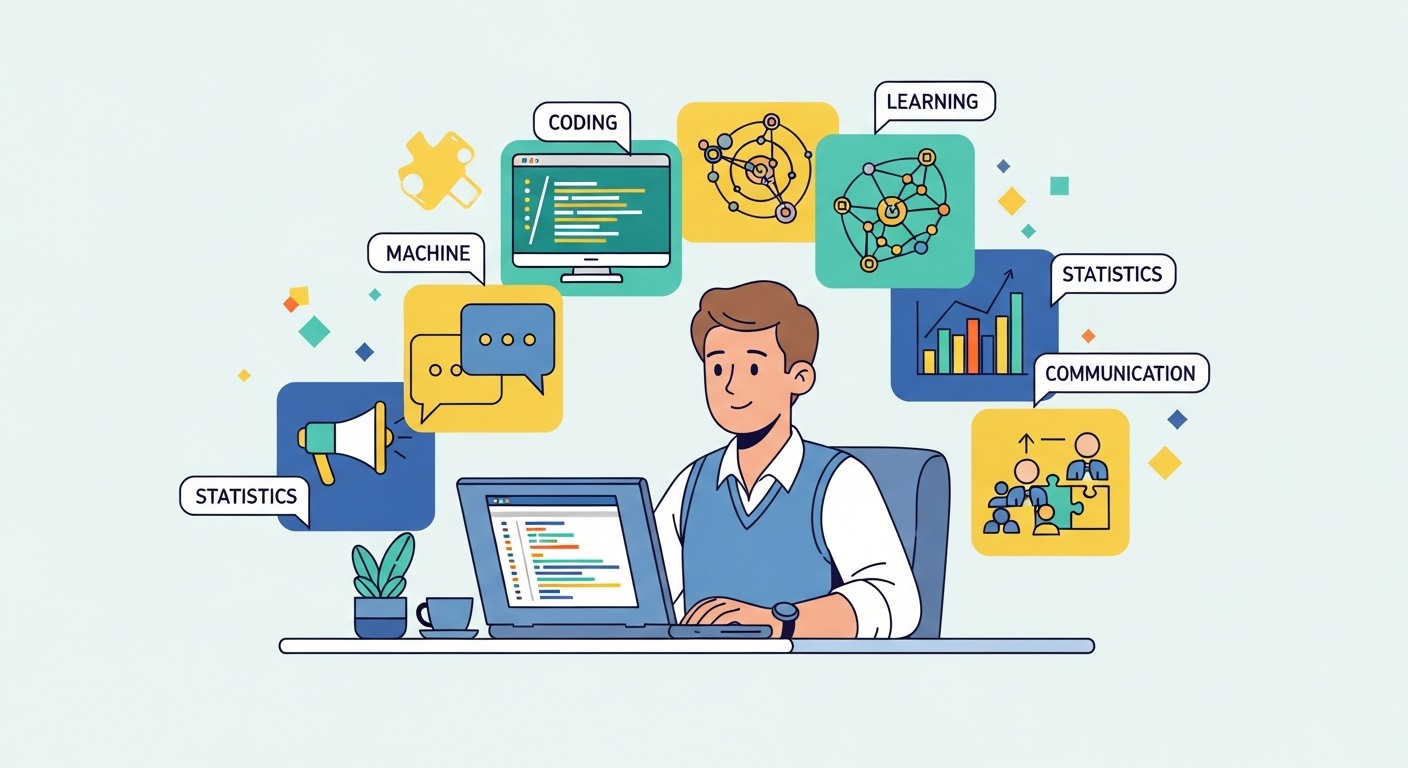
For your first AI engineer job, you need to be good at Python programming. It is also important to know the basics of machine learning and how to handle data. Employers want you to have these technical skills. When you use what you know and work on real projects, you show you have the essential skills needed for ai engineering. These things help you get ready for this kind of work and stand out to people who want to hire you.
How do I prepare my resume for AI job applications?
To make your AI engineer resume, focus on showing what you have done in AI projects. Be sure to talk about the results you got. Show your practical skills and list all your important certifications. Add a link to your GitHub portfolio so people can see your work. You can use an AI resume builder to help with the format, but what matters most is that your content shows you can solve real problems.
Which certifications help in starting an AI engineering career?
Certifications such as Google's Professional Machine Learning Engineer or AWS Certified Machine Learning – Specialty are known to be strong in the field. You can also get useful, hands-on experience by finishing an AI engineering course at a trusted institute like SocialPrachar in Hyderabad. This will give you practical skills, and you will get a certificate that helps you start your career in machine learning or AI engineering.
What should I expect during an AI engineer interview?
During an ai engineer interview, you will get technical questions about machine learning. There will be coding problems for you to solve. You will also get system design questions. In this interview, you will talk about your projects to show your practical experience. Your soft skills, including how you talk with people and solve problems, be as important as your technical skills.