








Top Frameworks for AI Engineers: PyTorch & Beyond
Key Highlights
AI frameworks like PyTorch and TensorFlow simplify building and deploying machine learning models. Choosing the right deep learning framework depends on your project needs, from research to production. PyTorch is favored for its ease of use and rapid prototyping, making it a great choice for researchers. There are specific use cases where PyTorch outperforms other AI frameworks—for example, in academic research, experimental deep learning projects, and rapid prototyping scenarios. Its flexible architecture and dynamic computation graph are particularly beneficial when developing complex machine learning models that require frequent changes or debugging.
Choosing the right deep learning framework depends on your project needs, from research to production.
PyTorch is favored for its ease of use and rapid prototyping, making it a great choice for researchers.
TensorFlow excels in production environments with its robust tools for large-scale deployment.
Generative AI is driving the rise of new frameworks like LangChain and Hugging Face.
Strong community support is crucial for learning and troubleshooting any AI framework you choose.
Introduction
Welcome to the world of artificial intelligence! As the use of AI grows, it is now more important to know the tools that make it work. People who work in data science and machine learning need to use frameworks to build strong AI systems. In this guide, you will see the top AI frameworks. You will learn what each one does well. This will help you choose the right one for your career path. It does not matter if you are just starting or if you have done a lot of work in this field before. This information will help you move forward with machine learning, artificial intelligence, and data science.
Top Frameworks for AI Engineers: PyTorch & Beyond
 When you work with deep learning models, you need the right framework. It is what helps make everything work better. These frameworks give you important tools, like a ready-to-use Python library and open-source code. This lets you train your models faster and helps with rapid prototyping. Modern AI depends on these tools.
So, what do AI engineers use in 2025? How does PyTorch stand in comparison to other frameworks? Whether it is an older tool or a new one, each framework has something different to offer. Here are the top options in deep learning you need to know to keep up in this field.
1. PyTorch – Deep Learning Powerhouse for AI Engineers
PyTorch is made by Meta AI. It is well liked by the deep learning group. It is open-source and is known for its ease of use. Python developers find it simple and flexible. PyTorch lets you use dynamic computation graphs. You can change your neural network models any time you want. This makes it great for testing and fixing problems.
Why should you use PyTorch for building AI models? The main advantage is its ease of use. PyTorch also has strong features like automatic differentiation. These help make building and training models quicker. You do not need to remake your whole model every time you want to change something. This saves you a lot of time.
The flexibility of PyTorch is well known, mainly in research. The active community provides many extra tools and libraries. This means there is help when you need it. If you want to get serious about deep learning, PyTorch is a good idea.
2. TensorFlow – Production-Ready AI Development Framework
TensorFlow, made by Google, is one of the leaders in the machine learning world. It is a deep learning framework. It helps build and run models for big groups of people. TensorFlow is strong when used in production environments. If you want to share your model with many users, this framework gives you tools the help you do it well.
Choosing between PyTorch and other AI frameworks for a fresh project? The way you plan to use your model matters. TensorFlow offers tools like TensorFlow Serving. It helps you serve models in production. This deep learning framework has a big ecosystem. You will also find good documentation and strong community support. It’s a good option for big companies.
Some people think learning TensorFlow can be harder because it uses static computation graphs. But its clear structure can give better speed and let your system grow. For projects when you need to reach many users, or want to use your model on servers, phones, and other gadgets, TensorFlow is often the top pick.
3. Scikit-learn – Easy Machine Learning for Beginners
If you are new to machine learning, you can start with Scikit-learn. This is a popular Python library for machine learning. It is made for classic machine learning jobs, not deep learning. Scikit-learn is easy to work with and has a strong focus on ease of use. It runs on top of other scientific computing libraries like NumPy and SciPy.
With Scikit-learn, you get many various algorithms. You can use it for data analysis, classification, regression, or clustering. It helps you make and try out machine learning models fast. You only need a few lines of Python code for data processing and building models.
The API is simple, and the documentation is great. This is why a lot of people use it to learn the basics of machine learning. Data scientists often use Scikit-learn for the first work on a project like early data analysis or building simple models. Later, they might move to deep learning if they want something more advanced.
4. Hugging Face – NLP and LLM Capabilities for Generative AI
Hugging Face has changed how natural language processing works. It is not just a framework. It is a platform and has a strong community. The goal is to help everyone use advanced AI. At the center of it is the Transformers library. This library gives you thousands of pretrained models for so many tasks. You can take ideas from new research papers and use them without having to start over.
If you use large language models or want to build generative AI applications, Hugging Face is the tool you need. It makes things like text generation, summarization, and translation easy to do. You can grab a great model and make it work for your specific needs without much trouble.
Are you new and looking for places to learn about top frameworks like PyTorch? Hugging Face is a great place to start. The platform offers guides, courses, and there is a model hub. It works well with frameworks like PyTorch and TensorFlow.
5. LangChain – Building Advanced AI Agents and Workflows
LangChain is an open-source framework built for making software that uses large language models (LLMs). It helps you link LLMs with other data sources and lets them work with what is around them. If you want to build something bigger than a basic chatbot, LangChain has tools you need to make smart, complex agents.
What is the LangChain framework and is it worth learning for AI engineers in 2025? Yes, it is. LangChain helps you build generative ai applications by putting different parts together. This way of building software makes the development process easier, especially if you need advanced features. You can make applications that:
Interact with APIs
Connect to external data sources
Remember past interactions
Make decisions and take actions
With LangChain Expression Language (LCEL) and other tools, developers can make chains that do many steps and reason through problems. It is becoming popular for making new workflows that use generative ai and large language models.
6. Keras – Simplified Deep Learning Interface
Keras is a high-level API for deep learning. It is built for people, not for machines. The main aim is to make working with artificial neural networks fast and easy. Keras acts as a simple layer on top of TensorFlow. It lets you build deep learning models with clear and simple code.
Keras is great for rapid prototyping and is good for anyone new to deep learning. You can use Keras to make a deep learning model with just a few lines. It takes care of hard parts on its own. There is still a lot of power here, as Keras works with the full speed and scale of TensorFlow.
This straight and easy model building has made Keras very popular. If you want to try ideas fast or work on neural networks without dealing with tiny bits of code, Keras is a good choice.
7. OpenAI APIs – Real-World AI Integration Tools
OpenAI's APIs are not what people call open-source, but they are now an important tool for adding advanced AI to the apps people make. These APIs let you use strong, proprietary frameworks and models like GPT-4. This means you can add cool tools like natural language understanding and generation to your product without needing to train your own model.
There are so many use cases for this tool. Some people use it to build smart chatbots, while others use it for virtual assistants, content creation, or checking customer feedback. Just by calling the API, you get to use a huge model. Building and keeping a model like this would be too big or expensive for most teams.
These APIs help your apps link to powerful external data and AI features. So, for the people who want new AI functions fast, especially for better business operations, using an API like OpenAI’s is a good way that lots of developers pick.
What Are AI Frameworks and Why Do They Matter for Engineers?
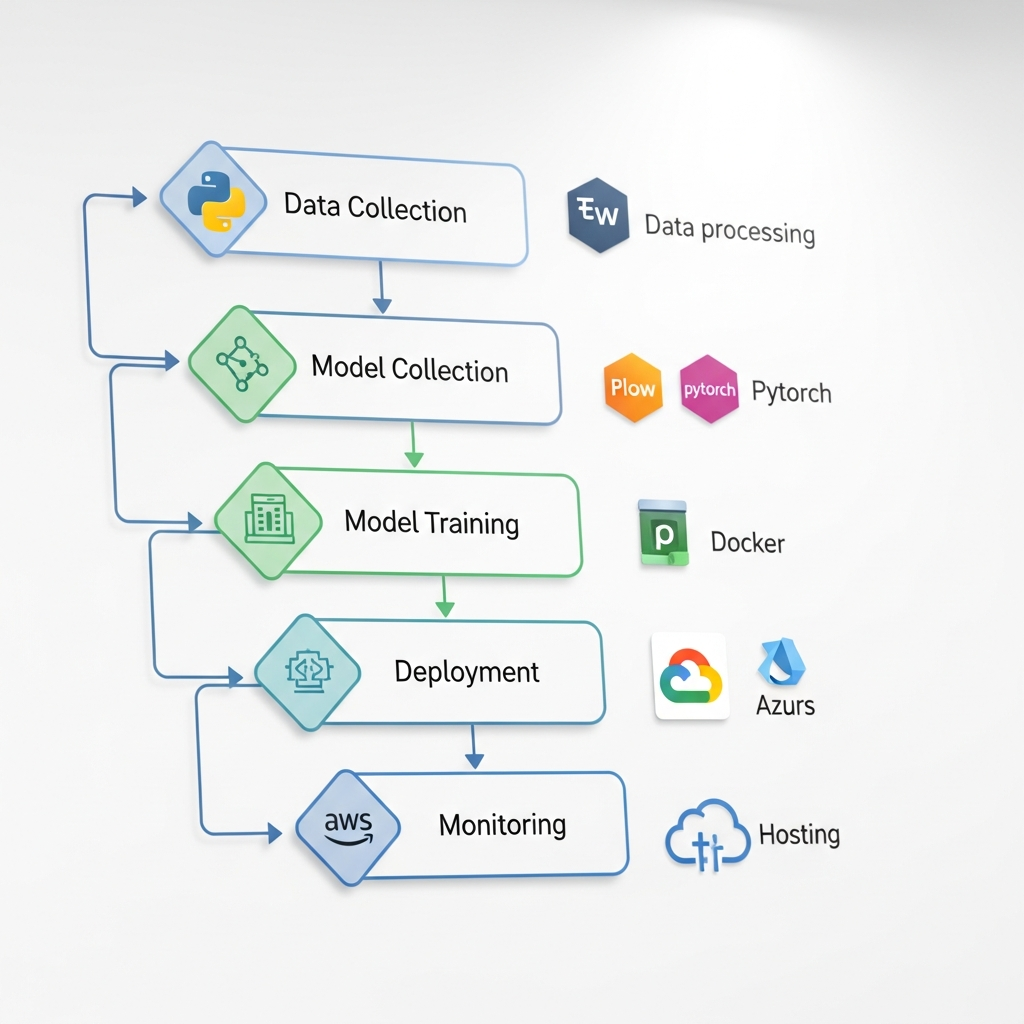 AI frameworks are groups of tools, libraries, and ready-made code. They help you build and train machine learning and artificial intelligence models. With these tools, you do not have to start everything from zero. These building blocks help speed up your work and cut down on development time.
These frameworks are very important for engineers. No matter your skill level, they help make the model development process the same for everyone. You do not have to worry about hard math or the code that runs under the hood. This way, you can keep your mind on the real problem you want to solve. Next, we will talk more about what these frameworks do and why they matter so much in machine learning and artificial intelligence.
Understanding AI Frameworks: Definition and Examples
An AI framework is a set of tools that helps you build things with AI. It acts like a digital toolbox for an AI engineer. It comes with pieces like libraries for getting data ready, common algorithms you might need, and models that you can use right away. One well-known example is a deep learning framework. It helps you make neural networks for things such as computer vision.
Let's say you want to create an image recognition model. You do not have to write out the math for each network layer yourself. The framework includes these steps for you. This makes model training easier. You get to focus on how to design the structure and train it using your data.
Some popular frameworks are TensorFlow, which works well for big models in production, and PyTorch, which is great for research when you need flexibility. Scikit-learn is used for older machine learning techniques. There are new frameworks too, like LangChain, made for building things around a language model. This shows how AI technology keeps changing as new tools come out.
Keywords used: machine learning, deep learning, neural networks, computer vision, deep learning framework, model training, image recognition, language model, ai framework
Importance of AI Frameworks in Modern AI Engineering
AI frameworks are a critical factor in modern AI projects. Without them, the development process can be slow and cost a lot. The work may not be open to many people. Data scientists and AI engineers use these frameworks to make the job easier and let projects grow.
PyTorch is often recommended for AI engineering over other frameworks because it has ease of use. This helps speed up the development process. In general, frameworks offer some big benefits. They:
Cut development time and cost
Make workflows the same so they can grow
Make complex tasks easier so teams can finish them faster
Allow rapid prototyping for fast and new ideas
No matter if you build a model for research or set it up for real use, a framework gives you structure and efficiency. This helps teams create value and not spend time doing work that is already done.
Libraries vs Frameworks vs Tools: Key Differences
It's easy to get confused by the terms "library," "framework," and "tool," but they have distinct meanings in AI development. A library is a collection of functions and code that you can call to perform specific tasks. You are in control and decide when and how to use the library's components. A Python library like NumPy is a great example.
A framework, on the other hand, is more structured. It provides a skeleton for your application and dictates the overall workflow. You fill in the blanks with your own code, but the framework is in charge of the flow. Different frameworks are designed for different purposes, so choosing the best choice depends on your specific needs.
Tools are often more specialized and help with a particular part of the development process, like debugging or visualization. Understanding these differences helps you select the right machine learning algorithms and components for your project.
Component | Description | Control |
|---|---|---|
Library | A collection of code you can call to perform tasks. | You are in control. |
Framework | A structured skeleton that dictates your application's flow. | The framework is in control. |
Tool | A program that helps with a specific development task. | Used as needed. |
PyTorch vs TensorFlow – Comparison for AI Project Success
The choice between PyTorch vs TensorFlow is something many AI engineers talk about. Both are very strong tools. Each one has its own strengths that make it better for certain use cases. The one you pick can change your learning curve, how fast you build your model development, and what deployment options you have.
How do you pick between PyTorch and other AI frameworks for a new project? Most of the time, you need to compare things like how ready it is for production and the community support. Let’s look at the differences between these two main frameworks. This will help you make a good choice for your next project.
Ease of Use, Flexibility, and Learning Curve
When you talk about ease of use, many people pick PyTorch. The syntax in PyTorch matches Python, so you get a natural feel if you already know some Python. This means there is not a big learning curve, and you can do rapid prototyping. PyTorch has dynamic computation graphs. These let you change the network, so you can fix things, try new ideas, and test complex tasks easily.
TensorFlow, on the other side, used static graphs before. You had to set up the whole model before you could run it. That made the learning curve steeper and the code more wordy for easy jobs. But now TensorFlow has eager execution mode. It gives you more flexibility, much like PyTorch does.
Most people say PyTorch is more intuitive. If you are new, want to get started, or you need to try out complex tasks fast, this design works well. With TensorFlow, the setup is stronger, and it has power. But in the beginning, the structure can feel more rigid.
Production Readiness, Community Support, and Industry Adoption
For a long time, TensorFlow was known as the top tool for production work. It came with the tools you needed, like TensorFlow Serving for putting models into use and TensorFlow Lite for running things on phones and small devices. It was the main pick for big companies and large jobs. Because so many people use TensorFlow, there is a big active community. You can also find a lot of guides, help, and tools out there. Its widespread adoption means you can find support or answers for most of your questions.
At first, PyTorch was not as strong in production. But things have changed over time. You now have tools like TorchServe and PyTorch Mobile, and more ways to connect to other systems. Because of this, people look to PyTorch more for production. PyTorch started in research, but its growth and community support helped it gain ground. Big and small companies now use it for both new ideas and running real jobs.
These days, the difference in production tools between the two has become small. TensorFlow has a mature set of tools for many use cases. Still, PyTorch’s flexibility and the power of community support make it a strong choice for the whole job cycle. In the end, your choice will often come down to what your team knows and what you need for deployment.
Conclusion
To sum up, picking the right AI framework is key to your success as an AI engineer in 2026. Tools like PyTorch and TensorFlow are very strong and lead the pack. Other frameworks, like Hugging Face and LangChain, have changed the way we look at generative AI and use cases in NLP. You now have many choices to go through.
You need to know what each framework does best. This will help you match the tool to your goals and what you want your career to be. If you use these frameworks to make real things and focus on good, practical projects, you will learn faster and stand out in the AI field. If you want to dig deeper into these AI frameworks, you can get a free consultation to help start your path in AI development!
Frequently Asked Questions
What features should I look for when choosing an AI framework for my next project?
When you pick a deep learning framework, look at how easy it is to use. Think about the community support you get with it. Make sure the framework fits well with your machine learning project and your use cases. You should also check if there are good deployment options and if there are any pretrained models you can use. See if it works for the scalability you need. The best deep learning framework will give you the right mix of flexibility and ready-to-use tools for your projects.
Why is PyTorch often recommended for AI engineering compared to other frameworks?
PyTorch is known for being easy to use and feels a lot like working with Python. This makes rapid prototyping and model building simple. The dynamic graphs help a lot when there is a need to debug something. It also has an active community that is always ready to help. Because it is open-source, PyTorch is used a lot in deep learning work and is liked by both academics and developers.
How does LangChain differ from more established AI frameworks like PyTorch?
LangChain is a framework made for building generative ai applications using LLMs. It is not like PyTorch, which is mostly for model building. LangChain uses the LangChain Expression Language to link LLMs with external data and APIs. This lets you handle complex tasks and work with different data types. You can create more dynamic applications with it.