







.png%3Falt%3Dmedia%26token%3D84a985c1-cf2d-4537-8d1c-d67904e1b1b1&w=3840&q=75)
Python vs Java AI Development: What Developers Should Choose
Key Highlights
Python is the top choice for artificial intelligence and machine learning projects due to its simplicity and vast ecosystem of libraries. Many top AI frameworks and stacks, such as TensorFlow, PyTorch, and Scikit-learn, primarily support Python, which gives it a leading edge for developing machine learning projects. Java is a strong contender for enterprise-level AI applications, excelling in scalability and performance; however, while some AI frameworks also offer Java support, Python typically has broader and more comprehensive support, making it more prominent in the AI ecosystem.
Java is a strong contender for enterprise-level AI applications, excelling in scalability and performance.
Python's popularity is driven by its extensive AI libraries like TensorFlow and PyTorch, which simplify deep learning.
Java is often used for deploying trained models into large-scale production systems and for real-time data processing.
For beginners and data scientists, Python offers a gentler learning curve for building AI applications.
The future of AI will see hybrid stacks, but Python will likely continue its dominance in the field.
Introduction
Welcome to the world of AI programming! Picking the right language is a big step when you start working in artificial intelligence. There are two main choices to look at. People use Python and Java a lot when building ai applications. In this guide, you will see a comparison of Python vs Java for AI. It will help you find out which language is best for your data science goals and career plans. It also gives you a clear idea if you want to build a project in 2026 or after that in the world of ai programming.
Overview of Python vs Java in AI Development
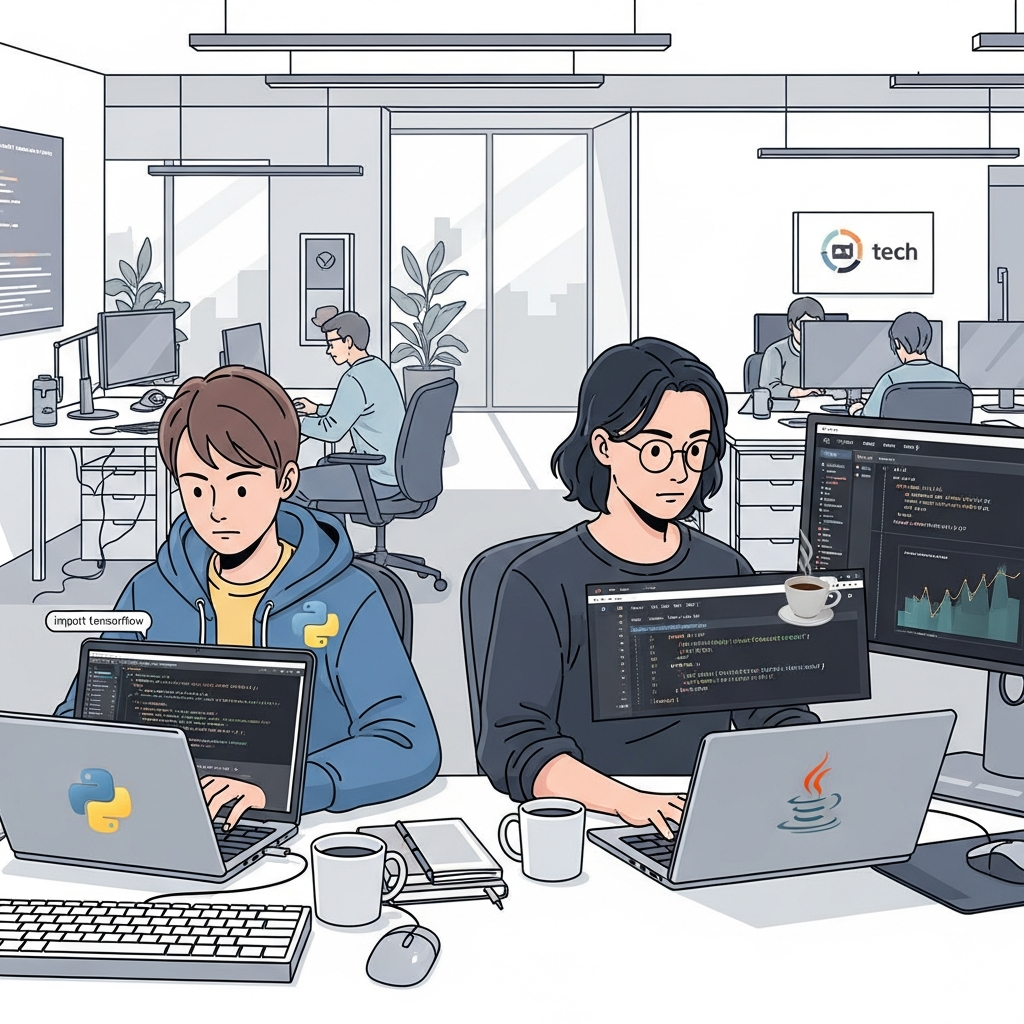 When you see Python and Java, you find two strong but different tools in artificial intelligence. Python is now the main language for data science and ai applications. People like it for its ease of use. It also has many libraries that help you build models fast and without trouble.
Java stands out in big businesses for its speed and how it can grow. It may not be what you pick first when you want to train models. But there is no doubt that it helps a lot when you need to use ai applications on a big scale. We will talk about how both these languages fit into the world of artificial intelligence.
The Rise of AI Programming Languages in India
The need for skilled people in AI is growing fast in India. Picking the right AI programming languages is now more important than ever. As machine learning and deep learning projects grow, the language you work with can shape your job in a big way. Today, the popularity of Python has gone up a lot, and many see it as a great choice if you want to be an AI engineer.
Still, there are some big companies in India that use systems built in Java. So, there is a strong need for java developers who can add AI tools into the same software. This brings up the Python vs Java question, which matters a lot in the Indian tech world.
Looking at the next few years, it is very important to know the good and bad things about each language when you start with ai development. Your language choice in machine learning and deep learning can affect how fast you work, what jobs you get, and the projects you get to join. If you want to take an AI engineering course in Hyderabad or if you are a developer about to pick your next step, you should think about this comparison.
Why Comparing Python and Java for AI Matters in 2026
If you are wondering which is better for AI development, Python or Java, you are not alone. As artificial intelligence is becoming a bigger part of the world, the choice of programming language shapes how we build and run ai applications. By 2026, your decision will be even more important, as artificial intelligence projects will need to use bigger data and tougher jobs.
Different use cases ask for different tools. When data scientists need to try out new ideas quickly or build models fast, one language is the clear winner. When engineers add ai applications to big company systems that handle big data, the other language might work best.
Looking at Python and Java side by side shows you the differences. It is not about which programming language is better for everyone, but which is the preferred choice for your needs. This will help you put together an ai development plan that matches what the industry will want in the years to come.
Growth Trends of Machine Learning Python vs Java
The popularity of Python for machine learning projects is undeniable and continues to grow. Its simple syntax and powerful libraries make it the top choice for tasks like data analysis, model training, and deep learning. Most cutting-edge research and new frameworks are released in Python first, giving its users a significant advantage.
While Java is not the primary language for AI research, it holds its ground in enterprise environments where machine learning models are deployed at scale. When it comes to performance, Java can outperform Python in certain computationally intensive tasks because it is a compiled language. However, Python's libraries are often highly optimized C++ code, which bridges the performance gap for many deep learning tasks.
Here is a quick look at how they stack up for common machine learning tasks:
Feature | Python | Java |
|---|---|---|
Rapid Prototyping | Excellent | Fair |
Data Analysis & Visualization | Excellent | Good |
Model Training Speed | Good (with optimized libraries) | Good (can be faster for some raw computations) |
Deep Learning Ecosystem | Excellent | Growing |
Ease of Deployment in Enterprise | Good | Excellent |
Factors That Influence AI Programming Language Choice
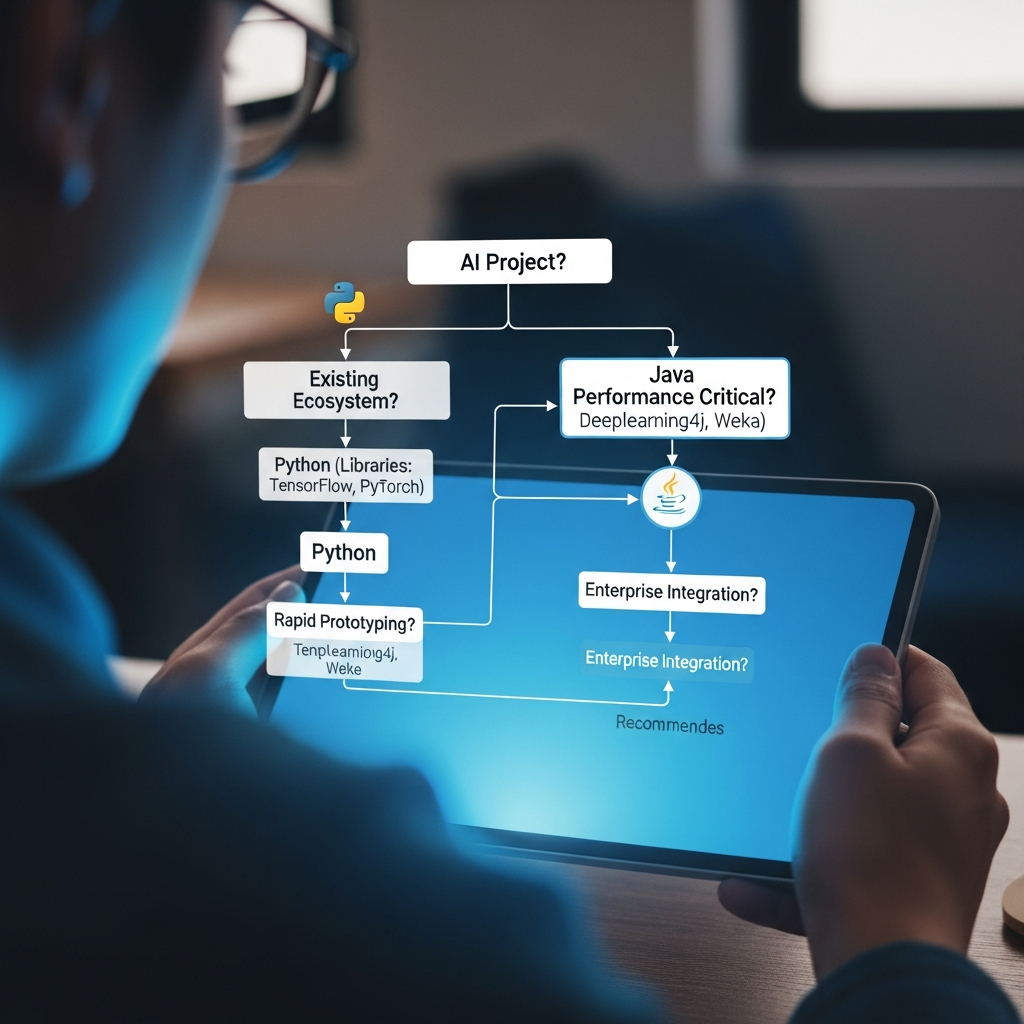 Picking a programming language for AI goes beyond what you like. The choice depends on some important things. It will change how fast you build ai applications and how much help you get from other people who work with artificial intelligence.
The best language makes tricky ai programming easier to handle. If you go with the wrong one, you might face more problems. There are a few big things to think about before you pick, like how much work you can get done, what tools or libraries be there, and how strong the community support is for that language.
Productivity and Development Speed in AI Projects
One of the main things that shows how Python and Java are not the same for making ai applications is how they help you be more productive. Development time matters a lot in ai because you need to try out new ideas quickly. Python is known for its simple syntax and ease of use. You can write code fast and use fewer lines of code than you would with Java.
This makes Python good for rapid prototyping. You get to test ideas, build models, and see what works right away. You do not have to deal with too much complicated setup. So, you can go over your work and make changes fast. With ai moving all the time, this is a big plus.
Java, on the other hand, takes more time for software development. You need to write more setup and boilerplate code. This can slow down you when starting out. While this works well for bigger and steady business programs, it is not great for projects in ai where you need to try different things quickly.
Availability of python AI libraries and Java AI tools
The ecosystem of libraries you get with a language can really shape if it is right for AI or not. The biggest advantage with Python is its extensive library support. Python’s libraries for machine learning and deep learning are well-known, easy to use, and have strong support from many people who work as developers and researchers.
This strong ecosystem means you do not have to create all things by yourself, from the start. You can use pre-built, powerful tools for data analysis, data manipulation, and model training. Here are some top Python AI libraries that give Python a clear edge:
TensorFlow and PyTorch: These are used for deep learning and neural networks.
Scikit-learn: People use this for many machine learning algorithms.
Pandas and NumPy: These are important for data analysis and data manipulation.
Java does have tools for AI, like Deeplearning4j and Weka. It also has a strong Java API which works well with big data platforms such as Apache Spark. But, the machine learning library choices for Java are not as large and are not picked as much as Python’s libraries. This makes Java a tougher pick for most people who want the best and newest AI tools.
Community Support and Learning Curve for Beginners
If you are new and want to start with AI, it is important to think about community support and how easy it is to learn the language. Python has strong community support in AI and data science. If you get stuck, there is a good chance you will find the answer on Stack Overflow, in forums, or in many online tutorials.
Because of this, the learning curve for Python is much easier. You can find many tools and guides to help you get a strong foundation in AI. The best things about Python’s community support are:
There are tons of tutorials and easy-to-read documentation.
You will find active forums and Q&A sites such as Stack Overflow.
There are many open-source projects you can use and study.
Java also has a big group of developers, but not that many people using it for AI. You can find help for normal Java skills. But getting answers for AI questions can be harder. This is why Python is the better choice for someone who is just starting to learn about AI and wants strong community support.
Python’s Popularity in AI and Machine Learning
 The popularity of Python in AI and machine learning is not just a random thing. Python is now the main language for these areas because of some strong reasons. The way Python is built makes it simple and easy to read. This really helps when you are working with complex algorithms and big datasets.
Python lets you do everything from data preparation to putting your model to use, and it all feels smooth and fast. Because of this, Python is the preferred choice for data scientists, researchers, and developers who work on advanced machine learning projects. Now, let’s look at why Python is leading the AI world.
Simplicity and Readability for AI Development
Python has a simple syntax. This makes it one of the top choices in machine learning and AI applications. The code in Python looks a lot like plain English. This lowers the barrier for those new to programming. Because of this, people can focus more on solving real problems and less on learning hard language rules. The ease of use lets people develop AI faster.
The simple syntax helps a lot with rapid prototyping. In machine learning projects, you need to test fresh ideas and change your models often. Python lets you do this because you can write and run code in fewer lines of code than Java. This makes testing new things quicker and easier.
Python is also not strict like Java. It feels flexible and lets you try different things. This is why data scientists and researchers pick it, even if they are not trained as software engineers. With Python, they get a powerful tool to make their ideas work.
Leading Python AI Libraries Driving Innovation
Python is a top choice for AI because it has a strong group of special libraries. These libraries give people what they need to build all kinds of AI systems. You can use them to make simple machine learning models or move up to complex deep learning models. This is a big reason why Python stands out for AI development when you look at it next to Java.
The libraries do lots of the hard work. They help with data manipulation, natural language processing, and training large language models. This makes it easy for people to work on the main ideas of their AI projects. Big steps in generative AI mostly happen in the Python world.
Some of the best and most used Python libraries for machine learning, deep learning, and other AI work are:
TensorFlow & PyTorch: These are top tools for building and training deep learning models.
Scikit-learn: Many people use this library to do common machine learning jobs.
Pandas & NumPy: These libraries help with data cleaning, changing data, and looking at it.
Hugging Face Transformers: You want to use this library for working with the latest NLP models.
Industry Adoption Across Indian Tech Companies
The use of Python for AI in India is now everywhere. There are many success stories from both small startups and big companies. These businesses in different fields use Python to make new AI-powered products and services. It helps them make new ideas fast, which is why it is the top pick for new ai applications.
Data scientists in well-known tech firms in India use Python for a lot of things. They do data analysis with it and they also build smart recommendation engines. Its strong libraries help them handle large amounts of data. They can use these tools to get good insights that make the business grow and improve the user experience.
Java still has its place in enterprise environments, but Python is now the main language for new ai development. It is flexible and fast. This makes it great for building and changing AI tools, and for getting them out to users in less time. Because of this, developers with Python skills are in high demand. There are many looking for a generative ai course in Hyderabad to boost their skills.
Can Java Compete in the AI Development Space?
While Python often gets most of the attention, Java is still an important and strong language for ai development. It works well for ai applications because of its high speed, its ability to grow as you need, and how steady it stays when used by big companies. Java is a strong contender, mostly for tasks that have large datasets and need to run fine for day-to-day business.
Another thing people like about Java is how easy it is to mix it with programs and systems that companies already use. It does very well when there is a need to add ai abilities into big, key tools or projects. This is why Java still stands out when people work with ai applications and need something solid that works together with the rest of their tech.
Let’s talk about where Java does well and how it holds its own in the world of ai development today.
Key Java AI Frameworks and Tools Explained
Java has a smaller ecosystem than Python. But it brings some strong frameworks and tools for machine learning and deep learning. These libraries help teams do ai development in the Java environment. That makes Java a strong contender for some use cases, especially in places where people already use Java.
A main challenge for people who want to use Java for AI is that its libraries can be harder to learn. They are often not as easy to use as Python’s. Still, if you and your team already work with Java, these tools help you get into AI faster.
Here are some key Java AI tools:
Deeplearning4j (DL4J): This is a deep learning library for the JVM. It is open-source and great for enterprise use.
Weka: It gives you a set of machine learning algorithms for data mining.
Apache Spark (MLlib): This is not just for Java, but its Java API is strong. People go to it for large-scale machine learning.
MOA (Massive Online Analysis): It is a framework that helps mine data streams in real-time.
Java’s Role in Enterprise-Level AI Applications
Java is often chosen over Python for ai development in big enterprise environments. This is because Java’s performance, security, and stability are very good. It helps build strong and scalable java applications that have to run well in real production environments. Many big companies have their main systems built with Java, so adding ai features to their core systems is easier.
There are clear use cases, like real-time fraud detection systems in the financial world, where Java works well. These systems have to check many transactions very fast with almost no delay, and java’s performance is great for this. Its solid memory use and the way it handles many tasks at once are very important for systems like this.
In the process, engineers might use Python first to train and test a model. But, when the model is ready for production, it is usually used inside a Java-based system. This helps with scaling up and makes sure things fit in well with other work. This shows why Java has an important role in the AI world, especially in enterprise environments and production environments where use cases like fraud detection systems really matter.
Integration Capabilities with Large-Scale Systems
Java is great at working with other tools and systems, which makes it a strong pick in the AI world. The language fits well with big data tools like Hadoop and Apache Spark. Because of this, many companies see Java as their preferred choice when they want to make intelligent systems using the data processing work they already do.
A lot of backend services that run big businesses are built in Java. If a company wants to add AI to these services, it makes sense to use Java for the AI part too. This lets everything come together well without the problems that can happen when you try to mix two languages or make them talk to each other.
Still, there is a challenge if you use Java for AI instead of something like Python. Python makes it easy to link to data sources. When you try to use Java with AI models, you may find you need to write extra code and spend time on setup, especially if you use tools that are not made for the Java Virtual Machine.
Comparing Python and Java – Core Differences for AI
When you look at Python and Java for AI, you can see some clear differences. Python is known for its flexibility and quick development. People use it when they want to do research or try out new ideas fast. It is a favorite in fields like computer vision and natural language processing. This helps you make AI applications quickly.
Java, on the other hand, is all about performance and being able to handle big jobs. It is great when you want to build strong AI applications, especially for businesses. It works well when you need everything to scale.
When choosing the right language for your artificial intelligence work, it's important to know these basic differences. You need to look at how easy it is to learn, what kind of library support it offers, and how each language performs overall.
Learning Ease and Flexibility for Developers
For people who are new to ai development, Python is the best language to start with. It is easy to learn because its words and format are simple to read and use. This makes it much easier for you to get started and not feel lost as you would with Java. With Python, you can learn key things about AI without having a hard time with the language rules.
Python gives you more room to try things out. It works in a way where you can write and run code right away. This is great for ai development because you can test ideas fast. You learn better and faster this way. For those who are new, this is very helpful.
Java is great for software development when you know more, but at first, it can feel hard. Its rules are strict and it wants you to do things in a set way, which takes time to get used to. The strong community support for Python, full of guides and friendly help, makes things much smoother. If you join an AI training institute in Hyderabad, you will most likely begin with Python, because it is easier, has more help, and is simply better for people who want to learn ai development from the start.
AI Library Ecosystem: Python vs Java
The AI library ecosystem is very different for Python and Java. Python has a big, rich ecosystem of libraries. It is made for AI development. This wide range of libraries is the main reason Python is the standard choice in this field.
Big AI frameworks like TensorFlow and PyTorch focus on Python first. They give more support, better features, and clear instructions for Python users. These frameworks do provide Java APIs, but they do not get the same attention. Java versions get fewer updates and may not have all new tools at the same time as Python. So, people working in Python use the latest ideas in deep learning and natural language processing before those using Java. Python also gets new ways to do data visualization faster.
Here is a quick look at both:
Python: Brings a large group of libraries. These help with all AI tasks, including deep learning and many ways to visualize data. The ecosystem of libraries in Python is rich.
Java: Has fewer choices for AI libraries. These are strong, but they do not cover as many tasks and often are not up-to-date.
Framework Support: Most leading AI frameworks give their best support to Python. This makes Python stand out for ai development.
Performance Benchmarks in AI Model Building
When you look at how AI models work in Python and Java, the answer is not always simple. Java is a compiled language, so it is often faster than Python, which runs as it is read by the computer. So, if you have heavy number-crunching jobs that do not use outside tools, Java can do the job in less time.
But, this speed test does not give you the whole idea. Many of the most important parts in Python's machine learning libraries, like TensorFlow and NumPy, are actually written in C++. They work very fast because of this. When you are training machine learning models, you usually do not see much of a speed gap. Most of the slow parts come from the GPU or how you move your data, not the language you choose.
Python has an edge when it comes to development time. It lets you write and fix your code fast. This often matters more to people than a small speedup you get from using Java. For most ai applications, what you want is to make a model that works well with unseen data and to do it quickly. Python’s tools and libraries help you do both with less trouble.
Typical Use Cases for Each Language
The choice between Python and Java often depends on what you need to use it for. Each one is best for different types of ai applications, so knowing where each fits is key if you want to make the right pick.
Python is the preferred choice when it comes to research, data science, and work that must move fast. The many libraries in Python make it great for trying out new ideas without much wait. Here are some common use cases for Python:
Machine learning and deep learning research.
Building recommendation systems.
Natural language processing and text analysis.
Data science and making dashboards with easy-to-see information.
Java is better if your ai must work inside large systems, especially when you need things to run fast and be strong for business. Its steady build and how well it grows with use are reasons why people go for it. Java's usual use cases are:
Enterprise-level fraud detection systems.
Putting ai powers into current backend services.
Doing big data or large data processing that uses ai.
Building AI-powered Android mobile apps.
Conclusion
To sum it up, when you want to pick between Python and Java for ai development, you should think about what your project needs and where you want your career to go. Python is great because it is simple to use. There are many libraries for machine learning, and you will find a helpful group of people ready to support you. That is why many choose Python, especially when they first start with machine learning.
But Java can be a good choice too. It works well for big companies and can handle large tasks, which helps you build complex systems. As we move toward 2026, both Python and Java will still be important in the world of ai development. So, you can go with Python if you want something that is easy for people to use. You might pick Java if you need power and want to work on large jobs.
If you know what each one does best, you can make a better choice for your needs. If you want personal advice for your coding path, just ask for a free talk with our experts!
Frequently Asked Questions
What Should Beginners Choose for AI: Python or Java?
Beginners will find Python easy for AI. The simple syntax and strong community support help everyone get started. You can use Python for rapid prototyping of ai applications. This lets people experiment and build ideas fast. You get confidence sooner with Python, unlike Java, which is harder to use.
Are There Challenges with Using Java for AI?
Yes, the use of Java for AI has some challenges. There are not as many AI-focused libraries as there are for Python. It can take more time to learn, and making quick test models is harder. Still, Java works well when you want to link with big data platforms or run java applications in production environments. For early steps like data processing and building models, it is not as easy as using Python.
Do Top AI Frameworks Support Both Python and Java Equally?
No, top AI frameworks do not support both languages the same way. Most of the leading frameworks, like TensorFlow and PyTorch, focus on Python first. So, Python's ecosystem gets more features and better support. There is a Java API, but it doesn't keep up with what Python can do. The machine learning library support for Python is much bigger and stronger than what you get for Java.