








How Java/Python Developers Can Move into AI Roles Easily
Key Highlights
Java and Python developers have a strong foundation to transition into artificial intelligence roles.
The demand for AI skills is growing, offering a promising career path for software engineers.
Python is the top language for AI due to its extensive libraries for machine learning and deep learning.
Key skills for an AI transition include data analysis, understanding neural networks, and working with AI frameworks.
Building a portfolio with real-world AI projects is crucial for showcasing your abilities to employers.
Job opportunities in AI are expanding rapidly, with high growth expected through 2026 and beyond.
Introduction
Are you working as a Java or Python developer and thinking about what the next step in your career could be? The world of artificial intelligence and data science is growing fast. The skills you have now with programming can help you get started with it. Moving from software development to a role in artificial intelligence or data science might look hard, but you can do it. This guide will help you see how your work and knowledge already give you a head start. It will also show you the steps to get into the best and most wanted AI jobs by the year 2026.
Why Developers in India Are Moving into AI Roles
 Many software engineers in India are now choosing artificial intelligence as their next career step. The use of AI is growing fast in all kinds of industries. Because of this, there is a big need for people who know how to work with it. For developers, learning AI is more than picking up a new skill. It's a way to make sure the future of their careers is safe in a tech world that is always changing.
Moving to AI offers a clear career path with the chance for strong job growth. People are shifting from regular information technology occupations into special jobs with high impact. The percent growth of jobs in artificial intelligence is much higher than in many other tech areas. This means it can be a good and exciting field for developers. Now, let's see what is leading to this trend.
Growth of AI-Powered Applications and Industry Demand
The use of artificial intelligence is not just something for the future; it is here right now. Many companies are adding machine learning to their software products to make things work better and faster. You can see this in action with recommendation tools on shopping websites and even fraud detection features in your banking apps. Artificial intelligence makes things easier for users and helps fix big business problems.
Because of this, there is more need for people who can make and look after these smart systems. Companies want to hire people who know both software engineering and artificial intelligence. They are looking for people who help connect old ways of software work with new AI technology.
By 2026, the need for workers with AI skills will be very high in big tech cities like Bangalore, Hyderabad, Pune, and the NCR region. If you are a developer, learning generative ai and picking up AI skills now can get you ready for these new job chances. You can look for a generative ai course in Hyderabad that fits well with the jobs in this field.
Career Growth Potential for Java and Python Developers
If you work in Java or Python as a software developer, switching your career to AI can be a smart move. There are many ways to grow in your job and even make more money. An AI developer or machine learning engineer gets paid more than a regular software developer because the skills needed are not easy to find. Companies are looking for people to fill these roles, and not many people can do this work. So, you will be in a good spot to talk about your pay.
Choosing a job in AI is not just good for money reasons. You also get to do cool work on new and big projects. You might help make tech for self-driving cars, work in medical data science to help diagnose patients, or build ideas that offer personal service to customers. By moving into AI, you can go from taking care of old systems to helping create the next big things.
The career path in this field can go up pretty fast. Here are some ways your career might grow:
Move from a software developer to a focused job as a machine learning engineer.
Step up into senior data scientist or AI architect roles.
Get into higher positions like Chief AI Officer or Director of Data Science.
Try your hand at AI consulting or maybe even start your own business that’s all about AI work.
Understanding AI Roles for Developers
When you hear the words "artificial intelligence," you might think it is just one area. But the truth is, there are many different jobs in this field. If you are a software developer, you get to choose a path that matches what you like and what you already know how to do. Every role in artificial intelligence has one thing in common. They all use programming and data to make systems that can learn and decide on their own.
Knowing about the different job jobs in certain areas helps you pick what you need to learn. You may want to work on building the models, or you may want to put them inside bigger apps. There is room in artificial intelligence for every software developer. Let's look at some main job types you could try for.
Key AI Job Profiles for Software Developers
If you are a software developer, you can move into many interesting AI jobs. Each of these jobs has a different focus, but all of them use your strong skills in programming. You can choose to work in building models, looking at data, or working on new ideas in AI research. Pick the path that you feel good about.
If you are just starting out, jobs like Junior Data Analyst or AI Trainee are good ways to get your foot in the door. These roles give freshers a chance to work on real projects and learn by doing. After you get some hands-on experience, you can look at more focused jobs.
Here are some of the top roles that many people want and companies need:
Machine Learning Engineer: This job is a favorite for many developers. You will create, set up, and run machine learning models for big tasks.
AI Software Developer: In this role, you bring AI features into different software. You work on the whole process from start to end, making sure AI works well in each new or current program.
Data Scientist: If you enjoy working with numbers, this might be for you. Data scientists work with lots of data by gathering it, cleaning it up, and looking for meaning inside it. They also use this information to come up with useful predictive models.
AI Research Scientist: If you are interested in big ideas and want to push what AI can do, you could aim for this role.
Typical Job Descriptions and Responsibilities in AI Engineering
A job description for an AI developer or engineer mixes skills from software development and data science. Employers need people who can write clear code and also get the basics of artificial intelligence and machine learning. You will need to solve problems and turn business needs into working AI solutions.
Each day, you will work with data scientists to get what a model needs, and then help to put that model into production systems. You might work on things like data preprocessing, feature engineering, and building and training predictive models. It will be up to you to help make sure these models will scale, run well, and stay strong.
Artificial intelligence developers on a team also take care of data analysis to check how the models are working. You will need to fix problems and keep learning about new technology in this field. The goal is to make smart applications that help solve real-world problems.
How Java and Python Skills Benefit Your Developer AI Transition
 If you are a Java or Python software developer, you already have a big advantage when it comes to moving into AI. You use programming languages every day, so you have a solid foundation for picking up the new things you need for AI development. You know logic, data structures, and algorithms. These are important when building smart systems.
This means you are not starting over. You get to build on what you know. A Java developer can learn key machine learning techniques and pick up Python. A Python developer can jump right into AI libraries. Let’s see how to use this advantage to help you get started.
Leveraging Your Programming Background for AI Programming
Your time working in software development is your biggest help when you want to move into AI. You already know how to think like a programmer. This way of thinking helps a lot. You need this skill when you build, fix, and launch new systems. Because of your past work, you can learn machine learning faster. You understand machine learning better because you know software engineering.
Many different programming languages can be used for AI. But Python stands out as the top one. Python is easy to learn, and it has many libraries. This makes it the best choice for machine learning jobs. If you already use Python, you will have an edge over others. If you use Java, you can still do well. Java is popular with big companies that use AI.
Still, most people agree that Python is a must if you want to get ahead in the AI job world. Because you know software development and how to think in code, it will be quicker and easier for you to start using Python for AI than it is for someone new. Your skill in programming languages, software development, and software engineering will help as you get into the machine learning field.
Additional Skills Needed for a Smooth Transition
Your programming background gives you a strong foundation. To move into AI, you will need a few more skills. These things will help you bridge the gap from software development to building and working with AI models. You can think of it as adding new layers to what you already know.
It is important to have a good understanding of math. This is true for linear algebra, calculus, and statistics, since machine learning often uses ideas from these. You do not have to be a math genius. Still, you should be comfortable with these basics.
Besides math, be sure to work on these other key areas:
Data Structures and Algorithms: You might already know this from software development, but in AI, you will use these to work with large sets of data.
System Design: You should know how to make systems that are strong and can grow. This matters when you put AI models into use.
Cloud Computing: Most AI projects use the cloud. Platforms like AWS, google cloud, or Azure are good places to get comfortable with.
Data Preprocessing and Visualization: You need to know how to prepare data before using it. You should also know how to show your data in ways people can understand.
With these skills, you can do well with machine learning and AI projects.
Why Python Is the Preferred Language for AI Programming
Python is the main language people use when they work with artificial intelligence. The code in Python is simple and easy to read. Because of this, you can spend more time on the real problems and not get lost in the code itself. That makes it a good fit if you want to use new machine learning techniques, and you need to do this fast and get good results.
Java and other programming languages are used in AI as well. But Python has many tools and libraries made just for artificial intelligence. This is why most people and companies choose Python for their work. You do not need to know every language out there, but knowing Python well is something almost all AI jobs ask for.
Popular Libraries and Frameworks in Python AI Development
Python is a top choice in the AI field because it has a huge set of tools for machine learning and deep learning. These libraries and frameworks help you make things, from simple to advanced models, without having to start every part from nothing. They come with many functions and parts already made for you.
If you want to work in AI, you need to know how to use these machine learning and deep learning tools. They let you build, train, and put any AI model to work. Frameworks like TensorFlow and PyTorch are must-haves if you want to work with neural networks.
Here are some must-know Python libraries and frameworks for anyone in AI:
TensorFlow and PyTorch: The top choices for deep learning and building neural networks.
Scikit-learn: A standout library for basic machine learning jobs like sorting things, making guesses, and grouping data.
Pandas: The main library to use for any work with handling and looking at data.
Matplotlib and Seaborn: These give you good power to show your data in charts and pictures.
Hugging Face Transformers: This makes working with the newest natural language and natural language processing models easy.
Industry Adoption and Python’s Advantages in AI
The way so many big companies and new startups use Python for artificial intelligence shows the big benefits it gives. Many tech giants and new businesses build their AI and machine learning platforms with Python. Because of this, there are lots of jobs in the field for people who know Python.
One of the things people like best about Python is how fast you can get things done. With its easy-to-read code, developers can quickly try new ideas and change them. This helps a lot in AI, which is a fast-changing field where you need to test things often and move fast.
Python also has a big and active group of people who use it. There are many tutorials, lots of documentation, and many forums to get help from. If you come across a problem, someone else has likely faced it and put the answer online. This friendly support makes it simpler for people to work on and keep up real machine learning or artificial intelligence production systems in Python. If you want a full machine learning course in Hyderabad, it is a good idea to look for one that is about Python.
Can Java Developers Succeed in AI Engineer Jobs?
Yes, Java developers have good skills in software engineering, object-oriented programming, and building big systems. These are strong skills that help in an artificial intelligence or AI engineer job. While people often use Python to make and test AI models, Java is also used to put these AI models into big company systems.
A Java developer can move into artificial intelligence by building on what they already know and picking up key knowledge of AI and its tools. You will often need to learn Python because it has popular AI libraries. But, your Java skills are still very useful to work AI into strong and reliable apps.
Java Frameworks and Integrating Java with AI Models
While it may seem like Python is the top choice in AI, the truth is that Java also has a strong setup for machine learning. There are many frameworks in Java to help you build and use ml models inside your usual tools. This is great for businesses with big, older systems that be built in Java.
It’s normal to connect AI models with Java programs. For example, you might first use Python to train your model. Then you share it with an API that your Java code calls. This way, you get the best from both sides. Use Python to make and test your model quickly. Then run your code in Java to build strong and large systems.
Below are some Java tools and libraries you can use for machine learning and deep learning:
Deeplearning4j (DL4J): This is a good open-source tool for building and training neural networks using Java.
Weka: Weka gives you many machine learning ways to work with your data and find patterns.
Tribuo: This is a machine learning tool from Oracle that helps with things like finding groups in data, sorting data into classes, and guessing numbers.
DJL (Deep Java Library): This open-source tool from Amazon lets you work with deep learning models right in your Java app.
When and Why Java Developers Switch to Python for AI
Many people who work with Java want to get into AI. When they do, they often decide to learn Python. There are good reasons for this. The main reason is that Python has a very large and helpful ecosystem for machine learning and deep learning. You will find many libraries, a lot of tutorials, and great community support for Python in AI. There is not much out there that offers the same.
Java is great if you want to build a strong backend system. But Python is made for fast testing and easy data analysis. This means that, when you are still trying out new ideas or working with a lot of data, Python lets you test and change things much faster. It is very useful during the research and development part of any AI project.
In the end, it is about picking the best tool for the job. If you know Java and then learn Python, you don’t lose your skill with Java. You are picking up something new and useful. With both, you become more valuable. You get to use Python for quick tests and machine learning, and use Java when it is time to move the system to real production.
Essential Skills and Tools for AI Programming
To do well in AI programming, you need both technical skills and to know some important tools. It is not only about writing code. You also need to know the steps in the AI process, from data engineering to putting models in use for things like predictive analytics. If you get good at these things, it can help you move from being just a good developer to do great work as an AI expert.
This means you should learn the basics of machine learning techniques. You need to feel good about using cloud computing. You will also need to learn how to use the software that runs AI projects. Let’s take a look at the main skills and the important tools you should know if you want to make the change to be a developer in AI.
Core Technical Skills for Developer AI Transition
Moving from being a developer to working in AI means you have to build on your current technical skills. If you have a bachelor’s degree in computer science, that is a good start. But you will still need to learn new things about data science and machine learning. Your strong programming skills give you a good base, but you need to add more layers.
It is still very important to know about data structures and algorithms. When you work with large data sets, these things matter even more. You have to understand how to get, use, and move this data quickly so it fits into your AI models. Using the ideas you learned in computer science in a real way is a big part of the job.
Here are some of the main technical skills you will need to learn:
Mathematics and Statistics: You must have a good understanding of basic math, algebra, calculus, probability, and statistics. These skills help you really know how machine learning and AI models work.
Machine Learning Fundamentals: You have to learn different types of techniques. These include supervised, unsupervised, and reinforcement learning.
Data Preprocessing and Analysis: You should know how to clean data, deal with missing information, and look over the data well before starting any AI job.
Model Evaluation: You have to know about the ways to check your models and see how well they are doing.
This set of skills will help you step into machine learning, data science, and carry over your strong
Must-Know Tools for Machine Learning and AI Projects
Beyond core skills, proficiency with the right tools is essential for any AI developer. These tools are the software and platforms you'll use every day to build, train, and deploy your machine learning models. They streamline the workflow from initial data analysis to putting your models into production systems.
Cloud platforms like AWS, Azure, and Google Cloud are particularly important. They provide the scalable computing power and managed services needed for heavy-duty tasks like training deep learning models. Familiarity with at least one of these platforms is a must for modern AI development.
Here is a breakdown of some essential tools categorized by their function:
Tool Category | Examples | Purpose |
|---|---|---|
Deep Learning Frameworks | TensorFlow, PyTorch | Building and training neural networks. |
ML Libraries | Scikit-learn, Keras | Implementing traditional machine learning algorithms. |
Data Analysis & Visualization | Pandas, Matplotlib, Seaborn | Cleaning, manipulating, and visualizing data. |
Cloud Platforms | AWS, Google Cloud, Azure | Providing infrastructure for training and deploying models. |
NLP Libraries | Hugging Face, NLTK, spaCy | Working with human language data. |
Beginner’s Guide: How to Move from Java/Python Development to AI Roles
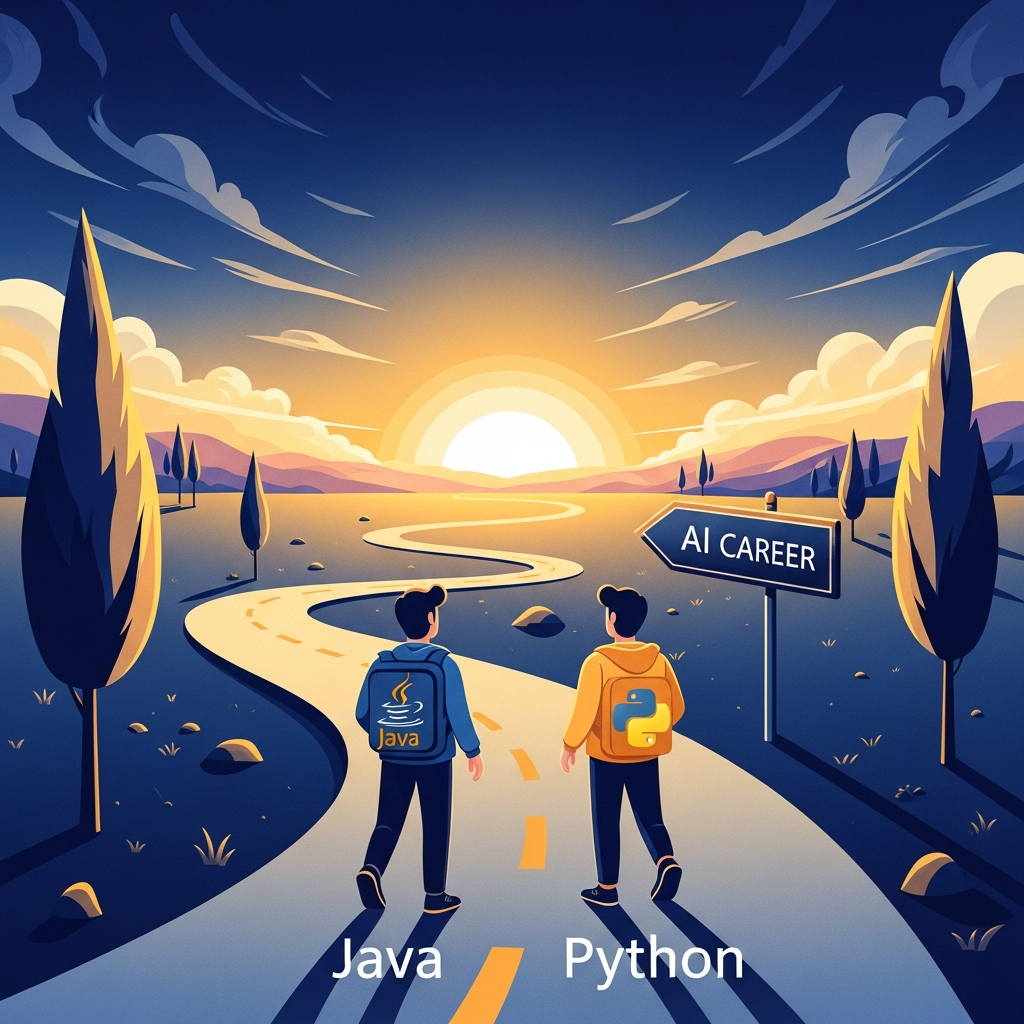 Are you ready to move into the AI field? This guide will show you an easy plan you can follow step by step, made for Java and Python developers. You do not need a master’s degree to get started, even though having one can help. Many top AI people build their skills with online courses, hands-on projects, and a strong love for learning.
No matter if you want to work in older machine learning or see the new things you can do with generative AI, this roadmap will help guide your way. We will go over what you need to start and tell you the steps you can take to get one of the top AI jobs for developers.
What You Need to Get Started with AI Roles for Developers
To start your path to become an AI developer, you need to have the right attitude and a clear learning plan. If you already know some programming languages, you have a good base to work from. You also have to be ready to keep learning, because the ai field keeps moving fast.
The first thing to do is to see this as a long journey, not something you can finish quickly. You need to give your time to learn new ideas. You also need to practice what you learn by working on projects. Step by step, you will make your skills stronger. The best way to organize your learning is to join an AI developer course in Hyderabad.
Here is what to keep in mind as you start:
A Commitment to Learning: The ai field moves fast, so you need to stay up-to-date by always learning something new.
A Strong Math Foundation: Go over topics like linear algebra, calculus, and statistics again.
Mastery of Python: You should make learning Python first on your list if you do not know it well yet.
Understanding of Core Machine Learning Techniques: Learn the basics about machine learning and how both supervised and unsupervised learning work.
Step 1: Learn Python for AI Development
If you want to be an AI developer, you need to start with Python. Even if you know Java and have a good background in software development, learning Python is a must for any work in the field of AI. The language has clear rules and many strong tools, which is why many people use it for machine learning and building AI models.
Your past work in software development will help you understand Python faster. You should look into how it works with data and notice how it is not like the other languages you know. The main idea is not only about learning rules but also about thinking the way Python wants you to, mostly when you want to work with data or change it.
Here is how you can learn Python for AI in a good way:
Focus on Data Science Libraries: Spend time with Pandas for working with data, NumPy for numbers, and Matplotlib to make charts and look at data.
Practice with Small Projects: Do simple data analysis projects. They can help you get used to these libraries.
Understand Python’s Role in AI: Find out why it works well for scripting, handling data, and building models for machine learning.
Join an AI Training Institute in Hyderabad: Learning with help and set lessons will make you better and give you help from people who know the field.
Step 2: Master Machine Learning and Deep Learning Fundamentals
When you know your way around Python, you can begin learning about the main ideas in machine learning. At this point, you will find out what is behind the things that make AI work. You should start with what is simple and step by step move up to hard topics like deep learning.
It is important to understand the main ideas well. This helps you pick the right tool for a task and fix your models if they do not give the results you want. When you have this kind of knowledge, you are not just a coder, but someone who really gets machine learning.
You should work through these important topics:
Supervised and Unsupervised Learning: Find out the difference between these and learn core tools for each, like linear regression, logistic regression, and k-means clustering.
Deep Learning and Neural Networks: Learn the basics of how neural networks work, like how activation functions and backpropagation fit in.
Advanced Topics: After you get the hang of the basics, take a look at areas like convolutional neural networks (CNNs) for working with images and recurrent neural networks (RNNs) for working with things that happen over time.
Specialized Areas: If you want, you can check out reinforcement learning and see how it helps build things that learn from what happens as they try tasks out.
With these steps, you will start to see how everything comes together in deep learning, convolutional neural networks, and much more
Step 3: Build and Deploy Real-World AI Projects
Theory matters, but it is hands-on experience that will help you get a job. The best thing you can do is to build real-world AI projects. This shows your skills and lets you put what you have learned to use. You move from examples in books to working on real problems with data and real results.
Begin with small and easy projects. As you get better, you can try harder ones. Work through every part of the project—start by finding and cleaning the data, then train a model, and finally, put it into a simple system that works. Going through all these steps gives you the kind of experience companies want.
Here are some ideas for your portfolio:
Image Classification Model: Try building a model that can tell what is in a picture, like telling the difference between a cat and a dog.
Sentiment Analysis Tool: Make a program that looks at text and tells if the feeling is good, bad, or neutral.
Recommendation System: Create a basic system that suggests movies or products.
Chatbot with an LLM API: Use a large language model API to make a chatbot that talks to people for a set purpose.
Conclusion
To sum up, moving from Java or Python development to a job in AI is not just possible. It can also be a smart choice for your job growth. The need for people in AI is going up, and your strong foundation as a developer will help you switch with ease. If you learn key skills in machine learning and get to know popular tools, you can find your place in AI. You might check out AI frameworks or work on new projects. Each step you take can open up more chances in the field. If you want tips made just for you, you can book a free talk with our experts. We can help you move into the exciting world of AI together!
Frequently Asked Questions
What is the average salary for AI engineer jobs in India?
The average salary for an AI developer or ai engineer in India is much higher than most other information technology occupations. If you are new and just starting out, you can get around ₹6-12 LPA. If an ai developer has a few years of experience, they can make ₹15-25 LPA or even more.
Are both Python and Java essential for AI programming?
Python is the main language people use for artificial intelligence because the libraries are great and there are many of them. But you can use Java, too, and it is helpful, especially when you need to put your AI models into big company systems. Most jobs in artificial intelligence want you to know Python well. Still, if you learn both of these programming languages, you will be more flexible and could get better jobs in software development.
Can freshers or students start a career in AI roles for developers?
Yes, if you are a fresher or a student, you can start a career in the AI field. If you have a relevant bachelor’s degree and a strong foundation in programming and machine learning, you can try for entry-level jobs. Jobs like AI Trainee or Junior Data Analyst are some options. It is good to build your own projects to show what you can do. This will help people in the field see your skills.
Which Indian cities offer the highest demand for AI developer jobs in 2026?
 By 2026, the need for ai developer jobs will be highest in India's main tech cities. Places like Bangalore, Hyderabad, Pune, and the NCR region will have the most percent growth in information technology occupations. There will be good chances for skilled ai developers in these areas. If you want to work in this field, going to an AI engineering institute in Hyderabad could be a smart choice.
jobs from Hacker News 'Who is hiring? (May 2018)' post | HNHIRING
The Hacker News "Who is hiring?" post from May 2018 featured numerous job opportunities for developers, particularly in tech-focused companies. These roles often sought candidates with strong programming skills, making it a valuable resource for Java or Python developers looking to transition into AI roles and advance their careers.