







.png%3Falt%3Dmedia%26token%3D7967e962-c6a2-4ed4-ab9a-bd8a6ae2710e&w=3840&q=75)
The Future of AI vs Traditional Data Science Methods in 2026
Key Highlights
Traditional data science relies on statistical modeling and manual feature engineering, focusing on structured data and business intelligence.
AI-driven data science integrates deep learning, Large Language Models (LLMs), and high levels of automation to handle complex, unstructured data.
The core differences lie in model complexity, tools used, automation levels, and the types of datasets each method can process.
By 2026, career scope for AI Engineers and ML Engineers is expected to grow rapidly, with higher salary potential in India compared to traditional roles.
Choosing between them depends on your career goals: traditional roles for analytics and reporting, and AI for research and product development.
The future points towards a convergence of skills, where data professionals will need a hybrid skill set encompassing both fields.
Introduction
The world of artificial intelligence and data science is changing fast. As we move toward 2026, it is important to know the key differences between traditional data science and new AI-driven ways of working. If you want a good career in tech, this is something you need to understand. You might wonder, is one better than the other? How do the two work together? This guide will look at AI vs traditional data science methods and show you their tools, career paths, and what the future will look like for each. We will also break down machine learning ideas in a simple way. This will help you know which path is best for you.
Understanding Traditional Data Science
 Traditional data science is the base for many new ways people use data today. The idea is to use data analysis and statistical modeling to look at past data and make predictions. You can think of it as using math ideas to find patterns in clear and well-sorted data.
The main goal of this field is to answer important business questions by looking at big data. Some main use cases are sales forecasting, customer segmentation, and market trend analysis. In this field of data science, people want to get clear and actionable insights from different types of data to help make smart choices. Now, let’s look more closely at the core ideas behind it.
Defining Traditional Data Science in India
In India, data science is now a field that many want to work in. It brings together computer science, statistics, and business. At its heart, data science is about cleaning, looking at, and making sense of data to fix problems. It deals with organized data, like sales in a chart or a list of users from a database. This is not the same as artificial intelligence. AI is focused on building systems that act like people and can learn or solve tasks on their own.
For a data scientist, the main job is to help with business intelligence. You might see them check data from social media to see if a campaign worked, or look at what customers buy most to spot patterns. This type of data analysis helps a company make smart choices.
While artificial intelligence can do difficult things on its own, data science usually helps to answer questions like "what happened" and "why did it happen" from collected data. The key differences are in how much can be done without a person. Regular data science often needs people to set goals and explain results. With artificial intelligence, the system can often work with less help from us.
Key Principles of Statistical Modeling
Statistical modeling is the backbone of traditional data science. It uses math models to find links between different things in a dataset. The main goal is to see how some factors can change an outcome, which helps with predictive analytics. For example, a model can look at past sales and marketing spend to help forecast future sales.
The process starts with data collection. Here, the data scientist gathers and gets all the important information ready for data analysis. The use of AI can look at unstructured data like text and pictures. But statistical models do their best with clean and structured numbers. For the data analysis, methods like linear regression or logistic regression can help you see patterns.
These models are strong tools for making forecasts and learning more from your data. Still, they depend a lot on what the data scientist guesses at first. Machine learning sits inside this field too, but these algorithms are usually simpler and easier to understand than what you find in deep learning.
Manual Feature Engineering Explained
Feature engineering is an important part of data science. In this step, a data scientist uses what they know about the problem to turn raw data into features. These new features help machine learning models to work much better. This process is not automatic. It needs someone to think hard and use their skills. You do not feed the model just raw data. Instead, you make new features that show the key patterns in the data.
This step in data processing helps us get meaningful insights. For example, if the data has dates, you might pull out the day of the week or the month. These could be useful for your model. Good features help the model do its job well and bring more correct results. Often, good data visualization can help you pick which features are good to use.
Some jobs you do in feature engineering are:
Handling Missing Data: You choose how to fill in missing values or remove them.
Creating Interaction Terms: You put two or more features together to see how they work as one.
Binning: You group numbers, like age, into ranges (like "18-25," "26-35").
All these steps help people get more from machine learning, data science, good data processing, and useful data visualization. Using data scientist skills and careful thinking, raw data can give the most meaningful insights.
Business Intelligence Focus in Traditional Data Science
Traditional data science is linked to business intelligence, or BI. The main goal is to turn big data into simple steps that people can use to make better business decisions. BI looks at descriptive analytics, which means it checks past and present numbers to show what happened. Data analytics helps companies see how they are doing.
For example, a retail business might use traditional data science to build dashboards. These show daily sales, inventory, and customer information. These reports help managers decide right away what to do, like which products they need to order or which ads are working best. The goal is to make clear and simple reports.
You can use machine learning to guess future trends, but the main focus stays on showing a clear picture of how the business is doing now. This way, leaders get the facts they need to lead the company well. That is why this way of working is so big for data-driven companies.
Role of Structured Datasets in Data Science
Structured data is at the heart of the usual way people do data science. This kind of data is put together and sorted well, which makes it simple to work with and look at. You can think about it like tables inside a spreadsheet or in a SQL database, where all the data sits in neat rows and columns. This setup is very important for how data analysis is often done.
The process starts when people collect data from places like CRM systems, sales records, and web analytics. That raw data gets cleaned and then put into data sets that are well organized. Good data management and data storage really matter here, because for things to go right, the models need data that is clean and the same all the way through. That’s the only way you will get results you can trust.
Because structured data sticks to a set plan, it is easy for regular tools and computer programs to work with, search through, and change what they want. This is why so many people use this type of data to make financial reports, keep an eye on inventory, or study customer transaction records. Jobs in data science that deal with business often use structured data for these reasons.
Classical Machine Learning Algorithms Overview
In data science, a data scientist will use tried and tested machine learning methods to do things like sorting and guessing outcomes. These older machine learning algorithms help a lot in predictive analytics. They are not as complex as deep learning models, but they work well. People usually use programming languages such as Python or R to work with these algorithms.
The algorithms look for patterns in training data. This helps them make guesses when there is new data that they have not seen yet. For instance, a decision tree can help say if a customer will leave or stay by checking his or her past actions. Most of the time, you can see clearly how these models make their choices, so you get a good idea of their steps and thinking.
Some well-known classical machine learning algorithms are:
Linear Regression: Good for guessing a number, like what price a house might go for.
Logistic Regression: Used to tell if something is true or false, like spotting spam in emails.
Decision Trees and Random Forests: Can work well for both guessing numbers and finding labels in the data.
Exploring AI-Driven Data Science Techniques
 AI-driven data science brings big changes. It uses artificial intelligence to help us solve tough problems. This way of working brings in things like deep learning and generative AI. These new tools let us use unstructured data. This can be images, text, or audio. Unlike old methods, the focus here is on building end-to-end AI systems. These systems learn and change without much help from people.
Data science uses many AI applications. For example, computer vision helps self-driving cars. Natural language processing powers chatbots. These tools let machines do jobs that needed human intelligence before. This opens up new ways for people to work and create. Next, let's see the top technologies behind this change.
Deep Learning Integration for 2026
By 2026, deep learning will be part of data science in even more ways. It will move out of just labs and will be used by more people in their daily work. Deep learning is a type of ai system that uses neural network designs based on how the human brain works. With this, people can look at large and hard-to-understand information. These systems let ai learn from data in new ways that go far beyond what older tools can do.
The need for people who know deep learning is high now, and it will keep going up. That is because these tools help power new things happening in the world right now. For example, deep learning helps autonomous vehicles. These cars use models to look at data from cameras and spot things like people, stop lights, and other cars so they can move around safely.
AI systems with deep learning can see small and hard-to-find signs in data that people cannot spot. Because of this, they are a big help with things like fraud detection, medical images, and building smarter tools that give people better recommendations.
How Large Language Model Workflows Enhance Data Science
Large language models, also called LLMs, are changing the way people do data science. These tools make it easier to handle text-based data. LLMs are an important part of natural language processing, or NLP. They are trained on a huge amount of text so they can understand and create human language very well. This lets people use them in many ways.
For a data scientist, an LLM can take over jobs that used to take a lot of time. An ai agent that uses an LLM can sum up long reports, go through customer feedback from social media, or even make short pieces of code. For example, instead of going through thousands of reviews one by one, a data scientist can use an LLM to pull out the main points and see how people feel about them.
With this technology, a business can also make content like marketing posts, product notes, and other things on its own. By adding these models to the way they work, people in data science can spend more time on the big picture and less time on doing everything by hand.
Automation in Modern Data Pipelines
Automation plays a big part in today's data science that uses AI. Data pipelines are sets of steps that move data from where it starts to where people use it for analysis. Now, these steps are done with automation. People do not have to spend much time on manual jobs like data processing or data cleaning. Data scientists can use their time for more important tasks.
With cloud computing and strong AI algorithms, data pipelines today can deal with large amounts of data in real time. This change is better than older data mining methods. Before, these methods were slow and took more manual work. Now, automation makes sure the data is always clean, updated, and ready to be used.
Key parts of automation in data pipelines are:
Data Ingestion: This step collects data by itself from many places, like APIs, databases, and streaming sites.
Data Transformation: It uses rules to clean, set up, and improve the data while it moves through the pipeline.
Model Deployment: When machine learning models are trained and checked, this step puts them into use right away.
Generative AI Integration in Indian Enterprises
Indian businesses are fast using generative ai to stay ahead in the market. This type of ai does more than just look at information. It can also come up with new and original ideas or content. The use of ai for content creation is changing how many industries work. You now see it in social media, in marketing, and with software teams too. For example, companies are using generative ai for making content for their blogs, ads, and all their social media.
This technology helps businesses make quality content in big amounts. They can also make the content fit different groups of people. There are data engineers and other experts working on these ai applications together. They want to make sure that the work the ai does matches what the business and their brand want to say.
This has a big effect. A marketing team can make a lot of ads very fast. An online store can come up with different product descriptions for many things. Some developers also use it to help them write computer code. Generative ai is now one of the best ways for Indian companies to grow, come up with new ideas, and get things done fast.
End-to-End AI Systems and Their Applications
End-to-end AI systems are full AI solutions. They can handle a complete job from start to finish without a person needed at each step. In modern data science, these AI systems are the main thing people use. They bring together data collection, processing, modeling, and the final use of an AI tool in one smooth process. The main goal is to make AI applications that do not need people once they are set up.
There are many good use cases for these AI systems in different areas. In e-commerce, recommendation systems look at your actions right away. They use this data to show you products you may like. In finance, AI systems check every transaction to see signs of fraud. These systems look at patterns and can spot something odd right away.
There are more ways to use AI, too. One example is with computer vision in factories. These AI systems check each item as it is made. They can find mistakes on a line faster and better than a person can. With these tools, we now see a big move toward making smart and self-running solutions with less need for human intervention.
Core Differences – AI vs Traditional Data Science Methods (2026 Outlook)
 As we move toward 2026, it will be easy to see the key differences between AI systems and traditional data science. Traditional data science often depends on human intelligence. People lead the process when they look at organized and straightforward information. On the other hand, AI systems use advanced machine learning to work with both straightforward and messy data. AI can find patterns that many people may not see.
The biggest difference is in how complex the work can be and how much of it can be done by a computer without help. AI-driven tools can deal with confusion and can grow in ways that older methods cannot. In this section, you will see how these two fields match up in some important ways so you can better know where data science is heading.
Tools Used in Each Approach
The tools used in data science and AI are not the same. In traditional data science, people use a lot of programming languages like R and Python. They often work with libraries like Pandas for handling data and Scikit-learn for machine learning. There is a big focus on data analysis and business intelligence, so many use SQL to talk to databases and Tableau to show data in charts or graphs.
But in AI-driven approaches, the toolkit gets more advanced. These methods use frameworks made for deep learning, like TensorFlow and PyTorch. With these, it is possible to build complex neural networks. AI algorithms in this area often work with unsupervised learning, where AI can spot hidden patterns in data without anyone telling it what to look for first. An AI agent may even use special AI tools to do some tasks on its own.
So what is the difference here? Traditional data science uses tools for things like structured reports and it needs more people to work with the data step by step. On the other hand, AI has frameworks designed for automation. It can handle unstructured data, and this opens up more use cases like recognizing objects in pictures or understanding natural language. These AI algorithms help to get deeper insights that would take much longer by hand.
Comparing Model Complexity
One big difference between machine learning and AI is how simple or complex their models are. Machine learning models, like linear regression or decision trees, are not too hard to understand. You can see each step and know why the model made a certain choice. This is helpful for industries like finance and healthcare, where being clear is important.
AI systems, especially the ones using deep learning, need much larger models. A neural network can use millions or even billions of pieces, which makes it hard to see how or why it makes choices. People call this the "black box" effect. But this complicated setup helps ai systems solve problems that are hard for the other models.
These advanced machine learning and deep learning models can find complex and non-linear patterns in data. Simpler models often miss these. This is why neural networks work so well with things like image recognition, using natural language, translating languages, or playing hard games. The way neural network systems handle all the steps is more complex, but it helps them handle tasks where the links between information are not clear.
Automation Level Differences
The level of automation sets traditional data science apart from AI-driven data science. In the old way, people did many things by hand. A data scientist often has to spend a lot of time on feature engineering, data cleaning, and model selection. This way gives more control to the person, but it can be slow, especially when there is big data.
AI applications are made to use much more automation. AutoML platforms, for example, can handle the whole job of training and tuning models on their own. The system can test hundreds of models and find the best one for the job, all without needing any human intervention.
In the future, agentic AI will push automation even more. These AI agents will be able to take care of all parts of data processing by themselves. They can bring in data and turn it into insights, with little to no help from people. This change lets data scientists stop doing each task and start guiding smart systems that do the work for us.
Dataset Type: Structured vs Unstructured
The type of data that each way works with is a key difference. Traditional data science mostly deals with structured data. This type of data is easy to put into tables, with rows and columns, like you see in a spreadsheet or in a SQL database. Most data analytics tools can handle this kind of data, so it is simple to check and study.
AI-driven data science is good for working with unstructured data. This is a big part of big data today. Unstructured data does not fit into tables. AI models can get meaningful insights from complex data and large data sets that older ways have a hard time with.
Examples of unstructured data include:
Text: Emails, social media posts, and customer reviews.
Images and Videos: Photos from security cameras or user-generated content.
Audio: Voice recordings from customer service calls or podcasts.
Scalability and Performance Factors
Scalability and how well a system works are very important in telling apart ai systems from older methods. Many of the older data analytics tools can have a tough time when they face large amounts of data. These tools might be fine with a smaller dataset. But as you add more data, and when things get more complex, they start to slow down or not work as well.
AI systems that use deep learning are made to handle huge growth without much trouble. They make use of cloud computing and things like GPUs to work with petabytes of complex data in less time. The system can then build bigger and smarter models. These models do better on hard jobs.
Because of this scalability, people can now look at internet level data from places like social media and IoT devices. If you have a business that needs to use a flow of data to make choices right away, you will find that having ai systems with good scalability and performance is key. These new tools make it easy to keep up with very big and fast data.
Real-Time Deployment Capabilities
Real-time deployment is another place where data science with ai systems is very strong. Older data science models are usually used for batch data processing. This means they collect data over some time, and then they look at all the data later. For instance, a monthly sales report is batch data analysis. It is helpful, but it does not give you answers right away.
Today, ai systems are made for real-time data processing and fast decision-making. These new systems look at data as soon as it comes in. This lets you get quick responses. This is in high demand for things like fraud detection, where the system must stop a wrong transaction in just one or two seconds.
More examples are recommendation systems on streaming apps, where you get new show or movie tips while you watch. Navigation apps also can change your route right away if there is a lot of traffic ahead. The way you can use models that work in real-time is a big plus for data science with ai systems.
Human Intervention Required
The amount of human intervention needed is a big difference between the two. Traditional data analysis and machine learning depend a lot on people knowing what to do at each part. A data scientist has to clean the data by hand, pick what matters, choose the best method, and make sense of the outcome. This way, a person keeps control and can understand how it all works.
AI-driven systems try to cut down on how much work people have to do. People still need to set the main problem and check how things go, but the middle steps are done by the system on its own. In some use cases, the goal is to make fully independent systems that run with no help from a person.
Think about autonomous vehicles. They need to decide when to steer, brake, or speed up right away, without waiting for someone to tell them to go. This kind of independence is possible because of AI models that can see what’s around them and choose what to do. That is something old ways of doing things just can’t do.
Learning Curve and Adaptability
The way you learn and enter each field is not the same. In traditional data science, you have an easier way to get started. You work with data visualization, machine learning, and tools like SQL. These skills are not easy to master, but they do not take as long to learn as in some other fields. You mainly use simple statistics with well-structured training data to get meaningful insights.
If you focus on AI in data science, the learning path is much harder. You have to know a lot of computer science and work with things like TensorFlow or PyTorch. You often work with complex data. You also have to build nerve-like machine learning networks that need more technical skill and more time to learn.
Still, AI models can change and adapt better than traditional models. When you train them, they often do well with new or unknown data. They use what they learn from new information, which helps them in areas that change a lot or grow over time.
Table: Side-by-Side Comparison AI vs Traditional Data Science
To make the comparison clearer, let's look at the key differences between AI systems and traditional data science side-by-side. This table summarizes the core distinctions we've discussed, from the tools and data types they use to their levels of automation and complexity. Understanding these points is essential for anyone deciding which path in data science to pursue.
This comparison highlights how artificial intelligence is pushing the boundaries of what's possible, while traditional data science remains a vital and practical discipline for many business applications.
Feature | Traditional Data Science | AI-Driven Data Science |
|---|---|---|
Primary Goal | Explain past data, make predictions | Automate tasks, create intelligent systems |
Data Type | Structured (tables, spreadsheets) | Structured & Unstructured (text, images, audio) |
Model Complexity | Simple, interpretable (e.g., linear regression) | Complex, "black box" (e.g., deep neural networks) |
Automation Level | Low to moderate; heavy human intervention | High; focuses on end-to-end automation |
Tools | SQL, R, Pandas, Scikit-learn, BI tools | TensorFlow, PyTorch, LLM APIs, AutoML |
Human Intervention | High; required for feature engineering, analysis | Low; humans oversee and define goals |
Scalability | Limited with very large datasets | Highly scalable with cloud computing |
Learning Curve | Shorter and more accessible | Steeper and more technical |
Tools & Technologies in Traditional Data Science
 A data scientist often works with some main tools and technology to do data mining and data analytics. These tools help manage structured data well and are a big part of the work done in this field. The programming languages used most are Python and R. They both offer a lot of libraries that can help with things like handling data or building models to predict what might happen next.
These technology and tools are important for many use cases. Some example use cases are making business reports, looking at customer behavior, and helping guess what sales might be. Now, let's talk about the tools that a traditional data scientist uses most often.
Python & R Libraries Overview
Python and R are the top programming languages in the field of data science. Both have their own benefits. Python is often chosen because it is flexible and has simple code. You can use it for many things, like data processing and machine learning. Many people use Pandas for working with data. Matplotlib and Seaborn help with data visualization.
R is a language made for people who work with numbers and want to do deep data analysis. It has many tools for working with complex data and is strong in predictive analytics. In R, you can use libraries like dplyr for data tasks and ggplot2 for charts. Many who work in research and school settings like these tools.
If you want to take online courses, you should pick one that covers both Python and R. The right data science course in Hyderabad will help you get hands-on skills with both programming languages. You will learn to use the tools and libraries that are important for data analysis work. This training will get you ready for jobs that need machine learning, data science, and data visualization skills.
Essential Statistical Libraries
For anyone working in data science, it is very important to know how to use statistical libraries. These are needed for most data analysis and help you understand big data. They let people do predictive analytics and test ideas to see if they are right.
If you use Python, there is a library called Statsmodels that is useful. This tool has lots of tests, models, and ways to explore data. For machine learning, the Scikit-learn library is the main one to use. This library makes data mining and data analysis easier. It builds on top of other scientific programming languages and helps people work with data better.
The most important libraries for statistical analysis are:
NumPy: Works well for number crunching and handling arrays.
SciPy: Gives tools for optimization, math with lines and shapes, and stats.
Pandas: The main tool to use when you want to clean, change, or look at data.
SQL’s Role in Data Science
SQL stands for Structured Query Language. It is one of the key skills for anyone who works in data science. Companies use it to talk with their relational databases, and this is where most of them keep their structured data. Before you do any data analysis, you need to get the right data out, and SQL helps you do that.
If you have good SQL skills, you can do a lot with your data. You can filter, join, and sum up information from more than one table. These are some of the most important first steps in data analysis. In business intelligence, SQL helps make the datasets that people use for reports and dashboards.
If a data scientist cannot use SQL well, they will not be able to reach the data they want to study. It is one of the first things to learn in data science. SQL helps turn raw data storage into good ideas you can use, so it always has a big role in the field of data science and data analysis. It also helps people do many complex data and data management jobs.
Business Intelligence Tools for Indian Firms
Business Intelligence (BI) tools are very important for Indian companies that want to use data to help them make better choices. These tools focus on data visualization. With them, people can build interactive dashboards and reports that break down complex data, so it is simple to see and understand. BI tools connect with different data sources, do data processing, and show insights in a way that looks good and is easy to understand.
BI platforms let people who are not tech experts, like managers and company leaders, work with data and spot trends. They do not need to write code to do this. Because of this self-service data analytics, many more people in the company can look at information. This is key to building a culture where decisions are made with data. Some BI tools now also use AI systems to add more features, but their main job still is reporting and analysis.
Popular BI tools used in India are:
Tableau: It is known for giving people great and easy-to-use ways to do data visualization.
Microsoft Power BI: A favorite because it works well with other Microsoft products.
Qlik Sense: This tool helps users find hidden links in their data with its associative engine.
Tools & Technologies in AI-Enhanced Data Science (2026)
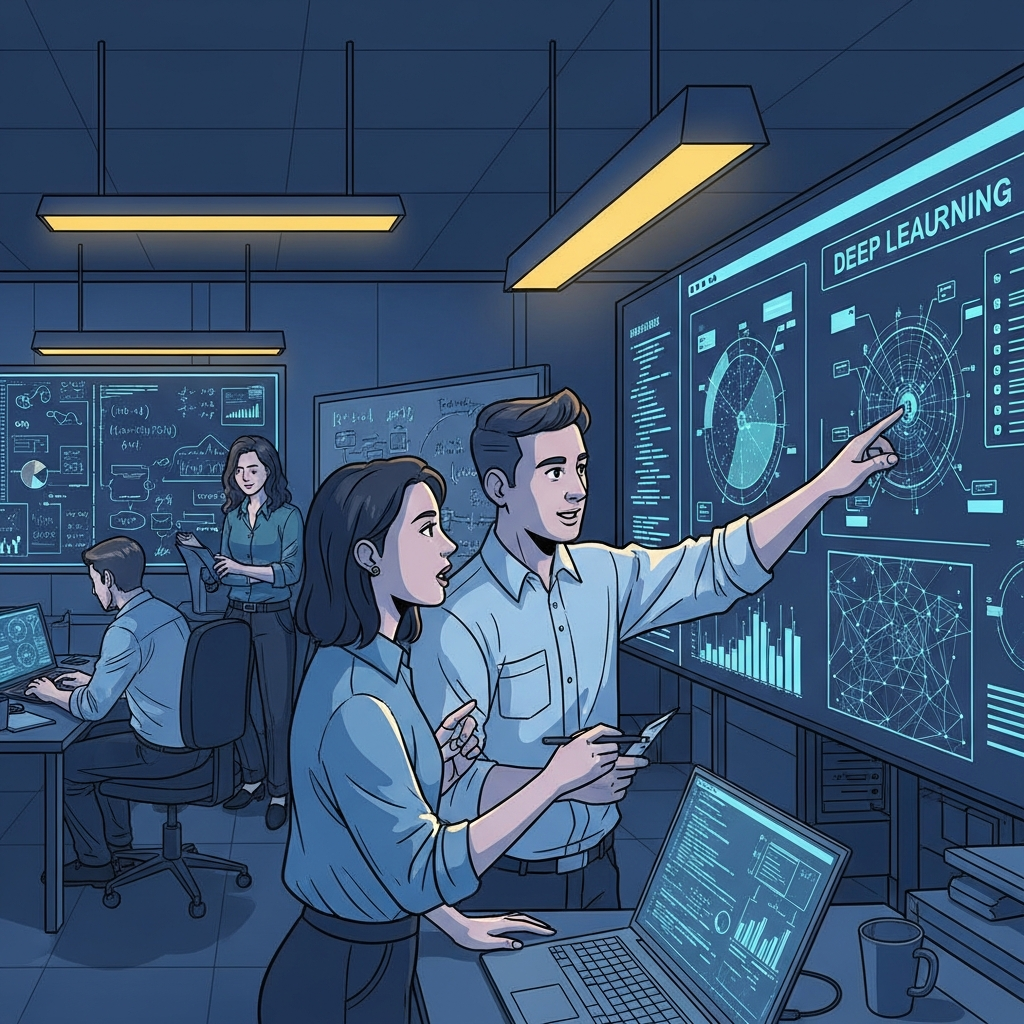 Looking at what’s next in 2026, the toolkit for a data scientist using artificial intelligence will be a lot more advanced. People in this area will use strong tools to make real AI systems. The job will not just be about simple analysis. Instead, it will be more about building smart apps that can learn and figure things out.
You will see deep learning frameworks used to set up neural networks. There will be APIs that help you connect with large language models. The platforms will let you automate the whole life of any machine learning project. If you take an AI engineering course in Hyderabad, you will learn these advanced tools in data science.
Now, let’s talk about the main technologies that will shape data science driven by artificial intelligence and machine learning.
Deep Learning Frameworks for Professional Growth
If you want to build a good career in AI, you need to get good at deep learning frameworks. They are important for your future growth at work. These frameworks give you what you need to make strong AI systems. This is true, especially for the ones that use neural networks. You find these tools at the heart of many new AI applications. People use them for things like computer vision and natural language processing.
TensorFlow and PyTorch are the two main frameworks. Google made TensorFlow, and Meta made PyTorch. Both of them are open-source, and many people in the community support them. They both let you build and train deep learning models in an easy way. Their high-level APIs and GPU support help to speed up your work.
You can use these tools for more than just research. These frameworks help people build ai systems that are ready to solve real life problems. To work in natural language, programming languages, computer vision, and other top fields like self-driving cars or medical jobs, you need to know these deep learning tools well. This is a key part of most AI jobs today.
APIs for Large Language Model Integration
The growth of large language models has changed things a lot. Application Programming Interfaces, or APIs, help people use what these models can do. Instead of building huge models yourself, which costs a lot, you can get them from companies like OpenAI, Google, and Anthropic. This means data engineers and data scientists do not have to start from zero.
These APIs let developers bring new natural language processing tools right into their apps. With just a few lines of code, you can make an AI agent that can sum up text, answer questions, write code, or make up something new. This makes it much easier for people to create strong AI features.
For data scientists, these APIs make working with text much quicker and better. They can help find what people think about something, sort support tickets, or pull out facts from papers, and all at a speed and quality not seen before.
AI Automation Tools and Their Impact
AI automation tools are changing the way people do business. These tools are not just for basic tasks. They use AI to handle things that are more complex. They help with making smart business decisions. This is where ideas like agentic AI matter. With agentic AI, an ai agent can work on its own to reach a goal.
There are many use cases for these tools. In customer service, you can see AI-powered chatbots and virtual assistants that answer questions. This lets people spend their time on harder problems. In marketing, AI automation tools help run ad campaigns. They do this by looking at results and making changes in real time.
AI automation is here to make business better, faster, and smarter. When companies let an ai agent take care of tasks that are boring or that use a lot of data, their people can do other jobs that matter more. This helps push the company forward in new and creative ways.
Career Scope: AI vs Traditional Data Science Roles in 2026
 By 2026, the job world in the field of data science will change in a big way. Some data scientist jobs, where the work is all about business intelligence, will still be important. But there will be more job openings for AI-related roles. Jobs like AI Engineer and Machine learning Engineer will get even more attention, because companies want to spend more on automation and smart systems.
In this section, you will look at what the future could be like, how much money you may make, and how fast these jobs will grow. This will cover main jobs in both the traditional data scientist area and the so-called AI-driven data science world. It can help you figure out the best way for you, as you step into this fast-changing field.
Data Analyst Roles & Future Trends
The role of a data analyst is an important way to start in the field of data science. People in this job collect and clean data. They also do the first step of data analysis and find main trends. Data analysts are good at data visualization. They make dashboards and reports that show what they learn to other people at work.
But the role is changing. Soon, data analysts will need better skills. They will have to use AI-powered tools to work with big data. The main goal will move from just showing what happened to also giving ideas about the future.
Future trends for data analyst roles include:
Increased Use of AI Tools: There will be more use of AI to clean data and do data analysis faster.
Emphasis on Storytelling: It will be more important to share insights in a clear and easy way.
Hybrid Skills: People who mix skills in data analysis with learning about the business will find better jobs and see their career grow.
Emerging Data Scientist Positions
The role of a data scientist is growing into more focused jobs. With more AI systems in use, there is now a growing need for an "AI Data Scientist." This person has the math and thinking skills of a data scientist. They also have the know-how to build and launch AI models.
To become an AI data scientist, you must grow some skills. You need to know a lot about machine learning. You should also be good at using deep learning tools. You have to work with new data, like pictures and text. You also need to code well and learn MLOps. This will help you run and take care of AI systems.
These new jobs now focus on bigger use cases. Some people make engines that suggest things to users. Others work on models that can understand natural language or see like people using computer vision. These roles lead the way in data mining and show us what we can do with data processing and the large amount of new data out there.
AI Engineer Opportunities in India
The need for AI Engineers in India is going up very fast. It is now one of the best jobs you can get in tech. An AI Engineer is someone who works to design, build, and set up ai systems. While a data scientist mostly works on looking at data and doing analysis, an AI Engineer is someone who makes things. They turn models to useful products. An AI engineering institute in Hyderabad can give you the training you need to get this job.
These workers know a lot about software engineering, artificial intelligence, and machine learning. They build things that act like human intelligence. For example, they might make an ai agent or a system to give people suggestions. There is high demand for these skills because companies from all areas want to use ai systems in their business.
Companies are putting money into artificial intelligence so they can stay ahead of others. Because of this, more and more firms need skilled AI Engineers who can build strong and big ai systems. If you want a job that pays well now and later, this is a good path.
Machine Learning Engineer Salary and Growth Direction
The role of a Machine Learning Engineer is growing fast, and it comes with good pay. A Machine Learning Engineer is the one who makes sure models made by data scientists will work well in real life. They use their skills in programming languages, big data, and MLOps to do this job.
There is more need for ML Engineers today because many companies want to make use of machine learning. As they try out new use cases, they need someone to take those cool models and bring them into action. So, having someone who can build and run these systems well is important. This is how a machine learning engineer helps turn new ideas into value for the business.
ML Engineers are paid more than most other jobs in data science. This is because the work needs deep knowledge of programming, big data, and putting machine learning into real systems. As companies go into AI, there will be more need for people who can work with both data science and software.
Job Growth Trends and ROI Comparison
When we look at job growth, AI-focused roles are expected to grow much faster than basic data analytics jobs. This happens because the return companies get from ai applications is often much higher. It matters what types of data a company uses and how it uses that data science.
Normal data analytics helps people see important information, but the return you get from it can be much less when you look at ai applications. AI can give companies a big boost. It can help them make new money or lower how much they spend by using things like automation. For example, when a company uses an ai-powered fraud detection tool, it can save a lot of money. Or, when a website uses AI to show each user what they might want to buy, sales can go up.
This high chance of earning more is why AI jobs are coming up so fast. On the other hand, data analytics gives better ways to do what a company already does, but the gain is not so big. That is why most companies now want to spend more money to find AI people and grow that part of their work.
India Salary Direction Across Roles
In India, people who have skills in machine learning and AI now earn the highest salaries in data roles. While a data scientist can get a good salary, an AI Engineer or Machine Learning Engineer will usually earn much more money. This happens because there is high demand for these skills, but not enough people who have them.
Starting salaries for jobs in AI and ML will usually be more than what a data analyst or a junior data scientist can get. When you get more experience and move to higher roles, the gap in pay gets even bigger. The top pay goes to people who can lead big AI projects and build systems that can grow and scale well.
There is more job growth and investment in AI happening in the Indian tech field now. So, this trend of high demand is likely to go on. If you take a generative AI course in Hyderabad or join a machine learning course in Hyderabad, you can have a better chance to get these well-paid jobs.
When to Choose Traditional Data Science
 Picking a career in data science can be a good choice if you like to use data to answer business questions and help make plans. This path is great for people who enjoy looking at and working with data, from cleaning it up to building models for predictive analytics. This field is all about using statistics and business intelligence.
If you like making reports, building dashboards, and sharing what you learn with others, then being a data scientist or data analyst in a traditional workplace could be the right job for you. Now, let's look at some times when this career path is the best fit.
Analytics-Focused Roles Explained
Analytics-focused roles are all about looking at data to find useful ideas that help with better business decisions. If you are good at spotting patterns and like to tell a story with numbers, then this path is for you. People in these jobs spend a lot of time doing data analysis. They also build predictive analytics models. Later, they show what they find to company leaders.
Some common use cases are checking if a marketing campaign worked, guessing what future sales will be, or looking at customer behavior to stop people from leaving. This work ties in closely with what the business wants to achieve, and you will see how your data work can change the plan and performance of the company.
For these jobs, you need to know about statistics, data visualization, and communication. The aim is not just to look at data, but to explain what you find in a simple way. Then, you can help the business grow by giving clear next steps that people can act on.
Business Reporting Careers
Careers in business reporting are one of the main paths found in traditional data science. These jobs are about making the reports and dashboards that help a company keep an eye on how well it is doing over time. If you are good at data visualization and like to make data simple for people to use, this could be a good job for you.
People who work in this field are often called BI analysts or data analysts. They know how to use business intelligence tools such as Tableau and Power BI. Their main task is to take raw data and turn it into clear and interesting pictures that share a story. This makes it easy for managers to quickly understand information that may be hard to follow otherwise.
Job growth in business reporting stays strong, because every company has to watch its important numbers, or KPIs. A career in this field lets you play a key role in helping leaders make choices, as you give them the clear and up-to-date data they need.
When to Choose AI-Focused Data Science
 A data science career focused on artificial intelligence is a good choice if you like new ideas and want to help build smart systems for the future. This path is for people who are interested in the front area of artificial intelligence, like deep learning and agentic ai. You get to create ai applications that can see, hear, and understand how things work in the world.
If you get excited about working with the latest ai systems and want to use ai to do things that have not been done before, then this field is for you. Now, let's take a look at the kinds of jobs and places where an AI-focused data science career stands out.
Research-Focused Career Paths
If you are very curious and like to solve hard problems that people do not have answers for yet, a job in research for artificial intelligence could be for you. Most of these jobs are at colleges or in research labs at big tech companies. The work here is all about making the field of AI better and moving it forward.
People in these roles make new ways to teach machines. They build new algorithms and ways for computers to learn. Some focus on deep learning, while others try new ideas in unsupervised learning to find hidden things in data. They also try to make models that work better and faster. The work in artificial intelligence research is both about theory and experiments.
To go down this road, you need to have a strong background in school, most people get a Ph.D. in computer science or a close field. This is a good path for people who want more than just using AI—they want to make new tools and shape the future of AI.
AI Product Development Roles
AI product development jobs are for people who want to make real AI applications that others can use. In this kind of job, you work with a team to take an AI idea and turn it into something you can see and use in the world. You do everything from planning the AI model to putting it into the app that people will use.
This is an exciting field that lets you get your hands dirty. You get to help build new and cool products. For example, you could help make a generative AI tool that makes art, work on a computer vision system for self-driving cars, or put together an AI agent for a new app. Here, the point is to put machine learning to use and make real value for users.
Examples of AI product development roles include:
AI Product Manager: Decides what the AI product will be and what it should do.
ML Engineer: Makes and puts out the machine learning models that run the product.
AI Full-Stack Developer: Connects AI features to both the front and back ends of an app.
Startup Ecosystem Opportunities
The startup world is full of new ideas for AI, and it gives great chances to people who have AI skills. Startups often lead the way in building new AI systems that change big industries. Life at a startup is fast, always changing, and you get the chance to make a big difference.
If you join a startup, you might get to do many things. You could do data processing, work with big data from social media, or help build and set up AI systems in the cloud. You may even help create a whole new AI service from the start.
These jobs are good for people who can change quickly, want to do many things, and like helping to make something new. If you take an AI developer course in Hyderabad, you can get the skills you need to do well in the world of startups where things move fast.
Large Language Model Integration Careers
With more large language models showing up, there are many new jobs for people who want to work with these tools. In the field, people use LLM APIs to help build products and add new services that make use of natural language.
You will find a lot of use cases in this area. Some people might be making an ai agent that talks and acts much like a person. Others may work on apps that use speech recognition to turn spoken words from meetings into text and make summaries. Some use these tools to build a search engine that answers questions in simple language.
If you want one of these jobs, you need good software engineering skills. It also helps to know about prompt engineering and how large language models work. This is a new and fast-growing field for people who want to help shape the future of natural language and AI.
Conclusion
To sum up, when we look at the future of data science, it is important to know the difference between old methods and new AI-driven ways. Traditional data science focuses on things like statistical modeling and working with structured datasets. On the other hand, AI brings automation, deep learning, and can work with unstructured data more easily. Because of this change, using AI is getting more important in many jobs, especially in fields that will change a lot by 2026. So, if you want to work as a data analyst, data scientist, or AI engineer, understanding these differences can help you plan your studies and career. If you want to know more about the world of AI, data science, deep learning, and data processing, you can book a free talk with our experts to help guide your future in this fast-growing field.
Frequently Asked Questions
What are the major differences between AI and traditional data science methods?
The key differences are about how complex they are and how much they use machines to do tasks on their own. In data science, people use machine learning with numbers and organized data. This also needs a lot of work and help from people. But in artificial intelligence, the ai systems use deep learning. They can look at both types of data—ones that are organized and ones that are messy or unstructured data. Their goal is to make choices by themselves without needing people all the time.
Which skills are essential for an AI data scientist in 2026?
In 2026, an AI data scientist will need to know how to use deep learning tools like TensorFlow and PyTorch. The person must be good at using programming languages such as Python. They will also have to know about MLOps to help with putting models to work. A good base in data analytics and knowing how to work with big data from different places will be very important for this work.
How do AI and data science courses compare for career impact in India?
AI courses in India, like the ones at an AI training institute in Hyderabad, help people get higher-paying jobs in product development and engineering. They can make a big change in your career.
Data science courses give you the basics for jobs in analytics and business intelligence. These roles are wanted too, but their growth may go a different way.
AI Course vs Traditional Data Science Course – What to Look For
When you need to pick between an AI course and a data science course, think about what each one teaches, what is happening in the field, the kind of experience you will get, and what skills you will learn. It is a good idea to find programs that focus on real-world use and new technology. This will help you stay ahead in the job market in 2026.
Curriculum Depth and Industry Relevance
When you look at curriculum depth, you need to see if it fits with what the industry asks for now. Programs that bring in hands-on work and new technology help students get the skills they need. This makes it easier for them to start working and gives them a better chance to get good jobs.
AI Integration in Course Content
AI in course content helps make learning more personal and fun. It helps change lessons to fit each student. As AI tools get better, students will get instant feedback. They can also get help that meets their own needs. This gets students ready for a world where data matters, and it works well with the ways teachers already teach.
Project-Based Learning Experience
A project-based learning experience helps you understand more by using both AI and data science with real-world examples. When you work like this, you use your hands and brain at the same time. This way, you build up critical thinking and learn to work with others. It is a good way to teach because it gets people ready for new jobs and changes in the industry.
Internship Opportunities and Real-World Exposure
Internship opportunities help the gap between what you learn in class and how you use it on the job, especially in data science and AI. When students have real-world experience from internships, they pick up key skills. This makes them strong candidates when looking for work in the changing job market by 2026.
Placement Support for Indian Students
Placement support is very important for Indian students, especially as AI grows. Schools and colleges are making their career services better. They offer things like job fairs, help with getting internships, and programs to build new skills. These resources match what different companies need right now. With this help, students can step into the changing job world in a good way.
Future Outlook – Will AI Replace Traditional Data Science by 2026?
AI will help make data analysis better, but it is not likely to take over traditional data science by 2026. People and AI will work together, using both human intuition and the speed of AI. This way, data science will become stronger, and we will find better answers as the field grows.
Evolution of Roles: Hybrid AI + Analytics Professionals
AI technology is getting better over time. Because of this, jobs in data science are changing. People working in this field now need to mix AI skills with analytics. This will help them make better choices and bring in new ideas. To keep up, everyone has to keep learning about new tools and ways to do things. These changes in data science shape how the work is done today.
Skill Convergence in Data Science AI
Skill convergence in data science and AI means bringing together technical and thinking skills. As there are new tools, people working in this field will need to mix their knowledge from both areas. This mix will help bring new ideas and make better choices in many types of jobs by 2026.
Long-Term Industry Outlook for India
India’s future in data science and AI looks good. By 2026, more people in India will use AI at work. This will make things run smoother and help create new ideas in many fields. Still, data science will keep being very important and play a big role.
AI vs Traditional Data Science: Which One Delivers Better ROI?
AI typically delivers better ROI compared to traditional data science methods due to its ability to process vast amounts of data quickly and efficiently. AI models can uncover insights and automate tasks, leading to faster decision-making and reduced operational costs, ultimately enhancing profitability for businesses.