





.png%3Falt%3Dmedia%26token%3D0b104c10-44a9-474f-8d6a-bbc90a32511f&w=3840&q=75)
AI Agents vs Chatbots: What’s the Difference in AI Careers?
Key Highlights
An ai chatbot mainly answers questions and handles routine customer support with set flows.
An ai agent goes further and can act with more autonomy to complete tasks.
The key difference is action versus reply within artificial intelligence systems.
Businesses want agentic ai because it can use tools and work in real time.
Chatbots fit simple requests, while agents suit complex workflows and changing situations.
In 2026, this choice shapes customer support quality, speed, and productivity.
Introduction
If you want to know about the difference between an ai agent and an ai chatbot, start with this basic idea. An ai chatbot talks with people and gives answers to their questions. An ai agent does the same thing, but it can also plan, make choices, and take action without a lot of help from people. This change is important for artificial intelligence jobs, products, and business work. It is also important for you if you are thinking about taking ai courses in hyderabad at SocialPrachar to get new skills for the future.
What Are AI Agents and Chatbots?
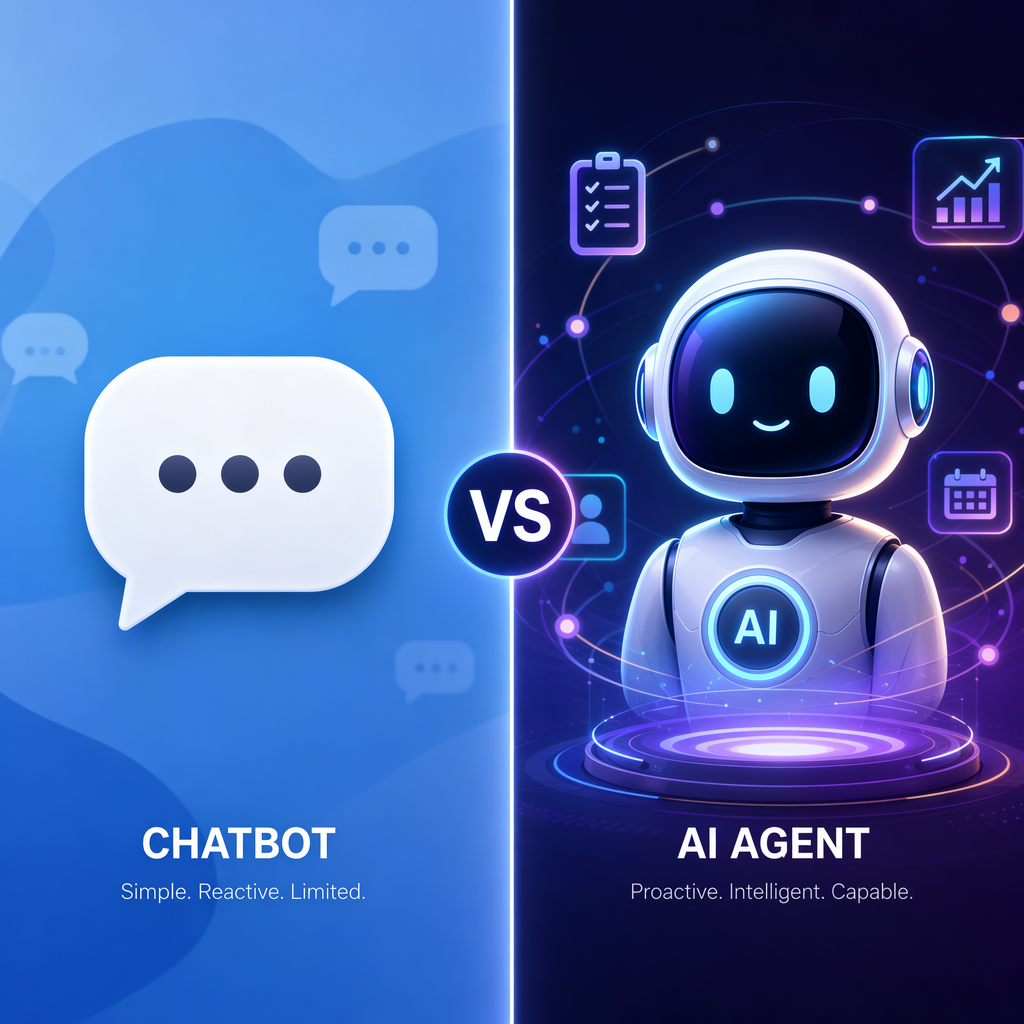 An ai chatbot is a simple chatting tool that talks with people using text or voice. It uses natural language understanding or easy matching methods to answer questions, help people, and be part of set service flows.
An ai agent, on the other hand, does more by itself. It gets a goal, breaks it down into steps, and can use tools. It works inside artificial intelligence systems to move work forward. The big difference is that an ai chatbot mostly gives answers. An ai agent can think, pick what to do, and get things done. Now, let’s have a closer look at chatbots first.
Definition of Chatbots and How They Work
An ai chatbot is software that talks with people using chat or even voice. The job of this type of tool is simple. It is there to answer questions, give relevant information, and help with routine specific tasks. Most times, there is no need for a person to jump in. Many businesses use an ai chatbot to help with response times and to take stress off their support teams.
Traditional chatbots use simple rules. These chatbots look for common phrases or certain keywords. Then, the traditional chatbots give back answers that are written ahead of time. Some can also walk a person through menus. This makes them good for things people ask often—like checking store hours, order status, getting password help, or booking an appointment.
The more advanced AI chatbots use basic natural language processing and large language models. This helps them understand natural language better. Still, most of these chatbots follow a set path while talking. They give answers when you ask them, but they often will not make their own workflow as agents do. The line between the chatbot and an agent will clear up in the next part.
What Are AI Agents? Key Features Explained
An ai agent is a system that can work on its own toward a goal. After you give it an initial prompt, you do not have to tell it what to do at every step, adapting to user preferences. This is one reason agentic ai gets a lot of attention. It does more than talk with you. It can take action and focus on getting things done.
What makes an AI agent work on its own? It can look at a situation, break down a goal into smaller tasks, and choose the best course of action. It can also use external tools when needed. For example, it may connect to databases, applications, or even a web browser. This lets it gather new information and complete tasks.
These things make AI agents different from chatbots. Agents can support complex workflows and handle harder decision-making. They can also chain together more steps to finish a job on behalf of a user. AI agents can remember and adjust over time too. Instead of just responding to you, they are built to keep going until the task is complete.
Major Differences at a Glance
The key difference is simple to see and easy to remember. An ai chatbot waits for you to write something, and then gives a reply. It is mostly reactive. An ai agent, on the other hand, is more active. It can keep going after you give the first instruction. It will try to finish the work on its own.
There is also a difference in scope. An ai chatbot works with a script, knowledge base, or has just a few things it can do. An ai agent has a broader scope of knowledge. It can use tools, systems, and even real-time info. This helps the agent decide what to do next.
You can think about it like this. A chatbot will tell you what to do. An agent may take action and do it for you. The agent knows how to look at the options, choose the best course of action, and manage the steps one after the other. That is why many people and businesses compare the key differences between an AI chatbot and an AI agent in this breakdown of the differences, instead of thinking they are just the same thing.
Diving Deeper Into Chatbots
Chatbots are still key in customer service because many tasks come up again and again. A good AI chatbot helps with customer support processes by handling lots of requests, letting people find answers themselves, and making wait times shorter. For many teams, this makes things work better right away.
But not all bots do things the same way. Traditional chatbots rely a lot on set paths, while newer bots use natural language understanding for a smoother experience when people type questions or other user inputs. These new AI assistants may seem like chatbots, but they are often not exactly the same. The next parts will show you why.
Rule-Based Chatbots and How They Function
Rule-based chatbots are the simplest kind of ai chatbot. They work by following clear steps, like "if this happens, then do that." When you type some common phrases, the bot looks for a match to set replies it has ready. This makes them good for customer support that follows a set plan.
Because there is not much room to change the flow, these bots answer best when the questions are simple and repeat a lot. They can answer questions about delivery, return policies, account settings, and booking steps. They work well in menus where you pick an option, not when you write a long sentence.
There is a limit to what these bots can do. If a request is outside of what is programmed, the chatbot might not help or may ask you to try saying your question in a new way. Rule-based ai chatbots do not plan, think ahead, or link one step to many others. They are good for simple jobs, but not when your problem changes or has many parts.
AI-Powered Chatbots and Conversational Interfaces
AI-powered chatbots are more flexible than rule-based bots. They use things like large language models, generative ai, and natural language processing to get what users say in a more natural way. This helps customer service technology feel much more smooth and less like a script.
You see this in tools such as ChatGPT, Microsoft Copilot, and other virtual assistants. These tools can take in broader user inputs, suggest what to do next, and give helpful answers in natural language. Some can also connect to APIs, so they can do even more.
But AI assistants and AI agents are not just chatbots. Most AI assistants are still reactive. They need someone to ask them things and usually work inside set rules. These assistants help users well. But they often do not have the deeper skills, lasting memory, or full task control that AI agents want to give.
Common Chatbot Examples in Indian Businesses
Many Indian businesses use ai chatbot tools for customer support in front-line roles. Companies get the most from these bots where things move fast and questions come up again and again. They help customer support teams do their job without having to bring on more people for every task.
You will see these chatbots being used by retail shops, banking firms, places that answer education questions, and many service websites. The main value is that they handle simple requests quickly. This helps with customer satisfaction and keeps things running well day-to-day.
Some typical use cases include:
Website bots that can answer common questions and send users to the right place
Online shopping helpers that give people updates on orders or deliveries
Bots for booking appointments that walk you through each step
Chatbots that help with minor fixes for common support problems
Assistants that offer account details or information about the service
These are good examples of where an ai chatbot does its best work. In cases where the job is not so clear, other AI tools can be even more helpful.
The Rise of Autonomous Agents in AI
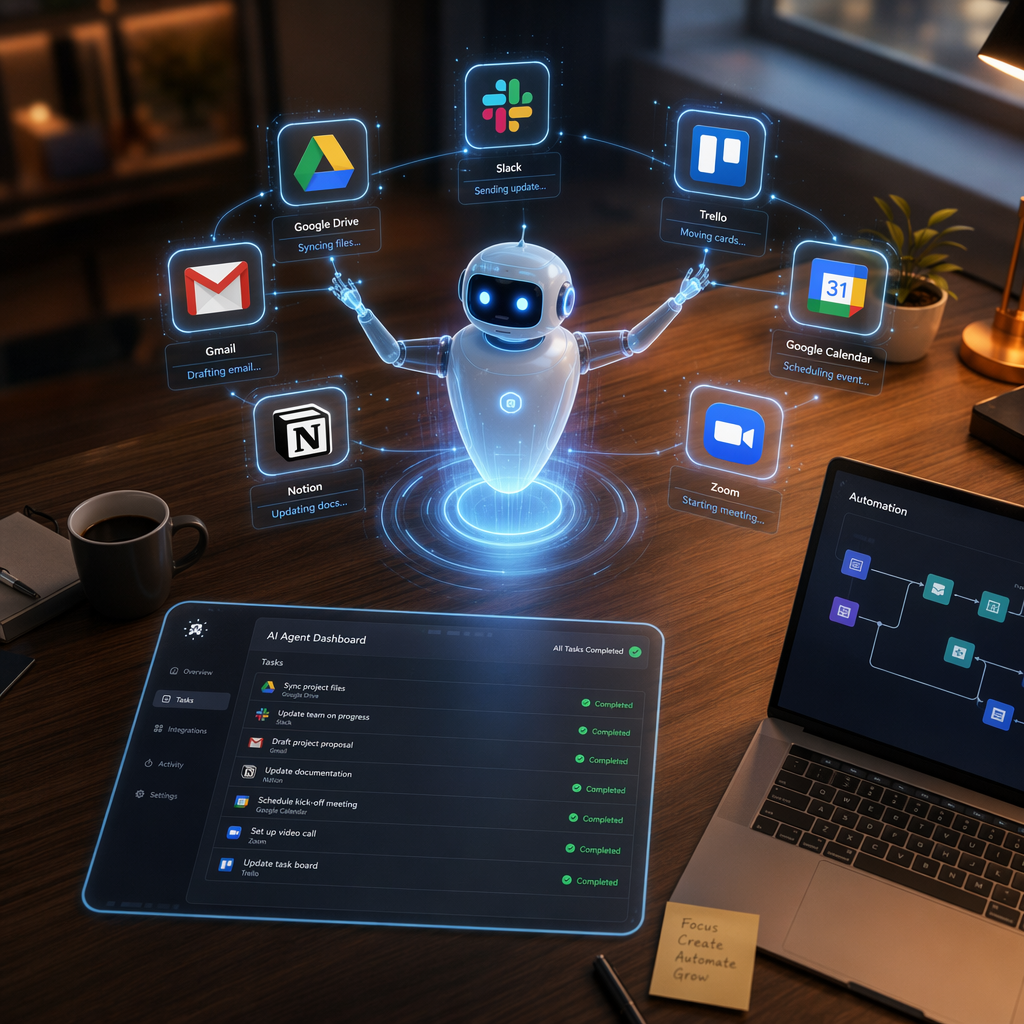 Now, the focus is moving to autonomous agents. The goal for businesses is to have systems that do more than just chat. They want an ai agent that can finish tasks with many steps, use tools, and keep the work moving without much help from people.
This is why agentic ai is starting to get more notice. It uses machine learning, large language models, and connected systems. Autonomous agents can help people work better and get more done on their own. These tools are now key because they do jobs that, in the past, needed a lot of care. Here is how they work.
How Autonomous Agents Operate
An ai agent starts with a goal. Then, it looks at what is needed and makes a list of steps. After this, it goes through these steps, one at a time. It does not wait for a new prompt each time. The ai agent keeps working until it gets a result that is useful or finds it needs some help.
The strength of the ai agent comes from mixing language skills and action. The ai agent can use external tools and connect with other systems. It can get new details from outside its training data. In some cases, it can use a web browser or computer programs to finish tasks.
This setup helps agent efficiency. Chatbots mostly talk to people in a back-and-forth way. Ai agents do more. They understand things, make plans, use tools, and act. That is what makes ai agents different from chatbots. Ai agents do not just talk with you. They take action and have a bigger role in business work.
Decision-Making and Multi-Step Task Execution
One big change with an ai agent is how it makes choices. The system does not just look for an answer to match the question. It thinks about the goal, checks the options, and then picks what to do next. All this happens within the limits set for it.
This is very important in multi-step tasks. The agent can split a big job into smaller parts. It can find what has to happen first and finish each step in order. This helps a lot with complex workflows, like fixing problems, routing, doing research, or handling tasks in different systems.
These advanced capabilities make agents different from chatbots. A chatbot may list the steps, saying, “Here are the steps.” But an ai agent may do the steps, check how things are going, and change its plan when it gets new information. Because agents work this way, businesses see them as more than just better chat tools. They know these tools can get real work done.
Why AI Agents Are the Future of AI Assistants
AI assistants are good for help because they react when you ask them something. But an ai agent does more. It takes action on its own. This means the ai agent will keep going after your first instruction. Because of this, it works better when you want bigger workflows or when business needs change.
That is why many people believe agentic ai is the next step for AI assistants. In customer service or company work, more businesses now want tools that not only talk but take action to provide effective support. The goal is to get better results, need less manual follow-up, and give more proactive support.
Why does this matter?
Agents can finish tasks with less human intervention
They can link tools and systems in one simple flow
They help with broader workflows, not just what you get from normal assistants
Will AI chatbots turn into autonomous agents? Some will get new advanced capabilities, but not every chatbot needs to be one.
Comparing Chatbots and AI Agents in Practice
You can see the difference between an ai chatbot and an ai agent when there is more to do than just give one answer. An ai chatbot is good for customer service interactions that are simple. It is best when you have a clear question and the answer does not change.
An ai agent does more. It is better to use when you need someone to use good judgment, handle tasks with more steps, or get real time updates from other systems, aligning with user needs. The advanced capabilities of an ai agent really help in these cases. To make it clear, let's look at a simple side by side comparison.
Side-by-Side Comparison Table: Features & Capabilities
Here is a simple text table showing the key difference between an ai agent and an ai chatbot. Use it when you need a quick decision view.
Feature | AI Chatbot | AI Agent |
|---|---|---|
Purpose | Answers or guides | Works toward a goal |
Autonomy | Low | Higher |
Decision-making | Limited | Stronger |
Task execution | Single-step or narrow | Multi-step |
Tool use | Basic or fixed | Chooses and uses tools |
Scope of knowledge | Narrower | Broader scope of knowledge |
Response times | Fast for simple queries | Fast, but may also act |
Memory | Often limited | Better potential for persistence |
In short, chatbots are built for conversation-first support. Agents are built for action-first support. That is why both matter, but not for the same jobs.
Real-World Tasks Only AI Agents Can Do
Some work is just too deep for a normal chatbot to handle. This is where an ai agent stands out. It can take your goal, get new information, use external tools, and finish a group of steps all in order.
These kinds of complex tasks show how things change from just talking to real automation. The agent does more than help you think. It gets the work done, too.
Examples include:
Fixing a billing issue by checking records, taking the right steps, and updating what has changed
Rebooking a service after looking at options and making everything right
Sending requests to the right place by looking at what people say
Giving after-hours help that needs to go into the system and check back
A normal chatbot cannot usually do all those tasks from start to finish by itself. AI agents can, so businesses want to use them for harder and higher-value work.
Simple Use Cases for Both Technologies
Both tools have something to offer. The best one to use depends on what the customer needs, how hard the task is, and how much the system needs to do. You do not always need the most powerful choice to make something good.
For simple tasks, an ai chatbot can be enough. When you need to handle more steps, an ai agent is a better tool. Many businesses use both together. This way, customer support stays quick for basic questions, while tackling challenging issues receives more help with ai agent automation.
Common use cases include:
Chatbots for FAQs, store hours, returns, and booking flows
Chatbots for order status and known troubleshooting steps
AI agents for advanced issue resolution and ticket routing
AI agents for workflows that require tools, context, and follow-through
This mixed setup helps a business with simple tasks and fast support, but also lets them solve harder issues when needed. It is a good way to match customer needs and grow with time.
Real-World Applications in Indian Businesses
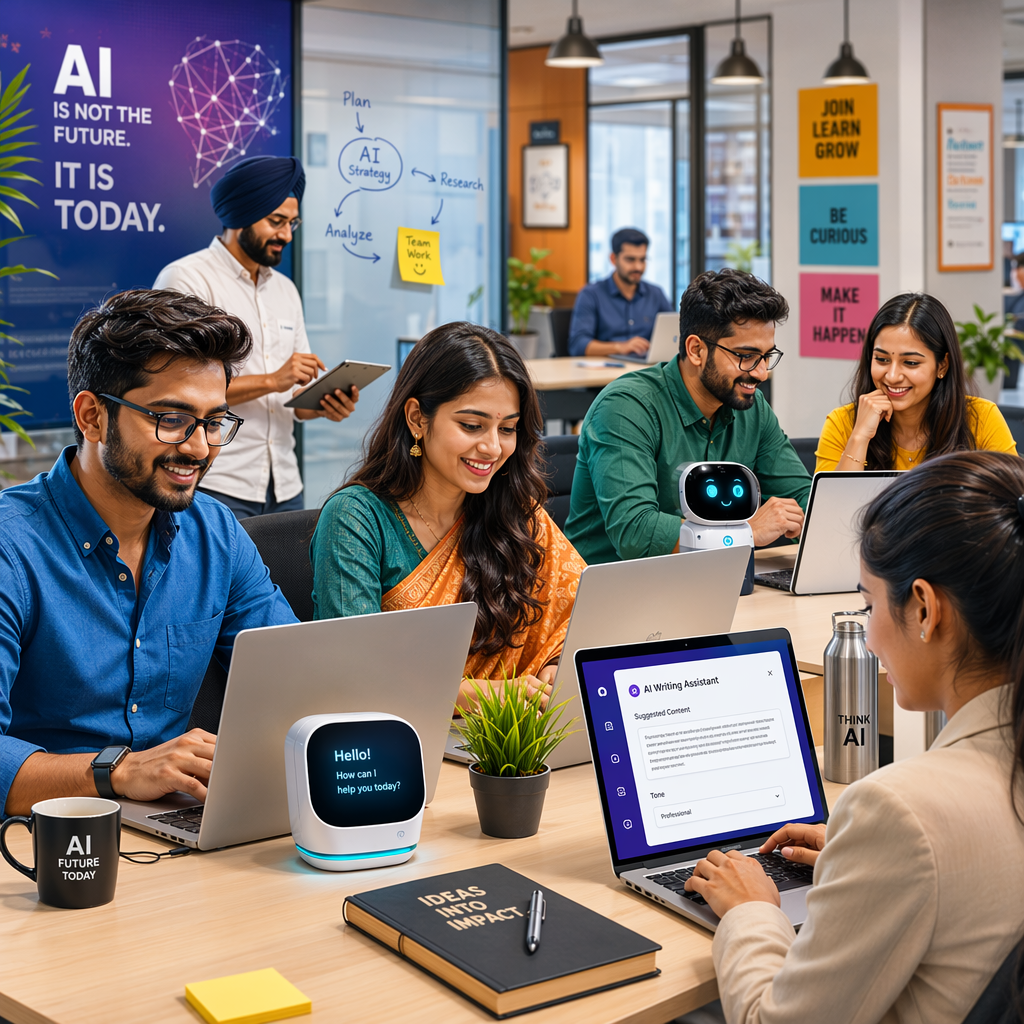 Indian businesses use both systems when speed, size, and service quality are important. An ai chatbot helps when they need to talk to lots of people fast. An ai agent is better for doing hard tasks and fixing tricky problems in the workflow.
This change is big for customer relationship management, in-house tasks, and customer experience. It also changes how customer service teams use their time. Companies do not have to treat every job the same now. They can pick the best tool for each kind of work. Here are the main ways to use them.
Chatbots for Customer Support, FAQs, and E-commerce
An ai chatbot is good in customer service when the job is simple and happens a lot. The bot can give answers to FAQs, help people use self-service, and reply to customer messages all day and night. This can cut wait times and automate repetitive tasks, making things the same each time.
In e-commerce, an ai chatbot can help even more. They make it easy for customers to check order status, learn about return rules, find product facts, or finish simple booking and support steps. This means people get help faster and do not always have to wait for a human team to step in.
There is a clear business gain. Companies can raise customer satisfaction and meet increasing customer expectations while having their staff do less support work. Response times improve, more help is open, and easy problems get solved faster. If the talk is simple and easy to guess, an ai chatbot is still one of the best ways to manage customer service.
AI Agent Applications in Research, Coding, Marketing, and Automation
An ai agent is more helpful to people when the work happens in steps and uses more than one system. It does not just answer you. It can help with things like research, coding, data analysis, and also different business jobs. This is the main reason why businesses find it better for important work.
One of the biggest benefits is that the agent helps you own the workflow. It can find out what is going on, plan what to do next, and use different tools. It also keeps working to get the result you want. This makes the agent much stronger than a simple chatbot, mostly when things change often.
Common examples you may see are:
Research agents that help get and organize relevant information
Coding agents that help with software tasks or code writing
Marketing agents that help with content creation and workflow
Automation agents that move, update, and take care of business tasks
These examples make it clear why an ai agent is needed for today’s business work.
Conclusion
To sum up, it's important for businesses to know the difference between AI agents and chatbots if they want to use the full power of artificial intelligence. Chatbots are good for simple jobs and talking to customers. AI agents bring advanced capabilities and can work on complex choices and processes that take more steps. As we look into the future, more companies will take advantage of these innovations and start to use autonomous agents. This means things will get done faster, better, and in new ways. Your users will have a better time, too. Now is a good time to see what these technologies can do for your business. Stay ahead by signing up today and step into the world of AI!
Frequently Asked Questions
Are AI assistants, autonomous agents, and chatbots the same thing?
No. An ai chatbot is mostly used for talking with people, and many times you will see it in customer support. An ai agent in agentic ai has more freedom and can take action to reach goals on its own. AI assistants are in the middle. They use natural language to understand what you say pretty well, but many of them still wait for you to tell them what to do, instead of working on their own like autonomous agents.
What should businesses consider when choosing between chatbots and AI agents?
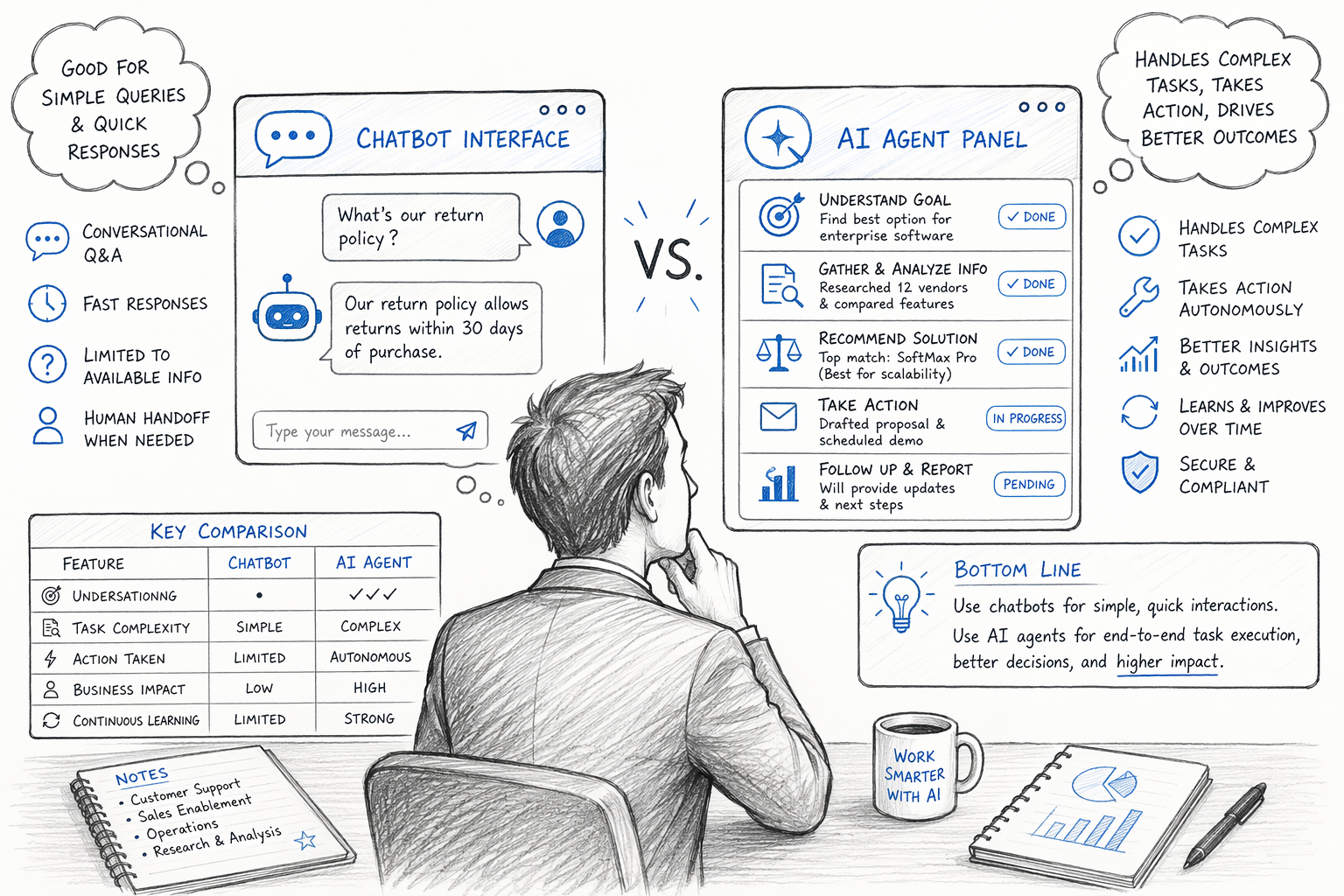 Begin with what the customer needs. If your work is simple, repeats, and uses a knowledge base, pick an AI chatbot. If you deal with complex customer problems, need to use tools, or want help with tasks that have many steps and less people involved, and better support for choices, go with an AI agent, especially if you consider the complexity of your support needs.
Will AI chatbots eventually evolve into fully autonomous agents?
Some will do this. As models get more advanced, an AI chatbot might get closer to being an AI agent. But, not every business will need full agentic AI. Many will want to use both human agents and chatbots at the same time. Chatbots can handle simple chats, while agents can be used for more complex workflows, deeper automation, and actions.
If you want to take your next step in learning, SocialPrachar can also help you find the right path. You can get started with an ai training institute in hyderabad, an ai developer course in hyderabad, an ai engineering institute in hyderabad, a machine learning course in hyderabad, or a data science course in hyderabad.