








How AI Chatbots are Transforming Customer Support with NLP
Key Highlights
AI chatbots are changing customer support with artificial intelligence and natural language processing.
They provide 24/7 assistance, which improves the overall customer experience.
Using AI helps businesses automate tasks, reduce costs, and increase efficiency.
Natural language processing allows chatbots to understand and respond like humans.
This technology leads to faster response times and higher customer satisfaction.
Many industries in India are now using AI chatbots for better customer service.
Introduction
Welcome to the future of customer support! You might notice that some companies answer your questions right away, no matter what time it is. The reason for this is often artificial intelligence. Many use AI chatbots to help you. These smart tools are changing how companies talk with you. They use natural language processing to provide accurate responses that meet your needs. That means the chatbot can understand what you want and give answers just like a real person. In this guide, you will learn how these new technologies are changing customer service and making the customer experience better for all of us by using natural language, artificial intelligence, and new ways to work.
The Rise of AI Chatbots in Customer Support in India
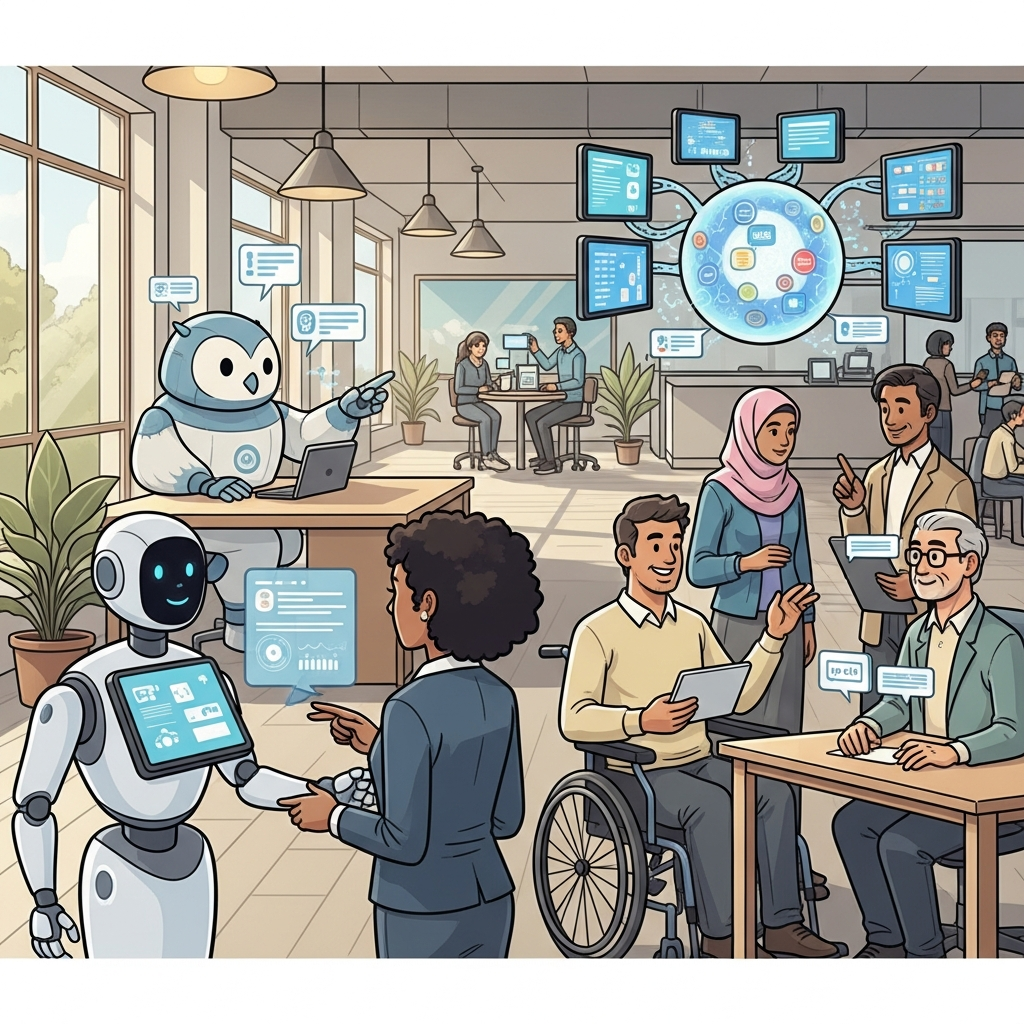 AI chatbots are quickly changing customer support in India. As people expect fast and reliable help, businesses now use artificial intelligence to keep up. This is making it easier and quicker for companies to give good customer service.
These tools are more than a passing fad. They mark a big change in the way companies handle customer interactions. Now let’s see how this technology is growing, why Indian businesses want it, and the shift from old support ways to new conversational AI.
Growth of AI-powered customer service across industries
The use of AI-powered customer service in contact center operations is growing fast in many fields. You can see this in e-commerce, banking, healthcare, and travel. More companies now see how much it helps to use AI for customer support. This tech lets a business handle many customer queries at once, without lowering the quality.
Different industries get a big boost from these changes. In retail, for example, chatbots help people while they shop. In banking, chatbots answer questions about accounts. The way companies use customer service tools like these means they are working to make things run smoother and to meet customer expectations and what customers want today. However, companies can face several challenges when implementing AI chatbots for support, such as integration with existing systems, ensuring accurate and natural responses, managing customer data privacy, and maintaining the technology as customer needs evolve.
AI chatbots take care of the simple customer interactions. That gives human workers time to handle more complex issues, which in turn boosts agent productivity. It also helps make things go faster, which means customers get answers quickly and have a more seamless experience. Everyone benefits—customers get better service, and companies enjoy more operational efficiency.
Why Indian businesses are choosing support automation
Indian businesses are now using support automation more. This helps them stay ahead and handle more customer needs and customer requests. The main reason for this change is that people want better customer service all the time, not just during business hours. Support automation helps with this, so support teams do not get too tired.
Saving money is another big reason. It costs a lot to hire and teach a big customer service team. AI chatbots can talk to many people at the same time. This lets these businesses grow their customer service with fewer costs.
Here are some top reasons why this is happening:
24/7 Availability: Customers get help whenever they need it—even late at night.
Cost Savings: Keeps costs down because there is no need for a huge support team.
Increased Efficiency: Handles simple tasks, so people in support teams can focus on complex issues.
Improved Customer Satisfaction: Fast response times make customers happier.
Transition from traditional to conversational AI models
The world of customer support is changing. Old systems were not flexible, and the chatbots could only answer certain questions. If you asked something in a different way, they would not know what to do. This left people feeling upset due to the lack of a human touch. When integrating AI chatbots into existing support systems, best practices include ensuring seamless handovers to human agents for complex inquiries, training the AI on company-specific FAQs to boost accuracy, and regularly updating the system to improve conversational abilities. It's important to maintain clear tracking of customer interactions so users don't have to repeat themselves during transitions between AI and human support.
Today, businesses are using conversational AI. This new technology understands what you say and looks at the meaning behind your words. Talking to these models feels more natural. It seems almost like speaking to a real human agent.
This change is important for customer experience. Conversational AI can solve more problems, learn from talks, and give support made just for you. It moves from basic answers to real solutions, which helps both companies and the people they serve.
Understanding AI Chatbots and Conversational AI
So, what are these tools? An AI chatbot is a smart program that can talk to you like a person. It uses text or voice. The chatbot works as a virtual AI agent. It will help you with your questions or tasks. These chatbots aim to build conversational interfaces that make working with technology simple and easy.
This technology uses conversational AI to work. It lets the chatbot know what you are saying. The chatbot can reply in a smart way. Now, let’s look at the basics of AI chatbots. We will also see how they are not the same as the old bots. You will learn how NLP fits in to make human conversation better.
Definition and basics of AI chatbots
An AI chatbot is a powerful software tool. It works as a virtual AI agent for customer support within a mobile app. This chatbot uses artificial intelligence to understand and reply to customer queries as they come in. Unlike simple bots, an AI chatbot manages tricky talks and gets better after every chat with people.
The main job of the AI chatbot is to handle talks on its own and give quick help. This helps the chatbot experience be much faster and smoother because customers get answers right away. They do not need to wait for any human agent to join and help out.
Here are the main parts of an AI chatbot:
Natural Language Processing (NLP): This part helps the bot get what people say in natural language.
Machine Learning (ML): This lets the bot get better with time by learning from data and past talks.
Conversational Interface: This is the place, like text or voice, where you talk with the bot.
Knowledge Base: The bot keeps all its info here to use when giving answers.
An AI chatbot brings machine learning, natural language processing, and a strong knowledge base together to help solve customer queries. Using artificial intelligence, it can improve customer support for any business.
Rule-based bots vs conversational AI
It's important to know the difference between older rule-based bots and modern conversational AI. Rule-based bots are the chatbots of the past. They operate on a fixed set of rules and pre-programmed scripts. They can only respond to specific keywords and phrases, making their conversational abilities very limited.
On the other hand, conversational AI uses artificial intelligence, machine learning, and natural language processing to understand the user's intent. This allows for much more flexible and natural customer interactions. These bots can understand context, handle variations in language, and learn from conversations to become smarter over time.
While rule-based bots are good for very simple, repetitive questions, conversational AI is far more powerful for creating a truly helpful and personalized customer experience.
Feature | Rule-Based Bots | Conversational AI |
|---|---|---|
Flexibility | Rigid, follows a script | Flexible, understands context |
Understanding | Keyword-based | Understands intent and meaning |
Learning | Does not learn | Learns from every interaction |
Conversation | Unnatural, robotic | Natural and human-like |
How NLP bots enable smarter conversations
NLP bots use natural language processing to make conversations smarter. This technology lets chatbots understand human language, including small details and feelings. The bot does not just read your words. It also gets what you mean behind them.
These bots look at your text or speech to find out what you want. Are you asking something, complaining, or giving praise? NLP helps the bot know this and answer you in the right way. This skill helps the bot see your customer needs better. It is what makes one bot basic and the other intelligent.
By seeing meaning, context, and feelings, NLP bots make customer interactions feel more personal and useful. They can manage many types of questions or concerns. The responses they give are more relevant to you and provide relevant information. This makes the conversation good and satisfies the customer.
How AI Chatbots Use Natural Language Processing (NLP)
 Natural language processing is the thing that makes AI chatbots work so well. It is a part of artificial intelligence that helps computers understand, read, and make human language. With natural language processing, chatbots connect how people talk with how computers work.
This technology lets a chatbot do more than just find keywords. It helps the bot understand what you mean and the background of your words. This deep kind of natural language understanding is important for getting what customers need. Let’s look at what natural language processing is, how it picks up on intent, and how it helps make chatbots talk like people.
What is NLP and how does it work in chatbots?
Natural language processing, or NLP, is a part of AI that helps computers understand human language. This can be written words or words we speak. With chatbots, NLP helps them get what we mean. The chatbot takes our text or speech, which is not always neat or clear, and changes it into a way the machine can work with.
There are a few steps in this process. First, the chatbot uses NLP to clean up and standardize the text. Then, the chatbot splits what you type into smaller parts like words or short phrases. With machine learning, the chatbot looks at these parts to figure out what you want and finds the most important details.
When you talk to a chatbot instead of typing, speech recognition turns your voice into text before starting natural language processing. All of these steps help the chatbot know what you said, understand it, and answer back in a short time. It uses machine learning and natural language tricks to help people and chatbots talk to each other.
Intent recognition and context understanding
Two of the most important things NLP lets chatbots do are intent recognition and context understanding.
Intent recognition helps the bot figure out what the user wants. For example, when you type "my order hasn't arrived," the bot knows you want to track your order.
Context understanding goes a bit further. It lets the chatbot remember what was said before, so it can answer better. For instance, if you ask, "What about the blue one?" the chatbot knows you still mean the shirts you were just talking about. This is important because it helps the chatbot meet your customer needs in a good way.
When you use both intent recognition and context understanding, chatbots can answer complex customer queries more accurately. They do not just answer one single question. Instead, they follow the whole conversation. This makes your experience with them better and helps most people get the help they want.
Human-like responses and continuous learning
The main goal of a chatbot that uses natural language tools is to give answers that are right and sound easy for people to read. With natural language generation, which is a part of these tools, the chatbot can build sentences that are correct and fit well with what people say. This helps make customer interactions smoother and more like real talk, which is very good for customer satisfaction.
These chatbots always learn from every chat they have. Each time people talk to the bot, it gets new info that it can use to do a better job. By using machine learning and deep learning, the chatbot gets to know the way people use words and can guess what people may want next, over time.
This cycle, where the chatbot talks to people and learns more from them, makes sure the chatbot gets smarter and works better after every talk. Being able to change and learn, while collecting valuable data, is important for making customers happy, and it lets the bot answer more and more kinds of questions as people use it.
Automation of Customer Support Tasks by AI Chatbots
AI chatbots are great tools for making work easier in customer service. They make it simple to handle a lot of tasks that can take too much time and are the same each day. Because of the chatbot, people working in customer service can have more time to do bigger and more important work. The use of automation makes all parts of the support process smoother, from the first question by a customer on social media to the final answer.
A chatbot is an AI agent that helps with customer service by being the first to talk with the customer. These bots answer common questions, check if a person could be a good lead for the business, and can even help users get through hard processes. The most advanced chatbots utilize generative AI to enhance their effectiveness. Next, let’s see some ways chatbots help with jobs like ticketing, picking leads, and other main steps in customer service.
Ticketing and FAQ automation for support teams
One of the biggest plus points for support teams when using AI chatbots is that they can take care of ticketing and answering common questions automatically, enhancing the overall customer service experience. Chatbots can reply fast to questions about shipping, returns, or account information. This means a lot of the questions people ask don’t have to be sent to real agents.
If the customer question is too tough for the bot, it creates a support ticket on its own. The chatbot grabs the info from the person and sends the ticket to the right department. With all the needed details, agents can fix problems faster.
This automation helps the team be more efficient. It also increases how often issues get solved.
Instant FAQ Answers: Gives quick answers to common questions.
Automatic Ticket Creation: Collects customer info and makes a ticket.
Smart Routing: Sends tickets to the right team or agent.
Reduced Workload: Lets support teams work on big, important issues.
Lead qualification and onboarding automation
AI chatbots do more than just answer questions. They are great tools for sales and help your business grow. With a chatbot, you can make lead qualification much easier. The chatbot talks to people who visit your website. It asks questions that matter, gets their contact details, and helps sort them. When a user shares answers, the chatbot can find out if they are a good lead. If they are, it sends them to the sales team.
Chatbots are also needed when it comes to helping new customers. They show people how to get started, walk them through steps, and tell them about important features. Chatbots are here to answer early questions as well. This way, new customers get a good start with your service. This smooth welcome is key for people to stick with your brand for a long time.
When chatbots do work like this, they collect helpful customer data. They learn about customer preferences, what people like, or what their business needs. Along with account information, this data lets you give each person a better and more personal experience right from the start.
Workflow automation in customer service
Workflow automation helps chatbots do better in customer support. These chatbots connect to many business tools and work through steps, so people don’t need to do everything by hand. For instance, a chatbot helps a customer check their order status and return something. It checks the order, makes a shipping label, and updates the inventory. All this is done in one talk with the customer.
The automation helps the business run better. It takes away some tasks from support teams and helps reduce mistakes. By linking each part of the support process, chatbots make things smoother and easier. This is good not just for customers, but also for the people who work there.
At the end, workflow automation helps support teams get more work done in less time. When chatbots take care of easy tasks, human agents have time to handle customer issues, work on building good relationships, and bring more value to the business.
Key Benefits of AI Chatbots in Customer Service
The advantages of using AI chatbots in customer support stand out. They help boost customer engagement and address common issues. Chatbots can cut operational costs in a business. They also be good at making response times faster. If you want your customer service to be better and scale up while keeping its quality, chatbots are important.
Chatbots work around the clock, providing consistent support. This means customers can get help any time. They give support in different languages and try to make it feel personal. There are many good points to using a chatbot for customer support and customer service today. Let’s look at some of the biggest benefits that make AI chatbots something every business wants.
24/7 instant support and faster response times
One of the biggest benefits of AI chatbots is their ability to give customer support all day and night across different time zones. Unlike people who work during business hours, chatbots are always ready to help. This lets customers get immediate assistance at any time they need it. The place or time does not matter.
This round-the-clock service means response times are much faster, eliminating long wait times. Human agents can only be on a few chats at once. A chatbot can handle thousands at the same time. Customers do not have to wait in long lines for answers to their questions.
When chatbots offer instant help, customer experience gets better. It also helps with customers being loyal to the brand. If you know your issue will be fixed quickly, you feel happy with the company.
Multilingual and personalized interactions for Indian markets
In India, people speak many languages. So, having support for more than one language is not just nice to have—it is needed. AI chatbots can be set up to talk in many different languages. This allows a business to reach out to more people without needing a big team that speaks all these languages. It helps companies meet what their customers expect in such a big and mixed market.
These chatbots do more than just talk in your language. They make talking with them feel special to you. They use customer data and know what you like. They can suggest things based on past talks. They even call you by your name and remember your earlier chats. This makes your time with them feel good and special.
This way of treating each customer is how businesses stand out in a market where there are so many choices.
Multilingual Support: Talk to customers in the language they want.
Personalized Greetings: Use customer names and their history to give a personal touch.
Tailored Recommendations: Suggest things or answers based on what you have done before.
Contextual Conversations: Remember old talks for smooth chats.
Cost savings, scalability, and improved customer engagement
Using AI chatbots helps companies save a lot of money. When you use these chatbots, many customer service tasks get done by a bot instead of a person. This means businesses do not need as many workers in call centers. This helps lower how much they spend on paychecks, training, and keeping up buildings or equipment. The cost savings can be big for any company.
There is also another good thing about using AI chatbots: scalability. As a company gets bigger, it will handle more customer inquiries. With chatbots, it is easy to take on more questions without any loss of service quality. The chatbot keeps working well no matter if it’s talking to ten customers or ten thousand. So, the business can give customer service to more people without the costs going up a lot.
At the same time, these chatbots can improve customer engagement by providing accurate information. They give answers fast and are helpful too. Each answer even feels personal, which makes people happy to stay in touch with the brand. AI chatbots make customer service quick and smooth, which helps build trust. Over time, this leads to better customer relationships and loyalty.
Industries in India Transforming with AI Chatbots
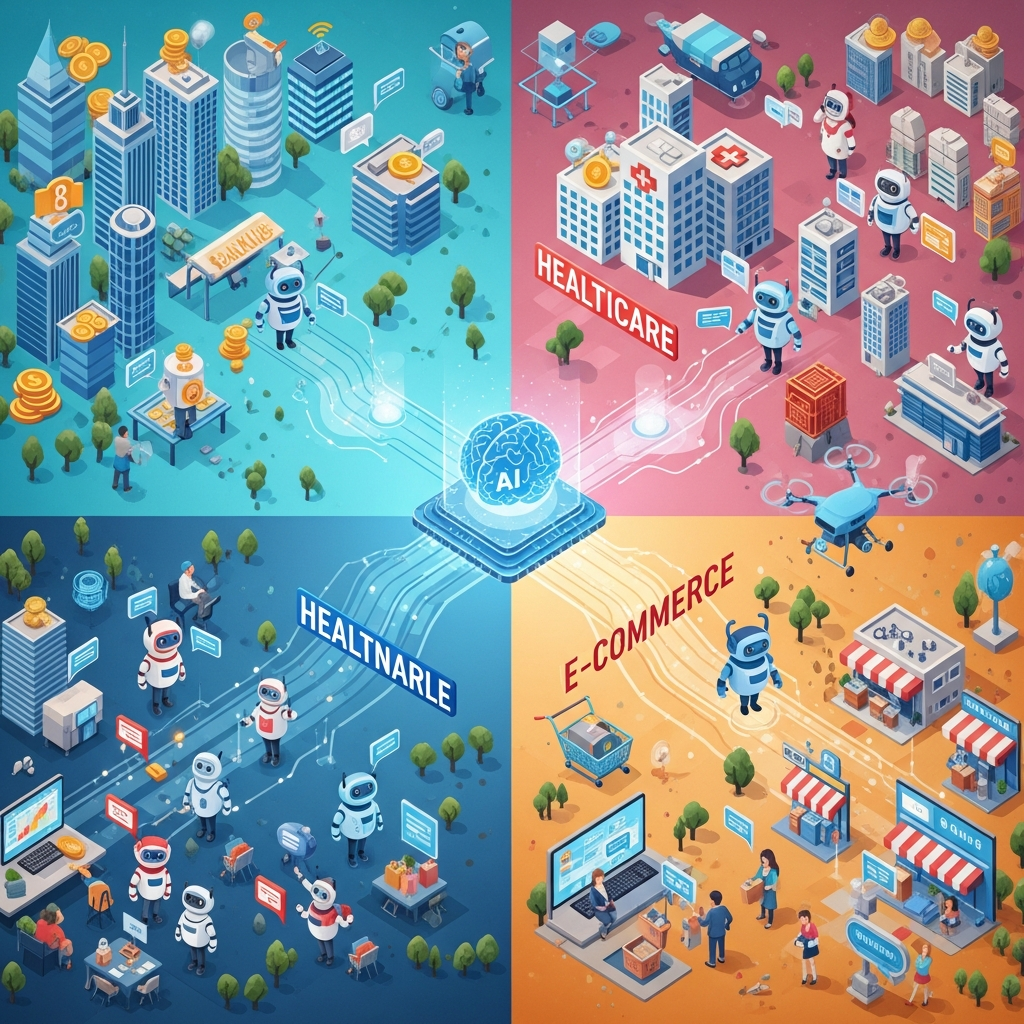 The impact of AI chatbots can be seen in many industries in India. They help people with online shopping and make it easier to look after a bank account. These smart assistants are now a big part of the customer experience. Different industries are coming up with new use cases for this technology. The goal is to make customer support better and boost operational efficiency.
Now, let’s look at how these sectors in India use AI chatbots. These tools are changing services and helping businesses deliver better results for their customers.
Real-world use cases in e-commerce, banking, healthcare, education, and travel
AI chatbots have found practical applications in many key sectors, revolutionizing the customer experience. In e-commerce, they act as personal shoppers, recommending products and tracking orders. In banking, they handle balance inquiries and transaction histories securely, similar to an interactive voice response system.
Healthcare chatbots assist patients with booking appointments and answering basic health questions, while in education, they guide students through course selection and admissions. The travel industry uses them to help customers book flights and hotels, and provide real-time travel updates.
These use cases show the versatility of AI chatbots in handling a variety of tasks, from simple questions to more complex queries, all while improving the overall customer experience.
Industry | Use Case Example |
|---|---|
E-commerce | Product recommendations, order tracking, and processing returns. |
Banking | Checking account balances, transaction history, and fraud alerts. |
Healthcare | Scheduling appointments, medication reminders, and answering health FAQs. |
Education | Assisting with course registration, campus information, and student support. |
Travel | Booking flights and hotels, checking reservation status, and travel alerts. |
Conclusion
To sum up, AI chatbots are changing customer support in India. They use conversational AI and natural language processing to help people without human intervention. These smart systems give support all day, every day. They can make user experiences better by giving each person a more personal touch, answering faster, and making it easier to handle customer service work.
When businesses move from old ways to new AI-driven tools, natural language bots help them talk to customers in a way that feels more real and friendly using sentiment analysis. This also saves time and money. As time goes on, customer support and customer service will be more connected with AI technology. So, it's important for businesses to be ready and welcome these new changes.
If you want to improve your customer service, sign up today. See how AI chatbots can help your business!
How are AI and chatbots transforming customer support? - Vocalcom
AI and chatbots are revolutionizing customer support by providing instant responses, 24/7 availability, and personalized interactions. They use Natural Language Processing (NLP) to understand and resolve queries efficiently, reducing wait times and improving overall customer satisfaction. This technology enhances service quality while optimizing operational costs for businesses.
How are AI and chatbots transforming customer support? - Vocalcom
AI and chatbots are revolutionizing customer support by providing instant, 24/7 assistance. They utilize Natural Language Processing (NLP) to understand and respond to customer inquiries effectively, enhancing user experience. This automation reduces wait times and operational costs, allowing human agents to focus on more complex issues.