








What is Generative AI? Uses Applications Today
Key Highlights
Here are the key takeaways from our guide on generative AI:
Generative AI is a type of artificial intelligence. It can make new content like text, images, and music.
It works with large language models that get information from lots of data. The output is new and original.
In digital marketing, it helps with content creation, email personalization, and social media work.
This technology improves marketing. It saves time by automating jobs and comes up with new ideas.
Knowing generative AI is now important for anyone working in marketing.
Introduction
Have you ever thought about how a computer can write a poem, make an image, or even put together a song? This is the world of generative artificial intelligence. This new technology is changing the way we use digital marketing. It helps people make content faster and in a more creative way. Old types of artificial intelligence could only look at data. But these new generative models can make things that are new and fresh. This guide will show you what generative AI is, how it works, and why it is so strong for marketing today.
Understanding Generative AI in Digital Marketing
 Generative AI is a big step forward in technology. It lets AI models make new content that has never been made before. For marketing teams, it means you can get help with many things. It can draft blog posts, create graphics for social media, or come up with good campaign slogans. With natural language processing, these tools get what you ask for and give you creative ideas.
This kind of technology is changing how people in marketing do their jobs. It takes care of many creative tasks that used to need a lot of time. Now, let’s look at the main ideas behind generative AI, so we can see how it works and why it’s not like other kinds of AI.
Definition of Generative AI
Generative AI is a kind of artificial intelligence that can make new and original content. You can think of generative AI as a creative helper. Regular artificial intelligence might just sort or look at data. But generative AI models can make their own ideas, text, pictures, music, or videos.
These ai models learn from a huge amount of things, like books, stories, and pictures. They pick up on the ways things are written or made. When you ask it to do something, like to "write a poem about the ocean," it takes what it knows and makes something new for you.
The generated data from generative ai is not just a direct copy of something already there. It puts together ideas in a new way. This is what makes this type of artificial intelligence so strong and good for many uses, like making emails or coming up with early ideas for new products.
Key Differences Between Generative AI and Traditional AI
Generative AI and traditional AI are two different ways to use artificial intelligence. Traditional AI systems work by using set rules. They focus on prediction or sorting tasks. These systems use data that is stored and follow step-by-step methods.
On the other hand, generative AI uses neural networks. It works with generative models to make new data. It can create original content in real time. This includes text, images, and code. Generative AI puts creativity first, so its models are great for content creation and product development. They help make user experiences more personal. This is something traditional AI systems may find hard to do.
How LLM Models Power Generative AI
Large language models, or LLMs, are the main part of the most text-based generative ai. So, how are large language models connected to generative ai? They are a type of machine learning model that is trained using a huge amount of text and code. Because of all this training data, these models get to know grammar, facts, context, and even new writing styles.
When you use an ai chatbot like ChatGPT, you are talking to a type of large language model. These language models work by picking the next word in a sentence from your input and the patterns they learned from all that training data. When they keep making predictions word by word, they can make clear and useful paragraphs, articles, or conversations.
Simply put, large language models are what let generative ai understand and make natural language. They are what make it possible for ai tools to write emails, sum up long documents, or answer questions in a way that seems human. That is why large language models are now a big part of modern ai technology.
Generative AI Explained Simply for Beginners
Let’s talk about generative artificial intelligence in a simple way. Think about teaching a robot to draw. You show the robot lots of dog pictures. The robot uses its neural networks, which are like the digital brain, to learn what makes a dog a dog. It sees the ears, the tail, and the fur.
Later, if you ask the robot to draw a new dog, it does not just copy any picture it saw before. Instead, it uses what it knows to make a new dog drawing on its own. That is the main idea of generative AI. It learns from examples and makes something new every time.
To get good results, you should give it good instructions. This is called prompt engineering. Here’s what generative artificial intelligence can do:
Generate Text: It can write articles, emails, or posts for social media.
Create Images: You can have it design a logo or a new graphic from just a text idea.
Style Transfer: It can take a photo and redo it in the style of another artist.
Produce Code: You give your needs, and it writes the software code for you.
Everyday Uses of Generative AI in Marketing
 Generative AI is not just something for the future anymore. The technology is now a real tool that marketing teams use every day. One big use for this is content creation. The text generation tools can help people write blog posts, ad copy, or even come up with captions for social media. These tools help people save a lot of time. The same technology also lets a smarter AI chatbot give fast customer support.
With these uses, marketing teams can do more work, keep their brand voice the same, and connect with people in a better way. Here are some of the main ways that generative AI is used in marketing. These include email campaigns and making videos.
Content Creation With AI Tools
One of the best uses for generative ai is in content creation. The ai models look at what you type in the prompt. They use the data they learned to make new content, like text or images, that fits what you ask for. This lets marketers make all kinds of content, not just one type, and they can do it fast.
It means you do not need to sit and look at a blank screen. You can ask an ai tool for blog post ideas, outlines, or even a full first draft. This helps speed up the process of content creation. It also helps if you get stuck or do not know what to write. The generated data can be checked and improved by a real person, so it matches your brand and is well-written.
AI tools can help with:
Blog Posts: It can give you outlines and first drafts on any topic.
Social Media Captions: It can make catchy captions for any social network.
Ad Copy: It gives you good lines and info for ads and campaigns.
Product Descriptions: It writes short, one-of-a-kind lines for your products on your site.
AI-Driven Email Campaigns
Email marketing is getting better because of generative ai. The ai system can help you write subject lines that get more people to open your emails. It can also help you write email text that matches what each group of people wants to see. This is more than using the person's name. It means you can make each email feel very personal.
The ai system looks at data points like what people bought before and what they looked at online. It uses this to give you new ideas for your email campaigns. For example, you can send an email with products that each person may like. This can make your customers happy because you send them what they want.
In the past, it was hard to do this for many people at once. Now, you can use generative ai to make every email more important to each user. This helps more people read your emails, customers feel close to your brand, and your marketing does better.
Generative AI Image and Video Generation
Beyond words, generative AI is changing how we make visual content. With image generation tools, you can get realistic images by just typing a simple sentence. For instance, a marketer can write "a futuristic cityscape at sunset in a synthwave style" and the tool quickly gives a few unique images. This is the way generative ai can make new and fresh images.
This technology uses ai models such as Stable Diffusion to make a wide range of images. These include product mockups and even styles of art. You can use it for style transfer, which means you take the style of one image and put it onto a new one. It is also able to make synthetic data for other ai models that need a lot of training data. This means you don't have to set up a big photoshoot or pay for many stock photos for marketing work.
Key uses for visual generation include:
Creating custom graphics for social media posts and ads.
Designing unique backgrounds and assets for websites.
Generating concept art for new products or campaigns.
Producing short video clips or animations from text prompts.
Personalization and User Engagement
Generative AI is one of the best tools for making user experiences more personal. It plays a big part in everyday marketing. With natural language and natural language processing, AI can look at what users do and what they like. This helps deliver content that feels special for each person. It is not just about using someone’s name in an email.
For example, when you shop on an e-commerce site, generative AI can make real time product suggestions based on what you are looking at. This helps make your shopping time better and keeps you interested. When the site feels more about you, you are more likely to buy something. That means better results for the company’s marketing.
Also, AI chatbots can give help and answers that fit each person’s questions. The chatbot uses generative AI to bring up answers that fit each moment. By doing this, every time you get help you feel it’s useful and just for you. This makes your whole user experience with the brand friendlier and helps build strong trust.
Benefits & Real Examples of Generative AI for Businesses
 What are the benefits of using generative ai for businesses? The good things you get from this are many. You will see better marketing, and improved customer service, too. In real life, companies say they save time and money. They also find more ways for their workers to be creative and do more every day. When you use generative ai for tasks like content creation and data analysis, it is possible to let people spend their time on making a plan or coming up with something new.
These generative ai applications are not just for large companies. Small and medium businesses can use them, too. With these tools, there is a way to keep up with the bigger players. Let’s look at some of the real ways generative ai helps, and see what changes it can bring for any business.
Enhanced Marketing Efficiency
One big plus of using generative ai is that it can help get more work done in less time. ai models can take on many of the repetitive tasks that fill up a marketer's schedule. This lets you spend more time on bigger tasks that need real planning. With generative ai, you do not have to draft emails, put together social media posts, or build every report yourself.
When you use ai models to automate these things, your team can make more content, and do it faster. That means you can kick off campaigns sooner and keep up when trends in social media shift. The power of generative ai is that it helps with the starting steps, so marketers get a good base to grow and make better.
Here's how ai helps to boost efficiency:
Automates Content Creation: Makes starting drafts for blogs, ads, and posts easier.
Reduces Manual Work: Takes care of repetitive tasks like typing in data and making short summaries.
Speeds Up Workflows: Helps you move from idea to action much quicker.
Implements Best Practices: Shows tips to do even better by looking at a lot of data analysis.
Improving Customer Experience
Generative AI is changing how companies do customer service. It makes the user experience much better. Right now, many companies use strong AI chatbots. Unlike old bots that followed set rules, these new generative AI chatbots can understand hard questions. They give clear, human-like answers right away and in real time.
This lets customers find answers at any time, day or night. They do not have to wait for a real person. When there is a harder problem, the AI chatbot can get the first bits of info. Then, it sends the person to the right worker. This makes the customer service move faster and smoother for people and workers.
With quick and right support, businesses keep customers happy. People are more likely to stay with the brand. If you get good customer service, you can go from being upset to feeling good about the company. This real time help with AI keeps things personal and builds real trust. Generative AI can lift the whole user experience in customer service.
Cost Savings in Marketing Operations
Another big benefit of using generative ai is that it can help businesses save a lot of money in marketing. When you bring in ai models, you can set up many jobs to run on their own instead of needing a lot of staff hours or hiring outside help. This is really good for small companies trying to keep their budgets in line.
A good example is for social media. Instead of bringing in a graphic designer each time you need a post, a marketer can just use an AI image generator to make what they need. The same way, content creation goes much faster. You may not need many writers because the ai can do much of the writing work. ai tools can also handle data analysis, sharing useful ideas that once needed a person to do all that looking.
Here is where you will see the biggest cost savings:
Content Production: Your business does not need as many outside writers or designers.
Advertising: ai models make your ad spend smarter by helping make better ad copy and finding your best audience.
Labor Costs: When routine jobs run on their own, smaller teams can get more done.
Subscription Fees: There is no need to pay for lots of small tools. One strong generative ai tool can now take their place.
Accelerating Campaign Launches
Getting a marketing campaign started can take time. But generative AI helps speed things up. This gives a big boost to your business, because an AI system can quickly make many parts of a campaign. It can give you ad copy, emails, social media images, and landing page text.
Marketing teams do not have to come up with new ideas by themselves all the time. They can use generative AI to look at different creative ideas and angles. The generated data gives them many ways to start, so they can move from idea to launch much faster. This way, teams can try out more new ideas and see what works well.
Generative AI can also take in performance data and suggest changes in real time. This makes it easy for marketers to change their plans fast, so a campaign can always work its best. Because generative AI speeds up every part of the job, businesses can get ahead of others.
Real-World Case Studies from India
In India, companies are actively adopting generative AI to innovate their digital marketing efforts. These real-world applications demonstrate the technology's practical value. For instance, e-commerce giants are using AI to generate personalized product descriptions and recommendations, leading to higher engagement and sales.
Another of the many generative AI examples comes from the travel industry, where companies are using AI chatbots to provide instant, multilingual customer support and create customized travel itineraries. These tools improve the customer experience and free up human agents to handle more complex issues. The focus is always on maintaining high output quality while increasing efficiency.
Here are a few examples of how Indian companies are using generative AI:
Industry | Company Example | Generative AI Application |
|---|---|---|
E-commerce | Flipkart | Personalized product recommendations and promotional content generation. |
Travel | MakeMyTrip | AI-powered chatbot for booking assistance and customer inquiries. |
Ed-Tech | BYJU'S | Creating personalized learning paths and interactive educational content. |
Food Delivery | Swiggy | Generating enticing dish descriptions and targeted marketing messages. |
Gen AI Tools Used in Digital Marketing Courses
 Digital marketing courses now use many generative AI tools. These tools come from smart AI models and help people create new content, look at data, and make better choices. It is important for anyone who wants to be in digital marketing to know how to use them.
When you spend time working with these tools, you can make new content fast. You can also use AI to help plan for the best results with their data. Now, let’s check out some of the most used platforms. These generative AI tools are in many top courses today.
Overview of Popular AI Marketing Tools
Many popular tools now use generative AI to help people who work in marketing. These platforms work with the help of large language models and other strong ai models. They can do a lot, like give writing help and create images. These tools are now a big part of the marketing field.
These ai marketing tools are built to be easy to use. Even someone new can begin making good content fast. The tools help you with tasks that are boring and give you new ideas, so they are great for anyone who needs to market something. Learning how to use them is an important part of learning digital marketing today, like an ai engineering course in hyderabad.
Here are some top tools that use generative ai and large language models:
ChatGPT: Gives help with conversational ai, new ideas for content, and text generation.
Canva AI: Helps make pictures, slides, and different design content.
Jasper AI: A writing tool that is good for ads and long pieces of writing.
Grammarly AI: Makes your words better by fixing how they sound and making them more clear.
ChatGPT Marketing Applications
ChatGPT is one of the best generative ai tools for marketers right now. The main reason is that the tool can work with natural language so well. You can use it for all sorts of things. It can be an ai chatbot that helps with new ideas. It can also be a writing buddy to make content, or even act as a research tool for you to look into any topic.
To really get the most from ChatGPT, you need to know about prompt engineering. This means you have to learn how to ask questions and give instructions the right way. If your prompts have clear details and are about what you need, you will improve your output quality a lot. For example, do not just ask it to "write a blog post." Instead, you can ask it to "write a 500-word blog post for beginners about the benefits of SEO, using a friendly and encouraging tone."
Many marketers use ChatGPT to do things like build a social media calendar, write emails, get keyword ideas for SEO, and even write scripts for videos. Because the tool does so many things so well, people go back to it again and again to keep their content running smooth.
Canva AI for Visual Content
Canva is a favorite tool for easy graphic design. Now, it uses strong ai models to help with content creation. With Canva AI, you do not need to know much about design to make graphics that look great. The features let you make things fast, like social media posts and business presentations. It feels simple and easy to use.
One cool feature is called "Magic Write". It lets you make text for your designs. There is also a "Text to Image" tool for image generation. This lets you turn what you say into new and different pictures. With Canva AI, you can also do style transfer, take backgrounds out from photos, or make a whole new presentation look just by typing a few words.
Canva AI helps marketers:
Generate custom images that match well with their campaign style.
Write good copy right inside their design work.
Automate design tasks like keeping the same look for branding in many projects.
Jasper AI for Copywriting
Jasper AI is a well-known writing assistant made for marketers and copywriters. The AI models in Jasper help you create high-quality and creative content. It also makes the content sound good for marketing. You can use Jasper to make a headline, write a blog post, or create social media copy. The tool helps you get all this done fast.
There is a wide range of templates in Jasper. They are made for all kinds of marketing tasks. You can use the templates to write Facebook ad copy, make product descriptions, or create scripts for videos. The text generation process is smooth because you start with a framework that works for your goal.
Jasper is very good at knowing your brand voice. You just give some details about how you want the content to sound. Then Jasper uses this information to make all generated data match your company’s style. This way, the creative content always lines up with your brand. It helps your whole marketing team do better work.
Grammarly AI for Content Quality
Many AI tools are made to write new content. But Grammarly AI is made to make your writing better. Grammarly uses large language models and generative AI, so it does more than just check for spelling mistakes. It helps you make your statements better and stronger. This tool looks at your text for clarity, tone, and how much it will interest someone. It then gives ideas to help you write in a good way.
You get real-time feedback as you write. So Grammarly can find mistakes and help you fix how you say things right away. Grammarly’s generative AI can also help you reword sentences, change the tone to be more sure or friendly, and even make your text shorter and clearer.
Grammarly AI helps you keep high content quality by:
Checking for correctness in grammar, spelling, and punctuation.
Analyzing tone so your words match who you want to talk to.
Providing generative suggestions to rewrite sentences for better clarity and impact.
It uses many data points to make sure the generated data it suggests is right in the context.
Copy.ai for AI-Powered Ideation
Copy.ai is a strong tool that does a great job with ai models for new ideas and content creation. If you ever get stuck and can’t think of what to say next, this platform is very helpful. It can be like a helper when you need to brainstorm. You just give a short line about your topic or product, and Copy.ai will show you lots of new angles and things you can try. This is good in the beginning when you start a marketing project and do not know where to go. It also helps to get rid of writer’s block and shows some paths for your work.
Besides coming up with new ideas, Copy.ai has good tools for content creation, too. It gives templates for many things such as emails, social media posts, and website copy. With all these features in one, you get a flow of ideas and ways to use or shape them. For marketers, Copy.ai makes every step of making content easier and faster.
AI Video & Image Generators
The rise of AI video and image generators is changing how people make and use visual content in marketing. These tools use smart ai models to make highly realistic images and short video clips. You just enter a few text prompts, and the tools handle the rest. Because of this, you do not need to buy expensive tools or have special skills to get great results.
Platforms like Midjourney, Stable Diffusion, and DALL-E are leading the way in image generation. With these, you can make almost any kind of picture you want. When it comes to videos, there are now tools that can bring images to life or even create quick clips from only text. This is great for social media, ads, or simple explainer videos. Many of these tools use synthetic data to make new and fresh visuals.
Here’s what these generators can do for marketers:
Create custom blog headers and social media graphics.
Generate product mockups and concept art.
Produce unique stock photos that are royalty-free.
Create short, engaging video content for ads and posts.
How Generative AI Creates Content
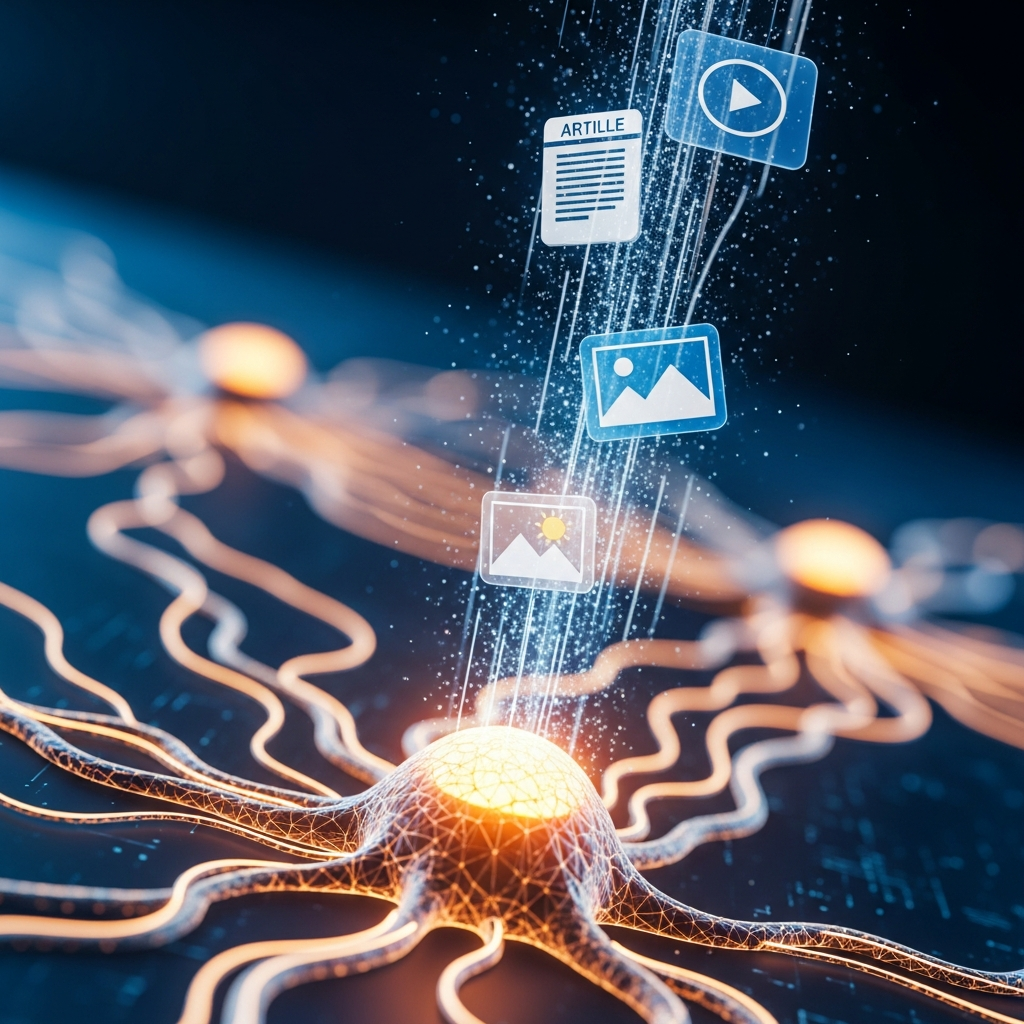 So, how does generative ai make new content? It begins with the training of ai models. These generative ai models, like large language models for text and other models for image generation, learn from huge sets of data. When you give them a prompt, they use what they know to guess and put together new content step by step.
This process is like strong pattern finding and making something new. The result is generated data that can be new and fit the topic well. Now, let’s look at the ways these models work and what helps them make new things.
AI Content Generation Workflows
The content creation process with ai models usually starts when a person gives a prompt. This step is called prompt engineering and it is important. A clear and simple prompt helps guide the ai models so you get the output you want. For example, you may tell the ai models the topic, tone, how long you want the text, and who the content is for.
When ai models get the prompt, they start to create some content. During their training process, the ai models learned how words, ideas, and writing styles go together. They use what they know to give you an answer that fits the instructions. What you get at first is like a rough draft. You can change and improve on this draft later.
In the end, a person needs to check and edit what the ai made. Even though ai models are good, they are not perfect. A human is needed to make sure the facts are right, the brand or message is correct, and to add new or creative ideas that ai can’t do on its own. This way, both the speed of ai models and the thinking of a person come together for better content creation.
Mechanisms Behind Text Generation
The magic of text generation comes from strong neural networks called large language models. These large language models go through training data that has billions of sentences from the internet, books, and other places. During training, the large language model learns which words most often follow other words in natural language.
When you give a prompt, the large language model uses natural language processing to figure out what you want. Then, the model starts by making text one word at a time. At each step, it looks at the words that came before and its training data to guess the next word that fits best.
Here’s how the process works in a simpler way:
Input: The large language model gets your words.
Prediction: It picks the next word that is most likely.
Iteration: The large language model adds that word, then does this again.
Output: It keeps adding words until you get a full response. This way of predicting lets large language models create text that makes sense and feels like it comes from a real person.
AI Image and Video Production
AI image and video production uses a method that is a lot like how text generation works. Both use generative AI that learns from data. In image generation, tools like Stable Diffusion start with random noise and step by step turn it into an image that fits a text prompt. This is one of the main ways generative AI makes new pictures for us.
There are other ways to do image generation, too. For example, generative adversarial networks (GANs) use two neural networks. One is called the generator, which makes the images. The other is the discriminator, which judges if the images are real or fake. These two networks go back and forth, making each other better. It forces the generator to slowly make more realistic images. There's also a method called variational autoencoders (VAEs), which help to learn and make detailed images as well.
These models let people make synthetic data, like fresh images and videos that look very real. For people working in marketing, this is helpful. You get many unique images for your campaigns, websites, or social media. Using generative ai, you can make these visuals much faster than with old ways or methods.
Data Input & Model Training Basics
The way ai models work depends a lot on the quality and amount of their training data. These models get huge data sets. This data can be from Wikipedia articles, books, images, or code. When you have more types of data and a bigger data set, the model will get better at doing different tasks.
When the training process starts, the ai models try to see patterns and relationships in the data. If the model deals with language, it will try to learn grammar and basic facts, plus the way people write. When the model is working with images, it needs to learn about shapes, colors, and what different things look like. This hard work during training is what gives the models the power to come up with new and original content.
Key parts of this training process include:
Large-Scale Data: Using many terabytes of data, so the model can learn more.
Unsupervised Learning: The model looks for patterns on its own, without using labels.
Fine-Tuning: The model gets more training with focused data for specific tasks.
Data Augmentation: Old data gets changed slightly to make more data so the model is stronger.
Generative AI Applications By Industry
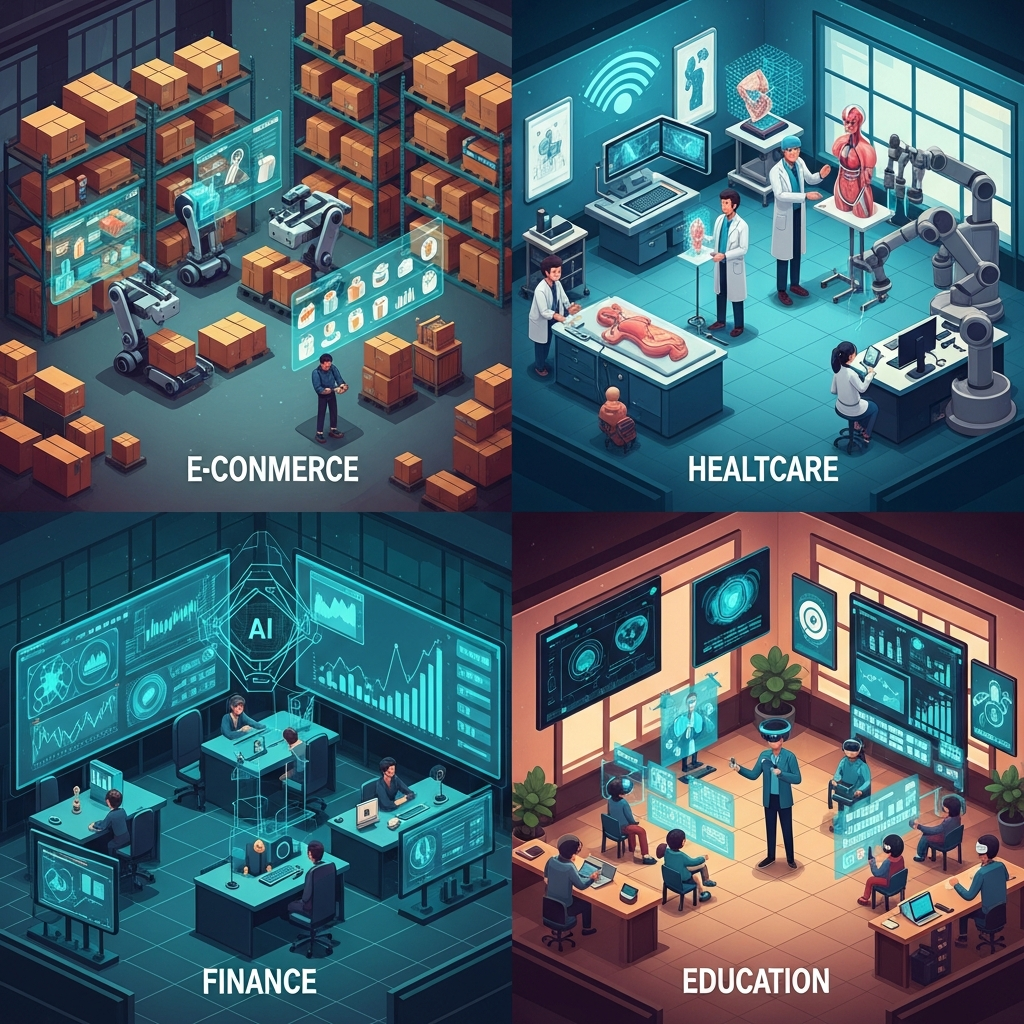 The use of generative AI is not just for marketing. People in a wide range of industries are now finding out how AI models can make new content, help automate tasks, and make their services better. The world of healthcare and finance, for example, is seeing generative AI boost new ideas and help things run smoother.
Generative AI applications are very flexible. You can use them in many ways, and they work for different problems in different industries. For example, businesses use them to give better customer support or even to make design samples. Now, let's see which industries use generative AI the most and what they get out of it.
E-commerce and Retail
The e-commerce and retail industries were some of the first to start using generative ai applications. One of the main ways they use generative ai is for personalization. Ai models look at what a customer does on the site and what they buy. They then use this to make a shopping experience that feels just right for that person. People get product recommendations and marketing messages made just for them.
Generative ai is also changing how customer support works in stores. With ai-powered chatbots, customers can get help at any time. These chatbots answer lots of different questions, like how to track an order or ask about a product. This gives people answers fast, and it means real customer support agents can help with the tougher things that come up.
More than that, stores are using ai to come up with good product descriptions, ad copy, and social media posts—all without needing a huge team. This lets them share their products with more people. They can have a strong online presence and market their goods in a better way, all thanks to generative ai.
Healthcare and Life Sciences
Generative AI is changing the way we work in healthcare and life sciences. The use of generative ai applications helps speed up drug discovery. Researchers get to create and test new molecules on a computer. This can cut down both the time and cost needed to bring all new drugs out to the market.
AI models can look at medical imaging like X-rays and MRIs. They help doctors find diseases sooner and in a more accurate way. These models learn by looking at a lot of images, so they sometimes spot details that people can miss.
Here are some other important uses in this field:
Generating Synthetic Data: You can create fake patient data to help with research, but it will not give away real people's information.
Personalizing Treatment Plans: AI can use what it knows about your health to suggest what will work best for you.
Automating Clinical Notes: It can take what is said between doctor and patient and turn this into clear medical notes.
Advancing Drug Discovery: ai models play a big role when finding new drugs.
Generative ai is making big changes in these areas and will help improve the lives of many people.
Finance and Banking
The finance and banking fields are using generative ai to boost security, help with customer service, and handle data analysis faster. AI models look at transaction data in real time to catch fraud quicker than old systems. This keeps customers and banks safe.
AI-powered chatbots and virtual assistants give personal advice and answer customer questions anytime. They help people check their balance, move money, and learn about different financial products.
Investment companies use generative ai to study market trends, news, and reports for better trading choices. AI models can look over lots of information fast. This gives them an edge in finance, where things move quickly.
Manufacturing
In the manufacturing sector, generative ai applications are helping to bring new ideas to design, making things work better, and checking quality. Engineers now use "generative design" tools to make new parts that are lighter, stronger, and work well. The ai models can look at thousands of ways to build a part. They find the best one by staying within given rules or needs.
ai models are also used to make manufacturing run smoother. They look at data from sensors placed on machines. This way, they can tell when a machine could break down. If people know this before, they can fix things early. That means there is less time when machines are not working.
Other uses of generative ai in manufacturing include:
Generating Synthetic Data: It can make fake data that helps test out and try new ways to make things.
Data Augmentation: This means adding more with old data to help make quality checks more right.
Automating Design: ai models are able to make first versions of new parts. This helps the business bring out products faster.
Education and Certification
The education and certification industries are using generative AI applications to make learning more personalized and interesting. AI models can make new content for each student, like practice questions, study guides, and lessons. This content matches the way a student learns and how fast they go.
Teachers and instructors can use these AI tools to do some of the daily tasks. This includes grading and planning lessons. It helps them have more time to teach. They can also make use of text prompts to create assignments that are just right for their students or give clear summaries of hard topics. Taking a generative AI course in hyderabad can get people ready for such work.
AI-powered tutors use generative ai to give students help one-on-one. They answer questions and explain hard subjects. This makes learning open to more people and helps students feel sure about what they know. AI models that change to fit each student are starting to change the way we learn and teach.
Entertainment and Media
The entertainment and media industries are now using generative ai applications to help drive new ideas and make work easier for everyone. With ai models, people can make new content like scripts, storyboards, music, and special effects. This makes it possible for creators to try fresh things and get content made faster.
In film and games, ai is used for image generation to build real-looking characters, places, and textures. This helps save time and money that would be spent doing things by hand. Music producers use ai to write soundtracks and make different sound effects.
Here are some ways generative ai is used in entertainment:
Scriptwriting: It helps writers by making dialogue, plot ideas, and stories for characters.
Visual Effects: It makes effects and animations for movies and TV.
Game Development: It builds levels, characters, and things players use in games.
Personalized Content: It suggests movies, shows, and music people may like.
Skills Gained from an AI Tools for Digital Marketing Course
 When you sign up for an AI tools for digital marketing course, you get a strong set of skills that help you in the job market today in India and other places. In this course, you learn how to use generative ai in many ways, like content creation and looking at data. These skills are wanted by many companies. That’s because businesses now want to use more ai to do better in digital marketing.
A good course, for example, what you get from an AI training institute in hyderabad, gives you real hands-on work with the newest AI tools. You use important platforms and learn by doing. Let’s look at which skills you will get and how these can lead to new and good jobs.
AI Content Generation Skills
One of the most important skills you can get is AI-powered content creation. The course will show you how to use generative AI to make new content fast and easily. It is not just about clicking a button. You will learn how to make good prompts and lead the AI models to create content that fits your marketing goals.
You will get good at making different types of content. This includes blog posts, social media updates, ad copy, and email newsletters. With this skill, you will be able to keep making new content and stay true to your brand voice on all channels.
Key content generation skills include:
Prompt Engineering: Writing clear and simple instructions for AI models.
Content Ideation: Using AI to think of new ideas and topics.
Drafting and Editing: Creating first drafts with AI and making them better yourself.
Multi-format Creation: Using AI tools to make text, images, and even video ideas.
AI SEO Tools Mastery
Mastering AI SEO tools is a key skill that can give you many job options. A good data science course in hyderabad or an AI marketing program will show you how to use generative ai with ai models to boost your search engine results. These ai models look at huge sets of data and help you find strong keywords, make content better for search sites, and check how things are doing.
You will get to use AI for keyword research and find chances others missed. You will also learn how to use generative ai for content creation, so your work is good for both people and search engines. With both data analysis and creating content, you will have all you need for SEO today.
When you know these tools well, you help firms get more people viewing their websites and bring in more visitors from search results. This leads to better results in marketing. Your skills in content creation, data analysis, ai models, and generative ai make you stand out in any team working with digital marketing.
Campaign Optimization With Automation
Learning to use ai models for campaign optimization and automation can change the game for anyone working in digital marketing. These ai models look at campaign data in real time. They give insights you can use, so you know what steps to take to make things better. You can make data-driven choices that help improve your marketing work.
You will know how to automate different parts of your campaigns. This includes A/B testing many ad creatives, personalizing email steps, and fixing bidding plans for paid ads. Automating these things saves time and helps you get better results. It keeps making things work in the best way by always trying to do better.
Skills in this field are:
A/B Testing: Use ai to test and find what works best in a campaign.
Personalization: Automate sending special content to each type of audience.
Performance Analysis: Use ai to check campaign numbers in real time and look for places to make things better.
Budget Management: Use ai to better decide how to spend your ad money.
Data Analytics and Reporting
A strong base in data analytics and reporting is important for anyone working in modern marketing. With generative ai, using data has become easier than ever before. An AI developer course in hyderabad will show you how to use ai models to look at data sets and find helpful insights. You can ask the ai to sum up performance reports, spot trends, and tell you what the data shows in simple words.
This skill lets you move past just reading numbers. You can really see the story in your marketing data. You will know how to answer big questions about how your campaigns perform, what customers do, and if you are getting good results. You will do all this with more confidence and accuracy.
Generative ai can also help you make clear reports and easy to follow visuals. This makes it simple to share your results with others and show the value of your marketing work. Having both these technical and communication skills is something many companies want in people they hire.
Social Media Enhancement With AI
Social media marketing is a place where generative AI can give you an edge. When you take a course just for this, you will get to learn how to use AI models in every step of your social media plan, like content creation and managing your online group.
You can use AI to come up with good post ideas. It can help you write catchy captions, and you can even use it to make pictures or videos that get people to look at your posts. Need help figuring out when to post or what is trending on social media? AI tools can break down the trends and show you the best times to post so that you get the most reach and engagement.
Here’s how AI can help you on social media:
Content Generation: You can make lots of great posts on a regular basis.
Scheduling and Automation: You can plan and set up your content calendar in a better way.
Audience Analysis: You get to know what your followers like and how they act.
Creative Strategies for Generative AI Marketing
A good digital marketing course will teach you more than just technical skills. You will learn how to build creative ways to use generative ai in your work. It's important not only to know the tools, but also to understand how they can fit into a smart marketing plan. This helps you make campaigns that stand out and reach people.
You will get to think about how generative ai and ai models can help in different parts of your work. At the same time, you will learn how to mix the speed and power of ai models with the human touch. This means letting ai models handle fast ideas and first drafts. But people still guide the big picture and make things look right before they go out.
Some creative ways you may learn include:
Personalized Storytelling: Using generative ai to build special stories for each group of customers.
Interactive Content: Making ai-powered quizzes, polls, and chatbots that people enjoy.
Trend-Jacking: Using generative ai to join new trends fast and make content that fits.
Hyper-Targeted Campaigns: Making marketing messages that speak to each person or group using ai models.
Future Trends of Generative AI in Digital Marketing (India 2026)
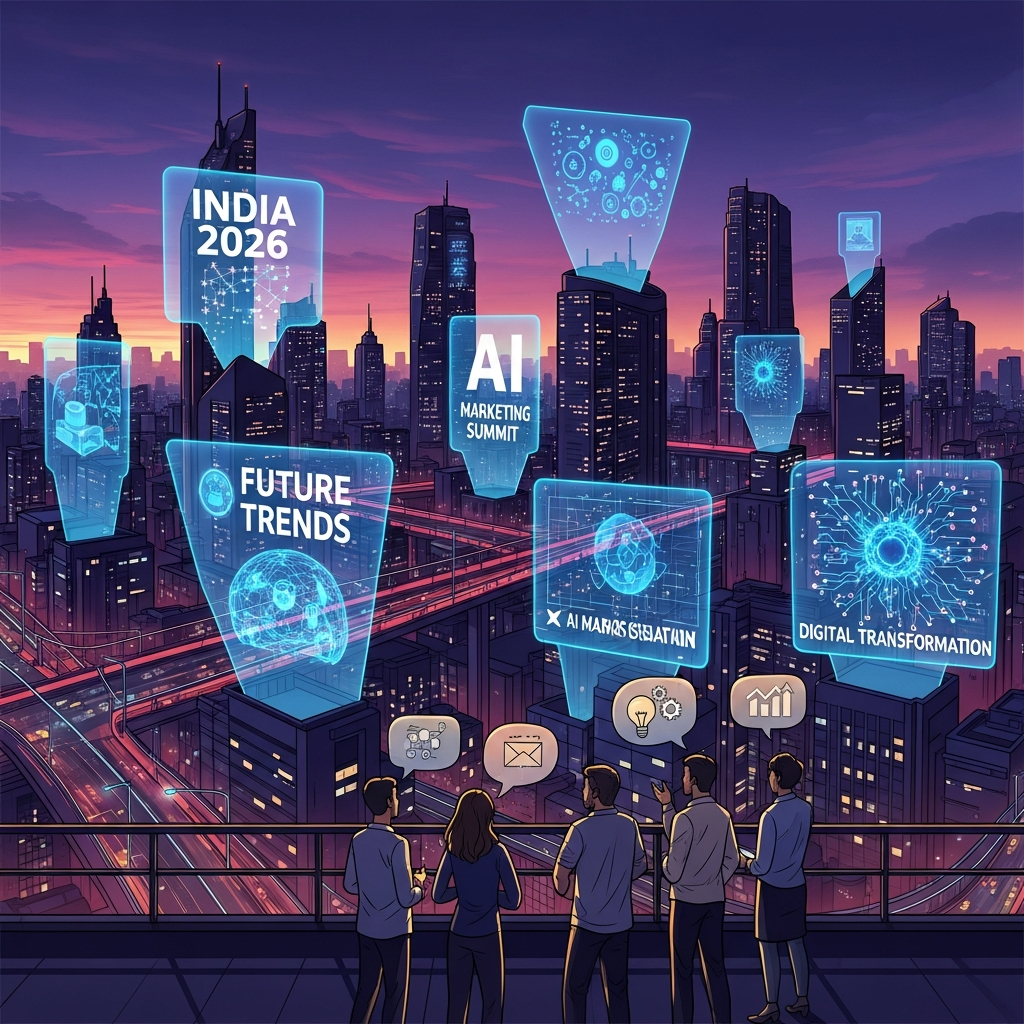 By 2026, generative ai will play a bigger role in digital marketing in India. AI models will be even better at creative and number-based jobs. These tools will get stronger and bring more ways for people to use automation and make things personal.
When new data comes in, ai models will give clearer and faster answers. People who follow these changes will be in a good spot. Let’s talk about the main things that will shape the industry.
AI SEO Evolution
A big change has come to SEO with the use of artificial intelligence. AI SEO tools are powered by machine learning and make content creation and ranking better. In the past, people mostly used keywords. Now, AI methods look at huge data sets to get good ideas for making content.
This new system makes keyword strategies stronger. It also uses natural language processing to know what users want. Marketers now can make content that speaks to people. This helps to get more people involved and makes them more likely to act. It also keeps up with the always changing search engine rules.
Hyper-Personalization in Campaigns
A good marketing experience comes from hyper-personalization. This means showing content that fits each person and what they like. Generative ai and ai models help send messages that match how people act, what they prefer, and what they have done before. By working with large data sets and using machine learning and deep learning, marketers can build campaigns that speak to people and keep them interested.
Using natural language processing and generative ai models, marketers can make original content that feels special to each user. Customer service now uses ai to answer customers in ways that feel real and friendly. This makes people feel loyal and happy. The best campaigns in the future will be built on these personalized experiences.
Rise of Automated Video Marketing
Automated video marketing has changed how brands talk to people. By using generative ai and ai models, businesses can make exciting, personal videos at a big scale. Methods like style transfer and deep learning help create sharp visuals that connect with certain groups.
With real-time data and analytics, these ai-generated videos shift based on how viewers act and what they like. By using tools with adversarial networks and neural networks, marketers can quickly run campaigns. This makes user experience better and gets people more interested. Brands use strong storytelling, all without needing a lot of manual editing.
Next-Level Analytics With AI
Artificial intelligence and machine learning have changed the way businesses make sense of data. Now, companies do not just use old ways to measure things. With new tools and data analysis, marketing teams can see patterns, understand how people act, and improve their work in real time.
This makes it easier to make good choices and helps companies change their plans based on data that gets made during the process. Using these skills helps customers have a better time, pushes conversion rates up, and builds a strong base for new growth.
Conclusion
To sum up, generative ai is changing how people in digital marketing talk to their customers and get them involved. With new technology growing fast, marketers have to keep up to get the most out of these changes. The best way to do this is to keep learning, and taking ai marketing courses can help you stay ahead. Using generative ai is good for coming up with new ideas, and it can help you get work done faster and better. By the year 2026, people who know how to use ai tools will have a better chance to use smart plans that reach people and help companies grow. This can make their work stronger and get real results.
Frequently Asked Questions
Which Gen AI tools are recommended for digital marketing courses in India?
Several generative AI tools are good for digital marketing courses in India. Jasper, Copy.ai, and Canva are some that you can use. These platforms help with content creation, make it easy to design things, and improve campaigns. They are key if you want to use generative ai in your marketing plan.
What career opportunities do AI marketing tools open up in India?
AI marketing tools in India help people find many new jobs. Some of these jobs are in data analysis, content creation, making plans for digital marketing, and using AI at work. People can work as AI marketers, SEO experts, or know a lot about automation. They use these new tools to make better and smarter ways to do marketing.
Are there challenges beginners should be aware of when using Generative AI in marketing?
Beginners need to know about some challenges with generative AI. These can be things like making sure the data is good, thinking about ethics, and having a clear plan. If you know about these issues early, you can use generative AI for marketing in a better way. This helps you get the most out of it and avoid problems that people often run into when they start using it.
What is generative AI, and why is it so popular?
Generative AI refers to algorithms that create new content, including text, images, and music, by learning from existing data. Its popularity stems from its ability to enhance creativity, streamline workflows, and personalize customer experiences in digital marketing, making it a powerful tool for brands looking to innovate.