







.png%3Falt%3Dmedia%26token%3D2e10a279-17aa-4aed-b30e-e4032ba5b525&w=3840&q=75)
Private AI Models: Building Secure AI Systems in 2026
Key Highlights
Private AI keeps sensitive data inside your own AI system and supports stronger data privacy.
Enterprise AI helps businesses improve business processes, automate routine work, and move faster.
Secure AI lowers exposure to outside risks and helps protect customer and company information.
Private AI gives organizations more control over model deployment, governance, and proprietary data.
Many companies choose private AI to gain a competitive edge without losing security or trust.
In 2026, enterprise AI adoption is growing as secure, controlled deployments become more practical.
Introduction
Artificial intelligence is now being used in everyday business. But, the number of data security problems is also going up. That is why private ai matters a lot for companies today. With private ai, the business does not have to send important info to open or shared places. Instead, AI works in a setup you can control, keeping records, ways of working, and knowledge safe. If you want your company to grow with new tools but you do not want to lose safety, this short guide will show you how private ai helps you. You will get safer business moves, more control, and even better value over the next few years, especially by 2026.
The most important things here are artificial intelligence, private ai, and data security.
Private AI Models – Quick Overview for Indian Enterprises
 Private ai models are a kind of artificial intelligence that run in a secure setting. This could be a private cloud or a setup based at your own place of work. The main goal is to keep business data safe, under your group’s control, and not let it go into outside systems. Many teams in India think this is very important.
Enterprise ai use is going up. Businesses want things done fast, but also want to protect special or highly controlled information. Using private ai can help lower risk, give better control, and build trust in what work the ai does. The next parts will cover what these artificial intelligence systems do, why they are important, and what value they add.
What Are Private AI Models?
A private ai model is an artificial intelligence system that works inside the company’s own setup. This can be on a private cloud, an internal server, or in the company’s building. The main thing is simple: a business keeps control of the ai system, its training data, and how people use them.
This is how private ai is not the same as public ai models. Public ai uses other companies’ servers and usually works with information in shared or outside places. But a private model keeps training data, prompts, and outputs inside the business.
This way is good if a company works with things like customer records, money details, legal work, or important files. Teams do not have to lean on outside tools all the time. Instead, they can build an ai system that follows their rules, supports governance, and helps keep important things safe.
Why Enterprises in India Prefer Secure AI
Many companies in India handle sensitive data every day. This data can be customer details, financial records, healthcare information, or internal documents. When this data leaves the company, the risk goes up. A secure environment can help manage this risk.
Private deployment helps keep data privacy safe because all information stays inside approved systems. This means that proprietary data does not get out to outside providers or shared spaces. Security teams can use their own rules, control who can access the data, and watch over everything to make sure business needs are met.
There is one more reason companies like this method. They want to feel sure about what happens with their information. If your teams use AI for reports, customer support, or checking data, you want to know where the data goes and who can see it. A secure AI makes things better by keeping business information near you, under your rules, and easier to watch over.
Major Benefits of Enterprise AI Adoption
Enterprise ai can help businesses get work done faster and better. You do not have to use so many separate tools. Instead, you can connect AI to key business processes, like support, analytics, document review, and decision-making. This way, teams work with more operational efficiency and can act faster.
Private ai is very helpful when you need more security and control. It gives you the power to use smart systems and automation, but you do not let go of your data. This smart use of technology can give your business a real competitive advantage.
Key benefits include:
More operational efficiency by letting ai handle routine tasks
Better protection for customer data and your company’s own information
AI that fits what your company needs since it uses your own knowledge
Extra control over how you use ai, manage updates, and set your own rules
When you add secure deployment to enterprise ai, you get speed for your business, better trust, and a clear way to track everything.
Key Trends Shaping Private AI in 2026
In 2026, private AI moves past testing and becomes a key part of how companies work. Many businesses now want to use generative ai tools that fit with their own enterprise data, follow their rules, and help them make faster choices. At the same time, they look for machine learning systems that run in real time but still keep important details safe.
Another big change is the use of language models linked to business knowledge. Companies use AI for much more than chatbot help. They now use it to search lots of documents, sum up long reports, find risks, and help their teams with answers from inside their own systems.
Major trends include:
Real time AI help built into daily jobs
More private language models that connect to enterprise data
A stronger push for good rules and safe use
More use of these tools in finance, healthcare, and other operations
All these changes mean private ai is now ready for everyday use in business, not just special testing or labs.
Understanding Private AI Models
 Private AI does not only talk about where the software runs. It is about being able to control the whole artificial intelligence process. This covers how the data is handled, who can use the model, and how things are watched or checked. Having this level of control is important during every part of the AI lifecycle. This is true, especially for teams that work with business-critical or rule-based (regulated) information.
To pick the best way to use artificial intelligence, you need to know what the terms mean. It is also good to look at different deployment choices and ownership models. The next sections explain how private AI works, how it is not the same as public AI, and why many organizations want to use controlled environments.
Defining Private AI Models
Private AI models are AI tools that an organization runs in a space it controls. It can be a private cloud or the company’s own systems. The main thing is that the company keeps all systems, access, and data in its hands instead of using outside shared services.
This is important because AI often uses business knowledge, customer records, and proprietary data. If this type of data gets shared too much, the company could have privacy issues or lose control. Using private AI keeps data, the systems, and important assets close to home and away from outside eyes.
Good data management is key, too. A private model is not just an AI tool kept privately. It also means the company takes care of data flows, sets access rights, uses clear rules, and watches what happens in the system. This is why many companies that put security first pick private AI for their work.
Public AI vs Private AI: Core Differences
The biggest difference between public ai and private AI is control. Public services are usually managed by outside providers in shared environments. Private deployments stay inside organizational infrastructure or approved private cloud systems. That changes how data privacy, oversight, and security are handled.
For businesses managing sensitive information, this difference is not minor. It affects model access, data flow, compliance readiness, and long-term governance. Public AI may be easier to start with, but private AI gives stronger ownership and clearer boundaries.
Area | Public AI | Private AI |
|---|---|---|
Environment | Shared or third-party hosted | Controlled internal environment |
Data privacy | Data may move externally | Data stays closer to the business |
Sensitive information | Higher exposure risk | Lower exposure through tighter control |
Governance | Provider-led limits may apply | Organization-led rules and oversight |
Custom fit | Broad use | Better for company-specific needs |
The Role of Self-hosted and On-premise AI
Self-hosted ai and on-premise ai play a big part in private ai. In these setups, the company runs the model in its own space or building. This creates a controlled environment. All data, who gets in, and what people do, stay inside the company’s walls.
This way can lower the need for outside groups. It also lets the company keep a close eye on things. It works well when a business needs very clear rules for records, inside files, or work that needs to stay safe. On-premise ai is good for businesses that want to know what will happen with rules and like to keep model deployment in their own hands.
Do private AI models always need to use the internet? Not always. Some setups work just from inside, so they can do main jobs without outside internet. It depends on how the tools are put together. For groups that care a lot about safety, not needing the outside can make a big difference.
Why Indian Organizations Opt for Private Deployment
Many groups in India pick private AI setups today. The reason is, the value of AI is going up, but the worries about control are also growing. When people work with important records or business knowledge, they need to be serious about data privacy. It is not just something extra, it is something you have to do. Private ai helps give companies a safe place to start.
One more reason is complete ownership. Businesses want to choose where their data is kept. They want to pick who gets to see it, and how enterprise ai works are watched. This helps with following regulatory compliance. It also makes sure teams are clear about their jobs.
There are other reasons too:
Better control over business and customer information that is important
It is easier to meet regulatory compliance rules
Firms get stronger rules inside and can check things better
Full ownership of all data, all models, and all rules about access
All these things make private AI a good choice. It is for companies who want new ideas, but also want to keep control over the way they work.
Exploring Enterprise AI
 Enterprise ai is about using AI through the whole company to make business processes better, automate jobs, and help people make better choices. It is not just for one group or done by using one tool. A good ai system becomes part of the daily work in many teams.
As more companies start using AI, they stop running small pilots and work towards using it at a bigger level. At this point, things like governance, integration, and data being ready are very important. The next part will talk about what gets covered in enterprise ai. It will also show how it can help real business outcomes.
Enterprise AI Explained
Enterprise ai means using ai in different parts of a business. It helps with how work is done, the way workers use apps, and how companies make choices. You can use it to look at data, get jobs done faster, and make business processes better for everyone. Some examples are machine learning, natural language processing, predictive analytics, and new tools that create content.
Today, enterprise systems do more than just basic prediction. They can check documents, help with internal search, make customer service better, predict what will happen, and help automate different work tasks. Businesses also use ai agents to do steps in bigger jobs, but people still stay in the loop to look things over.
In real life, the use cases are growing. You can find AI improving support, finding fraud, making short versions of long documents, making operations smoother, and offering ways for workers to get help with company knowledge. When enterprise ai works with current business systems, it becomes a normal part of how people work each day.
Popular Business Applications in India
Across India, the number of businesses using enterprise AI in real ways is growing. You can usually see the strongest use of AI where there is a lot of data, many customer interactions, or needed rules to follow. In these spots, AI helps organizations move faster, be more steady, and get better understanding.
Some fields are part of this change and move even faster. Healthcare providers depend on AI to look over patient information and handle daily jobs. Financial institutions use enterprise AI to spot fraud or check customer transactions. Companies in manufacturing use predictive maintenance with AI. They look at equipment data, so machines do not break down. This also helps them make their process better.
There are some major use cases for enterprise AI today:
Customer support chat and service automation
Fraud detection and risk review in financial institutions
Operational planning for healthcare providers
Predictive maintenance in manufacturing environments
These examples make it clear. Enterprise AI is not just an idea anymore. The technology is real, and it helps people and companies solve business problems. These benefits are easy to see and measure.
Enterprise AI Governance & Automation
AI brings real value when people in a business can trust how it works. This is why strong governance is important. Companies must have clear rules for data access, how models get used, who can watch over them, and who is responsible if something goes wrong. If there is not strong governance, using automation might cause mistakes or make things less clear. It can even bring risk.
One big reason companies use enterprise AI is to make more tasks automatic. It takes care of dull work, speeds up processes, and helps teams make steady choices. Even with that, automation should always fit the company's rules and compliance requirements. Good governance makes sure these AI systems work well and stay under control.
When there is strong governance, it also helps answer key questions. Who gets to use the model? What data can they get to? Who checks if it is working the right way? These things are important for everyone, not just the IT team. They are vital business tools that make enterprise AI safer, more steady, and easy to grow.
Integrating Internal Knowledge Systems
Many AI projects become far more helpful when they link to information inside the company. This may include different things like documents, company rules, guides, reports, and data the business uses. With better data management, a company can help AI give answers that fit their real jobs, not just public facts.
Natural language processing helps a lot with this. It makes it easy for people to ask questions in natural language and get answers from things the company already knows. This can cut down the time people spend searching. Teams can also work faster and be more sure about their work.
In the workplace, a common way is to use a private model that works with finding the company’s own information. The private model is not only about old training data. At the time an answer is needed, the AI can look at company documents and trusted sources. This helps make the answers better, more useful, and a good fit for the company’s current needs.
Secure AI: Principles and Practices
 Secure ai is about building and using AI systems so that data privacy is strong and access is safe. There needs to be clear oversight for these systems. You do not just need to block threats. It is also important to make sure the right people, processes, and systems work with information the right way.
In the world of business, security controls should protect data, AI models, user identities, and work operations. This is key, especially when AI uses private records or customer information. The sections below talk about the main things a company can do to make secure ai work well in real life.
Data Privacy in Secure AI Systems
Data privacy is a key reason why many businesses want secure AI. AI tools often work with things like contracts, records, customer info, and business files. If this sensitive data gets out, it can cause high losses. You need to protect this data even before you set up the AI model.
Private AI helps with this problem. It makes sure that data stays in a controlled environment. This stops most outside systems from getting access to your info and lowers the risk of mistakes. It also lets a company set its own rules about who can see, use, or send out business information.
This will not stop every single risk, but it does cut down the odds of data breaches. This is much better than putting everything on open outside platforms. For most bigger businesses, data privacy is about more than just tech. It builds trust, helps them meet rules, and keeps things safer for all teams that use AI results each day.
Model Security, Encryption & Identity Management
Secure AI must keep both the data and the model safe. If someone can get to the wrong dataset, model endpoint, or admin settings, it makes it hard for people to trust the system. This is why model security needs to be there right when you deploy it.
Encryption helps protect the data when it is stored and when it is being used in the system. Identity management makes sure that only the right users and services work with the model. With strong access controls, you limit what each user can do in the system.
Important actions are:
Encryption for both stored and moving data
Identity management to check users
Role-based access controls, to give users the least power needed
Monitoring who is using the model and the system
All these actions help companies keep their AI systems safe with good access controls, while still letting people use them for daily work.
Compliance Standards for Indian Enterprises
When Indian companies choose an ai system, they usually start with compliance requirements. This is a good step. If the model works with regulated content, then you need to make sure it meets internal policies, audit needs, and other rules from the start.
This is very important for industries that deal with financial data, healthcare information, or government records. Setting up a private environment makes it simple to say where the information will be, who can get it, and how each move is checked. These steps help people use the system in a safer way.
Key things to think about include:
If the model can run in a controlled environment
If you can check access, logs, and data use
If the setup fits with internal governance policies
The best ai system is not only about how good the model is. It is about whether the environment and setup meet your legal and work needs, too.
Beginner-friendly Examples of Secure AI
Secure ai may sound hard to understand, but it gets easy when you see real-life examples. Imagine a helper inside the company that answers staff questions. It only uses documents that are okay for employees to use. Or, think of a tool that helps support workers give quick answers. It does not let other systems see customer data.
Teams that work on enterprise ai use private language models for things like writing document summaries, helping with steps at work, and searching inside their company. In every example, the model works inside set rules. This makes the system better for their business use, unlike tools that do everything outside their company network.
Here are some simple examples:
Internal HR or policy helpers that answer staff questions
Customer support tools that only use data the business says is fine to use
Fraud review tools in finance to help spot problems
Systems that help with healthcare records
Even mobile apps can work with private ai for safe jobs. But the most important part is not if it is on your phone. What matters is that the customer data stays safe and in the right place. It is all about keeping information inside and safe for people at work.
Comparing Private and Public AI Models
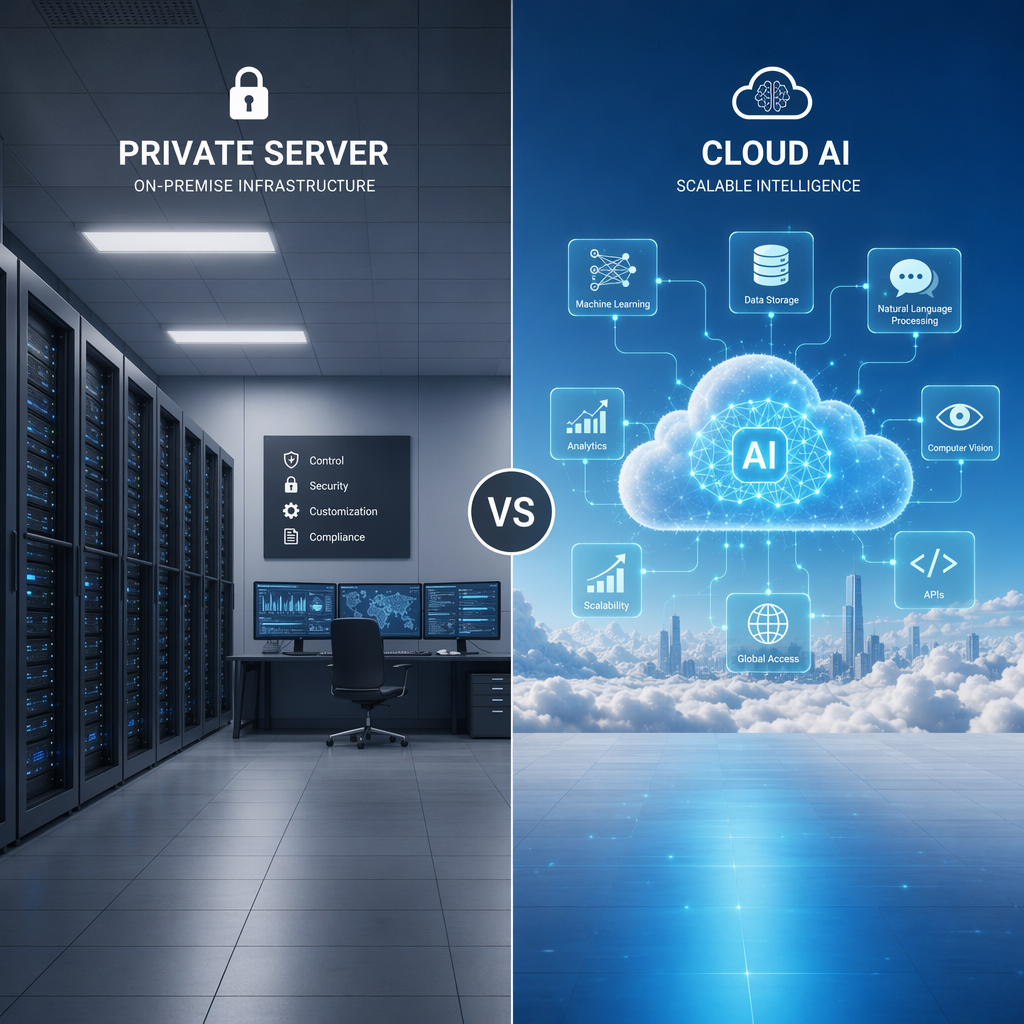 Deciding between private ai and public ai means you have to think about what is most important for your group. Public ai gives you fast access and is easy to set up. Private ai gives you more control, stronger safety limits, and better ways to meet your data security needs.
The best choice depends on your data, how much rule-making is needed, and how big your goals are. The next parts will look at privacy, cost, how much work goes into upkeep, and how these systems can be changed to fit what you want.
Data Security and Privacy Considerations
When businesses look at different AI options, data security is often the top concern. A public AI system can be good for tasks that are not risky. But when the AI system works with contracts, records, or inside information, there can be worry. Sensitive information has to be handled more carefully.
Private ai helps with data privacy. It keeps prompts, outputs, and any data in a setup that you control. This way, organizations have more say in who gets to see the data and how long it is kept. It also makes it easier to check and control what goes on inside.
Some key privacy benefits of private ai are:
Less chance that sensitive information will get out to others
More control over how data is handled and kept inside the business
Better help with checking for security and doing audits
If your business needs solid information flow, using private ai is often safer than sending that data out for outside processing.
Deployment, Cost, and Maintenance Factors
Public tools for artificial intelligence are often simple to get started with. The provider takes care of a lot of the work, so the deployment of artificial intelligence systems can be quick. Private AI needs more time and planning from the start. The group will need to build the setup, guide the rules, and keep everything working.
Still, easy does not always mean better. Private AI costs more at first and has higher resource requirements, but it can help you depend less on outside services later. For many companies, this trade-off is worth it.
Key factors to compare:
Public AI usually gives a faster setup
Private AI needs more planning and regular work
Private deployment can cost more at first
Long-term costs change based on how you use it, how big it gets, and what your group can do
So, is private AI harder to use? At first, yes. But if your group wants more control, private AI can be a good model for you over time.
Customization, Scalability, and Compliance Needs
One big advantage of private AI is how you can change it to fit your needs. You get to tune the way work is done, who can get in, and how the model acts. You can use your own business ideas and your proprietary data for this. With most public systems, this is tough, as they are built for many people to use, not just you.
Scalability is also important. When it comes to business set-ups, you need the AI to help more users and handle more data and tasks. It must stay strong and stable. Private AI can do this if you plan your main setup and keep things checked often. This is why the structure you pick and how you keep an eye on things are key.
Think about the rules you need to follow right from the start. If you have to check regulated files, clear audits, or keep access tight, a private setup is often a better pick. The best option will depend on how sensitive your data is, how you hope to grow, what skills your team has, and how much control you want to have inside your company.
Frequently Asked Questions (FAQ)
This part gives answers to many common questions in a simple way. If you need to choose between public or private deployment, these short explanations can help you go from knowing the basics to taking action.
How does a private AI model protect my business’s sensitive data?
A private ai setup helps you keep sensitive data in a controlled environment. This makes data privacy stronger and helps lower the risk of outside exposure. Your teams will be able to use security controls, decide who can get to the data, and watch over how it is used in business processes. That way, it gets easier for you to protect records, documents, and customer information.
What are the most popular private AI models available today?
Many people use private versions of language models for things like natural language processing and enterprise ai work. The best private model for you will depend on your ai system goals, what your internal data is like, and what your rules are for managing information. A lot of groups pick models that can link safely to their own private knowledge sources.
Is it difficult to set up and manage a private AI model in an enterprise?
This can be harder to do than using public tools. You have to plan for things like deployment, how you will take care of rules, and resource allocation. Still, if you set it up the right way, private AI can make ai adoption safer at every part of the ai lifecycle. For many people working in businesses, this is worth the extra work. It is important for business processes where there is key inside or regulated data.
Key Considerations When Choosing a Private AI Model for Your Organization
Start by looking at your specific needs. Look for data privacy risks and compliance requirements. See if the model can be used in a controlled environment. You should also think about what skills your team has and what your governance and regulatory requirements are. The best pick is the one that matches your business data, security aims, and the way you work.
Conclusion
As we move through the changing world of artificial intelligence in 2026, we see that private AI is now key for companies. It helps to keep sensitive data safe while letting businesses use the power of artificial intelligence. Private AI gives strong security, meets rules for data use, and lets a business stay flexible so it can grow and do well. When companies know the difference between private AI and public AI, they can pick the best way to use enterprise AI that works for them. Using secure AI saves your important information. It also helps your business get ready for new things and future success. If you want to protect your company’s artificial intelligence tools, get a free chat with our experts today!
What private AI is out there? : r/privacy
Private AI models include tools like OpenAI's ChatGPT, Google’s BERT, and IBM Watson. These models prioritize user privacy by processing data locally or implementing strict data handling policies. They empower businesses to leverage AI capabilities while safeguarding sensitive information, ensuring both innovation and confidentiality in applications.