







.png%3Falt%3Dmedia%26token%3D9510828c-846c-4801-bb4e-d401ef052827&w=3840&q=75)
Top AI Future Jobs: Opportunities You Can't Miss
Key Highlights
Artificial intelligence is changing the job market by creating new jobs, not just automating old tasks.
Roles such as AI Engineer, Prompt Engineer, and AI Ethics Specialist are growing with ai technology adoption.
Machine learning, data skills, and AI tools now matter across tech and business teams.
Many careers will use human judgment with AI, not compete against it.
Healthcare, finance, education, and manufacturing are opening fresh opportunities.
Students and professionals who build practical AI skills can enter strong future career paths.
Introduction
Artificial intelligence is not just a special topic anymore. It is now changing the job market in software, business, healthcare, finance, and education. This change is creating new jobs for people with technical skills, business thinking, and good communication. If you want to know where work is going, this is good news. The growth of artificial intelligence gives people chances that were not there in a big way a few years ago. Many of these new jobs are expected to keep growing until 2026 and later.
Future Jobs Created by Artificial Intelligence – Top Emerging AI Careers for 2026

The top AI Future Jobs for 2026 include AI Engineer, Generative AI Engineer, Machine Learning Engineer, Data Scientist, AI Product Manager, Agentic AI Developer, Prompt Engineer, and AI Automation Specialist. These roles are growing because companies want better systems, faster workflows, and smarter decisions.
At the same time, Future Jobs Created by Artificial Intelligence also include governance, ethics, research, and content roles. That means your next ai job may come from coding, data work, strategy, or human-AI collaboration. Let’s look at the emerging AI careers one by one.
Role | Core Focus | Main Skills | Demand Outlook |
|---|---|---|---|
AI Engineer | Build AI systems | Python, ML, deployment | Strong |
Generative AI Engineer | LLM apps and workflows | Prompting, NLP, RAG | Strong |
Machine Learning Engineer | Train and deploy models | ML frameworks, pipelines | Strong |
Data Scientist | Insights and prediction | Data analysis, statistics | Strong |
AI Product Manager | AI product strategy | Business strategy, communication | Rising |
Agentic AI Developer | Autonomous systems | Programming languages, orchestration | Rising |
Prompt Engineer | Improve model output | Large language models, ai literacy | Rising |
AI Automation Specialist | Process redesign | ai tools, workflow logic | Rising |
1. AI Engineer
An AI Engineer creates systems that help bring AI applications into real life for businesses. You might work with machine learning in tools like recommendation engines, decision systems, or daily-use software. This job has you work with the product team, the data team, and the engineering group.
To succeed in this field, you need good technical skills. You must know Python, be able to use data structures, work on cloud platforms, handle model integration, and have some basic knowledge about running models live. Since companies want their systems to scale up, an AI engineer should also know how models blend into software engineering and get used in everyday work.
The job market is strong in this area. Businesses are putting a lot of money into AI to stay ahead. As more companies start to use AI, there is a jump in demand for people who design, build, and take care of systems that go beyond just simple tests. This is one of the best AI future jobs you can choose if you want a good job in this field.
2. Generative AI Engineer
A Generative AI Engineer works with systems that can make text, code, images, or answers using big models. This job is growing fast. You see generative ai tools used in customer support, writing, search, and in enterprise software. It is now one of the most popular new AI careers.
As an ai engineer, you might design prompts, connect models to business data, help improve output quality, or help build language-based features. It helps a lot to have a background in computer science, machine learning, and natural language processing. Knowing how these models act is as important as being good at coding.
Career paths in this area are growing because ai tools and other improvements now make LLM-powered products common. Businesses need people who can move from testing ideas to real work fast. If you like to build ai tools that solve real problems, this job has strong long-term chances.
3. Machine Learning Engineer
A machine learning engineer builds, trains, and launches models that learn from data. These models help with things like recommendation systems, fraud checks, and forecasting. There are many other ai applications you can work on too. If you want to solve problems by using code and logic, this is a good job to think about.
You need to know Python, data analysis, and how algorithms work. It is important to use frameworks like TensorFlow or PyTorch. You have to focus on how well models work and how correct the results are. It matters to see how these models work when live in the real world. ai technology is only helpful if it works well and does not fail.
This job is key, as enterprises need AI systems that work and do not break. They want results and not just tests and experiments. As many companies bring ai technology into their day-to-day work, the demand for machine learning engineers will stay strong in the labor market. For job seekers, this is a good career choice and stays ready for a new future in tech.
4. Data Scientist
A data scientist takes raw data and turns it into helpful decisions. This job often has data analysis, finding trends, creating predictive models, and helping with business strategy. In AI teams, the data scientist helps find out what the data tells us and what the company should do next.
If you are new to the job market, data science can be a good way to start. Most people start with Python, SQL, statistics, dashboards, and small machine learning projects. This path helps you build a strong base for other AI jobs later. It also shows you how a business uses data when making daily choices.
In the long run, data professionals matter a lot because AI needs good data and clear facts. Even as tools do some tasks on their own, teams still need smart people who can ask the right questions, check patterns, and turn things they find into actionable insights.
5. AI Product Manager
An AI Product Manager acts as the link between technical teams and business leaders. This ai job is all about planning features, picking what comes first, and making sure ai applications help real people with their needs. You are not just working on technology. You are making results that people trust and use.
This role needs skills in project management, good communication, and business strategy. You have to know what AI can do, how it can fit in, and how to help the product teams take an idea all the way to launch. Many groups are still learning the best way to use AI, so making the right call on ideas is very important.
In the next ten years, AI will bring more jobs like this that mix skills. Companies look for people who can use AI while balancing what technology can do, what customers want, adoption, and rules. Because of this, being an AI Product Manager is one of the best new ai job choices for people who enjoy both technology and making decisions.
6. Agentic AI Developer
An Agentic AI Developer is someone who builds systems that can do things, make choices, and finish work with less hands-on help. These tools are part of the move to more ai technology, where things happen on their own and work gets done faster. This job is one of the new options popping up because ai technology is getting better.
This role often asks that you know programming languages well. You should also be good at putting models together and get how ai technology works with steps that build on each other. You might work on agents that pick up facts, start actions, or help teams and tools do their jobs.
Why is this role growing now? Many companies want more from ai than quick answers. They want ai technology that helps get things done, gets teams set up, and follows the flow of tasks. This means there are more jobs for people who want to handle agent actions in a good way and bring real help to businesses.
7. Prompt Engineer
A prompt engineer makes large language models give better answers. The job includes setting up how you give input, checking if the response is good, making better instructions, and helping teams get more out of ai tools. This role got well known because good prompting can really change how clear, helpful, and right responses are.
You do not have to get a formal degree to train for this job. It helps, but there are other ways. You should be good at ai literacy, write clearly, know how work flows, and do some hands-on tests. It is important to learn how these models act, where they do not work well, and how to fix things by giving more context.
The role will change with time, but the main skill will always matter: clear talk with ai systems. As teams use large language models for support, content, research, and running things, a prompt engineer is there to help make responses more sure and quick, all while keeping people included.
8. AI Automation Specialist
An AI Automation Specialist changes the way teams work to help them do fewer repetitive tasks. This lets them spend more time on more important jobs. In many places, this means bringing in ai technology to help with reporting, customer service, daily work, or help inside the company. The main goal is not just doing things faster. It is to get more out of human effort.
This job is a good example of how ai technology is making jobs better instead of taking them away. When routine tasks get handled by smart systems, people can focus more on review, making choices, planning, or talking to customers. That is why many in the labor market are looking closely at this job right now.
You can find this kind of work in finance jobs, planning the movement of goods, fix-up steps in marketing, and helping offices run well. The main role of the specialist is to spot slow spots, use smart automatic tools, and teach people new ways to work. This makes it one of the most useful Ai Future Jobs the labor market has. It is best for people who know both jobs and technology, and want to help businesses grow.
9. AI Ethics Specialist
An AI Ethics Specialist helps companies use artificial intelligence in the right way. The job is mainly about keeping things fair. It looks for bias, protects privacy, and builds trust. As more groups start using ai, they want people who can check systems and ask tough questions before problems happen.
This job is not likely to be replaced by machines. That is because AI ethics depends on people who have judgment, know the right context, and use good communication and emotional intelligence. A tool can show patterns, but someone needs to decide what is fair, safe, or okay for others in real life.
People in this job now need new skills like being aware of rules, talking with others, and building systems that work in the right way. Businesses, public groups, and places with rules all want people who help them make good choices. That is why the AI Ethics Specialist is turning into one of the most important future jobs made by artificial intelligence.
10. AI Trainer
An ai trainer helps people and systems learn to work better with artificial intelligence. In some places, this job is about making data better and helping AI models work well. In other places, it is about helping employees know the tools, use them right, and feel sure of themselves by learning through training programs.
This job is good for people who like to teach, talk with others, and make things work more smoothly. You do not have to be a top technical expert to start. Knowing about ai literacy, writing things down well, having soft skills, and seeing how workflows move gives a lot of value.
Today, many organizations are using artificial intelligence so fast that their teams cannot keep up. Because of this, there is a need for people who help roll out AI, teach others, and make sure it is used in real work. If you want to start in Future Jobs Created by Artificial Intelligence, the job of AI Trainer is one of the best and easiest ways for most of us.
11. AI Governance Consultant
An AI Governance Consultant helps organizations set up rules for using AI. The job covers checking risks, making better processes, making sure people take responsibility, and helping support a safe rollout. As more ai applications are used, leaders want clear guidelines instead of just trying things out.
Traditional sectors, like healthcare and education, really need this job. These fields must deal with trust, privacy, and big decisions. Business leaders and other heads cannot risk careless ai adoption. They need clear frameworks to show how tools get picked, checked, and watched.
This is why ai governance now offers a strong path in consulting. The work mixes knowing about technology with policy skills and good ways to talk. If you can make tough ideas simple and help people act with care, this job may stay in high demand for years and be a good career in many industries.
12. AI Research Analyst
An AI Research Analyst looks at trends, tools, models, and market changes in ai technology. Companies need this work to see where ai technology is going. It helps them understand how to use ai in products, the way they work, or their plans for the future. The job takes careful observation and sharp thinking.
In this job, you may look at new systems. You may compare what different vendors can do. You can track how people use ai technology, or help your team plan with data analytics. The main task is to take complex data and turn it into actionable insights. Leaders and teams use those ideas to guide them. This work is important because ai technology moves fast. Bad decisions can cost a lot.
This job is one new path because of ai technology changes and the feeling that business can be uncertain. Businesses need people to see what is real and what is just hype. If you like to do research, use structured thinking, and help turn trends into clear direction, this role could be a good fit for you.
13. AI Content Strategist
An ai content strategist helps brands use ai tools to plan, make, and improve content. The goal is to not lose quality or keep things the same. This job sits where messaging, audience needs, and smart workflows meet. It is a big part of digital marketing and product-led teams.
When companies put out new products faster, they need ways to make content grow with them. ai tools can help with making drafts, doing research, and how the content moves in the system. But there still needs to be people guiding the plan. This is where this job is needed. You set the tone, decide what the goals are, choose the best structure, and pick how things get checked over.
Over the next ten years, there will likely be more jobs like this that mix creative work with using systems. ai will not take all these jobs but will help people focus more on planning, shaping, and getting content to fit the audience. That makes this role a good choice for people who are in digital marketing or make new products.
14. AI Search Optimization Specialist
An AI Search Optimization Specialist works to help people find content and information when they use search that is shaped by ai technology. As the way people search changes, there is now a need for those who know about being seen, how things are put together, and how ai technology picks answers to show for a search. This job is getting more important for publishers and brands.
The work may cover content planning, understanding what people want to find, looking at how things are doing, and using predictive analytics to find where there are gaps in content. It is also part of the bigger business strategy. Search does more than just bring in lots of people. It helps build leads, trust, and learns with customer education at the same time.
AI will likely help this role to grow instead of making it go away. AI may change search, but people with skill still have to shape the message, set up information well, and help content match what people need. For this reason, this role is getting bigger as more businesses go for ai adoption in marketing and publishing.
15. AI Safety Engineer
An AI Safety Engineer helps make sure systems are safe, easy to control, and ready for use in the real world. As more companies use models in big ways, ai safety needs to be a main focus. This job is about stopping problems, lowering failure risks, and stopping people from using ai in bad ways.
You need to know about ai technology, how models act, and how neural networks work in different settings. Safety work could mean testing limits, looking at what comes out, and adding checks to keep users and business steps safe.
The career outlook for this job and other new roles is good. Many companies use ai technology more every year, but trust has not caught up. They want new ideas but also need safety. This means people who can make systems safer will be needed for a long time.
16. Human-AI Collaboration Designer
A Human-AI Collaboration Designer helps people and AI work well together. The job is not about having AI take over everything. It is about making systems where human judgement and the speed of AI each play their part. This job often deals with user experience, how work flows, and how people start using new ideas.
If you want to get into this field, start with learning how ai applications work in real life. Build strong skills in talking with people, watching how things get done, thinking about steps, and making designs. Emotional intelligence is important since working together will only work if people trust the system and know their place in it.
This is one of the top new roles in AI, and almost every the industry will need people who help humans and AI work as a the team. Tools can suggest things, make summaries, or do things for us. Still, people like to know what is going on, feel sure, and keep control. Designers who help create that balance will always be needed.
How Artificial Intelligence Is Transforming Careers in India
 The impact of ai in India is easy to see today. There is faster ai adoption in many places. You can find new digital ways to work. The job market is asking for more AI-ready talent also.
As companies grow and use new tech, there are new jobs. People are getting work in engineering, data, automation, governance, and training. These are good roles for those who know about ai.
Old fields, like healthcare and education, are changing too. India is not losing all jobs to AI at once. Instead, you see new industries start, new roles show up, and a bigger need for people who work well with ai systems. The next parts will talk about how this big shift is taking place.
The main keywords here are job market, impact of ai, and ai adoption.
Impact of AI on Job Creation and Automation
The impact of ai on work is mixed, but you can see a clear trend. AI helps by taking care of many repetitive tasks. At the same time, it also brings new jobs. People are needed for building ai models, watching over these systems, handling their operations, and setting rules, or governance. So, the job market is not just getting smaller. It is simply changing shape.
Data from the bureau of labor statistics supports this. It shows strong growth over time in computer and information technology fields. This tells us that work tied to ai will keep growing. There will be more jobs in these technical, analysis-focused, and team-centered roles.
Here's how job types will change in the next ten years:
Routine work is more likely to be automated or made easier.
There are new roles showing up in AI creation, checking, and workflow tasks.
You now see more jobs where people review, guide, or make AI’s work better.
People’s judgment and talking skills are even more valuable now.
Human-AI Collaboration and New Work Models
One big change coming is that people and AI will start working together more. Companies are not giving all the work to machines. Instead, they are setting up their teams so people and AI systems help each other. AI can do things fast and on a big scale. People are still needed to check the work, make choices, and give the big picture.
This helps create the new way people work. Some jobs will change. People will watch over what the AI does, handle special cases, and look for ways to make the system better. Jobs where you deal with customers, work with products, do research, or help with training are all jobs where AI can help more than take over. These jobs need emotional intelligence and trust.
If you want to keep up, you need new skills that let you work with AI, not be scared of it. You need to be good at thinking, being able to change, and talking with others. Technical skills are nice, but not enough. In many jobs, the best workers will be the people who can lead AI and help it give good results, not just let it do all the work.
Technology Shifts Creating New Industries
Every big change in technology leads to new types of jobs. AI is doing the same. As companies add smarter systems, they need help. This creates work for other services and people who support, install, or improve the way these systems run. That is why AI brings many job opportunities. It is not only about coding.
You see this now in areas like managing models, data work, search fixes, safety, and things that use AI tools. These AI tools must be trained, checked, and put in place. They also need to fit with other parts of the company. So, this brings jobs for engineers, people who do data analysis, team advisors, and planners in all kinds of work.
The skills you need most for this change are both technical and work-related. Knowledge of machine learning, programming, the cloud, data analysis, and business all matter. People who use these tools to get results will be in a better spot. Just learning ideas is not enough.
AI Augmentation vs Replacement in the Workforce
A useful way to understand AI at work is this: ai augmentation helps people do tasks better, while ai replacement removes some tasks completely. In most cases, the real change is a mix of both. The labor market is being redesigned at the task level, not erased all at once.
The world economic forum has highlighted both job displacement and job creation. That supports a balanced view. Some routine work will shrink, but new roles in AI building, oversight, safety, and governance are growing at the same time.
Jobs that involve judgment, trust, communication, and problem-solving are more likely to stay safer from full automation.
Area | AI Augmentation | AI Replacement |
|---|---|---|
Customer support | Draft replies, summarize issues | Basic repetitive queries |
Data work | Speed up analysis | Manual routine reporting |
Healthcare | Assist diagnosis, admin support | Some low-complexity admin tasks |
Education | Personalized support tools | Parts of routine grading or content formatting |
Skills Needed for Emerging AI Careers
 Growing careers in AI call for technical skills along with practical thinking. The best way to start is by learning computer science. You also need to know how to handle data and work with programming languages like Python and SQL. After that, you can go on to learn about machine learning, using cloud tools, and how to put models into use.
But it is not enough to just be good at coding. If you want to get ahead, show that you are good at talking with others, can adapt quickly, and can bring real results with your work. The skill areas listed next tell you what you need most to make a strong place for yourself in AI future jobs.
Python and Programming Languages
Python is the top choice for starting work in AI. It is simple to use, flexible, and has many libraries that help. If you want to be an ai engineer or a data professional, you need to start with Python. SQL is also needed to work with structured data.
You can learn through degrees, bootcamps, guided learning, or hands-on labs. What matters most is practical experience. Employers want to see if you can write code, solve problems, and use the tools the right way.
Focus on these basics first:
Python for data work, automation, and building models
SQL for asking and handling data questions
One or more extra programming languages, depending on your role
If you are looking at ai courses in hyderabad or an ai engineering course in hyderabad, check that the program gives good coding practice and real projects.
Machine Learning and Deep Learning
Machine learning is at the heart of many AI systems. It lets models learn from data and get better as time goes on. Deep learning takes this a step further. It uses neural networks for hard jobs like image understanding and advanced language work. Many tools today, including large language models, rely on these ideas.
If you want to get into the job market, start by learning the basics first. You should know about supervised and unsupervised learning, how to check your model, and try simple projects. When you understand the main points and how data flows, you can move on to deep learning.
This way of learning helps you if you want to be a machine learning engineer, a data scientist, or a generative AI expert. A machine learning course in hyderabad will be good if it gives you real project work, real data, and time to use modern tools for hands-on learning. This works better than just reading theory.
Data Science Fundamentals
Data science basics are important because AI uses information that must be clean, useful, and set up the right way. You need to know about data analysis, statistics, data show methods, and some parts of data engineering. If you do not have these, strong models may give bad results.
This group of skills is used in old industries too. In healthcare, data science helps doctors check health issues, guess patient results, and make work flow better. In education, it helps find learning insights, planning, and ways to build better training. This is why data professionals have value beyond just tech.
If you want to learn, taking a data science course in hyderabad can help you if it covers Python, SQL, dashboards, and basics about models. The top courses make you see how data science links to real business needs instead of making it just one subject.
Prompt Engineering and LLMs
Prompt engineering is about helping large language models give better answers. You do this by writing clear instructions, adding context, trying out different ways, and making sure the results are good. As more companies use ai tools for support, research, and content, this skill is getting more important.
There are now jobs like Prompt Engineer, Generative AI Engineer, AI Content Strategist, and AI Search Optimization Specialist. These jobs are here because businesses need people who get how the model works and what users want.
This skill is helpful for many ai job paths, even if you are not called a prompt engineer. A good generative ai course in hyderabad or ai developer course in hyderabad should teach you how to work with large language models on real projects. It should not just tell you what they are.
Agentic AI and Autonomous Systems
Agentic ai is about systems that can plan ahead, use ai tools, and finish bigger tasks without being told what to do each time. These ai applications are moving from simple answers to organized ways of doing things. Because of this shift, there is now more need for people who build and design workflows.
Jobs here include Agentic AI Developer, AI Automation Specialist, and AI Product Manager focused on advanced ai applications. If you want one of these jobs, you need to be good at system thinking, know programming, and understand when automation is helpful and when people should still make decisions.
If you want to work in this area, you should get learning that is more in-depth than just beginner courses. An ai developer course in hyderabad or an ai engineering institute in hyderabad can help, but make sure they teach about working with ai tools, putting them together, and building real world workflows with modern ai applications.
Cloud Computing and Business Analytics
AI projects often use cloud computing because it takes a lot of power to train and run AI models. Cloud platforms help teams store your data, run the models, and grow apps when you need. That is why you need good cloud skills for jobs in AI, like engineering and analytics.
Business analytics is just as important. Companies do not use AI for only the tech side. They want to improve decisions, see better future results, and view clear numbers. If you know how to work with predictive models and can talk about their results in simple business language, you will be more helpful in any team.
Soon, some top skills will mix cloud platforms, working with models, and business analytics. If you are looking at programs, an ai training institute in hyderabad should cover both the tech side of deployment and how to explain your work for business.
Industries in India Hiring for AI Future Jobs
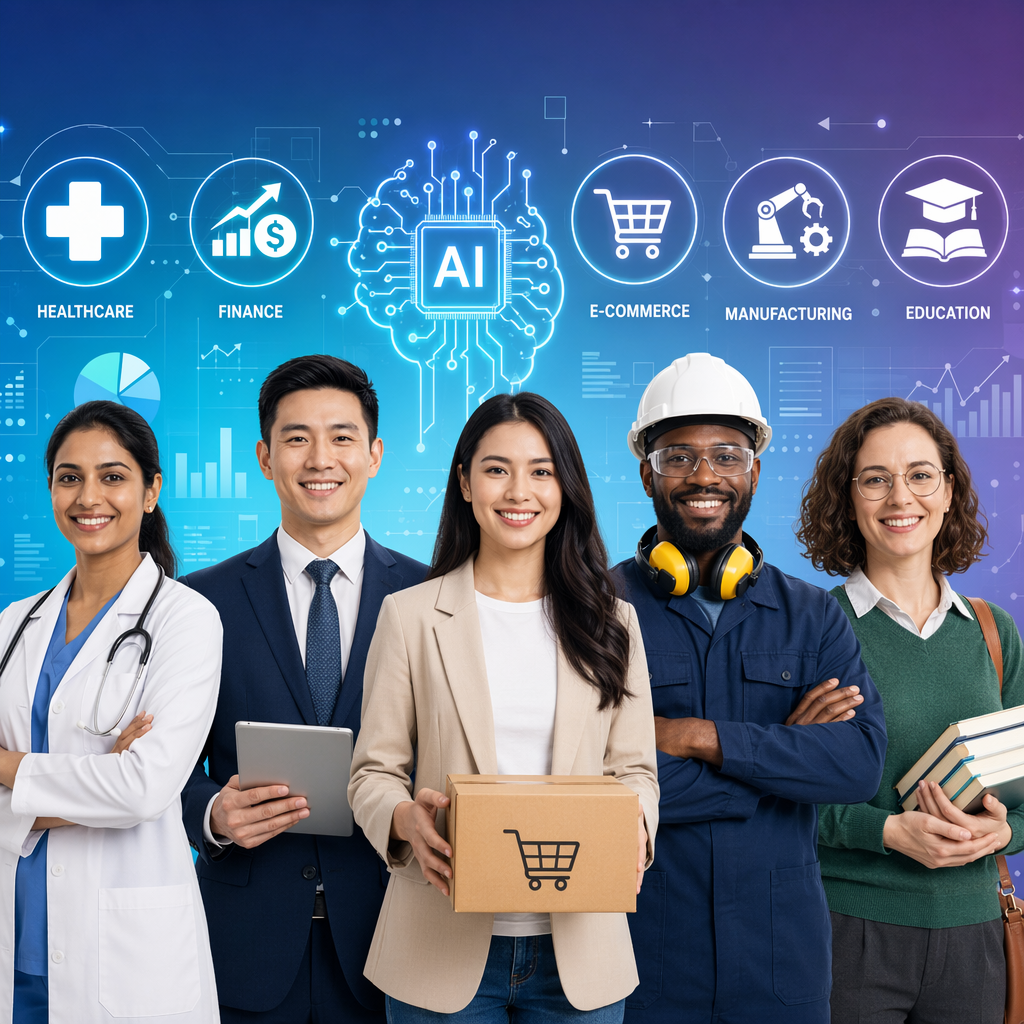 AI hiring is not just for startups or tech giants now. There are various industries in India that have job opportunities as ai adoption grows. It can be seen in operations, analytics, customer support, and product teams. Many business leaders now treat AI as important for long-term growth.
Because of this, old sectors are starting to change. Healthcare, education, finance, e-commerce, manufacturing, and cybersecurity are now looking for people to fill AI-related jobs. The points below show where demand is rising. These points also tell why this is important for your career plans.
Healthcare
Healthcare shows how AI creates new jobs and changes the work people do. AI systems help with medical images, predict what might happen to patients, and make paperwork easier. This gives jobs to data specialists, AI experts, and the people who make sure AI is safe to use.
In healthcare, you see real results from AI. Teams use data analysis and predictive analytics to make better choices and finish daily work faster. Things like checking images and making sure the right person is cared for can now use tools with facial recognition. Still, people need to check these tools, especially where mistakes can matter.
If you are a job seeker, healthcare is not just for doctors or those who run hospitals now. There are good jobs for analysts, engineers, people who work on rules and safety, and those who build products for both tech and patients. This shows healthcare is a strong place for growth with AI in the future.
Finance
AI is used in finance for fraud detection, credit scoring, support, and quick analysis. This makes finance one of the top sectors to hire people with AI skills. Companies look for better risk control, smart choices, and smoother work.
Predictive models and data analytics are at the heart of this work. Financial firms use ai applications to handle big chunks of data fast. But they need people to check the results, make improvements, and set rules. That’s why the field needs both tech experts and people who know business.
How will AI change finance? It will take care of some simple tasks on its own. There will still be a need for those who can read risks, build strong systems, and keep things in line. For people who like data, structure, and clear results, finance stays a good place to find AI jobs.
E-commerce
E-commerce uses ai tools to make search, recommendations, customer support, and campaigns work better. Because online businesses need to move fast, they look to people who can use ai in everyday choices and still not slow down the customer experience. This creates new jobs in analytics, content, automation, and product work.
This area links closely with digital marketing. Brands hope for better targeting, stronger content, and more efficient ways to work. AI tools help with these jobs, but people still shape brand voice, decide where it fits, and pick the right audience. That divide makes new jobs instead of only replacing work.
If you want to change careers, e-commerce is a good way into ai-driven work. You get hands-on experience, see real results, and learn fast with quick feedback. If you look for a job where ai and market impact come together, this could be a good spot for you.
Manufacturing
Manufacturing has used automation for a long time. Now, ai technology makes systems more smart and based on data. Companies use these new tools to make their work better, find problems before they happen, and help with production speed. This changes the kind of workers they need.
Repetitive tasks in manufacturing will keep going down. But human value will not go away. There are new roles in system watching, process plans, looking at data, and helping the setup work well. AI needs people who can help run and make the automated setups better.
This area shows that AI growth is not just about software. Machines, care for systems, and technical work are important too. As more companies move to new ways of production, manufacturing has good chances for engineers, people who fix things, and workers who know about both automation and doing the job the right way.
Education
AI adoption is changing the way we see education. It helps with learning support, content help, and admin tools. Schools, colleges, and training providers need people who can use AI and also teach others to use it in a right way. Because of this, there are both technical and non-technical jobs now.
The best training still starts with learning the basics. This means you start with programming, data, machine learning, and working on real projects. At the same time, ai literacy matters not just for engineers, but for more people who need to use AI. So training programs now have to teach how to use these tools and also make good decisions with them.
If you want to work in AI, pick learning that mixes know-how with using what you learn. For example, students want to find an ai engineering course in hyderabad, data science course in hyderabad, or machine learning course in hyderabad. This kind of training helps you get the skills companies are looking for right now.
Cybersecurity
Cybersecurity matters more now with ai tools and ai technology bringing new spots where attacks can happen. Digital systems are growing, and things get more complex. Companies use ai tools to help spot and track problems, but threats also change quickly. Because of this, working in cybersecurity is seen as a good way to have a steady career.
Some routine tasks, like alerts or basic scans, may get automated. Still, the tough parts of security—such as understanding data, deciding what to do, and planning defenses—need human skills. That is why many jobs in cybersecurity are expected to be safer from full automation with AI.
For people who want to work in areas where ai tools and ai technology are used, cybersecurity gives the chance for technical growth and steady job demand. As more businesses bring ai technology into their products and systems, they will need people who keep things safe, check for risks, and jump in when things go wrong or when tools are not used right.
Conclusion
The world of jobs is changing fast because of artificial intelligence. By 2026, there will be many new career opportunities in this area. Jobs like AI Engineers and Human-AI Collaboration Designers will need people with special skills. These roles can be very rewarding for those who are ready to learn and grow with the changes. Places like healthcare, finance, and e-commerce are starting to use artificial intelligence more, so the need for skilled workers will go up. To make the most of these artificial intelligence career opportunities, it is important to keep learning and stay updated with what is going on. If you want to know about your options, you can book a free consultation with our experts today.
Frequently Asked Questions
What are the fastest-growing emerging AI careers in India?
The fastest-growing jobs are AI Engineer, Generative AI Engineer, Machine Learning Engineer, and Data Scientist. Each ai job helps businesses who need more automation, prediction, and better products. Companies look for people who can use AI systems to get real-world results.
How can someone start a career in future jobs created by artificial intelligence?
Start with the programming languages Python and SQL. The first step is to learn data basics and machine learning. You can use online courses and guided programs. Work on projects to get practical experience. When you go for a job search, show your real work with a portfolio, internships, or case studies. It's better than showing only certificates.
Which traditional job sectors are being most impacted by AI in India?
You can see the biggest changes in healthcare, education, finance, manufacturing, and e-commerce. AI adoption is making the job market change fast. Some routine work is now done by machines. At the same time, there is more need for analysts, engineers, trainers, and people to help manage things in these industries.