








Creative Machine Learning Projects for Beginners to Learn
Key Highlights
Discover 10 beginner-friendly machine learning projects that impress recruiters.
Learn why simple, well-explained projects are better than complex ones for your portfolio.
Understand the key components of a great project, from feature engineering to model evaluation.
Explore classic classification and regression projects with real-world applications.
Find out how to present your work on a resume and GitHub to land a data science job.
Get insights into how top training institutes guide you through your deep learning journey.
Introduction
Are you ready to get started with machine learning, but not sure how to go about it? Certificates can be good, but real projects help you get noticed by employers. This guide will help you step into the world of data science and give your career a boost. We’ll show you some easy and powerful machine learning projects, like a classic classification project, that you can start today. You will also find tips on where to look for source code to help you along the way.
10 Machine Learning Projects for Beginners to Get Hired
 Building a portfolio can seem like a lot, but there is a way to make it easy. You just need to begin with simple, basic machine learning projects. These projects are chosen to help you get the main ideas of machine learning such as regression models and data analysis. They do not have extra steps that could confuse you. If you work on these, it will show the person hiring that you have the practical skills for the job.
Every project in this list helps you move forward. You learn important facts with each one. You also show you can use what you know to fix real problems in real time. You might predict prices through a project. You might use one to put data into groups. Doing these machine learning projects helps you make a portfolio that will grab people’s attention.
1. Iris Flower Classification – The Classic Starter Classification Project
The Iris flower classification project is often called the "Hello, World!" of machine learning. This is because the data set you use here is small, the data is clean, and it's easy for people to understand. Your job will be to make a classification model that can tell what type of iris flower you have based on the petals and sepals.
This project gives a good start to supervised machine learning. You will get to learn how to load the data, look at it, and train your convolutional neural network classification model to put each flower into one of three groups. The best part is that it teaches these important basics without making you deal with hard or messy data.
When you finish this project, you show you know how a simple classification model works from beginning to end. It's a good starting point that will help you feel more sure about yourself and get ready to work on more advanced complex models and things about machine learning.
2. House Price Prediction – Regression Project for Real-World Impact
Want to work on a project that has clear value in the real world? Predicting house prices is one of the most known regression problems, and you can apply techniques such as linear regression. Recruiters really like to see this project. The Boston Housing dataset is often used here. You will make a model that can guess house price by looking at things like crime rate, number of rooms, and where the house is.
This project will help you learn about regression models in machine learning for stock price prediction. These models are there to predict values that keep changing. You will do data analysis to see which features are important for the house prices. This helps you get experience with finding feature importance. It is a great way to learn how machine learning is used to solve real problems.
By finishing this project, you can show that you know the complete data process. You will clean the data, train a model, and look at what the results mean. It is a strong proof for your portfolio. It shows the people you want to work for that you can build predictive models for the real world.
3. Titanic Survival Prediction – Binary Classification with Historical Data
The Titanic survival prediction is one of the best projects for people who are new to this. There is a good reason why many pick it first. You use real data about the people who were on the Titanic. Your job is to find out who survived and who did not. This is what we call a binary classification problem. It has an interesting story behind it as well.
You can start this project even if you only know a little about coding. The project helps you learn how to use a dataset that has numbers and words mixed together. You will work with data cleaning, learn about feature engineering, and use machine learning to build a model with logistic regression to make your prediction.
This project is a good way to see the entire process. You will look at the data, make the best use of it, and then test how well your model works. Many people like this project because it is simple to start and you can show what you know about getting good information from historical data.
4. Student Performance Prediction – Regression Project for Educational Analytics
Are you curious about how data can be used in schools? A student performance prediction project is a great way to start. In this project, you will use machine learning, including support vector machines, to build a model in which you try to predict a student's final grade. You look at things like study time, past grades, and details about the student to make a guess about how they will do.
This project will help you see how different things connect to the final grade, which is the dependent variable. You will use data analysis to find out which factors matter the most for a good result. Many websites have easy, step-by-step guides for this, so it is good for anyone who is new to the field.
When you take on this project, you get to show that you can use machine learning in the social sciences. You show you can build a model that predicts something, read the results, and give helpful suggestions for what to do next.
5. Email Spam Detection – Practical Text Classification Project
No one likes getting spam emails. Why not make a machine learning model to help stop them? You can do this by starting an email spam detection project. This idea is a good way to learn about text classification and natural language processing (NLP). Your job is to build a model that looks at an email's content and sorts it as either "spam" or "not spam."
In this project, you will see how to work with text data. You will get to know methods for turning words into numbers that the machine learning model can use. This is a basic skill in natural language processing and many places where people work think it is important.
Making a spam detector with a machine learning model is a smart and useful project that can also help in identifying fake news. It shows that you know how to wor
https://scikit-learn.org/stable/
k with unorganized text data and can build something helpful. It is a good first project if you want to get into language processing with machine learning.
6. Movie Recommendation System – Collaborative Filtering Made Simple
Have you ever thought about how Netflix knows what you want to watch next? You can make your own simple movie recommendation system. Use a data set of user ratings, like the MovieLens data set, to guess what movies someone may like.
This project is a good way to learn about recommendation systems. These are a common use of machine learning. You will work with a method called collaborative filtering. This finds users who like the same things and suggests movies for them. There are many guides with source code online that will help you.
If you create a recommender system, you show that you can make things just for someone. This project is fun to do. It is useful for many tech companies, and it will look good in any beginner’s collection of work.
7. Handwritten Digit Recognition – Computer Vision Classification Project
If you want to know how machines can "see," you can start with the handwritten digit recognition project. In this project, you use the well-known MNIST dataset that has handwritten numbers and sensor data. You will make a model that can find numbers from 0 to 9. This is one of the main projects in computer vision.
This project helps you get into image classification using an ML model. This is usually the first thing people do with neural networks. You will see how to use image data and give it to a model to get answers. There are some basic ideas here you will use a lot when you work with deep learning or machine learning.
When you finish this project, it means you know how to use image data and implement image recognition techniques. You also understand the main ideas in deep learning and computer vision. This kind of project is important for anyone who wants to do machine learning. It will be a strong first project for your portfolio.
8. Customer Churn Prediction – Business-Focused Classification Project
Businesses want to keep their customers. A customer churn prediction model will help them do this by pointing out customers who may leave. This type of business project is good for your portfolio because it shows that you know how to solve real money problems.
In this project, you look at customer behavior data. You work with things like usage trends, market trends, and account info to make a classification model. This model will say whether a customer is likely to leave, so the business can do something about it and keep them. Learning predictive modeling is seen as very helpful.
This project will show that you can use machine learning for business. Recruiters will see you know how to use data to help make more money and keep more customers. It also makes you stand out as a strong choice for their team.
9. Sentiment Analysis on Social Media – Text Data Classification Project
Are people happy or upset about a new product or movie? Sentiment analysis on social media can tell you. In this project, you will get tweets or other posts from social media. You build a model to sort their feelings as positive, negative, or neutral.
This is a good way to learn more about natural language processing. You work with real text that can be messy, and you try to find clear opinions in it. People will find many open-source codes and step-by-step guides online for this popular idea, so you can start without much trouble.
With a sentiment analysis project, you show you know how to use unstructured text data. You help people get useful business information through unsupervised learning techniques. This project is a great way to show you are up-to-date with machine learning and know how to use social media and language processing in real ways.
10. Model Evaluation and Validation – Portfolio-Ready Project with Metrics
This final project idea stands out from others. You do not build only one model. You build several and look at them side by side. The main goal is to work on model evaluation. You take a dataset, try different algorithms on it, and see which one works best. You do this by looking at many metrics.
The right project usually depends on what you want to get from it. This project is a good way to show you know a lot about the machine learning process. You compare how well classification models do the job. Then you pick your top model using accuracy, precision, and recall.
This project tells recruiters you are not someone who just copies code. You know how to think about your models, see what matters, and make good choices. You also show you can use model evaluation in real work. This is a great skill, and it helps you stand out from most beginners.
Why Projects Matter More Than Certificates in Machine Learning
 In machine learning, what you do counts more than what you say. A certificate shows you have learned some ideas, but projects show you know how to use them. Recruiters want to see if you can look at a problem, pick the right machine learning techniques, and make accurate predictions.
Because of this, having a good list of machine learning project ideas in your portfolio can be your best tool. It shows what you can do, how you solve problems, and that you have a real interest in this work. Here, we will talk about what recruiters want when they look at these portfolios and why when you do simple and well-explained machine learning projects, it can be more impressive than doing something complex.
How Recruiters Evaluate ML Project Portfolios in India
When a recruiter in India looks at your data science portfolio, they do not just want to see a list of what algorithms you use. They want to understand how you think about problems. They check if you can look at a raw set of numbers or facts and turn that into a good answer for the problem.
The first thing that they usually check is your work on exploratory data analysis. Did you take the time to actually know the data? Did you use data analysis to look at it and maybe also make some pictures or charts to see patterns and things that stand out? This means you do not be the one to go right into modeling without seeing what the data does. They want a story that shows how you move from the problem step all the way to the answer step.
In the end, they look at the way you check your model. It is not only about making sure you get accurate predictions, but also about knowing why your model works the way it does and what it cannot do. A project that is explained well and shows why you made each choice will be worth a lot more than a hard or complex one with very little said about its steps.
Why Simple, Well-Explained ML Project Ideas Stand Out
A lot of people think that a complicated project is always better. But that is not true. Recruiters actually look for simple machine learning project ideas that are done really well. If you have a simple project that is well-documented and easy to explain, it shows you understand the work much more than a complex project you cannot explain.
A simple project lets you focus on the basics. These fundamentals are what employers want to see in a beginner. They want to know that you understand every part of the machine learning workflow. This includes things like:
Data Cleaning: What did you do to manage missing values and make sure data quality is good?
Feature Engineering: How did you pick or create the main features for your model?
Model Justification: Why did you use one type of algorithm and not another?
When you do well with these basics in a simple project, you show that you have a solid foundation. This tells recruits that you are ready to take on bigger and harder machine learning problems in a real job.
Keywords: machine learning, project ideas, feature engineering, machine learning project ideas, data cleaning, data quality
Common Beginner Mistakes in ML Portfolio Projects
When you start to build your first portfolio, it can be easy to make some basic mistakes. It is important to know what not to do, as well as what steps you should take. A big mistake many people make is just copying code from a tutorial. If you do not fully understand it, it will show right away.
Recruiters are quick to notice when you have not put in the real work. To build a good portfolio, try to stay away from the following problems:
Using too many algorithms: Do not use lots of models on one problem. Pick a few that make sense, and explain why you chose them.
Skipping the "why": Say why you are making each choice, like when you do data cleaning or model evaluation.
Ignoring business context: Talk about how your regression models or any project you work on can help solve a problem in a real-world business.
Not explaining your results: It is not enough to make a prediction; you need to say what your result means, too.
If you avoid these mistakes, your work will look more thoughtful and professional. This is how you show you are not just copying steps, but you think like a real data scientist.
SocialPrachar’s Guidance on Project Selection for Beginners
Choosing your first project in machine learning can feel hard, but you do not have to do it by yourself. At SocialPrachar, we put stress on starting with projects that help you get a strong base. We think that learning the basics of supervised machine learning is the best way to start a good career.
In our machine learning course in Hyderabad, we stick to projects that have clear goals and use clean datasets. We help you with each step, from first data analysis to looking at the final results. We want you to start with well-known problems in machine learning, and we show you how to get good source code so you can learn from it.
Our goal is to help you grow your skills and give you new things to put into your portfolio, too. By working on clear ideas and useful skills, SocialPrachar is here to help you pick and make the right projects that match what companies want from new hires.
What Makes a Good Beginner ML Project?
 A good beginner project in machine learning should not be hard to understand. It should help you learn by doing clear tasks. You get to practice the whole machine learning process. This includes data collection, figuring out the problem, doing feature engineering, and looking at how well your model works with model evaluation. If the project is too much, you could get upset and stop.
The best projects are easy to follow and have a simple dataset. They help you learn one main idea. Now, let’s talk about the five key parts that make a project great for people who are new.
Understanding and Exploring Datasets
The heart of every machine learning project is the data set. For someone new to this, it helps to start with a data set that is clean and easy to understand. The set should not be too big. This way, you can spend your time learning key ideas, not doing a lot of hard data cleaning.
Before you build a model, you need to know your data first. You have to check for missing values. You should see how each feature looks and find any outliers. Doing this in the early stage is very important for making good choices later.
When you work on a project and take the time to study and get your data ready, it stands out. It shows that you care about doing things well. This is something every data scientist should do. It also shows that you know how model evaluation means nothing if your data is not good.
Basics of Feature Engineering for Beginners
Feature engineering is about making new features from your old data. It helps your machine learning models work better. This is one of the most creative and important steps in machine learning. If you are new to this, you should begin with the basics.
You do not have to make very complicated features. Focus on easy changes that make your data more helpful. You can do things like:
Put two features into one feature (for example, make a "total rooms" feature from "bedrooms" and "bathrooms").
Get relevant data from a date (for example, change a date into "day of the week").
Change a feature that has groups into numbers.
Even simple feature engineering like this can make your regression models much better. When you show that you worked on your features and did not just use the data as-is, you prove you have a good way to think about the modeling process.
Evaluation and Interpretation: Explaining Results with Confidence
Building a model is just one part of the job. The other important part is to check how well it works and explain what the results say. You should not just talk about the accuracy of your model. A good model evaluation is what sets a great project apart from an okay one.
You have to pick the right metrics for your problem. For some problems, things like precision and recall can matter more than accuracy. A good project will:
Use more than one model evaluation metric.
Talk about what these numbers mean for the problem.
Say what the model does not do well and how it could get better.
If you can understand your results and talk about them clearly, this is a big plus. It means you can take your accurate predictions and turn them into good ideas for action. This is what many employers want to see.
Classification Projects for Beginners
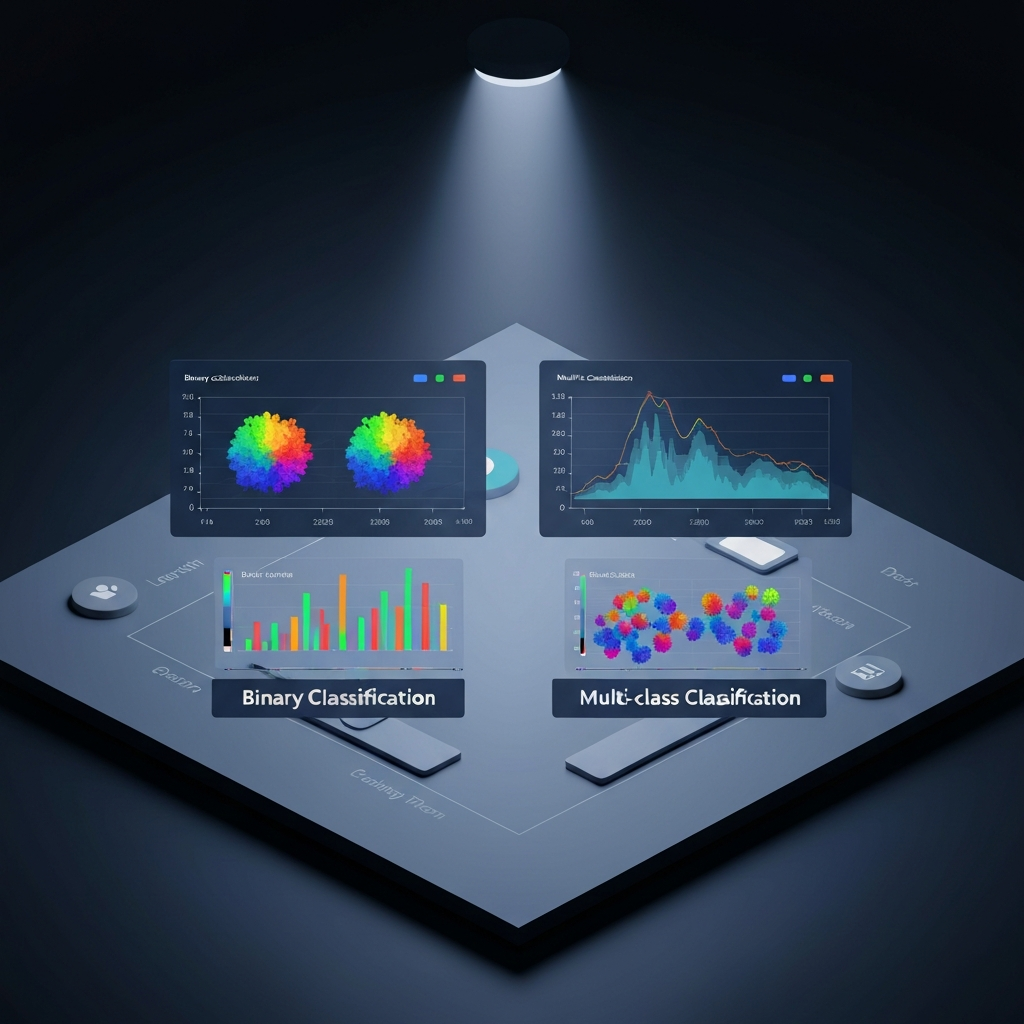 Classification projects are a great way to learn about machine learning. Here, you teach a model to put an item into a group. For example, this can be a simple task like spam or not spam. It can also use more than two groups. You will get to use text data, numbers, and more.
On these projects, you see the main ideas of supervised learning. Everything is step by step. In the next sections, you will learn what you need to start working with your first classification model or any other classification problem.
Binary vs Multi-Class Classification Explained
When you work with classification, you usually deal with two main types: binary and multi-class. It's important to know the difference so you can pick the best way to solve your problem.
Binary classification is the easiest to understand. In this, you put data into one of two groups. It is like a yes or no question. Some examples are:
Is this email spam or not spam?
Will this customer leave or not?
Is this action fake or real?
Multi-class classification is different. Here, you give data a label from three or more groups. For example, you may need to say if a photo is an "apple," "banana," or "orange." Multi-class jobs can be more tricky. You also have to look out for class imbalance. This is when one group has more data than the others.
Popular Real-World Use Cases in India
Classification models are used in many places in India to solve big business problems. By understanding the real-world use of these models, you can make your projects better. Recruiters notice when you can show this in your work.
A lot of banks use classification models for risk checks. For example, a bank can build a machine learning model for loan eligibility prediction. This model helps them decide if they should say yes to a loan. The model makes it easy for banks to avoid risk and give answers faster. There are many other good ways people use these models:
Fraud Detection: Many e-commerce and banking apps use machine learning to watch for and stop credit card fraud. These models flag odd or risky transactions so the bank can stop bad actions as they happen.
Customer Churn Prediction: Phone and streaming services use models to guess which people will quit. This helps them keep more users.
Medical Diagnosis: Hospitals use machine learning to sort medical images. With the help of these models, they can find things like cancer in body scans more quickly.
If you use any of these ideas in your project, you show that you know how to use machine learning for real business problems. This can help you stand out.
Beginner-Friendly Datasets for Classification Projects
Finding the right data set is crucial for your first classification project. You want something that's clean, easy to understand, and well-documented. Fortunately, there are many classic datasets available that are perfect for beginners.
These datasets are widely used in tutorials and online courses, so you'll find plenty of examples and open-source code to help you along the way. Platforms like Kaggle, the UCI Machine Learning Repository, and even libraries like Scikit-learn come with built-in datasets.
Here are a few great options for your first classification problem:
Dataset Name | Problem Type | Description |
|---|---|---|
Iris | Multi-Class Classification | Classify iris flowers into one of three species based on measurements. |
Titanic | Binary Classification | Predict survival of passengers on the Titanic. |
MNIST | Multi-Class Classification | Classify handwritten digits from 0 to 9. |
Breast Cancer Wisconsin | Binary Classification | Diagnose whether a tumor is malignant or benign. |
Key Metrics: Accuracy, Precision, Recall
How can you tell if a classification model is good? You do this by checking how well it works with different evaluation metrics. Accuracy is what most people know, but it may not show the full picture. To really know how your model is doing, you also need to check precision and recall.
Here is what they mean:
Accuracy: This tells you what percentage of your model’s predictions are correct. It is a good place to start. But when the dataset is not balanced, accuracy alone might be confusing.
Precision: Of all the times the model said a case is positive, how many times is that actually true? If your model has high precision, it does not make many false positives.
Recall: Of all the positive cases there really are, how many did your model spot? A model with high recall means there are few false negatives.
For some things, like medical diagnosis, recall is more important. For other things, like spam filters, you want high precision. Learning the trade-offs between them will help you do better with any classification model.
Interview Tips for Classification Project Discussions
When you talk about your classification project in an interview, the person asking questions wants to see how you think. They want to know more than just the code you wrote. Be sure to talk about why you made certain choices.
Here are some usual questions you might hear and how to get ready to answer:
Why did you choose that specific classification model? Be able to say what is good and what is not so good about the algorithm you picked when you compare it to other options.
How did you handle missing data or outliers? Talk about your data cleaning steps and give a reason for each thing you did.
Which model evaluation metric was most important for your problem and why? Show that you know about accuracy, precision, recall, and what trade-offs come with using each one.
How would you improve your model if you had more time? This lets them see if you can think about your work and figure out how to make it better next time.
Go over these questions until you feel sure about your answers. This will help you talk about your classification project in a clear way and make a good mark on your interviewer.
Regression Projects for Beginners
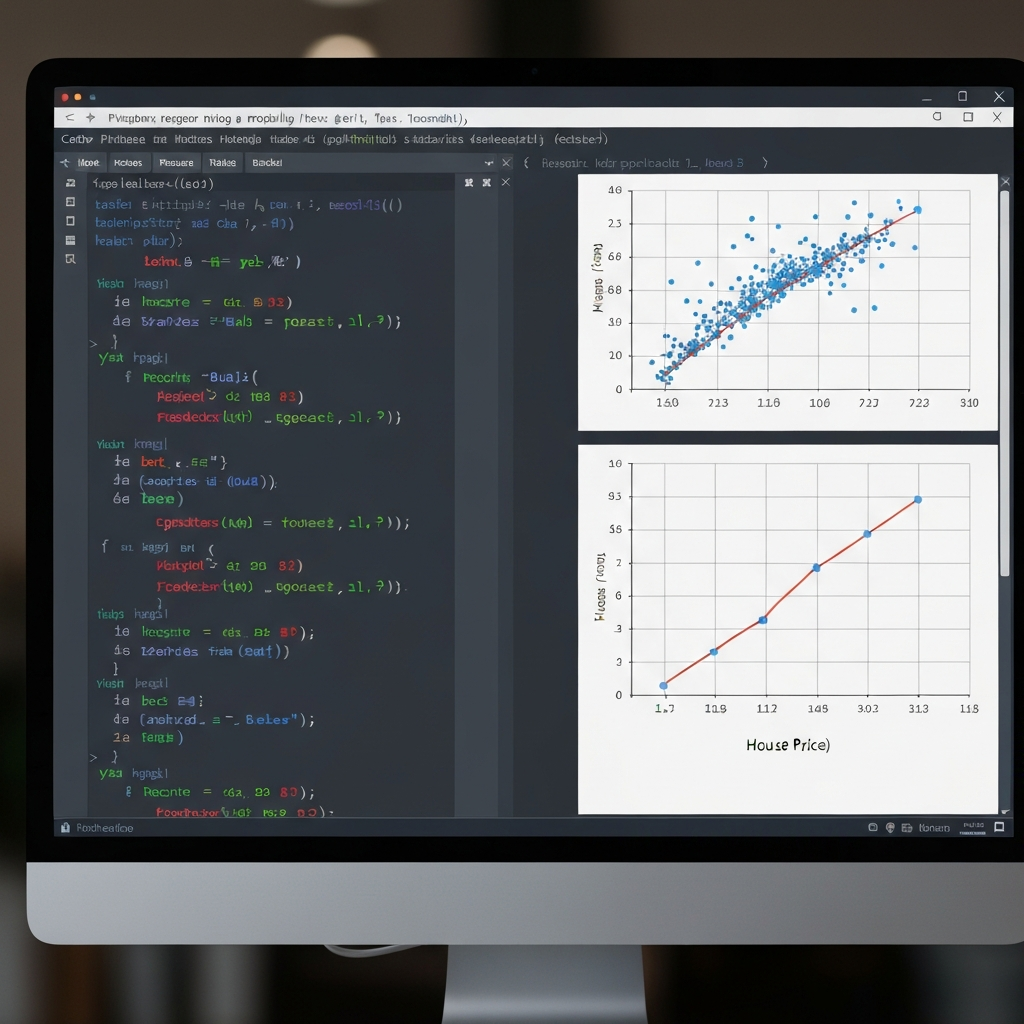 If classification helps you predict a label, regression helps you guess a value that can change, like a number. People use regression models for many things. You can use them to guess what sales will be, or to look at house prices. These models are important in predictive modeling. Every beginner should try to build one.
These projects help you learn more about how things connect in data. You also get to learn how to do deep data analysis. Now, let’s see some top ways you can use regression, and look at ideas and concepts you will need for your first project with regression models.
Understanding Feature Impact in Regression Projects
In regression, it is not enough to only make a prediction. You also have to know which features are helping to make that prediction. Knowing the impact of each feature is an important part if you want to explain your regression models and give useful information to others.
After training your model, you can check it to see how much each feature matters when finding the result, or the dependent variable. This can help you answer many business questions. For example, in a model that predicts house prices, you can find out how much more money a house is worth if it has one more bedroom.
There are a few ways to look at feature impact, like these:
Looking at model coefficients: In linear models, you use these numbers to see which way and how much a feature changes the outcome.
Feature importance plots: Some models, such as Random Forest, can show you graphs that list the most powerful features.
Partial dependence plots: These plots show you how one feature is tied to what the model will predict.
If you do this kind of work, it shows you can do more than give a number. You can also help others see the reason behind the results from your regression models.
Error Metrics: MAE, RMSE, and Their Interpretation
For regression problems, you can't use accuracy to measure how good your model is. Instead, you need to check how far your predictions are from the right values. This is why we use error metrics like MAE and RMSE.
Knowing about these metrics is important when you want to see how well the model works.
Mean Absolute Error (MAE): This means you take the average of the absolute differences between the predictions and the real values. It is simple to get because it has the same units as your target. For example, an MAE of 5,000 means your price guesses are wrong by ₹5,000, on average.
Root Mean Squared Error (RMSE): This metric is like MAE but bigger mistakes get a higher penalty because you square the differences before averaging. But the unit is still the same as your target.
A good project should show both of these numbers and clearly say what they mean for the problem. This tells others that you are looking at the data in more detail.
Translating Regression Outputs for Business Value
A regression model gives a set of numbers as the output. The real skill is to show how those numbers help in business. A recruiter wants to know if you can make a link between technical work and results in the real world.
For example, let’s say you build a sales forecasting model. Don’t stop at, "the RMSE is 100 units in the United States." Go further. Say, "Our model can predict sales with an average error of 100 units. This can help the company cut overstocking by 15% and save money."
Here’s how you can talk about your results:
Quantify the impact: Use the model’s accurate predictions to guess how much money the company can save or how much more they can earn.
Provide actionable insights: After you look at which things matter most, give steps the business could take based on that.
Explain the limitations: Be open about what your model can’t do well and how this may affect business choices.
This way, you show you think not just like a tech person, but also someone who knows about business.
Presenting Regression Projects in Your ML Portfolio
How you show your regression project in your portfolio is as important as the project itself. You want a busy recruiter to see what you did and why it matters without much effort.
Data visualization helps a lot. It lets you use charts and graphs to share your story. Do not just put tables full of numbers. Instead, add visuals that point out your big findings. For a regression project, you can use:
A scatter plot of what your model predicts and what really happened. This lets people see how well your model did.
A feature importance chart to point out what made the biggest impact on your results.
Plots from your exploratory data analysis that show patterns you found during your data analysis.
A README file on GitHub is also a must. Lay out what problem you tackled, how you worked on it, what you found, and which tools you used. This helps your portfolio look good and be easy for anyone to go through.
Model Evaluation Projects: The Underrated Portfolio Star
 Many people new to this focus on making a model with the highest score. But, what if that score does not show the real picture? Spending time on model evaluation can help you stand out. It shows that you are able to think deeper and not just look at numbers. Most beginners do not do this.
With model evaluation projects, you compare many models. You look closely at how they perform. You use ways like cross-validation. This helps make sure your model does not just get lucky on data, but can work well on new data too. It is about more than winning. It is understanding that how you judge success matters just as much as getting results. Now, let’s see why model evaluation is so good for you.
Why Model Evaluation Matters More Than Just Accuracy
Accuracy can be a risky number to use. Think about this. You are working with a model to find a rare disease. This disease only shows up in 1 out of 100 people. If your model always says there is no disease, it will be right 99% of the time. But this is not good, because it does not find any real cases.
So, knowing how to use model evaluation is very important. You have to pick the right numbers for the main problem. In the case of this disease, recall matters more. You want to know how many real cases you can find, not just how many times you get the answer right.
If you do a project that looks at model evaluation, it shows you understand how models really work. It tells people you do not just follow steps. You know how to ask what good work looks like in that setting. This is a key skill that good data scientists have and sets them apart from those who just know how to write code.
Overfitting vs Underfitting: Spotting and Solving
Two of the main problems in machine learning are overfitting and underfitting. If you have a model that fits your training data, but does not work well with new data, you are facing one of these problems.
Here is what these words mean in a simple way:
Overfitting: This is when your model gets too used to the training data. It picks up the noise and even the small mistakes in the data. It will do very well on the data you gave it, but not on any new data. This often happens when your model is too hard or too detailed.
Underfitting: This is when your model is not strong enough to find the real patterns in your data. Here, your model will not do well on the training data, and it will not do well on new data either.
Knowing how to find these problems is very important in machine learning. You can do this by looking at how the model does on the training set and then testing it on a validation set. If you make a project that can find and fix overfitting or underfitting, it will show that you really know how to work with machine learning models.
Cross-Validation Basics for Robust ML Project Ideas
How can you know that your model is really working well and not just a lucky guess? The way to do this is by using cross-validation. This strong tool helps you get a more steady read on how your model will do with new data.
Cross-validation does not just separate data into one training group and one test group. It breaks the data into many ways, called "folds." The model is trained and checked a few times, with a new part used for each check. When you finish, the scores are averaged. This gives you a better idea of how well your model will work in the real world.
Key benefits of cross-validation include:
More reliable evaluation: It helps lower the chance that your model's good results happened by chance.
Better use of data: All your data points are used for testing at least one time.
Helps tune hyperparameters: It is the basic method for picking the best set up for your model.
When you use cross-validation in supervised machine learning, you show that you are using best steps for good model evaluation in your machine learning projects.
How SocialPrachar Trains Beginners in Model Evaluation Projects
At SocialPrachar, we know that being good at model evaluation helps a data scientist stand out. This is why we teach it as a main topic in our ai courses in hyderabad. We think you need to know how to test and check a model the right way, not just how to make one.
In our training, you get to work on real projects. We help people new to this field focus on learning how to do model evaluation. Here’s what you will do:
Try cross-validation by building it from the start, so you see how it works.
Look at how different models perform with the same set of information and explain which one is the “best.”
Study how models work using social media data. This helps you see how different checks (or evaluation metrics) matter in real work.
We use easy-to-follow details and good source code samples, so you really understand model evaluation. With our help, you will be ready to talk clearly about your projects and how you check your models in any job talk.
How to Present ML Projects on Resume & GitHub
 You have put a lot into building a great project. So what comes next? To help people see its value, you need to show it off well on your resume and GitHub. The way you present your work is the final and most important step. You want to make things simple for a recruiter to look at and understand what you did. For this, clear storytelling, good documentation, and strong data visualization are key.
How you show your project can really help you stand out from others. Here are the best ways to show off your hard work and turn your GitHub page into a great tool to help your career.
Storytelling: From Problem to Approach to Result
The best way to show your project is to tell a story. You should not just list the things that you did. It is better to walk the reader through the steps, from the problem at the start to the result you got later. This kind of storytelling helps people get what you did. It also keeps them interested and helps them see the value of your work.
Your story should follow a simple path:
The Problem: Begin with a simple and clear statement of the problem. Say what you were trying to do.
The Approach: Talk about the steps you took next. Write about how you looked at the data, the feature engineering you used, and how you picked your model. Also, share why you made these choices.
The Result: Give your final findings here. Do not just put down your accurate predictions. Let people know what these predictions show and how someone can use them.
When you use this way to tell your project story, it will not sound dry or too hard to read. The project turns into a strong case study that shows your skills. It lets people see that you are not only someone who can code, but also someone who can solve problems.
README Best Practices for ML Projects
Your project's README file on GitHub works as its front page. This is what people see first. Many recruiters look at it before anything else. That is why it has to be clear, look good, and cover everything important. A poor README can make your project look messy. Even if your code is good, a bad README does not help.
You should see the README like a small report. It quickly tells people what your project is about. The reader should not have to search through the source code or look for clues to know what your work does.
Be sure to put these key sections in your README:
Project Title and Description: The title and a short note on what this project is about.
Installation and Usage: Simple steps on how someone can set up and run the code.
Data Set: Add a link to the data set you use and talk about what is in it.
Methodology: It should say what you did, and tell which models or methods you used.
Results: Share what you found and the numbers or facts that prove it.
When you follow a good structure for your README, it shows that you care. You are also showing respect for people coming to see your work. It saves their time and makes things easier.
Visualizations and Insights: Making Your Work Stand Out
A picture can say much more than words, especially when you do data science. Good data visualization helps your project stand out and brings your ideas to life. Instead of saying what you found, you can show it.
You should use visualizations all through your project. They help you explain your steps and what you got. These tools make hard information easy to get. Some good visualizations to add are:
Exploratory Data Analysis (EDA) plots: Histograms, scatter plots, and heatmaps that show what you see in the data.
Model Performance graphs: A confusion matrix when you have a classification problem or a predicted vs. actual plot when you do regression.
Feature Importance charts: A bar chart that shows which parts of your model matter most.
Adding clear and well-labeled visualizations in your README and notebooks proves you can share data analysis and tricky ideas well. This is an important skill to have for any job in data science.
Common Interview Questions about ML Portfolio Projects
When you go to the interview, make sure you are ready to talk about your portfolio projects. Be ready to share all the details about what you did. The person interviewing you will ask about your work. They want to see how much you know and how you solve problems. They also want to know if you really understand your projects.
It's a good idea to think about what questions they might ask. Practice your answers before you go. This can help you do well in the interview. Some common questions you may hear are:
What was the biggest challenge you faced in this project, and how did you overcome it?
If you could start this project over, what would you do differently?
Why did you choose these specific machine learning techniques over others?
How did you approach model evaluation, and why were those metrics important?
You want your answers to be honest and thoughtful. This will help show you are a person who thinks about your work. It will also show you learn from your experiences with machine learning, machine learning techniques, and model evaluation.
Conclusion
To sum up, starting with top machine learning projects is a big step for any beginner. It helps you build a strong list of work that will get the attention of recruiters. The project ideas shared in this blog are great for learning key machine learning ideas. They also show you the best ways to put your skills to use.
These machine learning projects cover things like artificial intelligence classification, regression, and model evaluation. They are made to be easy to start, but still help you learn a lot. You get to work with examples that are used by real people and companies.
When you put your work together, make sure your projects are clear. Try to show how you solve problems and what story you tell with your work. These things matter when people look at your skills.
If you want help with your learning or need more machine learning project ideas, you can book a free talk with the experts at SocialPrachar. They will help you get ready for a job in the field of machine learning.
Frequently Asked Questions
How do I choose the right beginner machine learning project for my skill level?
You should start with classic machine learning project ideas that use small and clean datasets. Pick a problem that is about just one main idea, like building a simple classification model or using one of the basic regression models. This will help you learn the whole process, like data analysis and feature engineering, preparing you for more advanced machine learning projects, but you will not feel lost along the way.
Are there open-source codes or step-by-step guides for these ML project ideas?
Yes, for most beginner machine learning projects, this is true. You will find plenty of source code for projects like computer vision and recommendation systems on GitHub and Kaggle. There are also many blogs and learning websites. These sites have step-by-step guides that help you with things like data cleaning, building models, and checking how well your work is doing.
What are the top mistakes to avoid when building your first ML portfolio projects?
The biggest mistakes in data analysis are copying code without knowing what it does, not checking data quality, and not doing model evaluation. You should always take time to do thorough exploratory data analysis. Make sure you can explain your choices. Use data visualization to help others see what you find. It’s better to have a well-documented portfolio project that shows how you think than to do a complex project that people cannot follow.
What is the best project to do for a beginner?
A great project for beginners in machine learning is building a simple predictive model, like a housing price predictor. This project allows you to practice data collection, preprocessing, and applying algorithms, giving you hands-on experience with tools like Python and libraries such as Scikit-learn or TensorFlow.