







.png%3Falt%3Dmedia%26token%3Dfcbd2791-b78c-407e-8e90-fd481c21590f&w=3840&q=75)
NLP vs Generative AI: Major Differences Explained for 2026
Key Highlights
Natural Language Processing (NLP) is a broad field of artificial intelligence focused on helping computers understand human language.
Generative AI is a subset of AI that creates new, original content, including text, images, and code.
The main difference is that NLP analyzes and understands existing language, while Generative AI models generate new language and content.
Large Language Models (LLMs) are a key technology powering many modern NLP tasks and are a type of Generative AI.
While NLP focuses on specific tasks like classification, Generative AI excels at content generation and creative applications.
Understanding both is crucial as they are increasingly working together in advanced AI systems.
Introduction
Welcome to the world of artificial intelligence. In this field, you will find words like natural language processing and generative ai. Many people wonder about the difference between these two. People can get confused, but they play different roles.
Natural language processing helps computers understand how people talk and write. Generative ai is all about making new content. In this guide, you will see what makes them different. You will also learn where each one is good to use in machine learning. This way, you can know more about what they do and how they work with language processing and new content.
Understanding NLP vs Generative AI: A 2026 Perspective
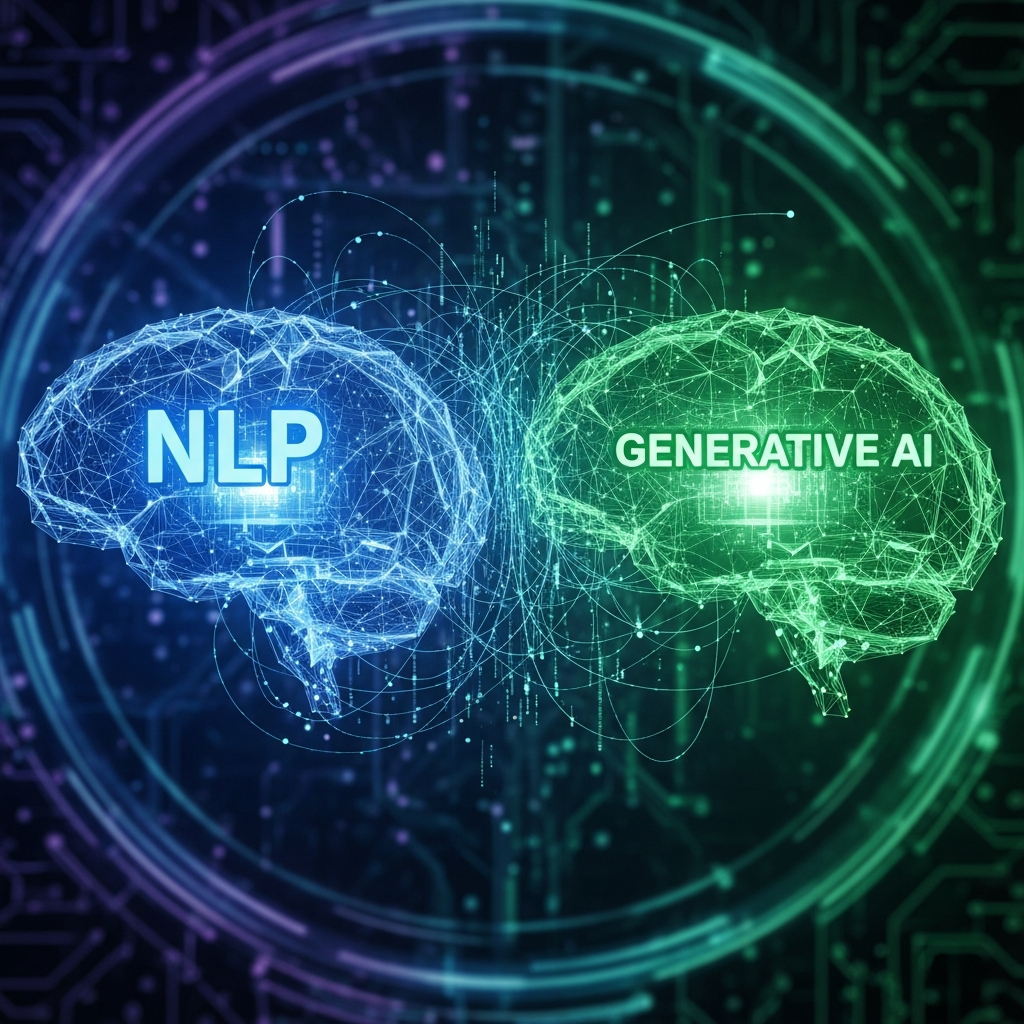 As we head into 2026, it can be hard to tell where one artificial intelligence field ends and another begins. NLP has been behind things for years, helping computers read and understand human language. Now, Generative AI makes use of a large language model and takes things even further.
This new type of AI does more than just understand. It also lets computers create and use natural language in ways that feel more and more real. Many people mix up both fields, but they each play a role. Let’s look at why the two often get confused, how they connect, and their path through time.
Why NLP and Generative AI Are Often Confused
It is easy to see why people mix up natural language processing and generative AI. Both work with human language. Many large generative AI models are great at language tasks. This has been the way natural language processing works too.
The mix-up gets bigger because modern generative AI, like a large language model, does a lot that falls under language processing. For example, when you use a chatbot that creates answers with generative AI, it also uses natural language processing to figure out your first question. This makes it look like both are the same.
In the end, generative AI is an advanced tool that sits on top of natural language processing. Natural language processing is mainly about understanding and working with language. Generative AI takes that and makes something new. They are close but not the same.
The Relationship Between NLP, LLMs, and Modern AI Systems
To get how modern AI works, it is good to see how its main parts connect. Natural language processing is the bigger field where computers learn to understand human language. It is the main group.
Inside this field, deep learning brought big changes. A large language model is a good example. This kind of model is trained on lots of text. It lets computers understand and make language in a smooth way.
So, how does this link together? An AI system, like a voice assistant, needs natural language processing to get what you say. That skill comes from a large language model most of the time. When you want an answer, the assistant uses the model to create words. Large language models are what makes some of the best natural language processing and generative AI apps work today.
How AI Language Technologies Have Evolved
The story of AI language technologies moves fast. At first, there were only simple rule-based systems. They could not do much with basic NLP tasks. People had to write out the grammar rules, and that made these early systems stiff and not very useful.
Then, machine learning changed things a lot. There was no need to put in all the rules one by one. Instead, the systems could learn the way language works by looking at large datasets. This made them work better and allowed them to handle more things. But the biggest change came with deep learning models.
Deep learning models, and especially transformer models made in 2017, really changed the game. They could work with language and understand context better than ever before. This is how we got the powerful AI and large language models we use today.
Rule-Based Systems: In the beginning, NLP used rules people wrote by hand.
Statistical Machine Learning: Language models learned from large datasets and could do things like translate.
Deep Learning & Transformers: Tools like neural networks and transformer models gave a deeper level of understanding to language.
Large Language Models (LLMs): Now we have huge models trained on lots of data, so they can write, answer, and reason with us.
Natural Language Processing (NLP) Explained
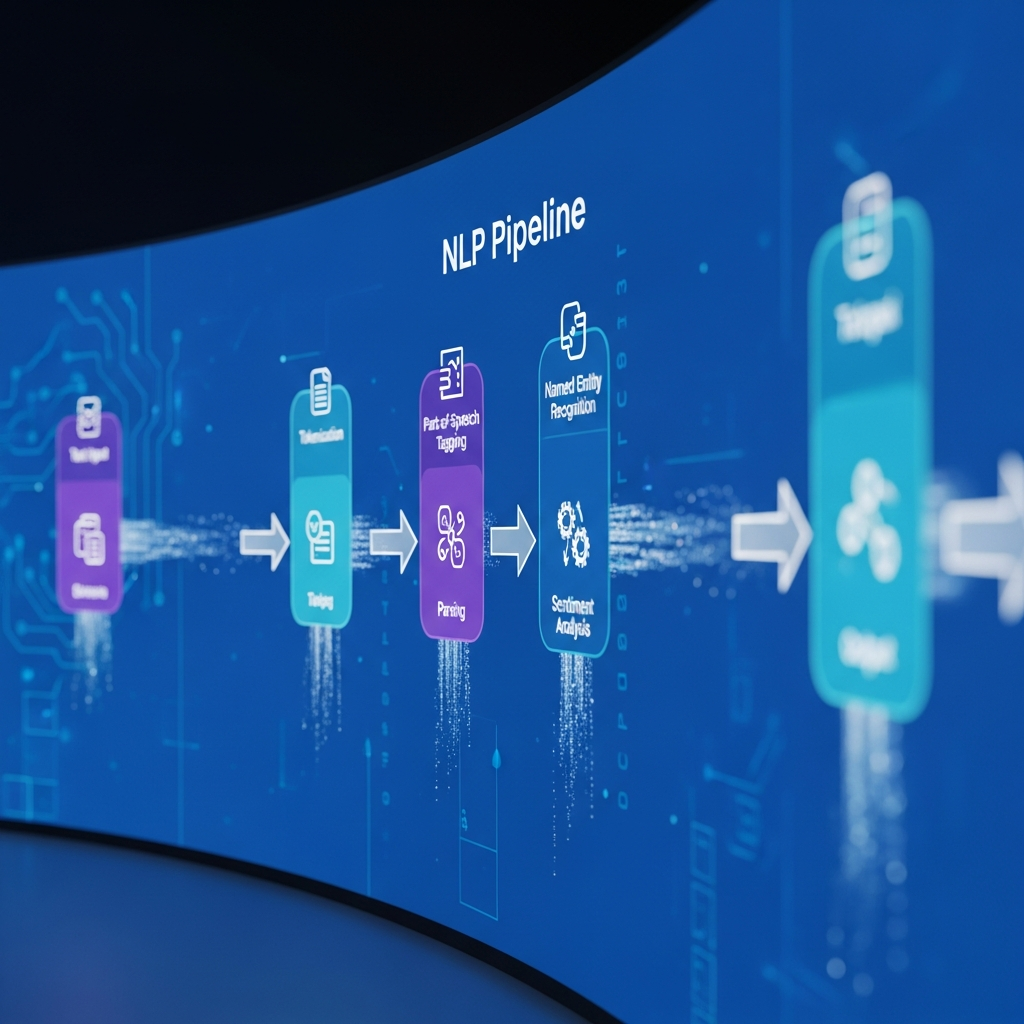 Natural Language Processing, or NLP, is a part of artificial intelligence. It helps computers understand and use human language. You can think of it as the link between how people talk and how computers make sense of it. The main goal is to make computers good at working with language like we are.
This technology is the reason many things you use every day work. It helps run search engines and spam filters. Here, we will go over what NLP is for, see what language tasks it does, and learn how its process usually works.
What Is NLP and Its Key Goals?
Natural language processing, or NLP, is a part of artificial intelligence. It helps computers understand and work with human language. The big goal is not just to look at the words, but to know the context, mood, and why someone said them, like people do.
The process takes the language and lets machines study it. For example, NLP can do text classification. It sorts emails into "spam" or "important." It also does sentiment analysis. This checks if a customer review is good or bad.
The main idea is to make the way people use computers easy and feel natural. The key objectives of NLP tasks include:
Understanding the structure and meaning of sentences.
Extracting key information from text.
Translating languages accurately.
Summarizing long documents.
Gauging the emotional tone of writing.
Common NLP Tasks: Sentiment Analysis, Spam Detection, and More
You see NLP tasks every day, many times without knowing it. The main job of these tools is to look at human language and help find meaning in it in ways that help people.
One big use is sentiment analysis. This tool helps businesses understand what people are saying on social media. Spam detection in your email is another example. Here, an NLP model checks all messages to find out if they are junk or not. Text summarization is also important. These tools can make long articles much shorter and easier to read.
These show some ways NLP helps us understand language for certain results. There are other things it does, too:
Speech Recognition: Turns what you say into text. You see this in things like Siri and Alexa.
Entity Recognition: Finds names, places, or things in text.
Machine Translation: Changes text from one language to another. You use this in Google Translate.
Traditional NLP Workflows and Approaches
Before deep learning models became popular, people working with natural language would use a step-by-step approach. Developers would start by gathering and cleaning training data that was important for their nlp tasks.
After you had your data, you would use tools like the Natural Language Toolkit. This tool would help break sentences into words. It would take away common words and shorten words to their root. This is the step where feature work happens. Once the data was ready, a machine learning model would be used for your problem.
This workflow worked well for some nlp tasks, but it took a lot of work each time you tackled a new problem. The typical steps were:
Data Preprocessing: Making sure the text data is cleaned and ready to use.
Feature Extraction: Changing text into numbers so the machine learning model can work with it.
Model Training: Letting a machine learning model learn from the data.
Evaluation: Checking how well the model works with data it has not seen before.
Generative AI in 2026: Definitions and Capabilities
 Looking ahead to 2026, generative AI is set to be a big change in how we use technology. It is different from the old type of AI that mostly looks at data and finds patterns. Generative AI models can come up with new content on their own. This includes things like text, pictures, code, and music. These new creations often look, sound, and feel like people made them.
The most important thing about this technology is content generation. It looks at many samples of data and learns from them. Then, it can use what it learned to make fresh content. Let’s look at what makes generative AI models stand out, how they create things, and what happens when you use their most known tool: LLMs.
What Makes Generative AI Different From NLP?
While NLP is about understanding language, generative AI is focused on making new things. This is the main difference. NLP looks at, sorts, and pulls information from text that is already there. But generative AI makes new and synthetic data.
Think of it like this. NLP is like a person who can read and understand every book in the library. Generative AI is like someone who can write a new story after reading all of those books. This creative ability makes it different.
The technology for this usually uses strong neural networks. These networks learn the patterns in data very well. Here are the main things that set them apart:
Purpose: NLP is to look and study; generative AI is to create.
Output: NLP gives structured data, like showing how someone feels about something. Generative AI makes new content, like writing a poem.
Focus: NLP is about finding meaning; generative AI is about content creation and making new content.
Generative AI stands out because it can use neural networks to turn what it learns into something new. It is great for content creation and making synthetic data.
How Generative AI Generates Content
Generative AI makes new content by studying patterns and shapes found in very large datasets. With deep learning, it creates a model of how the data looks. For text generation, it learns grammar, facts, and writing marks. For image generation, it learns about shapes, colors, and textures.
When you give it a prompt, the model uses what it knows to guess what comes next. For text, it picks the next word that fits, then the next one, and keeps building a sentence. This is done with transformer architectures, which let the AI manage strong links between data points.
The AI uses this process to make content that makes sense and matches the topic, like a paragraph or a detailed picture. The steps include:
Training on big datasets.
Learning how the data is spread out.
Using a prompt to help start the making process.
Guessing and creating new points in order, like words or image pixels.
The Rise of LLMs and AI Assistants
The big interest in generative AI started because of the large language model. The GPT series showed that AI can produce text that is clear, creative, and feels much like it comes from people.
This new ability helped bring out strong AI helpers like ChatGPT and Microsoft Copilot. These tools let anyone use generative AI, letting users make things like emails or small bits of computer code just by typing what they want. How you write these instructions is called prompt engineering, and it has become an important skill.
The success of large language models showed how much generative AI can do. It changed how we use technology and how we do things automatically. There are some main points that helped generative AI grow:
Advanced ways to generate text.
Simple and easy AI assistants that anyone can use.
The power to handle a range of tasks by using prompt engineering.
LLM vs NLP: Clarifying the Connection
Natural language processing, or NLP, is the main field in which people try to make computers understand and use human language. Large language models are a new and important tool in this field. They are not separate from NLP. Instead, they show how the work in NLP has grown and changed over time.
Large language models use transformer models. These have made nlp tasks faster, as well as more accurate. The way you work with language processing has changed because of large language models. They have helped ai applications get better at dealing with natural language.
This part will explain where language models fit in, and how they are now such a big part of natural language processing. It will show their effect on the field and on the types of work that use artificial intelligence.
NLP as a Broad Field and LLMs as Specialized Models
Natural Language Processing (NLP) is an important part of artificial intelligence. In this field, the main goal is to help computers work with and understand human language. This can be anything from counting words to looking at how sentences are put together.
A large language model (LLM) is a kind of machine learning model that now plays a big role in language processing. People call it “large” because it uses many parameters. It has learned from a great deal of text. Because of this, it does a great job at learning, making sense of, and creating human language.
You should know that a large language model is not here to take over all of NLP. It is one of the key tools people use in this field. Right now, there are many natural language processing systems that use a large language model as their main tool.
NLP: The main field where language and computers come together.
LLM: A very big model created for different nlp tasks.
Relationship: LLMs are some of the tools people can use to reach goals in natural language processing, and they are used a lot when text generation or other big tasks need more help.
Transforming Traditional NLP Through LLMs
Large Language Models have changed how natural language tasks are handled. Before these large language models, jobs like translation or making a summary needed their own special models. Building these models took a lot of time and used up a lot of resources.
Now, one large language model that is already trained can do many tasks at once. It works as soon as you use it and gets great results. Because these deep learning models learn from huge amounts of data, they understand natural language in a deep way. You can solve many problems with these models and you don’t need much extra training.
This has sped up the work on AI that uses language. Instead of starting over each time, developers use the strong features of a large language model for both language generation and natural language understanding.
Efficiency: One language model can take the place of many separate models.
Performance: Large language models are usually better than old models on standard tests.
Flexibility: You can change large language models for new tasks by fine-tuning or using prompts.
Examples of AI Language Models in Use
You use AI language models more often than you know. They are behind many smart tools and apps we use each day.
For instance, when you use an online language translation tool, you will see it works with a large language model that knows both languages well. New customer support chatbots also use large language models to get what you ask. They give helpful answers that sound like they come from a real person.
Even the tools we use for work are getting smarter. AI helpers, like Microsoft Copilot, come with apps to help write documents, make email summaries, and create slides.
Google Translate: Uses large language models for correct and clear language translation.
Intelligent Chatbots: Give round-the-clock customer support by getting and answering your questions.
AI Writing Assistants: Help you write everything, like emails or reports.
NLP vs Generative AI – Core Differences
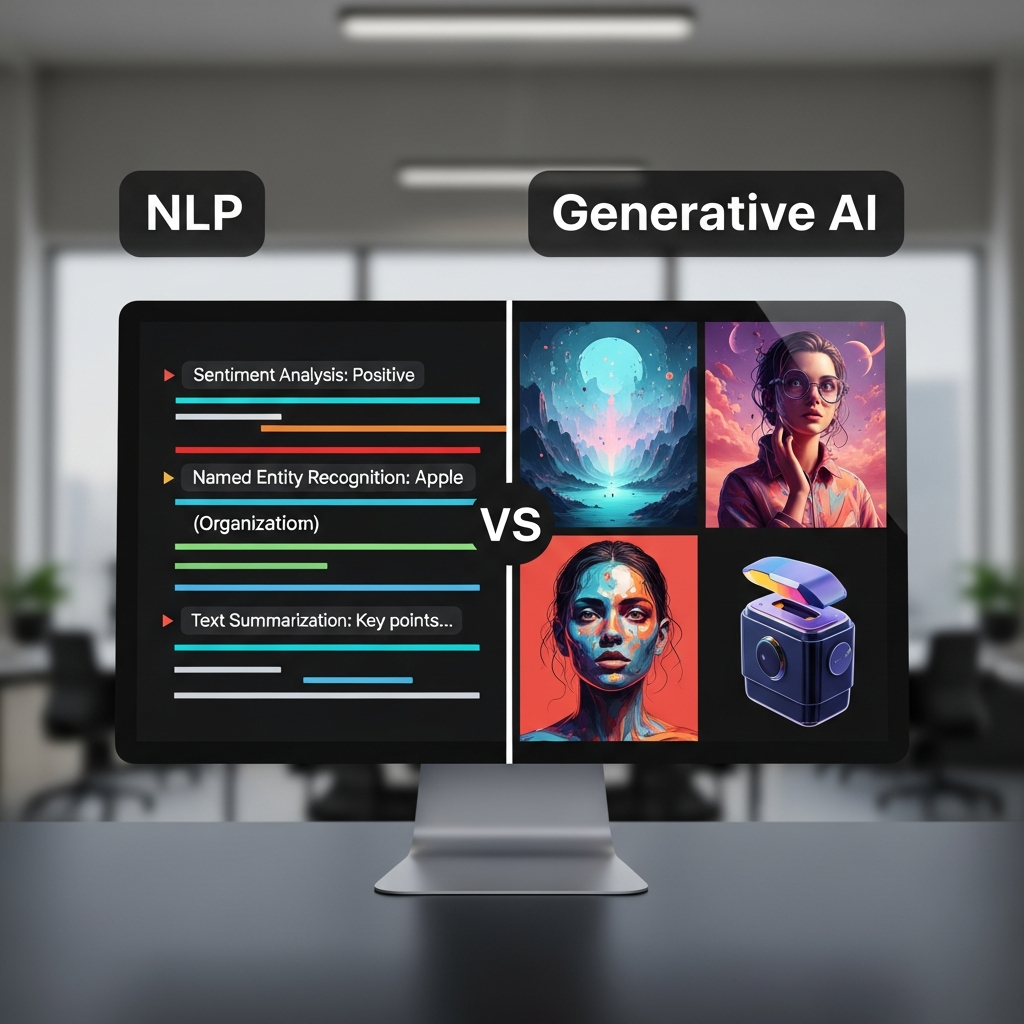 Now that we have talked about Natural Language Processing and Generative AI, let’s look at how they are different. Both of them use machine learning and neural networks. Their goals and what they do, though, are not the same. Natural language processing is there to help understand and work with language people already use.
On the other hand, Generative AI is all about making new content. This is a key change and affects how these systems are trained and how people use them. We can break these differences into things like their purpose, how creative they are, and more.
Comparing Purpose and Output Style
The biggest difference is in what each one is for. NLP works to analyze language. It is made to read text and pick out details like names, places, or how a sentence feels.
Generative AI is for creating things. It makes new content. You give it a prompt, and it creates new text, images, or code that was not there before. The output is new content, not a look at something already written.
This means the output for each is not the same. NLP tasks give you data, like a label, summary, or list of names. Language generation with generative ai gives you text, like a chat or story, that is closer to how people write or speak.
NLP Purpose: To analyze, understand, and structure language.
Generative AI Purpose: To create new, original content.
Output Difference: NLP outputs data; Generative AI outputs new text or media.
Contrasting Training Methods and User Interaction
The way traditional NLP and Generative AI train their models is not the same. Traditional NLP models get trained on smaller datasets. These datasets are labeled and fit for one job. The model tries to match certain inputs to certain outputs.
Generative AI models work in another way, especially those that use transformer architectures. They start by getting trained on huge datasets. The data can be from all over the internet. These models pick up general patterns in language. After that, they get tuned to be safe and helpful. That’s where human feedback comes in, often through reinforcement learning. The big pre-training step is a big part of deep learning today.
User interaction is not the same in both as well. With traditional NLP, you give some input and get a set output. With generative ai, it feels more like a chat. You send a prompt, the model gives you a creative reply, and you can change your prompt to see different responses.
Training Data: NLP uses labeled data made for one task. Generative AI uses large, general datasets.
Training Goal: NLP models aim to sort or find answers. Generative AI models try to guess the next word.
Interaction: NLP is more like a transaction. Generative AI is more of a conversation you can go back and forth with.
Creativity, Context, and Real-Time Generation Compared
Creativity is a big strength of generative ai. Because it is made for language generation, generative ai can make new content. It can write poems, stories, or scripts. This shows a kind of creativity that you don't get in most old-style nlp models.
Both generative ai and nlp need to deal with context. But, they do this in different ways. nlp tries to understand meaning by looking at context. generative ai uses the prompt and earlier parts of the chat to make sure its new content fits well and makes sense.
Real-time generation is also key in generative ai. chatbots and ai assistants must give answers right away, which makes people feel like they are having a normal talk. This means these ai applications need very fast and smart models.
Creativity: Generative ai is made to give original content. NLP mostly works on finding meaning.
Context Handling: NLP looks at context to understand things. Generative ai uses it to make and shape new content.
Real-Time Generation: This is important for conversational generative ai applications.
Main Applications of NLP
 Natural language processing, also known as NLP, is a big part of computer science today. It helps computers work with human language in many ways, and you see it used in things you use every day. With NLP, computers can make sense of human language and use it well. This makes natural language processing able to do a lot of different tasks. It helps make search engines better, and it helps you talk with people who use another language.
You can find NLP tasks in places like text summarization, sentiment analysis, language translation, and speech recognition. Let’s look at some of the best ways this AI technology helps us.
Chatbots, Search Engines, and Speech Recognition
Many core technologies on the web use NLP. Search engines use NLP to figure out what you want when you search. They do not just match the words you type. This helps them give better and more relevant answers.
Rule-based chatbots have used NLP for a long time. They help people by following a set conversation path. These bots may be simple, but they work well for basic jobs like checking if your order is ready or not. Speech recognition is another use for this technology. It helps voice assistants and apps that turn the things you say into written words.
All these tools are made to work with human language to get something done. NLP makes this possible.
Search Engines: Use NLP to understand what you want in your search and decide which pages to show.
Traditional Chatbots: Use your input to give ready-made answers or take actions.
Speech Recognition: Changes what you say into text a machine can read.
Text Summarization and Language Translation
Working with a lot of text can be hard, but the right nlp tasks can help people a lot. Text summarization is one of these nlp tasks. It picks out the most important parts from a long piece of writing. Then, it makes a short summary. This can help researchers, people who look at data, and anyone who wants to know the main ideas without reading everything.
Language translation is also a very important nlp task. From the start, the goal of nlp was to make language translation easier. Now, machine translation tools can change text from one language to another, and they do it well. This helps people talk and work with each other, even if they speak different languages.
These nlp tasks change text. They make it shorter or put it in another language so it can be more helpful to more people.
Text Summarization: This tool makes a short and clear summary from a long document.
Machine Translation: This tool takes text in one language and puts it in a new language.
Information Extraction: This tool gets important points from a lot of words that are not in any order.
Industry-Specific NLP Use Cases in India
In India, there are many industries that use NLP for their own needs. E-commerce companies look at customer reviews in different languages and dialects. They use sentiment analysis to see what people think and spot any issues with products fast.
Finance companies in India use entity recognition with NLP. They process loan forms and KYC papers by picking out names, addresses, and ID numbers. This used to take a lot of time. Now, it is automated so people can work quicker.
There are a lot of languages spoken here. That is why speech recognition gets used to understand local accents and regional languages. This makes voice-based services easier to use for many people.
E-commerce: Analyzing customer reviews across multiple languages.
Finance: Automating document processing and information extraction.
Telecommunications: Powering IVR systems that understand regional languages and dialects.
Main Applications of Generative AI
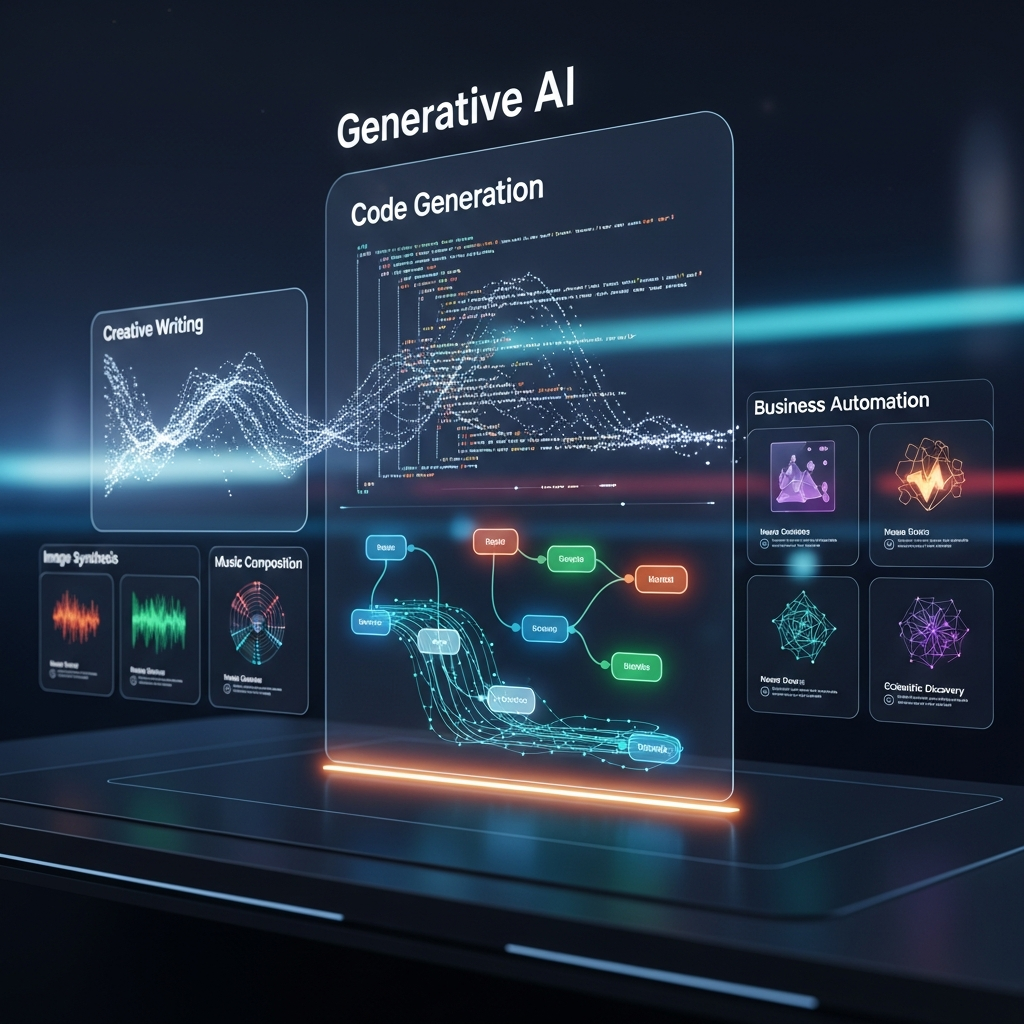 Where NLP tries to understand, generative ai makes something new. People use this technology in many creative and useful ways. generative ai models can write articles. They make great art. They even help with code generation to build software. The main thing these ai applications do is content generation.
generative ai helps people get more done. It can also take care of tricky tasks at work. This opens up new ways to do things. Some of the top uses are content generation, code generation, and running jobs through ai-powered automation.
AI Writing Assistants and Content Generation
Generative AI is being used a lot right now in content creation. You can use AI writing helpers to make emails, write blog posts, work on marketing copy, or come up with creative stories.
These tools use natural language generation to make original content from a simple prompt. This makes things easier for marketers, writers, and students. It helps them beat writer’s block and get their tasks done faster.
The way this works is changing how we write. Now, people and machines work together.
Marketing Copy: Making ad headlines, social media posts, and product descriptions.
Blog Posts: Writing drafts or full articles on a given topic.
Email Drafting: Helping users write professional and good emails fast.
Code Generation and Customer Support
Generative AI is not just used for writing stories. It is also a strong tool for developers. Code generation assistants can create short pieces of code. They can fix problems. They help explain hard parts of code. They can move code from one language to another. This helps developers get more done.
Generative AI is changing customer support, too. It now runs smart chatbots. These chatbots work better than old bots that just followed rules. They understand what you mean in your chat. They give good answers in a simple way. They use knowledge bases to answer tough questions. This makes talking with customer support much better.
A large language model acts as the main part of these tools. It uses its skill to see patterns in code and talk.
Developer Tools: Help with code writing, finishing code, and fixing bugs.
AI Chatbots: Give help to customers in a human-like way.
Internal Knowledge Bots: Answer team member questions by pointing to company files.
Image Generation and Automation in Business
Generative AI is not just for text. Tools like DALL-E and Stable Diffusion let people make great and unusual images just by writing a few words. This, and image generation in general, be a big help to designers, artists, and marketers.
In business, generative AI is used a lot to make automation better. The machine learning helps do many repetitive tasks, make reports, and even create synthetic data to train other AI models. This is a good way to move forward when there is not much real data to use or if the data is private.
Technologies like Generative Adversarial Networks (GANs) and diffusion models are what make these image and data features work. This shows how generative ai can do more than make and change words or text.
Graphic Design: Making new images, logos, and other things for marketing.
Data Augmentation: Making fake or extra data to help ai and machine learning models get better.
Workflow Automation: Creating reports, slides, and business papers without the need to do all the work by hand.
Tools and Technologies for NLP vs Generative AI
Choosing the right tool is important for any AI project. The world of generative AI and NLP has many different libraries, frameworks, and platforms. These tools help with many jobs and fit many needs. You will see that traditional nlp tools are mostly used for analysis and working with language.
Generative AI focuses more on building and running deep learning models. These models are often made with transformer architectures. Let’s take a look at the main technologies you might use in each area. You will find everything from basic nlp tools to frameworks that drive the most advanced deep learning systems today.
Popular NLP Tools: NLTK, SpaCy, and Hugging Face
When you start your journey into NLP, you'll quickly come across a few essential tools. The Natural Language Toolkit (NLTK) is often the first library that beginners learn. It's great for educational purposes and understanding the building blocks of NLP.
For more serious, production-level applications, spaCy is a popular choice. It's known for its speed and efficiency, making it ideal for tasks like entity recognition in large volumes of text.
Hugging Face has become a central hub for the modern NLP community. Its Transformers library provides easy access to thousands of pre-trained models, bridging the gap between traditional NLP tasks and the power of large language models.
Tool | Best For | Key Features |
|---|---|---|
NLTK | Education and research | Comprehensive library for classic NLP tasks, great for learning. |
spaCy | Production and performance | Fast, efficient, and optimized for real-world applications. |
Hugging Face | State-of-the-art models | Provides easy access to thousands of pre-trained models (Transformers). |
Key Generative AI Frameworks: TensorFlow, PyTorch, LangChain
Building generative AI models needs you to use strong deep learning frameworks. TensorFlow and PyTorch lead in this area. They offer the basic tools you need to design, train, and use the deep learning models and neural networks behind generative AI.
TensorFlow and PyTorch are mainly used to build the core machine learning models. At the same time, LangChain has become important for making apps with these models. LangChain gives you a simple way to link LLMs to other things, like APIs and data sources.
LangChain also helps people build apps quickly. This includes things like question-answer bots that look at outside documents, or AI tools that can do tasks.
TensorFlow & PyTorch: The main frameworks to build and train deep learning models.
LangChain: A framework for creating apps powered by transformer models.
Hugging Face Accelerate: A library that makes it easy to train big models on many GPUs.
APIs and Platforms: OpenAI, Google, and Others
For many developers, the easiest way to add generative ai to apps is through an API. You do not have to build a big model from the start. You can just use an existing one.
OpenAI is well-known for the GPT models, and you can use them with an easy-to-use API. Google also has strong models like google gemini within their platform. These companies handle all the hard parts, so people can focus on making their own app.
Besides these big companies, more choices for generative ai keep showing up. Companies like Anthropic—with its Claude model—and Mistral ai in Europe give more options to developers with great models.
OpenAI API: Lets you use GPT-4 and other models for many generative ai tasks.
Google AI Platform: Gives you tools like google gemini and other nlp tools.
Mistral AI & Anthropic: Let you use strong models with fast APIs.
Frequently Asked Questions (FAQ)
When you start learning about NLP and generative AI, it is normal to have a lot of questions. Many people ask about the ways you can use them. They want to know if they should spend more time on natural language processing tasks, or try out generative models first. People also ask about the best technologies and programming languages, like Python, for building good AI systems. As the field of AI grows, it is important to know the small things that make large language models different from old ways of doing natural language processing. This helps new developers and anyone who wants to get better at using language models and generative AI.
Is Generative AI a Type of NLP or Are They Separate?
Generative AI and NLP are tied together. Generative AI that works with language is a special kind of NLP. Traditional NLP is about knowing what the language means. Generative AI goes a step further. It uses what it knows to make new text. Today’s AI applications use ideas from both. Deep learning powers both generative AI and NLP.
Which Is Better for Text Analysis: NLP or Generative AI?
For tasks like text classification or sentiment analysis, traditional NLP machine learning models usually do the job fast and in a simple way. But a large language model can also do these NLP tasks well. With prompting, you can get more options, but it can cost more for your computer to run.
What Skills Should I Learn for NLP vs Generative AI Careers?
Python is key for both of these jobs. If you want to do work in NLP, use good NLP tools like spaCy and try to learn about classic machine learning. If you want to get into generative ai, work with deep learning models. Get to know frameworks like PyTorch or TensorFlow. It is helpful to also know about prompt engineering. Data scientists who are working in these areas should know about both fields. This way, they will do a better job at their work.
How NLP and Generative AI Work Together
NLP and Generative AI are not separate from each other. They work best when you use both together. A lot of the top AI tools today use both. These hybrid AI systems mix the strong points of NLP with the creative skills of Generative AI. As a result, these tools are making big changes in how we talk to AI and how business processes work.
One exciting example of this mix is something called Retrieval-Augmented Generation (RAG). Let’s see how this and other hybrid tools are changing the way we use AI in the future.
Retrieval-Augmented Generation and Hybrid AI Systems
Retrieval-augmented generation, or RAG, mixes the old way of finding information with new generative AI methods. In this AI system, when a user asks something, the system pulls in documents that matter. These help make the answer better. The big language models in this method keep the language rich and give solid information. They help create answers that are more true and useful.
When human feedback is used while training, RAG systems get better at seeing the smaller points of human language. This makes them great for things like chatbots and finding information at work. RAG stands out because it mixes information and language generation so well.
Building Conversational AI and Enterprise Search Solutions
Creating good conversational AI and enterprise search tools takes work with both natural language understanding and language generation. These tools use machine learning and large language models. They help figure out what users say in human language and turn it into useful data for a business. With machine learning and language models, companies can improve the way they talk to people and make information easier to find.
Adding NLP tools gives features like entity recognition and knowing what users' intentions are. Generative AI models help make responses on the spot. With these tools, systems respond faster and are even easier to use. This can boost user satisfaction and help people stay engaged.
Advantages and Limitations (NLP vs Generative AI)
NLP helps bring structure and fast processing to language tasks. It is important for things like sentiment analysis and chatbots. NLP works best when used for certain types of jobs. It can improve how work gets done and make communication between people and technology better through natural language understanding.
On the other hand, generative ai is great at creating content. It can make responses that sound like a real person by using a lot of data to offer different outputs. Still, both natural language and generative ai have some problems, like bias or mistakes in their answers, that can affect how much you can trust or depend on them. Knowing what these systems do well and where they struggle helps people choose a path in this fast-changing world of ai.
Strengths and Unique Benefits of Each Approach
Natural language processing is very good at looking at structured data. This makes it strong for work like finding sentiment or sorting text. It can work fast and understand human language well. That is why the technology is used a lot in things like customer support and smart search tools.
Generative AI is good at making new content that sounds like people made it. It can do many things, like writing, coding, and image generation. It is a tool that can be used in a lot of areas because of this.
Both natural language processing and generative AI have their own strengths. Each one helps in different ways in the world of AI.
Key Limitations: Hallucinations, Bias, and Resource Demands
Generative AI and NLP can have some clear problems. One big issue is when these generative AI models make things up without facts. What they write can sound true, but often, it is not right or can even be silly. This is called a hallucination.
Another problem is bias. If the training data used to make generative AI models is biased, the output from these AI applications may repeat wrong ideas or show unfair views like those found in society.
Both NLP and generative AI also need a lot of power and time from computers. Because of this, they may not be easy for everyone to use.
It is very important to fix these limits. Making generative AI better at avoiding mistakes and being fairer to all people helps the AI applications work well for many people in many fields.
Career Opportunities in NLP vs Generative AI
Exploring careers in natural language processing and generative AI shows that there are many good paths for developers and those who like data. In natural language processing, you can find jobs like NLP engineer and machine learning engineer. These people work on understanding and working with language.
On the other hand, in generative AI, there are roles such as AI engineers and prompt engineers. They focus on content generation and make ai applications better. Now, more companies use AI tools every day. When you learn programming languages and the basics of machine learning, you can get ready to work in this area. The world of AI is growing fast, so learning these skills will help you do well.
Top Job Roles: NLP Engineer, AI Engineer, Prompt Engineer
NLP engineers build programs that help computers understand and work with human language. They often use large datasets and deep learning models for this. You can see their work in things like chatbots or tools that look at a person's mood through text, known as sentiment analysis.
AI engineers use machine learning and neural networks. They bring new and smart solutions to many different areas by designing and building AI systems.
Prompt engineers focus on making clear prompts. They do this so that AI models, especially in generative AI projects, can make content that fits the conversation or task well. They make sure the AI knows what to say or write.
Each job here plays a big part in how artificial intelligence keeps changing and growing.
Learning Pathways: From Python to Practical Projects
Starting with Python is a good way to begin if you want to learn about natural language, machine learning, or generative ai. It helps you get the basic ideas of how programming works. This will make it much easier when you move on to things like natural language processing and building ai. Once you understand Python well, you can try out tools like TensorFlow or PyTorch. These will help you make your own ai models.
Doing real projects, like making a chatbot or working on content generation, is a great way to use everything you know. When you work with hands-on natural language applications, you learn more and start to feel sure about using ai. This matters a lot if you want a good career in this fast-changing area.
The Future of NLP and Generative AI in 2026
New ideas in artificial intelligence are changing the way we use NLP and generative AI by 2026. We will see more multimodal AI systems. These will bring together many types of data. This will help people and computers talk to each other in better ways.
There will be more AI helpers just for you. These smart assistants will get used a lot more, and they will help with customer service and improve how you use things in many areas.
AI tools like Microsoft Copilot will help make work run smoother. Tasks that you do again and again will be faster and easier.
As this tech grows, it is key to know how the parts of it work together. This knowledge will help you get ahead with artificial intelligence and generative AI.
Multimodal AI Systems and Personalized Assistants
New developments in multimodal AI systems are changing how we use personalized assistants. These systems bring together many types of data, like text, audio, and images. This helps them understand and reply to human language in a better and deeper way. With models built on deep learning and neural networks, you will see assistants that give you a better experience that fits your needs.
These AI systems help automate customer service tasks and do sentiment analysis. They can also make content just for you, using what you like. This makes every talk with the system feel smoother and more natural. As time goes on and technology gets better, more people will see how blending different ways to talk can really change user engagement.
AI Agents, Copilots, and Real-Time Workflows
AI agents and copilots are changing how people work with technology. These tools use natural language and language processing to let users talk or write to them easily. This makes it simple to get work done as things happen, and helps teams do their jobs better. If you use an AI copilot in a development tool, it can help by suggesting what code to write next. It also takes care of repetitive tasks and helps everything run smooth.
These smart agents can also look at a lot of data and give you information fast. Because they know how to use and understand human language, they are great for customer support and business needs. They help people get things done faster and make the user’s time better.
Which Should Beginners Learn First: NLP or Generative AI?
If you are new to this, it's a good idea to start with NLP. NLP covers the basics of language processing. After you get used to it, you can move on to generative AI. This next step will help you build skills in both creativity and in training new models. Learning both gives you a strong base in the world of AI.
Building a Learning Roadmap (Python, Machine Learning, LLMs)
If you want to start working with AI, you need to build a strong base. It is important to learn Python first, because it is used a lot in machine learning, large language models, and in natural language processing. When you understand Python well, it helps you learn bigger ideas in AI.
After that, you should look at the basics of machine learning. Find out how the key ideas and tools work, and see how these run many AI applications. Then, try to get to know large language models. These models are at the center of natural language processing and generative ai.
As you learn, work on some projects. This will help you get better and be ready for new needs in the AI field.
Project Ideas and Skill-Building for Indian Developers
Working on hands-on projects is a good way for Indian developers to get better at natural language and generative ai skills. You can try making a chatbot for customer support. This bot should use natural language understanding to talk with users. If you use machine learning, you can make the answers from the bot better. Another good project is content generation. In this, the model will write articles or make short summaries when a user wants, which shows its language generation skill.
Taking part in hackathons or helping out with open-source projects gives you a chance to work on real problems. You can also check for online platforms that have ai courses in Hyderabad. These classes can help you build up your skills even more.
NLP vs Generative AI – Why Both Matter
If you want to do well in artificial intelligence, it helps to know the difference between natural language processing and generative ai. Natural language processing helps machines make text that people can understand. Generative ai uses new ways to make content in many forms. The two help each other, so ai applications can be better. This is important when you look at things like customer support or content creation. If you get good at both natural language processing and generative ai, you will stand out. It will help you get ahead in a fast-changing world of artificial intelligence.
Interconnected Growth and Foundational Knowledge
To do well in today’s AI world, you need to know both natural language processing and generative AI. As these fields grow together, knowing how natural language works helps you do better with generative AI. When you learn about natural language processing, you learn how to understand human language, which can help with a lot of ai applications.
If you use the rules of natural language processing, you can make better generative ai tools. This can make things like chatbots for customer support or new systems for content generation work better for people. With skills in both areas, developers and those interested in AI can come up with new ideas and make better tools. When you mix both, you help bring out new and advanced ai applications that will help shape the future.
Long-Term Value for Careers in the Evolving AI Field
Knowing how to use NLP and generative ai can give you many job options in the AI world for the long run. More companies now use these tools for things like customer support and content generation. Because of this, people with these skills will be needed more and more. When you learn about NLP, you get better at handling language tasks. If you also know about generative ai, you can build new and useful things. With both of these in your toolset, you can fit into many different jobs. You also keep your career strong and up-to-date as the AI field changes.
Conclusion
It is important to know about NLP and Generative AI if you want to work in the AI world. These two areas are not the same, and each has its own strengths. NLP is good at studying and understanding human language in a careful way. Generative AI is strong when you need content generation that can be creative, and it works well across many uses. When you see how they come together, you can find good job opportunities. You can also make things that help in the real world.
By 2026, knowing both NLP and Generative AI will be a big help. The field is moving fast. So, you have to keep learning and be ready for new things all the time. This will keep you up-to-date and ready for what’s next in generative ai, human language, and content generation.