







.png%3Falt%3Dmedia%26token%3Ddf09c1b3-6a6e-41dd-be06-9b6d061726ee&w=3840&q=75)
How AI Search Engines Are Replacing Traditional Search
Key Highlights
An ai search engine uses artificial intelligence to understand meaning, not just keywords.
An answer engine gives direct answers instead of only a list of links from traditional search.
Tools like Perplexity AI improve user experience with fast, conversational responses and cited sources.
AI search fits complex user queries, follow-up questions, and research tasks more naturally.
Businesses now need search optimization, answer engine optimization, and GEO together.
In 2026, search is moving toward quicker, context-aware, and more conversational responses.
Introduction
A search engine used to be something where you type a few words and look through different web pages to find what you need. Now, things are not the same. Today, artificial intelligence helps these tools understand user queries even better. It looks at what people want and the context too, before showing a response. With these new features, you do not need to scroll through many web pages. These newer tools can give you an answer right away.
This change in the way people get information is important for marketers, students, business owners, and content creators. Now, finding things online is faster, smarter, and feels like a real conversation.
Understanding AI Search Engines and How They Work
 An ai search engine is a type of search engine that uses artificial intelligence, machine learning, and language models. It reads a user’s query in the full context, not just as a few words or keywords. This helps it get what people really mean, their intent, and the natural language used.
An answer engine is very close to this. The main thing that’s different is what it gives back to you. It does not just show links. It shares direct answers. To understand how this works, let’s go over what these terms mean and how the reply style is different.
Defining AI Search Engines and Answer Engines
An ai search engine uses artificial intelligence, natural language, and machine learning to figure out what you want. It does more than match words. It looks at context and meaning. It also studies what you’re after, so you get more relevant information.
An answer engine cares even more about giving you the right response. Instead of giving a list of links, it tries to make a single response you can read with ease. Now, people type full questions rather than short search queries.
To put it simply, a search engine helps you find sources. An answer engine works to get you the answer fast. Both still need information retrieval, but the way you use them is not the same. One lets you look around. The other goes straight for clear understanding with direct responses.
How AI-Generated Answers Differ from Traditional Search Results
Traditional search engines usually show a list of web pages based on what you searched for. You click on the links, look around, and read to find what you need. But an ai search engine can save you time by pulling information from different data sources and giving you quick answers in a way that feels more natural.
This new way changes how the user experience feels. You do not have to jump from one page to the next anymore. Instead, you get conversational responses that make it feel like you’re talking with an assistant, instead of just typing in a search bar.
The traditional search engine gives out a list of links and you pick what is important to you.
AI systems can use information retrieval along with language models to write direct answers.
Some answer engines will even offer citations and extra prompts if you want to learn more.
That is why tools like Perplexity stand out. They take your question, pull up relevant information, and use it to create an easy-to-read answer. They do not only rank web pages, they give you more with better search results.
The Shift from Traditional Search Engines to AI-Powered Platforms
 For a long time, google search set the way people used any search engine. People would type in a few words and go through the results, clicking on different pages. This way is still used today, but user behavior is starting to change. People now want answers that are faster and easier to understand.
AI-powered platforms now give answers based on user intent, so users do not have to work as hard to get what they need. This change is also shifting how search optimization works. Now, content must help both ranking systems and the new answer systems. The next parts will explain how user experience and local relevance are getting better as things move in this direction.
Key Differences in User Experience and Information Delivery
A search engine gives you many choices. An answer engine gives you a fast reply. This small change makes the user experience better. You do not have to open as many tabs, and you spend more time reading one easy-to-understand summary.
The way you get information is more focused. The platform does not just show you many web pages. It can look at what you ask and give you direct answers in a clear and friendly way. This helps when you have complex queries or want to ask follow-up questions.
Traditional systems help you look at many sources.
Answer engines cut down on clicks by giving you direct answers at the start.
Talking in a conversational way makes research feel easy for most people.
For your everyday searching, this will save you time. If you use it for business research, it can help you get more done. Still, checking your sources is always important. Getting an answer fast should not take the place of making sure it is right.
[search engine] [answer engine] [direct answers] [user experience] [web pages] [complex queries]
Why AI Search Engines Matter in 2026 for Indian Users
In 2026, an ai search engine will be important because people are typing longer and more natural questions. User queries are also getting more detailed. In India, people look for a lot of things. These can be about education, local services, business tools, and new research. They want information to be fast and easy to understand.
This change is big for every digital marketing agency, educator, and business owner who wants people to find them online. When someone looks up relevant information about a service, an AI summary may show up before a website link. This can change how website traffic works, and it can affect organic traffic too.
If you run a local brand, this can matter a lot. If you run a training business and promote ai courses in hyderabad, you might also offer a machine learning course in hyderabad, or give a data science course in hyderabad. You now need to think about more than just search engine rankings. Make sure your content is easy for ai search engine tools to understand, to quote, and to sum up. That way, your training business can still get seen by people who use these tools.
Perplexity AI and Modern Answer Engines Explained
Perplexity AI is a great example of a new answer engine. It uses conversational AI, power of web search, and language models. With these, it can give a short answer and show where the answer came from. This helps people who want their answers to be both fast and easy to check.
The way Perplexity AI is growing shows that people want something more. People want answers that sound like they are talking to someone, not just searching online. To see what makes perplexity ai special, you need to see what it can do and how strong its research is.
Core Features and Functionalities of Perplexity AI
Perplexity AI is made to help with research where you need clear and direct answers. It uses natural language processing and advanced algorithms to understand your search queries. Then, it works fast to get the information you need and gives you a direct answer. This makes the search feel quicker and helps you stay on track.
Many people like how Perplexity AI finds a good mix between putting information together and showing where it comes from. The answer engine does not just give you text. It also shows you the sources, so you can check facts and read more if you want.
Perplexity AI gives you direct answers in a simple, talk-like way.
You see citations that let you go back to the original sources.
You are able to ask follow-up questions in the same thread and keep going with your research.
Some other popular tools with answer engines like this are ChatGPT Search, Google AI Mode, Microsoft Copilot, You.com, and Brave Search AI. They all mix search capabilities with generative AI, but each one does things its own way.
How Conversational AI and Citations Enhance Research
Conversational AI helps with research because you can ask questions like you talk every day. You do not have to use the right keywords. You can also ask more questions to shape what you want to know. This helps with hard user queries and when you look at topics that are new to you.
Citations are also very important. When an answer engine shows where its ideas come from, users can look at the source quality. They can also see other points of view and read more if they want. This is very useful in academic research, business work, and when you want to find out about hard topics in tech.
Can these tools answer hard questions well? Many times, they can, mostly when they use data sources that have up-to-date details. But they do make mistakes too. They work best when people use their answer as a start. You should always check the key facts with the cited material before you act on it.
Leading AI Search Engines and Answer Engines in 2026
The 2026 market has a few major ai search engine options. Some of these focus on research. Others add answer engine tools to big search systems. The top names are Perplexity AI, ChatGPT Search, Google AI Mode, Microsoft Copilot, You.com, and Brave Search AI.
These search engine tools get information in different ways. Some give more attention to showing where facts come from. Some focus on user privacy. Others work with big search engines. If you look at a simple comparison, it can help you see what sets each ai search engine apart, so you can pick the one that will work best for you.
Top Platforms (Perplexity AI, ChatGPT Search, Google AI Mode)
Several tools now lead the answer-first search space. Perplexity AI is known for cited research answers. ChatGPT Search blends natural summaries with live web search. Google AI Mode brings generative AI into familiar search behavior. Microsoft Copilot adds conversational help on top of Bing-style search.
These platforms all use large language model systems, but their strengths differ. Some are better for fast summaries. Others are better for traceable research or integration with a wider ecosystem.
Platform | Main Strength | Best For |
|---|---|---|
Perplexity AI | Strong citations and research flow | Research and follow-up questions |
ChatGPT Search | Natural summaries with web access | Broad everyday and work queries |
Google AI Mode | Familiar search plus AI overviews | Mixed search and quick understanding |
Microsoft Copilot | Search plus assistant-style support | Productivity and guided exploration |
This comparison shows why no single tool wins every use case.
Comparing Use Cases and Strengths for Various Needs
People need different tools depending on what they want to do. For example, a student may look for good citations. A marketer may want short, quick summaries. Someone who is a business analyst might need to check a lot of data sources for the most relevant information. This is why you should pick an answer engine that fits your task. Do not pick one just because it is popular.
When it comes to wide search queries, all the big platforms can help you. The main thing that is not the same is how they do information retrieval, answer follow-up questions, and show you how they got their answers. Some are great for research. Other answer engines may help more with finding new things in a simple way.
Use Perplexity AI if you need good citations and more research depth.
Use ChatGPT Search for easy summaries and for flexible follow-up work.
Use Google AI Mode when you want to understand things quickly with the same search steps you already know.
Use Microsoft Copilot if you like having help that acts like an assistant while you search.
The best way to get the right answer, when it really matters, is to look at all the outputs across different tools. This helps you check for the best, most correct information.
Benefits and Challenges of Using AI Search Engines
An ai search engine can make user experience better. It helps people by doing much of the work for them. You can get quick answers, even when you use tough or confusing words. It can also make the way you see information better with things like summaries, where it got the facts, and what to ask next. That is why many people go to these answer-first tools for tasks every day.
But there are some issues too. The search engine may use poor sources, be biased, use old data, or make things up. So there is real value in a ai search engine, but it is best when you match its fast speed with the habit of checking things for yourself.
Personalized Responses, Fast Answers, and Enhanced Productivity
The biggest advantage is speed. You do not need to open many pages to find information. Now, you can get quick answers in just seconds. This helps save time when you do research, plan things, or solve daily problems. For many people, this alone changes the way they search each day.
Another gain is how clear things are. The tools can understand user queries in natural language. This means the output is often easy to read. When you get conversational responses, hard topics can seem much more within reach. This is even better when you can ask follow-up questions within the same thread.
Quick answers cut down the time you spend scanning many pages.
Personalized responses can better show what you want to know and mean.
Faster synthesis helps people get more work or study done in less time.
For businesses, it leads to faster help with choices. For students and workers, it offers a faster, easier way from a question to clear understanding. These wins help you in your day-to-day life, not just with the tech that runs under the hood.
Addressing Limitations: Source Quality, Bias, and Verification
Every ai search engine has limits. If the data sources are weak, old, or missing, the answer may be wrong. Also, ai search engine models can say false things like they are true. This is why the quality of the source is very important.
Bias is another problem. AI systems can copy patterns from the training data and from where they get the info. This can change what the search engine gives to users. It can also make things not fair or leave out details. Users should not think that a good-looking answer is always right or up-to-date.
Privacy is important too. Many platforms might use user queries that are private. People should not share secret data unless they trust the search engine and know the rules. The most simple way to stay safe is to look for the source, check other answers, and make sure the main facts are true before you act.
How Businesses and Marketers Can Optimize for AI Search Engines
Today, businesses cannot just use traditional SEO to bring in website traffic. More people now get answers from an ai search engine before they click any site. Because of this, brands must build a broad seo strategy. This plan should cover search engine basics, answer engine optimization, and generative engine optimization at the same time.
The basics are simple. Structure your content well. Be sure to answer common questions right away. Make your pages in a way that machines can read and understand them. In the next two sections, you will see real tips to do these things. This will help Indian marketers and local brands use search engine and answer engine optimization in a better way.
Structured Content, Schema, and GEO (Generative Engine Optimization) Best Practices
Start with a clear structure. AI systems understand pages better when you use clear headings, give direct answers, write short paragraphs, and organize everything in a logical way. This helps your content show up in summaries, snippets, and answer engine results.
Schema and markup can help these systems know what your page means. When you add these, it supports answer engine optimization. It makes FAQs, how-to steps, and main points simple for AI to get. For content creators, this is a big part of any new seo strategy. It is not just something extra.
Use clear headings that match the real questions people have.
Add sections like FAQs with direct answers.
Keep the content simple to scan and set up well.
Answer engine optimization matters because these AI systems like pages that are clear, trusted, and helpful. If you want to start, try rewriting your important pages so you give the answer first.
Actionable Strategies for Indian SEO Professionals
For people working in India, the move to GEO is big because many companies have to fight hard in the crowded local and education markets. A good seo strategy now has to focus on search engine optimization for search rankings and also be ready to give direct answers in AI summaries.
This means you have to match search queries to direct answers. If you work on local education or service pages, make sure the value is easy to see right at the top. Use pages that answer questions like who, what, why, and how. This will help both search engine and AI systems know your value.
For instance, a brand like SocialPrachar can get better visibility by making all pages clear and built around intent-driven words such as generative ai course in hyderabad, ai engineering course in hyderabad, ai developer course in hyderabad, and ai training institute in hyderabad. Simple and clear local words make it easy for AI systems to link the page to the right people.
Real-Life Applications and Impact of AI Search Engines in India
An ai search engine is good because it helps with many real things, not just when you want to look around for fun. You can use it for your studies, learning new things, business research, and finding answers fast. This is true when your user queries need quick or clear information retrieval.
In India, many people use these search engine tools. Students, companies, new startups, and service businesses all find them useful. The big thing is that you spend less time searching. You also get summaries faster and get help to find the right answers. Let’s see the main places where you get this kind of value.
Improving Academic Research, Business Intelligence, and Daily Information Needs
For academic research, an answer engine can make it faster to find what you need. It gives quick summaries of papers, topics, and background ideas before you spend more time reading. It also lets students and learners ask more questions right away, without having to start the search all over again.
In business intelligence, there is value in getting results faster. Teams can check trends, look at ideas from others, and get info from different data sources in less time. This helps with planning, reporting, and looking at the market.
Students can use an ai search engine to get a quick idea of new topics.
Analysts can use answer-first tools to go over business intelligence much faster.
Everyday users can solve daily search needs with less trouble.
This is important because finding information does not have to take a long time now. If people use these search engine tools the right way, they can help with learning and making decisions in many normal tasks.
Industries and Fields Benefiting Most from Answer Engines
Many industries use answer engine tools because they handle a lot of information. You can see this in healthcare, finance, retail, education, workplace knowledge systems, customer support, and e-commerce. These fields get quicker and more helpful answers because of answer engines.
A digital marketing agency also gets the most out of answer engines. User queries are changing every day. Agencies must now watch how AI shows brands, how quick summaries change clicks, and how to make content that ranks well and gives direct answers. So, using AI search has become a big part of the work that digital marketing agencies do.
Education is a great example, too. Brands that train people and target words like ai engineering institute in hyderabad, data science course in hyderabad, or machine learning course in hyderabad can use answer-first content. This helps reach user intent fast. The group that does best is usually the one that makes the info simple and easy for people to check and understand.
Conclusion
To sum up, AI search engines are changing the way we find information. They make searching faster and more personal for each user. With tools like natural language processing and large language models, platforms such as Perplexity AI are setting the bar higher for information retrieval. As businesses and marketers see these changes, it gets more important to know how to get noticed in AI-driven searches. Steps like using structured content and strong citations will help boost your SEO and get more people interested in what you have to say. If you want to see how these new tools can work for you or your business, book a free consultation with our experts today!
Frequently Asked Questions
Are AI search engines safe to use for private and sensitive searches?
An ai search engine can help you get what you need. Still, it is important to care about privacy when you use one. Do not share your personal or sensitive data unless you trust the platform and know how it handles user queries. You should also know that not every source is the same in a search engine. Being safe is not just about privacy. It is also about making sure the information is true.
Can answer engines like Perplexity accurately answer complex or research-based questions?
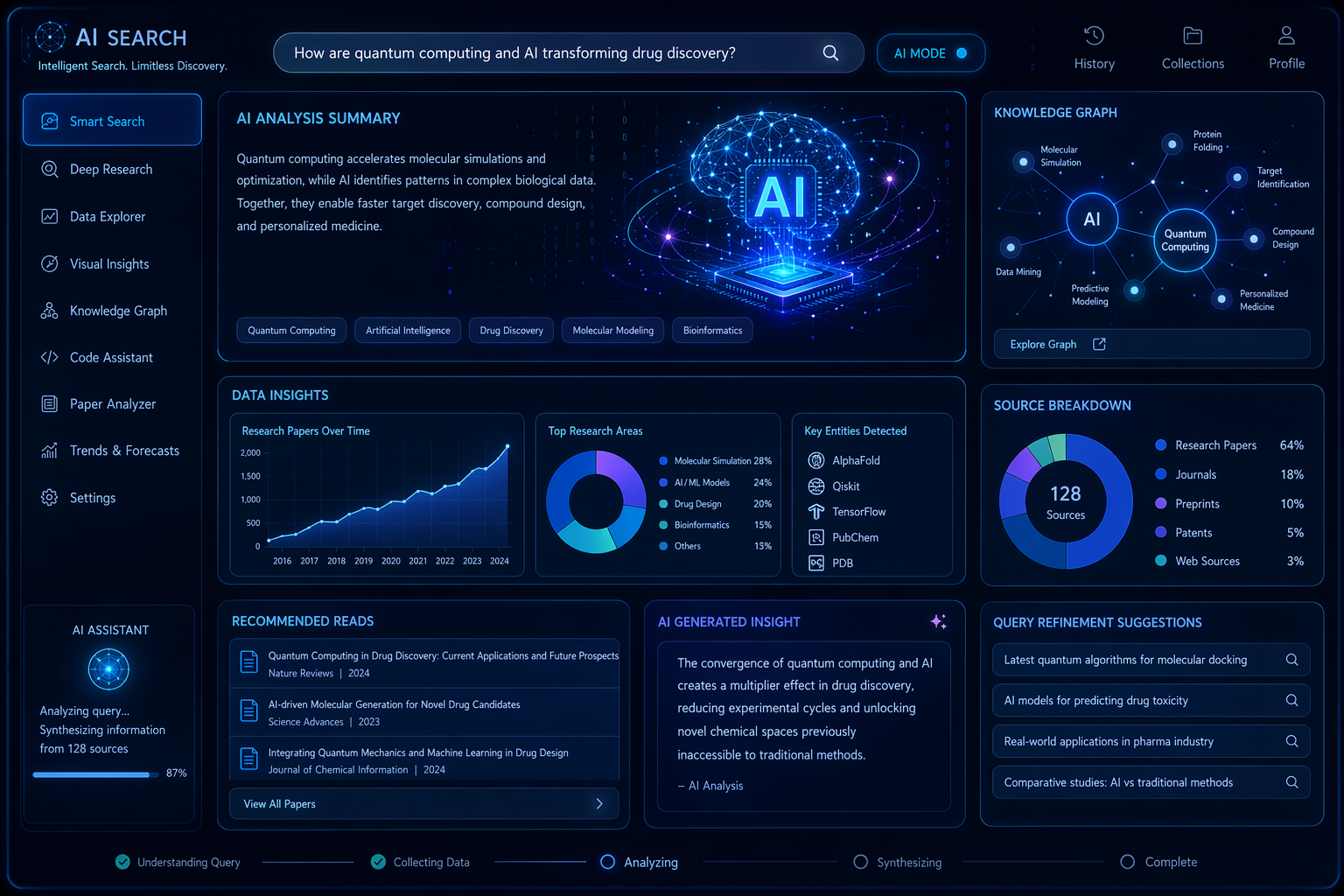
Perplexity AI is good at working with complex queries. Its language models help by mixing the search for answers with short and clear summaries and giving citations. This can make it helpful for people who do academic research or want to read more about a topic. But even the best answer engine is not perfect. So, it is always smart to check important information with the source that is shared.
How can I get started with using an AI-powered answer engine for my daily searches?
Start simple. Use an ai search engine when you need quick summaries, simple comparisons, or clear answers. Type your user queries the way you would say them, using natural language. After you get results, ask more questions to make the answer better. To get the most out of search optimization, compare what you find, check if the sources are good, and make sure to look over key details.
What is an AI search engine?
An AI search engine utilizes artificial intelligence algorithms to enhance search capabilities, providing more relevant and personalized results. Unlike traditional search engines, they analyze user behavior and preferences, enabling improved understanding of queries. This results in faster, more accurate information retrieval tailored to individual needs and interests.