







.png%3Falt%3Dmedia%26token%3De0f3615e-587a-48e5-975c-ebb082723dcd&w=3840&q=75)
Deep Learning Fundamentals: A Beginner's Guide to AI Models
Key Highlights
Deep learning is a part of artificial intelligence that uses neural networks to learn from training data.
You will see how AI, machine learning, and deep learning connect inside modern AI models.
This guide explains input data, hidden layers, outputs, and model training in very simple terms.
It also covers CNN vs RNN, plus where these machine learning algorithms are used in daily life.
You will learn beginner tools, common model types, and simple next steps for AI learning.
Introduction
Deep learning is a big part of artificial intelligence and machine learning today. It helps computers do things like see pictures, read words, and make guesses using lots of data. If you are new to this topic, this guide will help you get started and make things easy to learn. You will find out how deep learning, neural networks, and AI models all work with each other. If you want to start your learning with SocialPrachar, https://www.socialprachar.com, this beginner guide gives you a good place to begin.
What Is Deep Learning?
 Deep learning is a part of machine learning. The, it learns from data by using many layers of linked nodes. With this, it finds patterns and can make good guesses. So, it helps computers learn from what they see and not just follow those set rules.
In artificial intelligence, deep learning runs a lot of high-level systems. It is used for things like image recognition, tools for speech, text generation, and other smart uses. If you want to know how deep learning fits in with AI models, you need to know where it sits in the big world of artificial intelligence.
Understanding Deep Learning and Its Place in AI
Artificial intelligence is a wide area. It includes systems that do things that look smart. Inside artificial intelligence, machine learning helps systems get better by learning from data. They do not just use rules that people write by hand.
Deep learning models are another type in machine learning. Those models use neural networks with many layers. They take in a lot of training data. When they train, these systems change weights and bias values so they can give better answers as time goes on.
How does deep learning fit with AI models? It is a big way to make AI models. Not all AI models use deep learning, but a lot of new and strong ones do. These models work well for pattern recognition, language work, and image jobs. Simple ways do not work as well for these tasks.
Relationship Between AI, Machine Learning, and Deep Learning
Think of artificial intelligence as the biggest circle. It holds many ways to help systems act smart. Some artificial intelligence works using fixed rules, like expert systems. Other parts of artificial intelligence learn from data. This part is called machine learning.
Deep learning is inside machine learning. It works with neural networks that have lots of layers. These layers help the model learn from examples given in the training process. The model gets better step by step. The learning rate is a setting that helps decide how fast the model learns during the training process.
So, what is an ai model in simple words? It is a trained program that takes data and makes a decision or guess. The job of model selection depends on what you need to solve. If the problem is easy, you can sometimes use a rule-based system. For harder jobs, like working with language or pictures, deep learning often works best.
Why Deep Learning Became Popular in India and Globally
Deep learning got popular after data sets got bigger and computers became more powerful. With GPUs, parallel processing got faster. That helped deep learning algorithms use large amounts of information. This made advanced AI useful for real products and services.
Now, you can see deep learning in computer vision, natural language processing, and generative AI. It runs image tools, chat systems, recommendation engines, and talk-to-text features. People use these in business software, healthcare tools, online platforms, and mobile apps all over the world.
In India and the rest of the world, more people wanted smarter automation and improved predictions. AI models are now very common in e-commerce, customer support, healthcare imaging, finance, social media, and transportation. As different groups started using AI, deep learning algorithms went from research to technology that people use every day.
Importance of Deep Learning for Modern AI Models
Modern AI models often work with a lot of messy data. Deep learning models are important because they can find helpful features right from that data. This way of automatic feature extraction cuts down on manual work, and it helps these systems find complex patterns.
There are different neural network architectures for different jobs. A general ANN is good for basic prediction tasks. CNN models work well in image recognition because they pick up small visual features. RNN models are best for things that use sequences, where the order of information matters.
This is why deep learning models are a big deal in today’s AI. They help power generative ai, vision tools, speech systems, and language products at a large scale. If you want to know more about ANN, CNN, and RNN, here’s what you need to know: they are related, but each one is made for a different kind of data.
How Deep Learning Works: The Basics
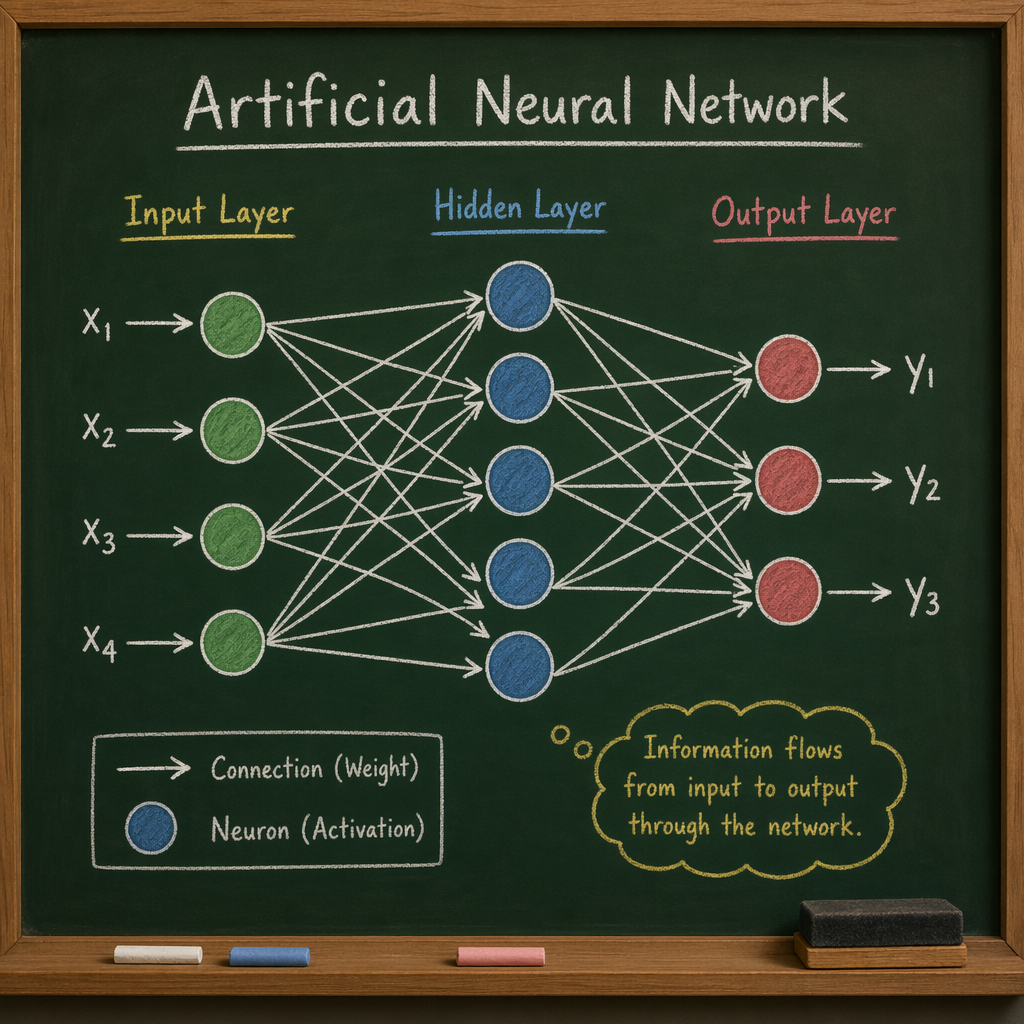 Deep learning begins with input data. This data goes into neural networks. Each layer in the network changes the data a bit more as it moves through. At the end, the system gives an output like a label, a score, or a guess.
The training process helps the network get better as time goes on. Using machine learning techniques, the system looks at its guesses and the right answers. It then changes its settings to do better next time. Before going into the technical stuff, it is good to know how input data, hidden layers, and outputs fit into this process with machine learning, neural networks, and the training process.
The Role of Data Input in Deep Learning
Everything starts with input data. A deep learning system needs examples to learn. You use things like images, text, audio, or numbers. Each of these is part of your training data. Every sample comes with data points the model uses to spot patterns.
Good data preparation is important. The model learns from what you feed it. If your data sets are messy, too small, or with bias, the output will not be good. Strong input helps the system spot useful links during training.
Good training data has these things:
It fits the task you want the model to work on.
It has enough samples to help the model learn stable patterns.
It is in a consistent format when you put it into the network.
The role of data and training in building AI models is simple: data teaches the model. Training turns these samples into prediction behavior you can use.
How Neural Networks Process Information
Neural networks work by moving data through layers that are linked. The input layer gets the raw values first. Then, these values go through hidden layers. In these layers, math steps change the data one at a time. Last, the output layer gives the final answer.
One easy way to think about this is by using a feedforward neural network. The data goes in one way, from the input layer to the output layer. Each neuron adds up the data it gets, uses weights and bias, then sends the new value forward. This creates a link where each step has small changes.
So, how do neural networks help AI models? They make guesses by changing input again and again. The early layers notice simple parts or signals. The deep hidden layers find bigger patterns that mean more. With this layered work, neural networks can do jobs like sorting, finding, and guessing things.
Hidden Layers and the Learning Process
Hidden layers are the main spot where learning takes place. They are in between the input and the output for a model. These help the network spot complex patterns. The first few hidden layers may see basic signals, but the deeper ones use those signals to get more detail in what they know.
Each neuron in a network uses something called an activation function. This helps it decide how much information should pass on to the next part. This step gives the model more ways to understand, not just straight lines. It lets the model handle real-world problems, which often have mixed and deep patterns.
When you do model training, the network first makes a guess. Then it checks the error from that guess and changes its inside values to do better. The learning rate controls how large or small these changes are. If the learning rate is too high, things can get jumpy and not settle down. If it is too low, it may take a lot of time to get better. This process keeps happening, with the aim to make the model's predictions improve.
Real-World Examples of Predictions and Outputs
When data gets to the output layer, the model makes a guess. These outputs can be things like labels, numbers, or chances that something could be true. In deep learning, the answer might tell what an image shows, figure out spoken words, or pick the best word to finish a sentence.
You use these outputs every day. Some systems work with decision trees or other ways, but deep learning happens a lot when you deal with lots of sound, text, or images.
Examples of how we see this are:
Image classification in photo tools and looking at medical pictures
Speech recognition in voice helpers or when typing with your voice
Facial recognition to unlock devices or let people in places
Picks for things to buy or watch in shopping or content websites
These are all ways you will find AI models being used. They sit behind many digital things you use each day, and most of the time, you may not even know the model is there.
Introduction to Neural Networks
Neural networks are at the heart of many deep learning systems. They help artificial intelligence use information, learn from things, and make new outputs. If deep learning is hard to understand, this is a good place to start. Here, you will see the main idea more clearly.
The way neural networks are built is like the human brain, but they are not the same. Instead, they use artificial neurons and math links to handle data. To get a better idea of neural networks, let's look at the human brain idea, how they are set up, and a simple way they work.
Biological Inspiration Behind Neural Networks
Neural networks were made to work like the human brain. In your brain, the neurons get signals, work through them, and send information to other neurons. An artificial neural network tries to be like this, but it uses math so computers can learn from the data.
This way of thinking is helpful but not exact. The brain's neurons use both chemical and electric signals. In a neural network, neurons use only numbers. The model gets an input vector, does math on it, and sends those answers through layers in the system. This helps the network pick up new ways to look at raw data.
This whole design makes pattern recognition possible. Just as people get older and learn to spot faces, sounds, or little shapes, an artificial neural network will learn patterns from the examples it's given. So if you want to know how neural networks work in AI models, the short answer is this: they take the idea of connected learning from the human brain but use numbers for it, not biology.
Artificial Neurons and Their Function
Artificial neurons are the small computer units in neural networks. Each one gets input data. Then it uses weights and bias to make and send a value. This value moves to the next layer, where more neurons keep working.
Think of each neuron as a small place where decisions get made. It looks at data points that come in. It decides how much those data points matter. If the signal helps, it goes forward. If not, its effect may stay small. This happens many times, sometimes thousands or billions, in big models.
As the network learns, it makes these neuron connections better over time. When it trains, the network changes the numbers in each neuron. This helps the output layer make better answers. That is what happens in neural networks. Small and simple units work together to build a strong system in AI.
Structure: Input Layer, Hidden Layer, Output Layer
Most neural network architectures be built in a simple way. The input layer gets the main values you put in. Then, one or more hidden layers work with these values. The output layer gives you the final prediction. The idea is easy to understand, but it lets you do very hard tasks.
A basic feedforward neural network works in one direction. Each layer has its own job. All the layers together change raw information into something you can use.
Here is what each part does:
Input layer: takes in features like pixels, words, or numbers
Hidden layers: learn patterns and relationships from the input
Output layer: gives the final class, score, or prediction
So, how do you use neural networks in AI models? They move information through this layered structure. This helps the system get better at knowing what to do from input to output as training goes on.
Simple Neural Network Workflow Explained
A simple neural network workflow starts when input data goes into the first layer. The network then moves it through hidden layers. At the end, the result comes out in the output layer. This result can be a class label, a probability, or some other prediction.
After that comes model training. The system checks what it gives against the right answer using training data. If the guess does not match, it changes things inside, like weights and bias. Then it tries again with more examples. Doing this many times helps the model get better.
You can see how this works in image tasks. The model may first try to say if a picture is a cat or a dog. If the model trains enough, it gets more accurate since it learns which details matter most. This is the basic way neural networks work in real tools.
Key Components of Neural Networks
Neural networks work because the main parts go together. Artificial neurons do math and help run the system. Weights and bias change the way things act. The activation function makes it able to try new things. The loss function checks for mistakes. These parts each have their job.
In the training process, these parts all help the system keep learning the right way. If you get how they work, it will help you see the bigger picture much better. The next sections will talk more about each part of neural networks. You will see examples to help understand them.
Neurons, Weights, and Bias: Building Blocks of Neural Networks
Artificial neurons are the main parts of neural networks. Each one gets a piece of the input vector. Then, it does some math and sends its answer to the next step. By itself, a neuron is simple. The power comes when you connect many neurons together.
Weights help decide how much each value matters in the neuron’s output. Bigger weights mean a signal has more effect. The bias gives a small boost or change so the neuron can react in new ways when needed. Weights and bias work together to shape what the model does with the input.
In model training, the neural network changes its weights and bias to make fewer errors. That is why these numbers matter so much. So, if you want to know how neural networks work in AI, just remember this: they learn by updating weights and bias to make artificial neurons give better results.
Activation Functions and Their Importance
An activation function is what picks what happens after a neuron mixes its inputs. It tells the network if the signal should keep going strong, pass along a little, or not much at all. This part does a good job for neural networks because it helps them work with complex relationships, not just simple ones.
If you do not use an activation function, deep models will not be very useful. When you go through model training, these functions help the system get better at finding patterns. They do not swap places with the learning rate, but they help the learning rate by guiding the way signals move around the network.
Common types are:
ReLU, often in hidden layers
Sigmoid, often for outputs similar to probability
Softmax, often when picking from more than one class
Now, what do neural networks do in AI models? Part of what they do is depend on these activation functions to turn rough math into real action and better guesses.
Role of Loss Functions and Optimizers in Deep Learning
A loss function shows the model how wrong its answer is. After data goes to the output layer, the system checks the result the model gave and compares that to the correct answer from the training data. The difference is called the loss value.
This loss value helps learning work. When the loss is high, the model needs to get better. If the loss gets lower over time, training is going the right way. This is a clear way to see the role of data and training when building AI models. Data gives examples, and the loss shows progress.
Optimizers help change the inside parts of the model after each step. They use work from backpropagation to update weights and bias faster. Simply put, the loss function measures mistake, and optimizers help fix it. Together, they help the model give better answers.
Easy Examples for Beginners
If neural networks sound hard to get, easy examples can help. These systems are in many tools you use every day. Their main power is pattern recognition. This lets them find helpful sparks in text, sound, pictures, or how we act.
You can see neural networks in a lot of tech around us, mostly in places that answer fast to what you do. Social media and apps often use these models. They help run feeds, give suggestions, and power image tools.
Beginner-friendly examples include:
Image classification in photo sorting apps
Sentiment analysis for reviews and comments
Face matching in phone unlock systems
Content suggestions on social media platforms
These show where AI models are used a lot now. They are made to spot patterns much quicker than any rule set by people, so that's why you find them in most digital tools and sites today.
Essential AI Models and Their Types
 AI models are trained systems that use data to make choices or find answers. Some of them are called machine learning models. Others are deep learning models that use layers of neural networks. Every model fits a certain kind of job.
When you look at different types of AI models, picking the right model gets easier. You will start to know how one model works best for pictures, another for steps in order, and another for shrinking data or making new data. Let’s talk about what AI models are, and go over the main kinds people new to these topics should learn about.
What Are AI Models? Simple Terms for Beginners
An AI model is a program that gets trained on data so it can make a prediction or decision. That is the easiest way to talk about what an AI model is. It is not magic. It is a trained system that you set up to do a specific task.
In machine learning, the model sees patterns in examples. It does not just follow fixed steps. After model training, it uses what it knows to handle new inputs. Some models sort data. Some models guess numbers. Some can make text or images.
Key things to remember:
AI models are trained for a specific task
They learn from examples, rules, or both
Different models fit different problems
Once you know this, it all makes more sense. AI models are tools. The right tool depends on what you need the system to do.
Training, Inference, and Model Evaluation Explained
The life of an AI system goes through three main steps. The first step is model training. During this stage, the model learns from training data. The next step is inference. Here, the trained model tries to use what it learned to give answers for new questions. The last step is model evaluation. This step checks if the model works well.
Evaluation is important. A model may look good during model training but might not do well with new data. That is why developers need to test how good it is using data that it has never seen before and clear measures. If you skip evaluation, you cannot trust what the model gives.
Here are some ways to check how well a model does:
Accuracy for right answers
Precision and recall to see how good it is at balance
Cross-validation for strong testing
So, what do data and training do in making AI models? The training data helps teach the model. Model training shapes it. Then, inference uses it to get answers. Evaluation tells you if this trained model is working well.
Differences Between Deep Learning Models and Traditional ML Models
Traditional machine learning models often rely on people to set up the most important features. A developer or data scientist helps pick what inputs to use. Deep learning models, on the other hand, can learn many features by themselves. They do this through different layers in the system.
This is why deep learning works well for complex patterns in images, sound, and language. A basic machine learning model may be good if the data is small and neatly organized. But deep learning models are often the pick when you have a lot of data, or the data is not clean. This is a big part of model selection.
There is also a difference in the way the model is built. Deep learning models use neural networks with hidden layers and an output layer. Most classic machine learning models do not have that. So, how is deep learning not the same as traditional machine learning? Deep learning usually needs more data and computer power. But it can find and use stronger patterns.
Major Types: ANN, CNN, RNN, Transformers, and Autoencoders
There are different types of neural network architectures, and each one is made to help with a certain task. If you want to know the main types of AI models and how they are not the same, it really depends on how they work with data.
Here are the main deep learning model types:
Artificial neural network: This is a general model used for simple prediction and classification.
Convolutional neural network: This model is great for images and gets local features. It is important in computer vision and feature extraction.
Recurrent neural network: This model is made for data that comes in a sequence or follows a certain time order. It deals with sequential data well.
Transformer: Uses attention to work with language models and other jobs that need to work with sequences.
Autoencoder: This model learns to compress and rebuild data, and helps with finding useful information in the data.
These model families work best for their own jobs. CNNs are top for computer vision. RNNs do well with data in order. Transformers are what make most new language models. Autoencoders help with compressing, removing noise, and finding deep features. Having many types gives deep learning flexibility.
Deep Dive into CNN vs RNN
A convolutional neural network and a recurrent neural network are two types of neural network architectures. Both are used in deep learning, but they are best for different things. A convolutional neural network is known for strong feature extraction when it comes to images. On the other hand, a recurrent neural network works better with sequential data.
When you look at CNN vs RNN, think about what kind of input each is good at. The way each one is built, what they do best, and where you use them are not the same. First, let’s talk about CNNs. Then, we will go to RNNs and see how they differ.
What Is a Convolutional Neural Network (CNN)?
A convolutional neural network, or CNN, is a type of deep learning model. It is built to work well with grid-like data like images. This model uses convolutional layers. These layers can pick out features on their own. Because of this, CNNs are really good for things like image recognition and finding objects in pictures. They are used in many kinds of work where these skills are needed.
CNN Architecture, Feature Extraction, and Key Applications
CNNs often begin with layers that scan for small patterns close by. The network then builds the first feature maps and sends them to more layers. These later layers give a deeper understanding of the visual information. In many setups, pooling is used to make the network smaller but still keep the key details.
Taking features step by step is what helps CNNs work so well. The first layers might find simple lines or edges. As you move up, later layers bring these signals together to show complete shapes. This is a big reason why CNNs have become so useful in image recognition and other computer vision jobs.
You can see CNNs used in many ways, like:
Image recognition in photos and security tools
Looking at medical pictures
Face and object detection
Video recognition and scene review
So, when do people use CNNs? They turn to these networks when jobs need the system to know the visual structure in what they see. If the task depends on patterns in an image or video, CNNs are usually a good way to go.
What Is a Recurrent Neural Network (RNN)?
A recurrent neural network, or RNN, is a model made to work with sequential data. It is not like a basic feedforward network. An RNN handles data in order, and it saves some information from each step to use at the next one. This means it has a simple kind of memory.
The structure of RNNs is helpful when older inputs important. In natural language processing, the meaning of a word can change depending on earlier words. In speech recognition, one sound connects to the others around it. RNNs are good at working with this kind of ordered data.
Now, how are CNNs and RNNs used for different work? CNNs look for patterns in space, like in images. RNNs focus on sequence and context that happens over time. That is why you see RNNs used for natural language, natural language processing, speech recognition, and other time-based prediction jobs more often than CNNs.
RNN Design, Sequential Data Handling, and Use Cases
Recurrent Neural Networks (RNNs) are good at handling sequential data. They help with tasks that use time-based information. The way RNNs work is a lot like the brain and its memory. They keep track of context over a sequence, so the memory is not lost as the data moves on. This kind of neural network is used in language translation and speech recognition. Having context in these jobs is very important.
RNNs can deal with many different lengths of sequential data. This makes them useful in lots of ways. For things like text generation and chatbots, RNNs stand out. They show they have a strong way to handle and predict patterns in temporal datasets.
CNN vs RNN: Detailed Comparison Table and Recommendations
Knowing the difference between CNNs and RNNs helps you pick the best model for your task. CNNs are good for image classification and computer vision because their convolutional layers pull features from spatial data well. On the other hand, RNNs handle sequential data, so they work for things like language and speech recognition.
You should think about the kind of data you have and what you need to do. If your task uses time series or deals with sequence prediction, RNNs get better results. For things with images, CNNs are the way to go.
Real-World Applications of Deep Learning and AI Models

Many industries use deep learning and AI models to help with new ideas and to fix big problems. In healthcare, tools like advanced image recognition help doctors find problems in medical scans. This makes it easier to know what is wrong with someone. Cars that drive themselves use neural networks to look at data as they move. This lets cars travel in a safer way.
In business, systems that give suggestions use pattern recognition to give each person a special experience. There are also tools that watch for fraud to keep your money safe. As these tools get better, they have more of an effect on daily life, and they help shape new ways we all live and work.
Healthcare, Self-Driving Cars, and Smart Assistants
In the healthcare sector, deep learning models help check medical images for things like tumors or broken bones. This lets doctors find and understand health problems faster and more exactly.
Self-driving cars use neural networks, like convolutional neural networks, to see objects around them and understand what is happening on the road. This helps them drive more safely.
Smart assistants use natural language processing and deep learning to understand what people want when they talk or give commands. These tools make life easier for us and show how deep learning, natural language, and neural networks are changing many industries.
Generative AI, Fraud Detection, and Recommendation Engines
Generative AI is now important in many fields. It helps people do tasks that seem like they need a creative touch. This technology uses neural networks to learn from data and make things look real and new.
With image generation, generative AI looks at pictures and sees patterns. It learns these patterns and makes new images that fit in. This changes how companies create and use pictures.
In fraud detection, deep learning models study payments and money moves. They spot strange changes or risks. Because of deep learning, companies can keep people safe from threats.
Recommendation engines use user data to help you find things you might like. These systems rely on neural networks to remember what you do and suggest choices. This makes shopping or watching videos easier and better for all of us.
Business Impact and Future Prospects in India
Deep learning technologies play a big part in changing businesses in India. They bring many benefits for the companies and show promise for the future. Neural networks, along with data science, power new ideas in healthcare, finance, and education. These make smarter options that help people make better decisions. As AI models grow and get better, companies will use more advanced systems. This will help make things run faster and smoother.
Looking ahead, AI will be more common in day-to-day tasks. There will be a need to build an AI-focused workforce using learning programs. AI training institutes will become important for teaching new skills and getting ready for these jobs.
Getting Started with Deep Learning: Roadmap and Career Paths
A clear plan for learning deep learning can help you move faster and find your way in many AI jobs. Start with Python and basic facts about numbers, since these are at the heart of data science. Next, learn about machine learning. You need to know the old ways and the new ways to get the best start.
Think about signing up for AI courses in Hyderabad. These classes can help you learn more about neural networks and grow your skills by working with real tools. Try making something, maybe a chatbot or an image classifier. Projects like these help you get good experience for later jobs in this fast-growing field.
Skills Needed: Python, Statistics, and Data Science Fundamentals
To start working with deep learning, you need to know Python. This is the main language used for many AI models. Python has lots of libraries that help with data science, model training, and showing what you find in your data. It makes data preparation and other tasks easier.
It is also important to know some statistics. This helps you look at data and see how your model is doing.
Learning the basics of data science like data preparation and checking your data is a must. If you focus on these skills, you will be better at building and testing deep learning models.
Step-by-Step Beginner Learning Roadmap
Learning Deep Learning can be fun and interesting! The first step is to get good at Python, as it is the main language used in AI. Then, learn the basics of statistics and math because you need them for data work. It is important to know about machine learning, so read about different ways it is used and the tools behind it. After that, look into neural networks and how they work. Try out frameworks like TensorFlow or PyTorch to see how ideas become real-world things. At the end, build some projects to test your skills and show what you know. This will help you learn more and grow in this fast-moving area.
Project Ideas: Image Classification, Chatbots, Sentiment Analysis
Exploring new project ideas lets you get a better grip on deep learning. You can start with image classification. In this project, you use CNNs with training data to help a model spot and sort images. Doing this gives you a good base in computer vision and helps you learn about pattern recognition.
You can try building a chatbot next. This uses RNNs, and they can get the natural language and give human-like answers. Sentiment analysis is another fun project. It takes you deeper into natural language processing, where you check user feelings in text data. That helps you get extra insight into what people think or feel.
Top Careers and Roles in AI and Deep Learning
There are many exciting jobs in AI and deep learning. Roles like AI Engineer, Machine Learning Engineer, and Data Scientist are very popular right now. In these jobs, you get to work with new and advanced tech. There are also specialties like Deep Learning Engineer and Generative AI Engineer. People in these roles build models that try to think and create like people.
If you want to learn more about this field in Hyderabad, you can join AI courses at different institutes. These training programs help grow your skills and can get you good jobs in the tech world, which is always changing. Being part of machine learning and generative ai work could be a great step for your future.
Common Challenges and Myths in Deep Learning
Deep learning has some challenges and myths that many new people need to know about. To train deep learning models well, you will often need large datasets. This can be hard for many people to get. The high cost of computers and tools also makes things tough. So, it's important to choose the right setup for your work.
Some people think that deep learning is only for experts. This is not true and can stop people from trying it. The truth is, anyone who is interested in artificial intelligence can start learning deep learning. It does not matter where you come from or what you know before.
Data Requirements, Computation Costs, and Explainability
Training deep learning models needs a lot of input data. You must use high-quality data sets to help show complex patterns. Model training takes time and plenty of computer power, so you end up needing strong hardware and lots of energy.
It can be hard to understand deep learning algorithms because they act like black boxes. This means people cannot see how the models make decisions. With deep learning models used in healthcare, finance, and other areas, many do not trust these AI models because their process is not clear.
Addressing Overfitting and Bias Concerns
Overfitting happens when the model picks up noise from the training data, not the real patterns needed. This makes it hard for the model to do well on new data. Methods like dropout, regularization, and cross-validation help fix this. They work by making the model simpler. Another good idea is to use a mix of training data. This will cut down on bias and help the model work better with new data.
Bias comes up when the training data is not diverse. This can cause unfair results. It is important to check and change things during the training process. Doing this helps to build AI models that are fair and more accurate.
Debunking Myths: Who Can Learn Deep Learning?
Deep learning can be learned by anyone who wants to know more about technology. You do not need to be from a certain field to get started. If you learn to code and understand some math, you can work with deep learning in many ways. It is open to all, and people from different backgrounds can do well in it.
Deep Learning Tools and Frameworks for Beginners
Many tools and frameworks help people who are new to deep learning. TensorFlow and PyTorch are two of the top platforms. They have simple features and lots of support from the online community. Keras is a high-level API on TensorFlow, and it makes creating neural networks and model training easy. Jupyter Notebook is great for working together, sharing code, and seeing results. All of these tools make learning deep learning better, so new AI developers can try things out and build real apps without getting lost in hard steps.
Overview of TensorFlow, PyTorch, and Keras
TensorFlow, PyTorch, and Keras are well-known in deep learning. Each one has its own features. TensorFlow gives strong support for making projects ready for different platforms. It works well for big business use. PyTorch is good for schools and research. It has an easy setup and lets you change things as you go. Keras comes with a simple way to build neural networks on top of TensorFlow. All have different ways you can use them. They help data scientists and people who work on AI get their jobs done.
How Jupyter Notebook and Hugging Face Are Used in India
Jupyter Notebook is a well-known tool in India. People use it to write and run code in real-time. Many data scientists and AI developers like it for this reason. It helps them try out deep learning models, see data, and share ideas fast. Everything here is easy for people to use.
Hugging Face is now a key tool for work in natural language processing. This library gives out pre-trained models. So, you can get started with natural language tasks faster. It helps both students and working people in India use new AI models with less effort. This way, you can use AI in a lot of different areas.
Practical Tips for Choosing the Right Framework
Choosing the best deep learning framework depends on what you need for your project. TensorFlow, PyTorch, and Keras each work well for different things. The right one also depends on how well you know coding and the job you want to do. TensorFlow is good for big tasks because it can handle a lot. PyTorch is more flexible, so many people use it for research.
Think about the support and resources for the framework you pick. A big and active community usually means better guides and tutorials. This will help you learn and use the framework well.
Conclusion
Deep learning is changing the way many industries work. It brings new ideas and better ways to solve problems with artificial intelligence. Fields like computer vision, natural language processing, and generative AI show how much deep learning can do for both daily life and business tasks. As the technology gets better, new things like multimodal AI and foundation models are shaping a bright future for deep learning. If you learn the right skills and get the right support, you can start your own path in this field and help build the future of artificial intelligence.
Frequently Asked Questions
How is deep learning different from traditional machine learning?
Deep learning uses neural networks to pick out features on its own. It needs big sets of data to learn, while machine learning needs people to choose features by hand. That is why deep learning works well for tough jobs like image and speech recognition. It can make these tasks better in many apps.
Can you explain the main difference between CNN and RNN?
CNNs are made to work with grid-like data like images. They do well because they use the way things are set up in space. RNNs, on the other hand, are good at working with sequential data. They remember what happened before in a sequence. Because of this difference, CNNs work best for visual jobs. RNNs are better to use for things like language or time series.
What’s the fastest way for beginners in India to start with neural networks?
To get started with neural networks, beginners in India should check out online courses about Python, TensorFlow, and Keras. Doing real projects and taking part in local meetups can really help you learn fast. You get practical experience and support from other people, so you can improve your skills well.