







.png%3Falt%3Dmedia%26token%3D7c54b2da-45ed-4a7a-88d6-8fb80b1673a5&w=3840&q=75)
Data Analyst Salary in India 2026: A Comprehensive Guide
Key Highlights
The average data analyst salary in India is projected to see steady growth by 2026, influenced heavily by your years of experience and skillset.
Freshers can expect a starting salary between ₹3 LPA and ₹6 LPA, which increases significantly with 3-5 years of experience.
Technical skills in SQL, Python, and business intelligence tools like Power BI are critical for securing higher pay bands. Salaries vary by city, with tech hubs like Bangalore and Hyderabad offering more competitive packages than other locations. Looking ahead, the data analyst salary in India is expected to be higher in 2026 compared to 2025 due to ongoing demand for these technical skills and continued growth in technology-focused cities.
Salaries vary by city, with tech hubs like Bangalore and Hyderabad offering more competitive packages than other locations.
Top companies, especially in the IT and finance sectors, are known to offer higher compensation for skilled data analysts.
Introduction
Welcome to the world of data analytics. In this field, your ideas can change how a business works. Companies in India now use data more, so there is a big need for skilled data analysts. Are you wondering how much you can get paid in this job? This guide explains what a data analyst salary in India could be like in 2026. It looks at everything, from what new workers earn to how business intelligence tools affect pay. We will talk about how things like your skills, your work years, and where you live all can change the average salary you can get. If you are searching for reliable data on data analyst salaries in India for 2026, reputable sources include industry reports from consulting firms such as Deloitte and KPMG, government labor statistics, and well-known job portals like Glassdoor and LinkedIn. Additionally, annual salary surveys by Naukri and Michael Page often provide valuable data for future salary trends.
Data Analyst Salary Trends in India for 2026
 When we look at 2026, things look good for data analyst jobs in India. The need for data to help with choices at work keeps getting stronger. Because of this, more and more companies will need data analysts in different fields.
Your average salary as a data analyst in India will mostly depend on your different levels of experience and the skills you have. As businesses learn to use data better, they pay more to those who can turn many numbers into ideas they can use at work. Here is a look at what makes this job market grow fast.
Growth Drivers: Analytics, AI, and Business Intelligence
The field of data analytics is changing fast. It is not only getting bigger but also becoming smarter every day. This is because business intelligence (BI), artificial intelligence (AI), and better ways of looking at data are now a part of how people work in a business. Companies use data mining to find patterns that were hard to see before. This helps them stay ahead of others. Looking ahead to 2026, the salary trend for Power BI Developers in India is expected to show strong growth, often outpacing that of traditional data analysts. As businesses continue to invest in advanced analytics and business intelligence tools, skilled Power BI Developers are likely to command higher salaries due to increased demand for their expertise compared to general data analysts.
Because of these changes, the job of a data analyst is now more important than ever. You do more than just give out numbers. You help those in charge make plans and choose what steps to take. With more work comes the chance to earn more money. Here are a few reasons why this is happening:
Automation: AI and machine learning help do simple jobs. This lets analysts spend more of their time finding deeper answers.
Data-Driven Decisions: More businesses are choosing to use data in all that they do. Because of this, there is more need for those who know how to work with data.
Complex Datasets: There is a lot more data out there. It's also getting more complicated. That means there is a need for people who can read and use this data in a good way.
Startups, MNCs, and Consulting Firms—Who Pays More?
The place you work as a data analyst has a big impact on how much you will get paid. If you look at the pay across different companies, big international companies and consulting firms tend to pay the most. On the other hand, startups might pay less but can give you things like stock options.
When you check market data, you can see that top companies have their own pay scales. For example, Accenture and EY (Ernst & Young) are top companies that usually offer salaries over ₹6 LPA. Some other big employers may start a bit lower but help you grow your career in a good way. So, you should look at the whole package they give you, not just the main salary.
Here is a quick look at what these companies pay:
High-Paying MNCs: Companies like Accenture have average salaries that can be around ₹610,419.
Competitive Players: Deloitte and EY also pay well, with packages close to ₹600,000.
Variable Pay: Some big companies like Amazon.com Inc. may have a lower starting salary but can offer other good parts in their pay.
Being a data analyst in top companies, startups, or even well-known names like amazon shows that there are many ways your pay can turn out. You should always see what each offer gives you for your work and growth.
Data Analyst Fresher Salary in India 2026
Getting started in data analytics as a data analyst fresh out of school is a big step. The data analyst fresher salary for 2026 in India is expected to be good. But, you need to have the right idea about it. What you get paid at first will depend on your technical skills, what kind of work you do, and where you live in India.
Some numbers you see on the internet might look too high. Most entry-level jobs have a salary that helps you get started. This role lets you get hands-on work and learn. Later, as you work more, you can get a much better average salary. Let's find out more about these points.
Entry-Level Roles and Average Fresher Salary Range
When you start out as a successful data analyst, you will do the basics in your job. These things are key for any work with data. Most of the time, you will collect data, clean data, and do simple statistical analysis. Doing these tasks helps you get to know the whole way data is used, from the start to the end.
The average data analyst salary for a fresher with less than one year in a job is usually between ₹3 LPA and ₹6 LPA. This is what most people can expect starting out. But, you could get a higher pay if you know skills that are really wanted or if you get a job with a top company, or if you work in a sector like finance that pays more.
Some common job titles when you start out are:
Junior Data Analyst
Business Intelligence Analyst (Entry-Level)
When you have one of these jobs, you will mostly help senior analysts and learn how things work. This early work will really help your salary go up more as you get better and spend more years in your job.
Essential Tools for Freshers: SQL, Power BI, and Hiring Expectations
If you want to get a good entry-level job, you need to have the right technical skills. Today, recruiters do not look only at your degree. They want people who can really use tools like SQL and Power BI. If you know the basics of these, you can make your resume stronger. You can also have more power when you talk about pay.
When they hire new people, many managers want you to know the basics well. You should know how to write queries and get data. You should be able to make simple dashboards to show what you found. These things show that you can start working right away. There are many people who try to find a good machine learning course in hyderabad to get these skills.
The most wanted tools for beginners are:
SQL: Used to write queries and handle databases.
Microsoft Excel: You should be good at Excel if you want to change or use numbers.
Power BI or Tableau: People use these for making interactive graphs and easy-to-read reports.
Tool-Specific Analyst Salaries: SQL & Power BI
If you know how to use certain tools, you can get paid more as a data analyst. The pay is not the same for everyone. If you are good at SQL, machine learning algorithms, or Power BI, you may get a better salary. Companies pay more for people who use their technical skills to do hard data work fast and well.
The kind of work you do as a data analyst can put you in different pay groups. Somebody who knows a lot about SQL can get a higher pay than someone without those skills. The same is true for a Power BI expert who can make special dashboards with it. Now, let’s look at how these jobs fit in the data analyst field.
SQL Analyst Salary vs Standard Data Analyst Pay
SQL is the backbone of data analysis. It is the universal language for communicating with databases, making it a non-negotiable skill for any serious analyst. A dedicated SQL analyst salary is often higher than that of a standard data analyst because these roles require deep expertise in query optimization, database management, and data extraction.
While a standard data analyst uses SQL as one of many tools, an SQL analyst specializes in it. This focus allows them to tackle more complex data challenges, which businesses reward with better pay. An analyst who combines SQL skills with business intelligence tools can command even higher compensation.
Here's a simple comparison of estimated annual salaries:
Role | Average Salary Range (Fresher) | Average Salary Range (2-4 Years) |
|---|---|---|
Standard Data Analyst | ₹3.5 LPA – ₹5.5 LPA | ₹5 LPA – ₹8 LPA |
SQL Analyst | ₹4 LPA – ₹6.5 LPA | ₹6 LPA – ₹9 LPA |
Power BI Salary in India, Corporate Demand, and Career Progression
The need for Power BI skills is going up fast in India. Many companies now use it to turn basic data into clear, good-looking dashboards. These dashboards help leaders make smart choices with business intelligence. There is strong pay for Power BI in India because companies want people who know how to use it. If you can tell good stories with data using Power BI, the company will want you on their team.
If you work in Power BI, there is a good path for you to grow your career. You can start by making dashboards. Over time, you may get work that lets you help shape business plans. If you learn DAX, which is known as Data Analysis Expressions, you can do tough math with your data. This helps you and the company find out more from the numbers. If you are very good with Power BI and DAX, you will become important to your workplace.
Key points about Power BI careers include:
High Demand: Jobs like Power BI Developer and BI Analyst show up in a lot of areas, like tech, money, and retail.
Salary Growth: If you are good at Power BI and Tableau, you may make more money than someone who just knows Excel.
City-Wise Data Analyst Salary Insights
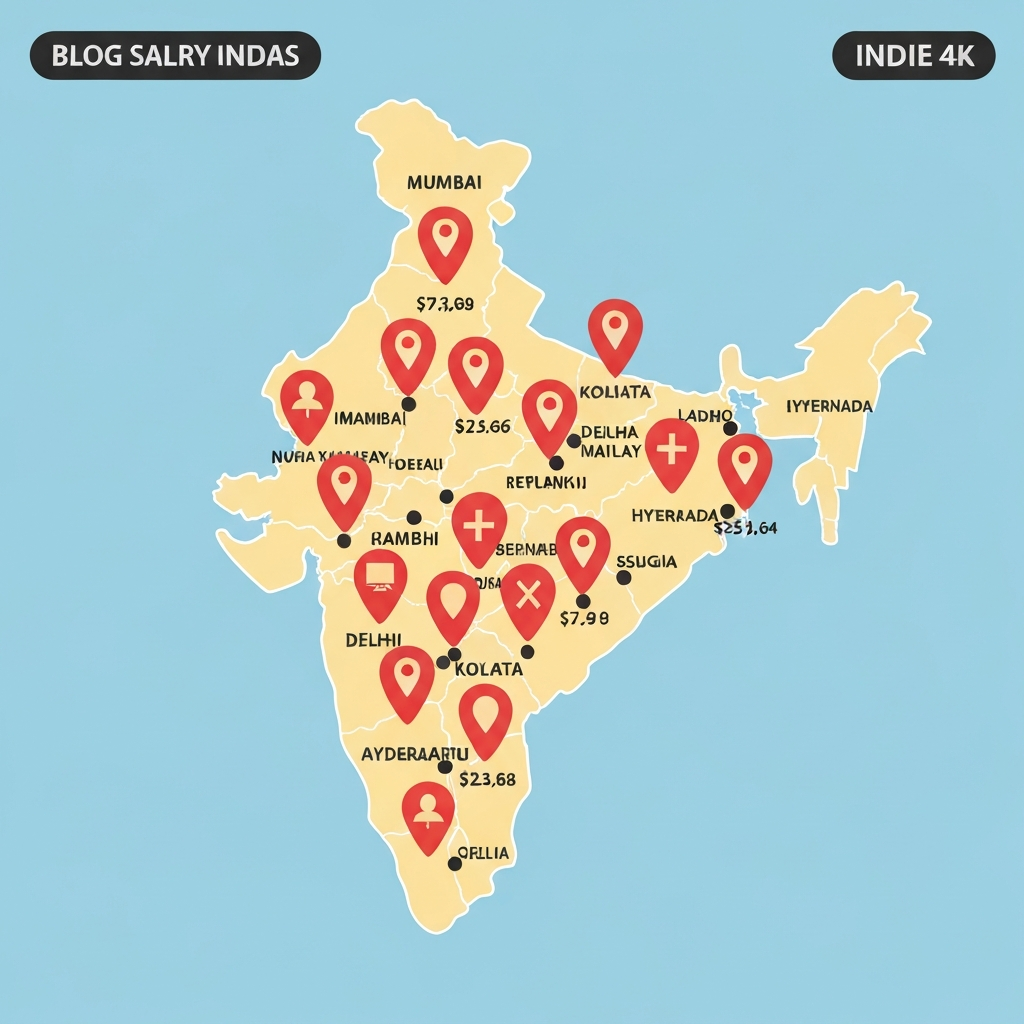 Where you work is important, not just what you do. The pay for a data analyst in India can change a lot from city to city. Cities like Bangalore, Mumbai, and Delhi NCR have many tech and finance jobs. This means that people who work as a data analyst often get paid more in these places.
But getting a bigger salary does not always help you save more. You have to look at the cost of living. The money you earn as a data analyst in Hyderabad can let you have a better life than if you got the same salary in a city where things cost more. Let’s look at how these cities compare.
Salary Comparison: Hyderabad, Bangalore, Pune, Chennai, Delhi NCR
Salaries for data analysts show clear regional differences. Bangalore and Delhi NCR (specifically Gurgaon) lead the pack, offering salaries that are around 18% higher than the national average. This is due to the high concentration of tech giants and large corporations in these areas. The data analyst salary Hyderabad offers is also competitive, about 10% above the national average.
On the other hand, cities like Mumbai, Pune, and Chennai offer salaries that are slightly below the national average. While these cities still have strong job markets, the pay scales are comparatively more moderate. This makes it crucial for you to weigh both the salary and living expenses before making a move.
Here's a quick look at how average salaries compare across major cities for a mid-level analyst:
City | Average Annual Salary Range |
|---|---|
Bangalore | ₹6 LPA – ₹12 LPA |
Delhi NCR | ₹5 LPA – ₹10 LPA |
Hyderabad | ₹5 LPA – ₹10 LPA |
Pune | ₹4 LPA – ₹9 LPA |
Chennai | ₹4 LPA – ₹8 LPA |
Cost of Living vs Analyst Salary—Making the Right Move
When you look at a job offer, you should not check the analyst salary alone. This is a common mistake that many people make. If you get a high salary in a city where it costs even more to live, you might end up with less money to spend. It's important to look at your salary and compare it with living costs. This will help you make a smart choice when thinking about your next career move.
For example, Bangalore gives some of the best salaries out there. But, it is also one of the most costly cities to live in. On the other hand, cities like Hyderabad or Pune pay a bit less, but the cost to live there is also lower. This means you might have a better life there even with a smaller salary. If you want to grow, taking an ai engineering course in hyderabad can be a good choice. The market in Hyderabad is growing, and it is still not too expensive.
Before you make your choice, think about these points:
Calculate Net Savings: Figure out what you will spend each month for rent, food, and travel in each city. Then, take these costs away from your expected take-home pay to get what you can save.
Factor in Career Growth: Think about which city will give you better chances to grow in your line of work.
Salary Breakdown by Experience Level
One big thing that decides your salary is your years of experience. When you start out in data analytics, you will earn less at first. As you move from a beginner to a mid-level or senior analyst role, you will see your pay go up a lot. Each step to a new pay level means you bring more skills, take on more responsibility, and have a bigger part in the team.
This step-by-step growth shows how much companies value people with more experience. These people often lead projects or help teach younger team members. Let’s look at what salary ranges you can expect at each stage of your data analytics career.
Pay Bands: Freshers, Mid-Level, Senior Analysts, and Manager Pathways
Your salary as a data analyst will usually go up as you get more time and skill in this field. You will move through different pay levels through your career. There is often a big jump in pay from freshers, to mid-level, and top-level roles. This is because as you learn, you take on harder projects that give the company good insights to use in the business.
Once you become a senior analyst, you may want to go for manager jobs. When you are an analytics manager, you are not only part of the team—you lead the way. You build and lead the team and help plan how the company should use data. This new role comes with more pay. Some people will take an ai developer course in hyderabad to reach this next step faster.
Here are the common pay levels by years spent working:
Freshers (0-1 year): Most get a total pay around ₹410,133.
Early Career (1-4 years): The pay for this group goes up to about ₹502,283.
Mid-Career (5-9 years): Analysts with more skill earn about ₹806,567 on average.
Senior/Experienced (10+ years): This group can make over ₹1,113,396, and even go up to ₹1,500,000 or more.
Analytics Leadership—How Experience Accelerates Compensation
Moving into analytics leadership is when people often see their pay grow much faster. When you have over a decade of years of experience, you stop being just an analyst. Now, you are a real partner with the business. Your career changes from only doing tasks to helping set the data goals for everyone in the company.
In jobs like Analytics Manager or Director of Analytics, you take on more big duties. This means running a team, working with budgets, and planning at a high level. You get a much bigger salary and more bonuses for these extra tasks. Companies value your years of experience because you know not just how the tech works, but also the business side of things.
Key things that grow pay faster in these roles:
Strategic Impact: Leaders who connect data work to making money for the business get paid well.
Team Leadership: If you can make and lead a strong analytics team, this is a skill that many want.
Skills That Fast-Track Data Analyst Salary Growth
When you have experience, it helps. But the right technical skills can really speed up your salary growth. If you want to get ahead fast, you need to learn the technologies that are in demand now. Skills like advanced SQL, making helpful Power BI dashboards, and good data visualization are what most employers want. They are ready to pay more to people who have these skills.
Just having basic knowledge will not help you stand out. You need to understand your skills well and know how to use them to help the business. This is what can make you one of the top earners in this field. Let's talk about the exact skills that matter the most for growth.
Advanced SQL, Power BI Dashboards, and Real-World Analytics Projects
If you want to speed up your salary growth, you have to go past basic skills. For example, learning advanced SQL helps you make tough queries and keep databases running well. This skill is very important in places where a lot of data is used. Using Power BI to build smart dashboards is also good. These help people see the main points right away and help you stand out.
But having good skills is not enough. It is best to show what you can do by working on real analytics projects. Make a portfolio where you start with data cleaning and end with a finished report. This shows what you can do and helps you when you talk about pay. It shows real proof of your skills in power bi, tableau, and sql.
To raise your salary fast, work on:
Advanced SQL: Practice with window functions, learn about common table expressions (CTEs), and work on making your queries better.
Interactive Dashboards: Try more than just basic charts. Use Power BI or Tableau to make dashboards that let people look into the data.
End-to-End Projects: Show projects where you did the whole work, from start to finish, including data cleaning.
Problem-Solving and Portfolio Building with SocialPrachar Guidance
Knowing theory is good. But, using it to solve real business problems is what helps you land the best data analyst jobs. You need to start building your portfolio for this reason. A good portfolio shows that you can solve problems and get real results. This makes you stand out more when applying for jobs.
Places like SocialPrachar understand this need. They focus on teaching with real-time data analytics projects. You learn SQL, Power BI, and business analytics by working on projects. This helps you build a portfolio that is ready for jobs. It matches your skills with your goal of higher salary growth. With this method, you will feel much more ready for technical interviews. If you join a top ai training institute in hyderabad like SocialPrachar, you get a big advantage.
With expert help, you can:
Develop a Strong Portfolio: Make great projects that show both your technical and problem-solving skills.
Master In-Demand Tools: Get real practice with tools such as SQL and Power BI that many companies need.
Data Analyst vs Other Tech Roles: Salary Perspective
How does a data analyst's average salary compare to other well-known tech jobs? If you want to plan your path, you need to see how the pay for a data analyst stacks up against jobs like data scientist, business analyst, and software developer. Each one has its own skill list, and you can see that because each brings in a different paycheck.
These jobs might look close, but they do not have the same core work or day-to-day things to do. That is why you often see pay levels change from one job to the next. If you know why these jobs are different, you can pick what works with your skills and what you want to earn. This will help you choose the right way to go in tech.
Comparing Data Analyst, Data Scientist, Business Analyst, and Software Developer Pay
When you perform a salary comparison across tech roles, you'll notice distinct differences. Data scientists typically earn the most due to their advanced skills in machine learning, statistical modeling, and programming. They focus on predictive and prescriptive analytics, which is a highly specialized field.
Software developers also command high salaries, as they are responsible for building the applications and systems that businesses run on. A data analyst and business analyst often have overlapping responsibilities, but business analysts may focus more on bridging the gap between IT and business stakeholders, while data analysts are more hands-on with the data itself.
Here’s a general salary comparison for mid-level professionals in India:
Role | Average Annual Salary Range |
|---|---|
Data Analyst | ₹6 LPA – ₹12 LPA |
Business Analyst | ₹7 LPA – ₹13 LPA |
Software Developer | ₹8 LPA – ₹16 LPA |
Data Scientist | ₹10 LPA – ₹20+ LPA |
Analytics ROI—Is Data Analyst Salary Climbing Faster Than Other Tech Careers?
If you think about what you get back from your job, taking the data analyst route can be one of the best choices. While some jobs, like data scientist, pay more at the top, it is easier to get started as a data analyst. This makes it a good and achievable way to step into tech.
The pay for data analysts keeps going up. As more companies use data to help them do better, there is a bigger need for people who know how to read and use that data. This is helping the data analyst salary to rise, sometimes even faster than pay for some other tech jobs.
If you want to start working in tech, picking data analytics is smart. You get the best mix of more jobs, good pay, and room to grow. You also learn skills that you can use in other jobs later.
Reaching Higher Salary Bands Faster as a Data Analyst
Do you want to move up in your job and start making more money soon? You do not have to just wait for your boss to give you a review once a year. There is a better way. You can be active in how you learn new things, build your skills, and take smart steps in your career. This will help you get more pay in the long run.
When you work on projects, you gain real skills. This kind of learning is good for you. If you get ready for interviews in the right way, you can stand out. Also, knowing the right time to change jobs can help you get ahead and earn more. These ideas will help you get the most out of your work life.
Let's talk more about how you can do this.
Project-Based Learning, Interviews, and Strategic Job Switches
The fastest way for you to move ahead in your career is to learn by doing real projects. When you work on real things, you get hands-on skills. You also build up a portfolio you can show at job interviews. This kind of experience means a lot more to companies than just having a list of certificates on your resume.
Changing jobs every two or three years is also a strong way to get a better salary. Most times, if you move to a new company, you get a bigger pay raise than if you only get promoted where you are. But, this means you need to get ready for interviews where you have to clearly show how you add value and what you know.
To move up faster, you should:
Learn by Doing: Go after projects that push you and help you get new skills.
Prepare for Interviews: Practice both technical and people-related questions so you answer well and with confidence.
Time Your Moves: Try to look for jobs right after you finish a big project, so you have good wins to share.
Showcasing Portfolios with Dashboard Presentations
Your portfolio can help you move ahead in your career. It does more than talk about your skills. It lets you show what you can do. If you use a live dashboard in an interview, it can make a strong impression. The dashboard shows your talent in data visualization and proves you can explain tough ideas in a clear way.
When you share a dashboard, you do more than display a chart. You take the hiring manager through your thinking. You talk about which numbers matter most, how you picked the right way to show them, and what helpful ideas came out. This kind of talk can help you stand out. It can also help you ask for better pay.
To help your portfolio get noticed:
Tell a Story: Set up your talk to share a story about the business problem you worked on.
Focus on Impact: Point out the results for the business or the things your data analysis found.
Conclusion
In short, learning about data analyst salaries in India for 2026 is very important for both freshers and people with experience. The field of data analytics, AI, and business intelligence is growing fast. Because of this, many businesses, from startups to big companies, need more skilled data analysts.
Knowing about the average salary, the use of SQL and Power BI, and what is common in each city can help you plan your career well. If you want to get ahead in this field, think about joining a training program like SocialPrachar. They use real-time projects and help you build your skills. If you want to know how to get started and earn more in data analytics, you can get a free consultation. This can help you know your best path moving forward.
Frequently Asked Questions
What is the average data analyst salary in India expected to be in 2026?
In 2026, the average data analyst salary in India for someone with some years of experience will be between ₹6 LPA and ₹12 LPA. You can get more if you have good skills in business intelligence tools, work for a well-known company, or have more years of experience.
How does a SQL analyst salary differ from a Power BI salary in India for 2026?
A SQL analyst salary is often higher than the pay for someone who works in general data jobs. This is because a SQL analyst has strong database skills. But, a Power BI salary can also be good, especially for people who know how to make useful dashboards. When you compare pay, analysts who know both power bi and sql often make the most.
Which Indian city offers the best salary for data analysts in 2026?
Bangalore and Gurgaon are set to give the best salary deals for data analysts in 2026. In these cities, pay is often 15-20% higher than the country’s average. Hyderabad and Mumbai also have good pay for these jobs. This makes them good choices for people who want high-paying data roles in top companies.