







.png%3Falt%3Dmedia%26token%3D0ba7fb47-5af4-46de-8f0b-d6ae9e8f05ee&w=3840&q=75)
The Complete Full Stack Developer Roadmap 2026 Guide
Key Highlights
This roadmap will help you learn full stack development. It is good for beginners and will get you ready for a job in 2026.
You will learn about the key programming languages and the main technologies used to make web applications today.
We are focusing on the MERN stack (MongoDB, Express, React, Node.js). Many businesses want people with these skills now because there is high demand.
This guide will show you how to work with the frontend by using React, and go into backend development with Node.js.
You will work on projects, and this way of learning will help you make a great portfolio to show your work to others.
You will also learn the key skills that companies look for when they hire a full stack developer.
Introduction
Welcome to your guide on how to be a job-ready web developer. This full stack developer roadmap 2026 is for people who are just starting and want an easy and clear way to grow. There is much you can do in full stack development. You get to work on web applications from the user interface to the database. If you want to create things and like being with technology, this full stack learning path will show you where to start. You will learn what you need to know to get a good job as a web developer in 2026.
What Is a Full Stack Developer in 2026?

In 2026, a full stack developer is a person who works on every step of the web development process. They can handle what users see on the page and the things that happen in the back end. These people know how to build, fix, and take care of web applications from start to finish.
Full stack developers follow best practices in the work they do. They build, test, and take web applications online. They know how APIs and databases work with the system. This helps them keep the user experience smooth for everyone.
Definition and Role of a Full Stack Developer
A full stack developer is a software engineer who can work on both frontend development and backend development. They have the necessary skills to make a web application from start to end. This means they are able to create the parts you see on the site, handle the server, work with the database, and make sure these parts talk to each other.
These developers often take an idea and turn it into a real product. They know the development process well, so they understand planning, design, launching a site, and making sure it keeps running. They are good at solving problems. They can work by themselves or with a team.
In short, a full stack developer is a key part of any tech team. They can switch between jobs and solve problems in any area of the system. A full stack developer can also help at every step of a project. This is why they are so important for many tech companies today.
Frontend, Backend, and Database Responsibilities Explained
To find out what a full stack developer does, you can look at the job in three main ways. The main parts are frontend, backend development, and database management. Each part helps the website work the way it should.
Frontend work is about the user interface and user experience. This is what you see and do on a website. It includes the buttons, menus, and the way the site is set up. The main goal is to give people a good and easy time while they use the site.
Backend development works as the heart of an app. It is about what happens behind what you see on your screen. This part handles the main logic, does server work, and talks to the database. Key jobs are:
Writing APIs so the data can go to the user interface.
Taking care of user logins and make sure it is safe.
Working with the business logic of the app.
The last part is database management. This is about how to keep your data safe and get it when you need it. It helps keep data integrity and is good for storing user info, product details, or anything else the app needs.
Why Full Stack Developers Are in High Demand in India
Full stack developers are needed a lot in India because they give great value to companies. A business does not need to hire one person for the front end and another for the back end. With one skilled person, the company gets someone who knows the user interface and the business logic. This makes the development process smooth. People can talk better in the team, and it can save money too.
Startups and small teams do well when they hire full stack developers. If the team is small, it is good to have one person who can handle the whole tech stack. A lot of job postings want someone who can make web applications that can grow as more people come in. A good full stack developer can do this job well.
Many places want to make smart web applications that do many things. Because of this, there is now more need for people who can handle every part of the job. Full stack developers work on both the user interface and the business logic. This makes full stack developers very important in tech today.
Essential Skills Companies Expect in 2026
To do well as a full stack developer in 2026, you should have both technical skills and soft skills. Companies look for people who understand code and can get along with the people they work with. You need to learn the main programming languages first before you can go far in this field.
When you get to the technical part, you need to know JavaScript. JavaScript is important because people use it for backend development and for frontend work. This is true in stacks like MERN. You also have to know how to use a web application framework. For the frontend, people use React. For the backend, they use Express.js.
Besides just writing code, there are many other essential skills you need.
Version Control: You have to know how to use Git and GitHub. These tools make it easy for people to work with each other. They also help to keep track of changes in code. It is good to have version control so you do not lose your work.
Problem-Solving: You need to solve problems when things go wrong. You have to look at what is not working and think about how to fix it. Good problem-solving means you can help the team get better results.
Communication: You must talk about hard ideas in a simple way. This helps others, both people who write code and those who do not, to get what you are saying. It makes it easier for everyone to work together.
With these key skills, you can give what companies look for in a good full stack developer.
Beginner’s Guide: Starting Your Full Stack Developer Journey

Are you wanting to start your development career? Walking the full stack developer path is good for people who want to get better at many things and grow their skills. You do not need to come from a computer science area to get started. Anyone with the wish to know more and learn step by step can do well in this field.
This guide is here to help you. We will share what you need to check first, what tools you can use, and how you can feel sure while working to be a good web developer. Let’s start now!
Top Learning Resources for Indian Students and Beginners
Finding the right tools can help you do well in web development. There are many tools and you have to make a choice. It is good to pick one that is clear and matches what the web development field needs. This way, you learn the best practices. You also get skills that are useful in real jobs.
If you are new in India, the structured learning platform is very helpful. It is better to use this than to try to learn by yourself with random info. These sites give you a clear plan. They give you real projects and experts who help you. SocialPrachar is a good example. The place is all about careers and shows you a full stack path from the start. This helps you get a job. SocialPrachar is also known as a top ai training institute in Hyderabad. The platform gets you ready for the new tech world.
Here are some good resources to check:
Guided Courses: SocialPrachar gives you a full MERN stack course and also a generative ai course in Hyderabad.
Official Documentation: You can use the official docs for React, Node.js, and MDN. These help you get the basics and learn other key things.
Coding Communities: Places like GitHub and Stack Overflow let you meet people, share your code, and get help.
It is good to use these picks in your web development and full stack journey. This way, you get new skills and learn best practices. You can step into the tech world with more confidence.
Step-by-Step Full Stack Developer Roadmap for 2026
Having a clear plan is the best way to learn full stack development. It will help you not feel stressed. The plan also keeps you learning new skills in the right order. This step-by-step guide takes you through every part of the career path. You start with basic ideas and then go into harder topics in your tech stack.
When you use a clear plan, you make a strong base first. After that, you learn harder things. This way is good for learning. It helps you get ready to be a good and sure web developer.
Step 1: Master Web Fundamentals (HTML, CSS, JavaScript)
Your journey starts with three main parts of the web: HTML, CSS, and JavaScript. You need to learn these basics. Do not skip them. HTML stands for HyperText Markup Language. It sets up the basic layout for web pages. You can think of it as the bones that hold the website together.
Next is CSS, or Cascading Style Sheets. CSS helps you add style to your HTML. With CSS, you can pick colors, fonts, and change the user interface layout. This is the part that makes the site look good and feel different from other sites. It is like putting new clothes on your website.
JavaScript is what helps things work on your web pages. JavaScript adds life to your site. It helps the site react when people click or move things. With JavaScript, things can change on the page without loading it again. You need to know JavaScript well. It is used in backend development and when building the frontend of new web stacks.
Step 2: Build Strong Frontend Foundations
When you know the basics, you can start to build strong frontend development skills. It is not only about writing code. You also want to make the user experience in web applications good for everyone. People should have a good time with your web applications on any device they use.
One thing you need to know is responsive design. It helps your web applications look good and work well on desktops, tablets, and phones. A lot of people now use mobile devices. So, having this skill is important for you.
You should start to learn basic UI and UX ideas. When you know how people use your application, you can make it feel easy and good to use. The best frontend developers think about how the code runs. They also care about how the user feels when they use the application.
Step 4: Explore the MERN Stack Roadmap
The MERN stack is a good choice for those who want to be a full stack developer in the year 2026. It uses four open tools: MongoDB, Express.js, React, and Node.js. If you follow a MERN stack roadmap, you can get ready for jobs faster, and many feel it is the best way to do it.
What makes MERN stand out is that it uses JavaScript for the whole stack. You work with React as a JavaScript library on the front. There is Node.js, and you can use JavaScript on the back with it. Express.js is there too, and it is a web framework that works well with Node.js. Because you only need to learn one language, it gets easier to start doing full stack development and build all kinds of apps.
When you learn this stack, you know how to make strong REST APIs. You also link them to a fresh and active frontend. You work with data using a NoSQL database like MongoDB. This type of database is easy to use and can change with your needs. These skills are wanted right now, follow best practices, and show you can get a job in the field.
Frontend Roadmap for 2026 (React-Focused)
 When you want to start your frontend development path, we say you should learn React. It is the leading JavaScript library to make modern and lively web pages. This frontend roadmap is all about React and will help you get the skills to build good web pages that load fast and look nice.
You will get to know how to make parts of your app that you can use again. You will learn how to handle the state of your app. You will also see how to use responsive design in your work. When you get good at React, you will have a skill that is needed for any frontend or full stack job. React is now one big part of our full stack developer roadmap for 2026.
Key HTML, CSS & JavaScript Concepts for Beginners
You should learn HTML, CSS, and JavaScript well first. Do not rush through this step. When you work with HTML, use the right tags to build your user interface. This makes it easier for people to use your site. It can also help your site appear in search results.
In CSS, you should do more than just pick colors and fonts. Make sure to learn about the box model and see how Flexbox and Grid work. These tools help you build layouts that are simple to change and work well on different screens. If you take time to get these ideas, you will have a much better time when you make real things for people to use.
For JavaScript, you need to know the new ES6+ features. Make sure you are good at these things:
DOM Manipulation: This is the way you pick things on the page and change what they show.
Asynchronous JavaScript: This is when you use Promises or async/await to get data, like from an API.
Array and Object Methods: These help you work with data in a smart way.
React Roadmap: Components, Hooks, State, Routing
Yes, learning React.js is a good choice for people who want to be a full stack developer. This React roadmap will help you understand the main things you have to know. The most basic part of React is the component. You will get to learn how to make small parts of the UI that you can use over and over. This keeps your code easy to read and helps it work well.
After this, you will read more about state management. State is data that can change when you use the app. You begin with React's built-in Hooks like useState and useEffect. You use these hooks to handle state inside your parts of the app. These are needed if you want to make a user interface that looks active and updates right away.
When you build larger projects in React, you will need to move from one page to another in your app. At that time, it is important to watch out for a few key things as you keep learning React.
Components and Props: Learn how to make the components. See how to pass data from one to another.
Hooks: Get to know
useState,useEffect,useContext, and some other helpful Hooks.Routing: Learn how to use a tool like React Router to build apps that have more than one page.
This will help you get better at full stack and make a user interface that looks smooth.
Frontend Tools and Frameworks to Learn First
As you keep going in frontend development, you will see the web framework options and new tools. These can help you get work done better and in less time. When you feel good with plain CSS, try out a CSS web framework like Bootstrap or Tailwind CSS. These let you style your pages a lot faster.
You will also need a package manager in your toolkit. For JavaScript, the top choice is npm (Node Package Manager). With npm, you can add and manage things your project needs, like libraries and tools such as React.
Here are the tools you need to know when you start with frontend development:
Code Editor: Most people use Visual Studio Code for this work.
Version Control: Git helps you follow code changes. It is a tool that you need to have.
CSS Framework: You can use Bootstrap to get ready-made parts. You can choose Tailwind CSS if you want to write your styles with utility-first tools.
Backend Roadmap for Full Stack Developers
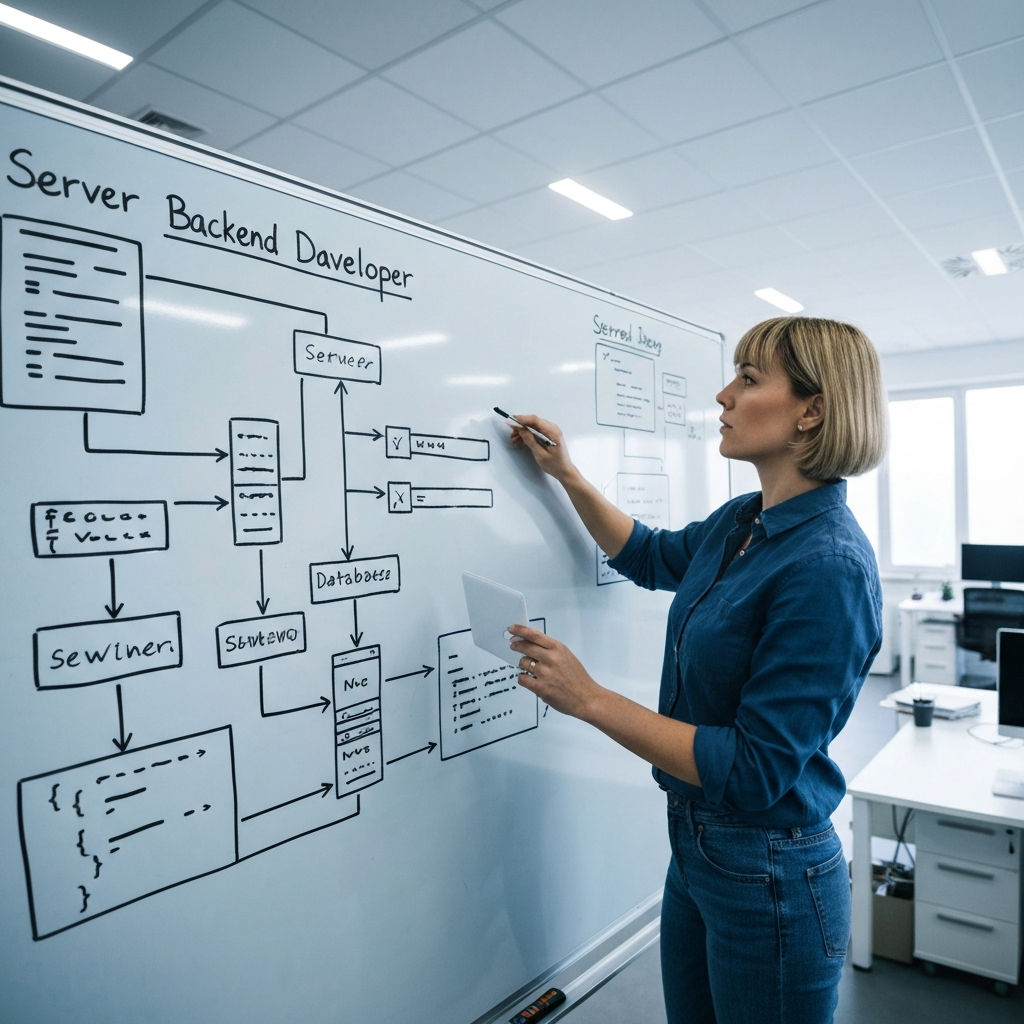 Welcome to the server-side! In this backend roadmap, you will see what steps to take for building the main logic that helps the apps work. This part of the full stack guide talks about how to set up a server, use databases, and build safe REST APIs.
For the backend roadmap, we use Node.js with the Express web framework. You will learn how to handle requests that come from the frontend. You will also do database operations and send the right data back. These are key skills for people who want to become good full stack developers.
Node.js and Express Basics for Beginners
Node.js is a tool that helps you use JavaScript on the server side. This means you can use the same language for your frontend and for your backend development. Node.js is fast and works well. It is a good choice if you want to make scalable network applications.
You can make a server with only Node.js. But if you use a web application framework, you make it much easier. That is why a lot of people go with Express. Express is a simple tool but also flexible. It is made for Node.js and helps you build a backend fast. It gives you a robust set of features to make servers and APIs.
With Express, you can set up routes that answer to different HTTP requests like GET, POST, PUT, and DELETE. You can also use middleware to help handle data coming into your app. On top of that, Express lets you connect your server to any database you want. This makes Express the top backend framework for Node.js, and it is a good place for beginners to start.
REST APIs, Authentication, and Security Essentials
A key part of the work for a backend developer is to create REST APIs. REST APIs are also called Application Programming Interfaces. They let the frontend talk to your server or the database management system. The frontend sends a request to the API. The backend gets the request, and sends the data back. Most often, the data goes back in a format called JSON.
Security means a lot in web applications. You have to know how to keep both your app and the people who use it safe. One main thing is authentication. This is how you check who a person is. You can do this with a username and password. You should make it so only people who are logged in can get to some parts of the app. These things help keep your web applications and users safe.
Here are a few key things you should know about security.
Password Hashing: Never keep passwords as plain text. You should always hash passwords before you put them in the database.
JWT (JSON Web Tokens): A lot of new apps use this as a simple and good way to handle user sign-in and sign-up.
Data Validation: You need to check and clean all user data. This helps keep out many main attacks.
Integrating Databases: MongoDB and SQL Basics
Every web app that updates a lot needs somewhere to store data. If you are a full stack developer, you need to know about the two main types of databases. The first type is SQL databases. People also call them relational databases. The second type is NoSQL databases. These are known as non-relational databases.
SQL databases, like MySQL or PostgreSQL, keep information in tables. These tables have fixed rules for how the information should look. They are a good choice when you need everything to be right and all the data should match. This helps a lot with data integrity. You need to know some simple things about SQL. This lets you do database operations. You can ask for information or change it in the database.
If you build apps using the MERN stack, you will use MongoDB. This is one of the most used NoSQL databases. It keeps your data in a simple way, much like JSON. This works well when your data can change or get bigger. That is the main reason many who write code with JavaScript like it. MongoDB helps people work with new and changing data in an easy way.
Backend Project Ideas and Best Practices
The best way to get better at backend work is to build a backend project. By working on this, you learn how to make RESTful APIs. You also practice data processing and using a database. You do not need to make a user interface first. You can use Postman to test your APIs.
As you build, try to always follow best practices. You should write clean code. Break your code into smaller parts. Keep your database details or other secret stuff in environment variables. It is also good to write down details about your API endpoints. This will help other people or even you in the future know what the APIs do.
Here are some backend project ideas for people who are just starting:
A Simple To-Do List API: Make the endpoints so you can add a task, read the tasks, change a task, and delete one.
A URL Shortener Service: Make a tool that takes in a long link and gives back a short one.
A Basic User Authentication System: Add ways for a user to join, sign in, and keep a route safe.
MERN Stack Roadmap: Connecting Frontend and Backend
The MERN stack is a good group of tools to use. You can use it to build full stack apps that can get bigger with time. This roadmap shows you how to use all the parts at the same time. You will learn how the React part in the front works with the Node.js and Express part in the back.
Many people pick this architectural pattern in full stack development. With the MERN stack, you use JavaScript for the whole development process. This way, you can build and run your scalable network applications with less trouble. It lets the frontend and backend talk to each other the right way. Because of that, the MERN stack is a good choice if you want to get full stack skills.
What Makes MERN Stack Popular in 2026?
The MERN stack is still popular in 2026. There are good reasons for this. First, you can use one language, JavaScript, for the frontend and backend development. This helps people learn things faster. It also lets teams do their work quicker.
Every part of the MERN stack is open source. Big tech companies support it. For example, Meta helps with React. Node.js has many packages as well as a lot of people who help keep it going. You will find a lot of help, tools, and libraries you can use.
Many web applications be built with the MERN stack now. A lot of companies want people who know this. If you have these skills, you will get more jobs and good chances at work. This is a good way to plan your tech future. A lot of major players use it and there is strong support.
Typical MERN Project Structure and Workflow
A good project structure helps you keep your MERN app easy to manage. It is important for the development process. There are many ways you can set up your project. A best practice is to put your frontend code in one folder and your backend code in another, both inside the main folder. This way, it is simple to find and work on the right part. You keep things clear and neat when you split frontend and backend code. It makes the development process smoother.
During development, you will usually have two servers running at the same time. One is the React development server, which runs your frontend. The other is the Node.js or Express server, which runs your backend. The React app will send requests to your backend’s REST APIs. This helps the app get data or make changes when needed.
Here is a common project structure:
Folder/File | Purpose |
|---|---|
| Contains the entire React frontend application. |
| Contains the Node.js/Express backend application. |
| Defines the database schemas (e.g., for MongoDB). |
| Defines the API endpoints and their logic. |
| Contains the functions that handle requests and responses. |
Full Stack Learning Path: Milestones and Timeline
To learn full stack development, it is good to break down the process into a timeline with clear steps. This way, the full stack path gives you a solid plan. You learn one thing at a time, and keep building up your skills as you move forward.
Remember, full stack development is all about continuous learning. The timeline is there to help you, but make sure you really know each topic before you go ahead. If you build a strong base now, it will help you a lot in your development career later.
Month-Wise Plan for Beginners
This plan is split into each month. It will help you start as a beginner and then become a full stack developer at an entry level in about six months. The most important thing is to work at a steady pace. Focus your effort on one thing at a time.
Start by learning the simple basics in the first two months. You will get to know the main parts you need, and work with easy things first. After this, you will begin learning frontend frameworks. Then, you will move into backend development. In the final part, you bring everything together. You will use what you learned to build good web applications.
This is one way you can set up your timeline:
Months 1-2: Web Fundamentals. You will learn HTML and CSS now. Find out how responsive design works. Also, see some basic ideas in JavaScript. You should try full stack by building a few simple and static websites.
Months 3-4: Frontend with React. Stay with the way React works. Learn about components and hooks. Work with state and routing too. At this time, build at least one single-page web application.
Months 5-6: Backend and Full Stack. Use Node.js, Express, and MongoDB in these months. Find out how to make REST APIs. After that, bring your React project together with your backend to be a full stack app.
If you keep going on this path, you will get the skills to make, link, and run your own web applications. You will know how to work with both the frontend and backend development. You will also see how a basic full stack project comes together.
What to Build and When: Project Examples
Building projects at each step of learning is important. This will help you remember what you learn. It also lets you have something you can show for your work. You should begin with a simple project. As you learn more, make the building projects bigger and harder.
When you finish learning HTML and CSS, you can use them to make a simple personal portfolio website. After you know some JavaScript, you can add new things to your site. For example, you can have a contact form that checks what people type. This way, your project will grow with you as you get better.
When you move on to React, you can build your portfolio again. This time, you can make it a single-page site. Or you can build a recipe search app. For this, your app can get data from a public API.
When you feel ready for backend work, you can build full stack web applications. You can use your own business logic for the apps. For example, you could create a blog site where people can make, read, update, and delete posts.
This will help you know more about web applications and practice full stack development. It will also help you learn how business logic works in real projects.
Tools and Platforms to Practice Your Skills
Using the right tools and platforms is very important in web development. The code editor you pick is where you will do most of the work. Visual Studio Code (VS Code) is a good choice. It has many helpful features and extensions that make the job easier.
Every developer should use version control systems. It is good to learn how Git works and use a site like GitHub for your code. This will help you back up your work. It also lets you have a public portfolio. You can show this code to future employers too.
Here are some key tools and places you can use:
Code Editor: Visual Studio Code.
Version Control: Git and GitHub.
Deployment Platforms: You can use Netlify or Vercel for your frontend projects. If you work on backend and full stack projects, go with Heroku or Render.
How to Track Your Progress Effectively
Tracking how you are doing helps you stay motivated. It also helps you find the parts where you need to practice more. A good way to do this is to keep building projects. You should send your code changes to GitHub often. You can look at the GitHub contribution graph. This shows all your code activity for each day.
Setting goals that you can see and reach helps a lot. For example, do not just say you want to "learn JavaScript." Try to say you will "build a to-do list app with JavaScript that can add, delete, and mark tasks as done." This way, you know exactly what you want to do. You also feel good when you finish it.
Don't feel nervous to ask other people for code reviews. You can show your work to your friends, guides, or share it with online groups. When you get feedback from others, you can get better fast. Sites like SocialPrachar give you project-based training. You also work with mentors there. This helps you see how you do, and you get better at building projects. It is a good choice if you want an ai engineering course in hyderabad.
Must-Build Projects for Full Stack Beginners
Your portfolio is the most important thing you have if you are just starting out as a developer. Building projects is not just good practice. It lets you show what you can do to people who may give you a job. In this part, you will read about the kind of building projects you should make. These will help your portfolio be strong and feel complete.
You should start with easy user interface projects. These first steps help you get better at working with what people see on the screen. When you feel ready, move on to making full stack apps. These will show you that you can work with both the user interface and the backend parts of a site. Be sure to use best practices, write your code well, and add clear notes to it. This will help people looking at your work know that you do things the right way.
Simple Frontend Projects to Start With
When you first start to learn, start with simple frontend projects that use HTML, CSS, and some JavaScript. These projects help you know how to make layouts for web pages. You also learn how to add styles to each part of the page. This will get you used to making basic things work when people use the site.
A good project to try at first is a personal portfolio website. You can use it to show your work as you learn both HTML and CSS. This project lets you work on a user interface that is clean and looks nice. Make sure to give it a responsive design. This way, the website will look good on any device people use.
There are other easy frontend projects you can try. You can make a tribute page, a technical documentation page, or a simple landing page for a fake product. As you get better at JavaScript, you can build a simple calculator or a to-do list app. These projects are good for the user interface. They help you work with pages as people use them. You can also learn how to handle events on the web.
Building Full Stack CRUD Applications
After you finish some frontend projects, the next thing to do in full stack development is to make a CRUD app. CRUD stands for Create, Read, Update, and Delete. These are the four main database operations. They are needed for most web applications and help run full stack projects well.
To build a CRUD app, you should connect the frontend, the backend, and a database. A good choice is to use Node.js, Express, and MongoDB. You will set up API endpoints for each of the four main ways to work with your data. Then, you will call these endpoints right from your React frontend.
A blog platform is a good example of a CRUD app. On a blog, people can make new posts. They can also read all posts, change any post, and take away posts that are not needed. A full stack project like this shows you understand how data moves in web applications. It is a good one to add to your full stack development portfolio.
Real-World Inspired MERN Stack Projects
If you want to get seen by recruiters, you need to work on MERN stack projects that come from real-life ideas. These projects help you do more than just create, read, update, or delete items. They also let you try things like logging in as a user, using APIs from other places, and finding better ways to handle your app's state.
Think about the services or apps that you use each day. Try to build a simple version of one of them. For example, you can make a small online store. With this, users will be able to look at different products, add the ones they want to a cart, and then buy them. When you do this, it helps you learn how to manage state in bigger apps. It also shows you how to keep user information safe during a single session.
Other good ideas for projects are making your own social media app. You can add things like posts and comments. You could also try to build a tool for managing projects, like Trello. Another fun idea is building a movie booking app. When you work on big apps that people might use in real life, you show that you understand best practices. You also prove to others that you have what it takes to solve tough problems.
Deployment and Showcasing on GitHub
Building a project is just one step. You also have to put it on the internet so other people can see and use your web applications. This step is known as deployment. It means you move your project from your computer to the web. This shows that you know how to take an idea and get it into production code.
Your GitHub profile is important. It is like your new resume. The first thing people like recruiters will do is look at your GitHub to see your work. You need to make sure your GitHub stays active. Keep all your projects in there. Add clear notes for each one. Every project’s folder needs a README.md file. This file should say what the project does. It should also list what you used to build it. Do not forget to tell people how to run it on their own computer.
Here’s how you can show your projects in the best way:
Deploy Everything: Put all your work on the internet. You can use Netlify or Vercel for the frontend. For the backend, use Render.
Link to Live Demos: Add the links to your live apps in the GitHub
READMEfiles. This way people can click and try them out.Pin Your Best Projects: Pick your top three or four projects. Pin them at the top of your GitHub profile so people see your best work first.
Skills Beyond Coding for 2026 Success
To be a good developer in 2026, you will need more than just technical skills. You also need strong soft skills. It is important to talk well, work well with others, and share your thoughts in a clear way. Employers want people who can get along with their team. They also want someone who understands what the business needs.
In this part, we talk about non-coding skills you need to focus on. Keep working on continuous learning and growing these work habits. This will help you do well in your job for many years. You will also be a better member of any team if you have soft skills along with your technical skills.
Git and Version Control for Collaboration
Git is a key tool in software development. It is a version control system. With it, you can keep track of code changes over time. If you make a mistake, you can go back to previous versions of your code. This helps you avoid many big problems.
Git is good for teamwork. When you work with others, many people can work on the same code at the same time. Git helps you manage all the code changes. It stops people from writing over each other's work. You can make a branch when you want to build something new. Later, you can add your changes back into the main project and fix any issues if there are any.
Knowing how to use sites like GitHub or GitLab is a big help when you want to work with others. Most companies want you to know these tools. It shows that you can be part of the team and do your job well when you are at work.
Debugging, Communication, and Problem-Solving
Knowing how to find and fix problems is very important for full stack developers. With these skills, you can spot and solve trouble in both the frontend and backend of web applications fast. Being good at talking with others on the team also helps. This way, everyone knows the goals and what the business wants.
Being able to solve problems is very important. It lets web developers handle tough jobs and find good answers. When you use soft skills along with your technical skills, you do well in software development. You can also be a strong part of any development team.
Understanding Business Requirements in Tech Teams
Good communication is key for tech teams. A full stack developer should understand what the business wants. They need to know why a project is there. This helps make web applications better for people who use them. To do this, full stack developers have to listen to everyone on the team. They need to work with other people so web applications will meet all the goals.
When things get hard, a good way to think can help full stack developers. It can make it easier to add the right business logic to the code. Working together helps get the best out of the full stack developer and the team.
Using tools like version control and taking part in code reviews gives people a better place to work. These steps also help boost code quality and make the project stronger. The best full stack developers know it takes more than technical skills to get the job done. They use both technical skills and soft skills to do well at work.
Common Mistakes Beginners Make (and How to Avoid Them)
Starting out as a full stack developer can be fun and exciting. But a lot of people make some simple mistakes at the start. Some skip the basics, like HTML and CSS. They want to get right into new things, like hot web frameworks. If you do not know HTML and CSS well, it can make building web applications harder for you later on.
It is good to focus on HTML and CSS first. This will give you a strong start in making web applications. When you know these core things, you can learn all the new stuff and feel good about it.
Some people do not think about backend development or database management when they start. If you make web applications without learning how the server and database work, your projects will not be complete. The best way is to keep things balanced. You can do this by following the full stack developer roadmap 2026. This plan helps you learn both frontend and backend development. When you learn all these skills, you can make better web applications.
Skipping Fundamentals or Overloading Frameworks
It is important to learn the basics if you want to be a good full stack developer. If you skip HTML, CSS, and JavaScript to start working with harder tools right away, your skills may not be strong. This can make it hard for you later, especially when you need to understand how web applications work and what gives users a good experience.
If you use too many tools and do not get the key ideas first, the code quality can drop. You may also find it tough to keep up with new trends in the field. It is better to learn the main parts of full stack development well before you try new frameworks. If you follow this plan, you will have a strong base to become a good full stack developer in 2026.
Avoiding Backend or Database Learning Pitfalls
Learning backend development and database management may feel tough at the start. But these skills are important for people who want to be good developers. The best way is to have a step-by-step plan. This helps you get better at programming languages first. You also learn about server-side logic and database operations along the way. If you do not know things like REST APIs or backend frameworks, working on real projects can be hard. So, it is important to build a good base with backend development and database management skills to make your way up.
Keep building projects often. This helps you remember what you learn and makes it easier to understand things. Doing code reviews with others let you solve problems and makes your code quality better. When you focus on building projects and code reviews, you set yourself up for success in full stack development.
How SocialPrachar Supports Full Stack Learners in India
SocialPrachar supports people in India who want to learn full stack. They give clear steps for learning that cover full stack development and the MERN stack. The group uses project-based training, so you get practice while you learn. This way, you meet what companies want and can feel ready for a job. SocialPrachar also helps with placement and interview prep. They help you build your essential skills and feel more confident.
SocialPrachar puts focus on continuous learning and helps you train for real-life jobs. This helps you get ready for the tough tech world. They want you to have good technical and soft skills. These skills will help you in your development career.
Project-Based, Career-Focused Learning Paths
Hands-on projects are a key part of a good full stack developer roadmap for 2026. When you work on real projects, you use your technical skills and learn more about business logic. By taking on projects that need both frontend and backend work, you see how to manage the development process well. You also get to know how database operations work and how to handle deployment.
SocialPrachar gives students a project-based way to learn. They guide you through tasks like the ones people often see at work. This style helps you build your technical skills. It can help you get better with your soft skills too. You learn things like how to talk well with others and solve problems. These skills are important if you want to do well in tech teams.
Placement Guidance and Interview Preparation
Getting around in the job market as a full stack developer is not only about knowing the tech or code part. You need to have soft skills as well. To get ready for an interview, practice your coding steps and understand data structures. It is good to practice common interview talk before you go in. This will help you say what you know in a clear way.
You can get help from websites like SocialPrachar. They give advice and practice interviews. This will help you feel more sure of yourself. Their tips teach you how to meet what businesses need. They help you match your skills to what jobs ask for now. This can give you a better chance to get a good job you want.
Real-World Training Aligned with Industry Needs
Getting hands-on practice is very important for people who want to be full stack developers. When you work on real projects, you get to learn key skills. These skills help you fix problems, solve issues, and talk with your team in a better way. This kind of practice lets you see how things you do in class connect to what you need in web development. It will also help you feel good about facing work problems in the future.
This training is made for the real needs of the business world. It puts focus on teamwork and on learning how business logic works. These things are very important for any full stack development job or development career. If you follow best practices on each project, your work will be good. This course helps you get ready for the future, no matter how strong the competition is. It will help you find success in your development career as a full stack developer.
Conclusion
Finishing the full stack developer roadmap for 2026 gives you the essential skills you need for today’s jobs. When you do things step by step, it helps you understand things better. You also make sure you do not miss any key ideas. Try to practice what you learn by working on real projects. This will make your knowledge strong and help you get ready for a development career.
If you use platforms like SocialPrachar, you get the right support. These platforms can help you find real ways to get ahead. With this help, you can feel more sure of yourself and become job-ready. As you learn, keep working on your technical skills and soft skills. You need both of these to have success in full stack development.
Frequently Asked Questions
What is the best full stack developer roadmap for beginners in 2026?
The best full stack developer roadmap for beginners in 2026 should focus on new trends and current needs in tech. A good place to start is the MERN tech stack with MongoDB, Express.js, React, and Node.js. You have to work on your basics first, so learn HTML, CSS, and JavaScript well. Then, put your time into a frontend framework like React. After you feel good about that, move to backend development using Node.js and Express. In the end, this tech stack roadmap will let you make, use, and put your full stack projects online.
Is MERN stack enough to become a full stack developer?
Yes, the MERN stack can be enough for you to become a job-ready full stack developer. The MERN stack lets you learn all parts of the development process. You will know how to build a user interface with React. You can also use Node.js to make a server, and MongoDB to keep data safe. Many companies want MERN stack developers to work on their web applications.
How long does it take to become a full stack developer?
The time it takes to learn will not be the same for everyone. It depends on your background and how many hours you work each week. If you put in a lot of hard work and you are a beginner, you can be ready for a job in about 6 to 12 months. You can follow a plan, like a 6-month program, to get you there more quickly. A program like this teaches the most important skills and lets you learn with real, hands-on projects.
Should beginners learn frontend or backend first?
If you are new to this, it is best to start with the frontend. Begin by learning HTML, CSS, and JavaScript. These tools help you see what you make right away. This will keep you excited and motivated. Once you know how to make user interfaces, you can start learning the backend. When you start with the backend, you will already know how the client side works. This makes it easier to keep going and learn more.
What are the key frontend and backend technologies included in the 2026 full stack developer roadmap?
2026 Full Stack Developer Roadmap (Overview)
Modern full stack development blends proven and emerging frontend and backend technologies essential for scalable web apps.
Frontend Key Technologies:
HTML5, CSS3, JavaScript (ES202X): Core building blocks, continually evolving.
Frameworks/Libraries: React.js (dominant), Vue.js (rising), Svelte (efficient), Angular (enterprise staple).
TypeScript: Strong typing; now standard for large or collaborative projects.
CSS Tools: Sass/SCSS (modular styles), Tailwind CSS (utility-first), PostCSS.
Package Managers/Build Tools: npm, Yarn, Pnpm; Vite, Webpack, Parcel.
State Management: React Query, Redux Toolkit, Zustand.
Testing: Jest, Testing Library, Cypress—automated testing is expected.
Progressive Web Apps: Service Workers, Manifest files for offline/native-like experiences.
Accessibility & Performance: ARIA standards; Lighthouse audits—accessibility is mandatory.
Backend Key Technologies:
Node.js (JavaScript/TypeScript): Popular for unified JS stack.
Python (FastAPI/Django/Flask): Widely used for APIs due to readability and rich libraries.
Go (Golang): Favored for high-performance microservices.
These tools and practices are projected to be vital for full stack developers in 2026.