







.png%3Falt%3Dmedia%26token%3D5f3a536a-e84f-4f83-8922-482fbdf78cfb&w=3840&q=75)
The Future of Technology: Multi-Agent Systems Explained
What are multi-agent systems?
Multi-agent systems are collections of autonomous agents that interact and collaborate to solve complex problems or complete tasks. These systems can simulate real-world scenarios, enhance decision-making, and improve efficiency in various fields such as robotics, telecommunications, and artificial intelligence by leveraging the collective abilities of individual agents.
Key Highlights
Multi-agent systems use autonomous agents with clear agent roles to solve complex tasks together. These ai systems split work, share updates, and improve speed on large problems. AI collaboration helps different agents handle planning, research, execution, and review as a team. If you're interested in exploring open-source projects or code examples for multi-agent systems, popular platforms such as GitHub and GitLab offer many repositories focused on agent systems. You can search for keywords like "multi-agent systems" or "autonomous agents" to find practical examples and collaborative code bases demonstrating ai systems where different agents work together to accomplish complex tasks.
These ai systems split work, share updates, and improve speed on large problems. AI collaboration helps different agents handle planning, research, execution, and review as a team. However, when designing multi-agent systems, common challenges include ensuring effective communication between different agents, managing coordination to prevent conflicts or redundant actions, and achieving balanced distribution of tasks. These issues can affect how efficiently generative ai is integrated, as well as the success of agentic ai approaches involving tool usage and complex goal-driven activities. Agentic AI makes generative ai more useful by adding reasoning, tool usage, and goal-driven action.
AI collaboration helps different agents handle planning, research, execution, and review as a team.
Agentic AI makes generative ai more useful by adding reasoning, tool usage, and goal-driven action.
Businesses use agent systems for customer support, software work, logistics, and other dynamic workflows.
Compared with one model, teams of agents often bring better scale, resilience, and flexibility.
Introduction
Artificial intelligence is changing fast. It is going from using single tools to making intelligent systems that can do work together, kind of like a team. This is important because work today is not always neat and slow. There is a lot to do, things change quick, and people need help keeping up. Multi-agent systems help generative ai by letting more than one agent split the work. Each agent can think, talk to the others, and do tasks. For example, a simple multi-agent system could be built where one agent gathers data from the internet, another agent analyzes the data, and a third agent generates a report. These agents communicate with each other to share results and complete the overall task efficiently.
If you want a simple guide to how agent systems and generative ai work together, you are at the right spot. This article talks about the basics, explains the workflow, and tells why so many big companies now pay attention to these intelligent systems.
Multi-Agent Systems – Quick Overview
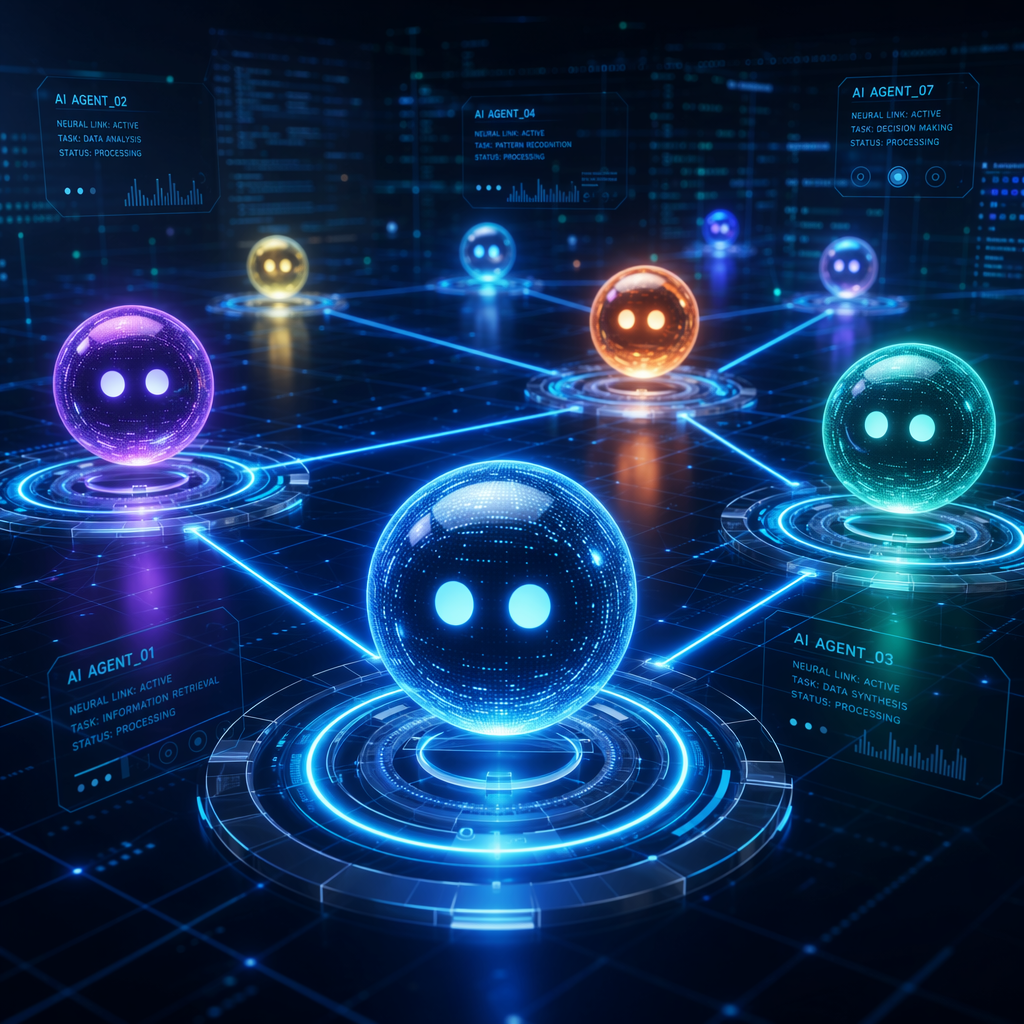 Multi-agent systems are agent systems that have many intelligent agents working in a shared environment. Instead of one model doing all the work, each agent takes care of part of the problem. This makes ai systems more flexible, especially when tasks are big or change a lot.
You can picture this like a digital team. One agent could do research. Another could plan. A different one may use the tools. All together, they help ai systems work better and give stronger results. The next parts show what these agent systems are, how they work together, and why agentic ai is becoming more widely used.
What Are Multi-Agent Systems?
Multi-agent systems are teams of software agents. They work together to reach one goal. Each agent works on its own. It can watch, make choices, and do things. It does not have to wait for someone to tell it what to do. This is the main idea for agent systems today.
These intelligent agents do not try to do it all on their own. They share the job in a shared environment. One might find data. One might think through the choices. One might give answers. Their strength comes from how they work together, not from just one agent.
This way of working helps with complex problems that are too big or fast-changing for one agent. If you want to know what a multi-agent system is, think of it as a group of AI workers. They each do part of the work, and they do it together.
How AI Collaboration Works in Multi-Agent Systems
AI work in multi-agent systems happens when the agents talk and work together. The agents do not act on their own. They share updates, send requests, and report results. This helps the whole system head for one outcome. Usually, this starts with message passing between the agents.
Sometimes, this talking is direct message passing. It can go through APIs, HTTP, or message queues. In other cases, different agents read and write in a shared memory. They may also react when something changes around them. The type of exchange may change, but the goal stays the same. It is always to keep all the agent systems on the same track.
Think about a help desk or support workflow. One agent gets the customer’s problem. Another agent looks at the right documents. Another prepares the final answer. These agent systems act and work like human teams. They pass context, stop doing the same work twice, and bring together local information so they have one useful answer.
The Rise of Agentic AI in Modern Technology
Agentic AI is getting noticed because it does more than just make text or code. Traditional generative ai can write or create code, but agentic ai can set up steps, use tools, and keep working to reach a goal. This makes modern ai systems act more.
This is important in real-life work. Many businesses use agentic workflows for customer service, software work, money analysis, supply work, and research help. In these jobs, more than one agent can ask, gather facts, call tools, and improve results before giving the answer.
Agentic ai, agent systems, ai systems, and generative ai are all growing because better frameworks help and LLMs can reason well. Because of this, multi-agent systems now fit real work, not just tests. They help groups make multi-step jobs simple when one model may not be able to do it all.
Enterprise Benefits of Multi-Agent Systems
For enterprise ai, agent systems give a clear edge. They break tough jobs into simple steps. This helps with speed, makes the system more flexible, and keeps it running strong. With different agents on separate tasks, agent behavior in big workflows gets easier to handle.
This setup lets companies make better decisions. Different agents bring their own skills. Each can make local decisions and see tasks in their own way. When a problem hits one part, the entire system does not always stop. Other agents can keep going, or find a way around trouble.
They make it easy to scale by letting specialized agents do the work.
They give more reliability, so a single mistake does not break the workflow.
They let teams work faster by running tough business jobs at speed.
In an enterprise, this leads to smarter automation for customer support, operations, and software workflows.
Quick Reference Table: Multi-Agent Systems at a Glance
A quick way to understand agent systems is to look at their main building blocks. Most designs include agents, a shared environment, communication methods, and some coordination logic. Many teams also use an open source framework to manage execution.
Here is a simple view:
Part | What it does |
|---|---|
Agents | Perform specific tasks with some autonomy |
Environment | Shared space where agents observe and act |
Communication | Supports message passing, APIs, or shared memory |
Coordination | Keeps agent types aligned on goals |
Tools | Lets agents call software, databases, or services |
Enterprise benefits | Better scale, resilience, and throughput |
In practice, these parts work together like a managed digital team. That structure is why multi-agent systems are now central to AI collaboration discussions.
Understanding Multi-Agent Systems
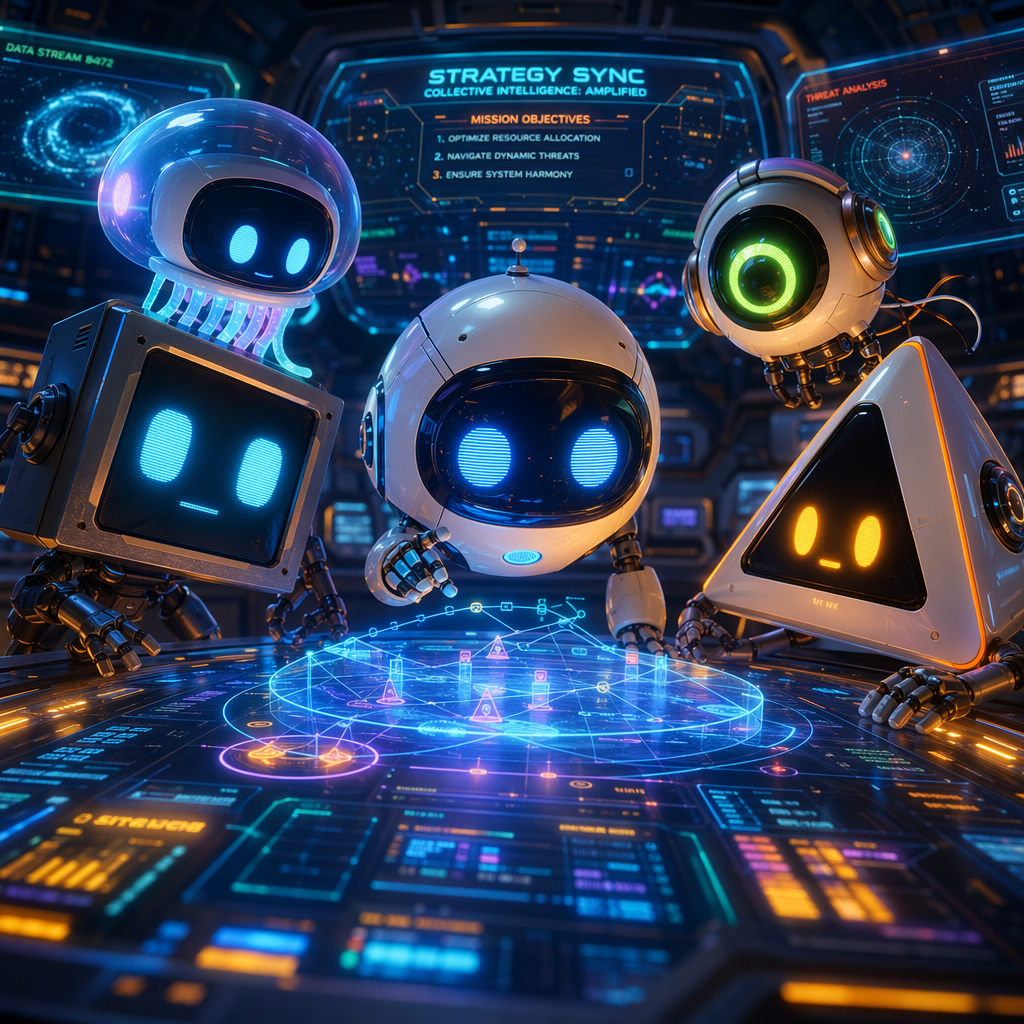 To get a good idea of agent systems, you need to think about both the main idea and the way they are put together. These systems use intelligent agents. The agents can watch what is going on, make choices, and talk to each other in the same space.
One big change in these systems is moving from just one main controller to letting many agents do things on their own. This is why there are different agent types. Some agents are good at planning, some agents are there to gather facts, and some do the actual jobs. Next, we can see how agent systems started, why they are strong, and how you can see them used in real life.
Definition and History of Multi-Agent Systems
A multi-agent system is a group of intelligent agents that live and work in the same space. These autonomous agents can help each other, try to win over the others, or talk things out. They might be doing things by themselves or going after a goal together. Most of the time, these are software agents and each of them has a set job to do.
This idea is not new. It was around even before the latest wave of generative AI. The old set-up would look at how to solve problems across many agents, run simulations, and give everyone a way to talk. These early systems were used for study, plans, and to see how a lot of agents could act at the same time.
Now, it is much more clear because powerful AI models like LLMs show us how it works. You get to see agents think, do jobs, and use tools like people do. The big change is because we now have better generative ai and tools to help run all the agents more smoothly. So even though the idea started a long time ago, the biggest steps forward happened with today’s tech.
Key Concepts: Distributed Intelligence & Autonomous Decision-Making
The main idea of multi-agent systems is to spread thinking across many agents. Instead of having one controller who knows everything, each agent does a smaller part of the job. This helps the system react faster and deal with change better.
In these agent systems, agents can make choices by using local information—they do not always need to wait for one person at the top to say yes or no. This helps a lot in dynamic environments. If everyone had to wait for one main leader, things would be slow and could get stuck.
Agent roles also make things work better. For example, a planner can take work and break it into steps. A retriever can look for facts. An executor can take action using tools. When agents use local decisions and their jobs connect well, the whole group works better. This makes agent systems stronger, able to grow, and able to solve complex tasks better than if one big system tried to do it all alone.
Real-World Examples of Multi-Agent Systems in India
Real world agent systems show up anywhere there are complex tasks that people need to handle together. The examples cover things like support jobs, software work, moving goods, healthcare, money, and making products. The same ways of working are useful for indian companies with big digital operations.
For instance, teams can use generative ai applications. In these, one agent can talk to customers, another can look at bills, and another can suggest what to do next. In software, agents might go through bug reports, look at old problems, and help people with coding or testing.
Customer support uses workflows that track problems and move them to the right person
Supply chain and travel systems can change fast when something new happens
Money and healthcare jobs need agents that look at the facts together
These show that real world multi-agent systems are good for big complex tasks in today’s growing business world.
Fundamentals of AI Collaboration
AI collaboration is what helps agent systems work well. If you do not have coordination, you just get many tools that do not connect. When there is coordination, these tools work together like a team and move toward one goal.
This teamwork comes from message passing, shared goals, and a plan for how things will be done. Some agents get context. Others use it and act. The parts below show how AI-to-AI communication happens, how delegation works, and why group intelligence is so key for agent systems today.
How AI-to-AI Communication Happens
AI-to-AI communication starts with a set way of sharing information. One agent will send a request, some context, or a result. The next agent gets this, thinks about it, and then answers back. This process is the main part of message passing in a system with more than one agent working together.
Some systems do direct message passing with APIs or HTTP calls. Others use message queues for talking to each other when many things are happening at the same time. Shared memory places can also help because both agents can read from it and change things there.
When large language models, or LLMs, are used, natural language processing can make things easier to set up. Agents may talk in clear, structured natural language. They can also use machine formats like JSON. The aim here is not to use fancy words. The point is to give clear, quick messages with enough information, so the other agent can make the right move.
Shared Goals and Task Delegation
Collaboration will only work when all agents know where they are going. Shared goals help give the system direction. When the goal is clear, people can give specific tasks to agents who are best at them.
This is the same as how human teams work well. A planner should not do every job. A reviewer should not do the same job as the retriever. Strong agent roles can cut out wasted work and make it easier to see and fix any problems later.
One agent can look at the request and make the work plan.
Another agent can do a focused research or find needed info.
A final agent can bring all outputs together and give the answer.
That is why specific tasks and task delegating are so important for teams and agent roles in AI. It helps groups of agents move faster and make sure everyone is in sync, just like in strong human teams.
Coordination and Cooperative Intelligence
Coordination helps turn many agents into one useful system. Without it, agents might do the same task again, skip things, or clash with each other. With coordination, the group acts more like human teams.
Cooperative intelligence means that agents share the context. They change what they do based on what others are working on. This could be through a central controller, graph workflow, or other rules for coordination. These days, an agent orchestration framework often keeps track of the order and the state.
Having this setup is good because it makes the system more reliable. It lets the system change its plan when something new comes in or when a step fails. Cooperation is more than talking. It is about timing, responsibility, and keeping things moving toward the goal.
Exploring Agentic AI
 Agentic AI is a new part of modern AI. It is about doing things, not just giving answers. It helps autonomous agents think, make plans, and go through steps without much help from people.
This affects agent behavior in important ways. These agents do more than respond just one time. They keep working toward a goal, use tools, and change their actions if things around them change. The next parts talk about how it works, how it plans, and why it is important when there are many agent systems or agents working together.
Keywords: agent systems, autonomous agents, agentic ai, agent behavior
Agentic AI: Definition and Core Principles
Agentic AI is about ai systems that can reach goals by taking a number of steps. They do not just make text. They can pick what to do next, use tools from outside, and keep working until the job is done. This is what makes them stand apart.
In real use, autonomous agents built this way have clear agent roles. One may make a plan, one may get info, and one may do the task. What they do is not random. Their acts are linked to a goal and the context that comes from the world or past actions.
This is why agentic ai works so well in agent systems with more than one agent. It helps each agent think better while the whole agent systems setups how they will work together. The simple story is that multi-agent systems set up the team, while agentic ai lets each team member act with more will.
Autonomous Reasoning, Planning, and Tool Usage
A strong agent does more than just answer questions. It uses its own thinking to choose what to do next. It looks at the task, the data it has, and what has already happened. This thinking often helps the agent plan, by breaking a big goal into smaller actions.
The next important part is tool usage. The agent can do things like ask a database, search in documents, use APIs, run code, or start a workflow. These tool calls make the agent helpful in business because it does more than just talk.
When the agent plans and uses tools, it handles specific tasks with less effort from people. It also works better. It does not need one big command to do everything. The agent can think about each step, use the right tool for the job, and go ahead in a clear way.
Goal-Oriented Execution and Continuous Learning
Goal-oriented execution means the system keeps going until it gets a useful result. It will not stop at the first answer. The system checks how things are going, updates what it does, and keeps moving based on what the task needs.
Continuous learning here means the agents get better from feedback, new information, or things that have changed. They can change how they sort tasks, sum up what is going on, or pick tools. This makes the work flow much better as time goes on.
Agents can change their plans when there is new information.
Teams can get better by using feedback and what they learned before.
Workflows can handle change well when the environment is different.
That is one big reason agentic ai is bringing the next wave of new information, teamwork, and automation for jobs.
Multi-Agent Systems vs Single-Agent Systems
A lot of people ask this simple question: why not just use one strong model instead of working with many? For some jobs, one single agent does the work just fine. Building it is easy, and you can control it with less trouble.
But, agent systems with more than one part start to help when the job is big, spread out, or changes often. These agent systems can split the work, so not everything depends on just one. The parts below will show you how agent systems and single agent ways compare when you look at decision-making, memory, doing the task, and use at work.
Comparing Decision-Making and Scalability
A single-agent system lets one central place make all the decisions. This can work well for small tasks that have simple and clear rules. It is an easier way to work, but it may slow down the whole process if the number of tasks grows or when the work goes into different areas.
Multi-agent systems let more people, or agents, get involved and share the decision-making. Each agent can look at their own role and setting, then make local decisions about what to do. This takes some of the load off one point of control and helps the people work on different parts of the problem at the same time.
This way, the system can grow better and move with higher throughput. You do not have to make the entire system depend on just one agent. Instead, you can add more agents as needed. Multi-agent agent systems work well when things change fast, involve large-scale tasks, or use more than one step in the process.
Memory, Task Execution, and Collaboration Differences
Single-agent designs keep both memory and control with one agent. This setup can be good for short flows. But when complex tasks grow, it becomes hard to manage one memory in real time.
Multi-agent systems help by sharing memory and work with different roles. One agent can keep up with the state. Another can find facts. A third can finish actions. This makes the task flow better, since each agent has its own job.
Single systems are simple, but there is less work together.
Multi-agent designs be better for big workflows by splitting roles.
If you put memory and actions in different places, it gets easier to manage complex tasks.
The main thing that matters in agent systems is not only how many agents you use. It is the way people organize the work, memory, and jobs. This also matters for real time and complex tasks.
Enterprise Use Cases in India
In enterprise ai, you have to pick between using one agent or many agents based on how the work is done. In the real world, most business work has different teams, tools, sign offs, and places data comes from. This is why multi-agent patterns work well for Indian enterprises that want to grow their digital services.
For example, with generative ai applications in customer operations, you may have steps like intake, checking, finding information, sending issues up the chain, and creating replies. In software teams, agent systems can sort bug reports, match them with old problems, and help engineers with tasks like code or tests.
These work processes are not only bigger. They involve back-and-forths and rely on many people or actions to get things done. A single agent can do some of the job, but multi-agent systems do better when many business teams, like support, operations, or development, have to work together.
Comparison Table: Multi-Agent vs Single-Agent
A direct comparison makes the distinction easier. Both models are useful, but they fit different situations. A single agent is best for focused jobs. Agent systems are stronger when work needs specialization and parallel action.
Feature | Single agent | Multi-agent systems |
|---|---|---|
Decision-making | Centralized | Distributed across agents |
Scalability | Limited as load grows | Easier to scale with more agents |
Collaboration | Minimal | Built for shared work |
Memory | One main context stream | Can be role-based or shared |
Task execution | Best for specific tasks | Better for multi-step workflows |
Fault tolerance | One failure can hurt more | Other agents may continue |
Enterprise fit | Narrow automation | Broader workflow orchestration |
This comparison shows why architecture choice should match the problem, not the hype.
How Multi-Agent Systems Work Step-by-Step
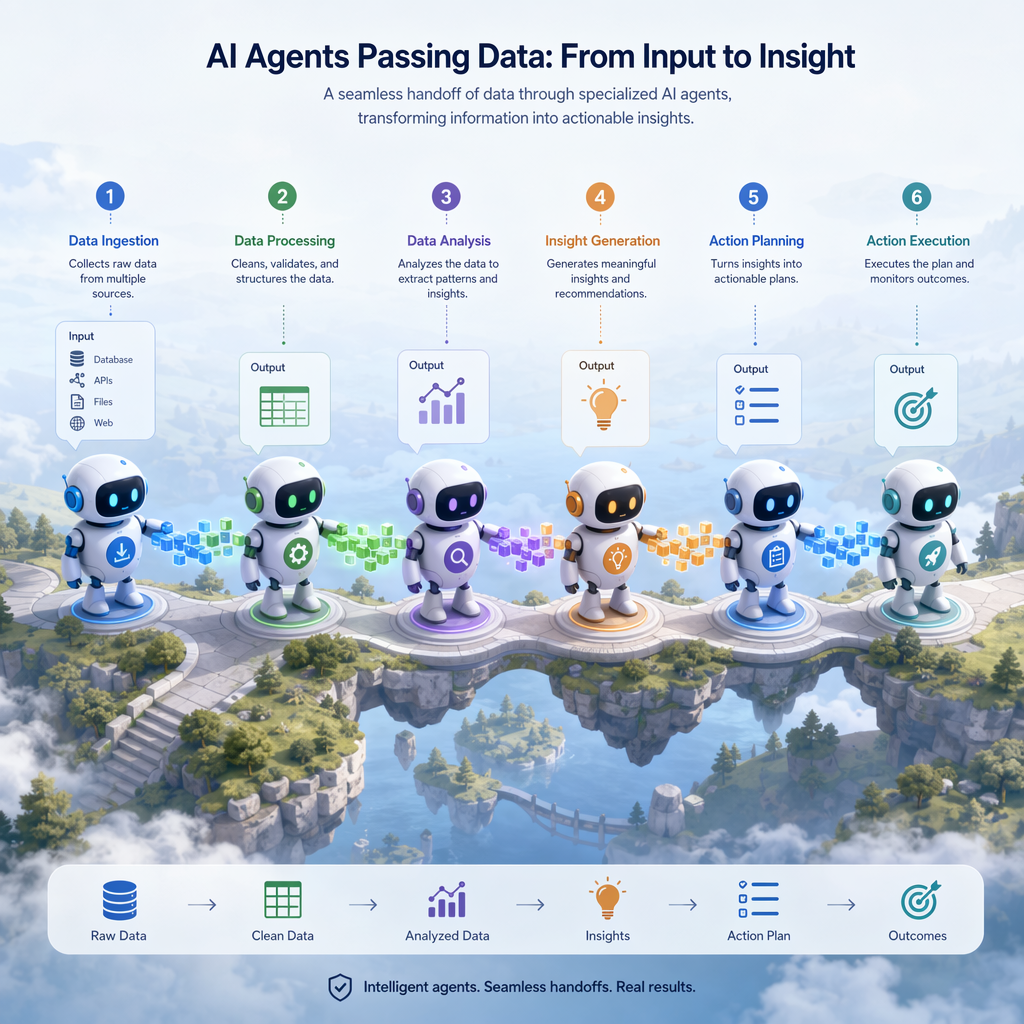 Most agent systems have the same steps. You ask for something, and the system makes the request into smaller tasks. Then, each ai agent does a set job. After that, the system puts everything together to give you one answer.
An agent orchestration framework usually runs these steps. It sends the work to the right place, keeps track of how things are going, and chooses what to do next. The next sections show you the whole process, starting with what the user types, then how the tools work, and ending with the final reply.
Workflow: User Requests to Final Response
The workflow begins when a user makes a request. The request can be simple. Still, the system often breaks it down into smaller tasks that happen behind the scenes. The agent orchestration framework is good for this work.
After that, the agent orchestration framework looks at the request and picks what order things should happen. There can be a planner who decides each step, a retriever who finds important facts, and an execution agent who uses different tools or other services. A reviewer may look at the result before sending it back.
In the end, the system puts everything together into one answer. For a simple example, think about three agents: there is a planner, a researcher, and a writer. The planner breaks the job into parts. The researcher looks for details. The writer puts all the pieces together into the answer the user gets.
Task Decomposition, Agent Assignment, & Result Aggregation
Task decomposition means you turn a big job into smaller tasks. This helps cut confusion and lets each agent work on one clear goal. This is key when you build multi-agent workflows.
After you split the job, agent assignment helps give each smaller task to the right role. Each agent will use local information and what it knows best to work the job. The system will then be faster and make better sense than if you tried to do everything in one go.
Break the user goal into smaller tasks.
Assign each task to the best available agent.
Combine outputs through result aggregation.
Result aggregation is the last step. This step joins each agent’s work into one clear answer or plan. The user gets something solid and easy to use.
Tool Execution and Collaboration in Practice
In the real world, agents get strong when they can act with software. Tool use can mean calling a database, looking through papers, running code, or starting another service. This moves the workflow from just making text to doing helpful actions.
Having clear agent roles is key. One agent can pick which tool to use. Another can act out that tool’s task. A third agent can check the results. This clear order makes everything safer and lets you see errors more easily if they show up.
Many people start building with open source frameworks because they make it simple to set up the work order and each agent’s role. A small setup might have one planner, one person to get papers, and one who writes the answer. Even this shows how teamwork with clear agent roles adds more order than having only a long prompt.
Conclusion
To sum up, agent systems are a new step in AI. These intelligent systems help agents work together well, so they can handle complex tasks faster. If you learn about how agentic AI works, you can use these tools to get more done and help your business run smoother. Soon, the way we do work will change as these systems work by themselves and help update old ways. Now is a good time to find out how agent systems can work for you and your team. If you want to learn more, book a free consultation with our experts. Let us show you how intelligent systems can help your projects grow.