







.png%3Falt%3Dmedia%26token%3Df1344404-cf91-4c40-ab72-4d8453524d0e&w=3840&q=75)
MERN Stack vs MEAN Stack Comparison: Making the Right Choice
Key Highlights
This guide offers a detailed MERN Stack vs MEAN Stack Comparison to help you choose the right path in web development for 2026.
Understand the core difference: MERN uses React for flexibility, while MEAN uses Angular for a more structured approach.
Learn about the career prospects for a full stack developer and the skills you'll gain in a web development course. If you're aiming to master front-end web development, look for a web development course that emphasizes responsive design principles and hands-on projects that enhance user experience. Discover how each stack impacts user experience and aligns with responsive design principles.
Discover how each stack impacts user experience and aligns with responsive design principles.
Get insights into which stack is better for beginners and what to look for in a developer course syllabus.
We'll explore industry trends, salary outlooks, and project suitability to guide your skill development in web technologies.
Introduction
Choosing the right technology stack is a big step for any person who wants to get into web development. In this field, you will see two main stacks that use JavaScript. These are MERN and MEAN. Both are good when you want to build new web apps, but they are not the same. Their differences can affect your learning and your career path as a web developer. This guide will make the MERN Stack vs MEAN Stack Comparison easy, and help you find out which one is the right pick for you in 2026. If you're just starting out and want to learn web development from scratch, some top-rated online developer courses to consider include freeCodeCamp, The Odin Project, and courses available on platforms like Coursera and Udemy. These resources cover key web development concepts and offer hands-on experience with both the MERN and MEAN stacks.
What Is the MERN Stack?
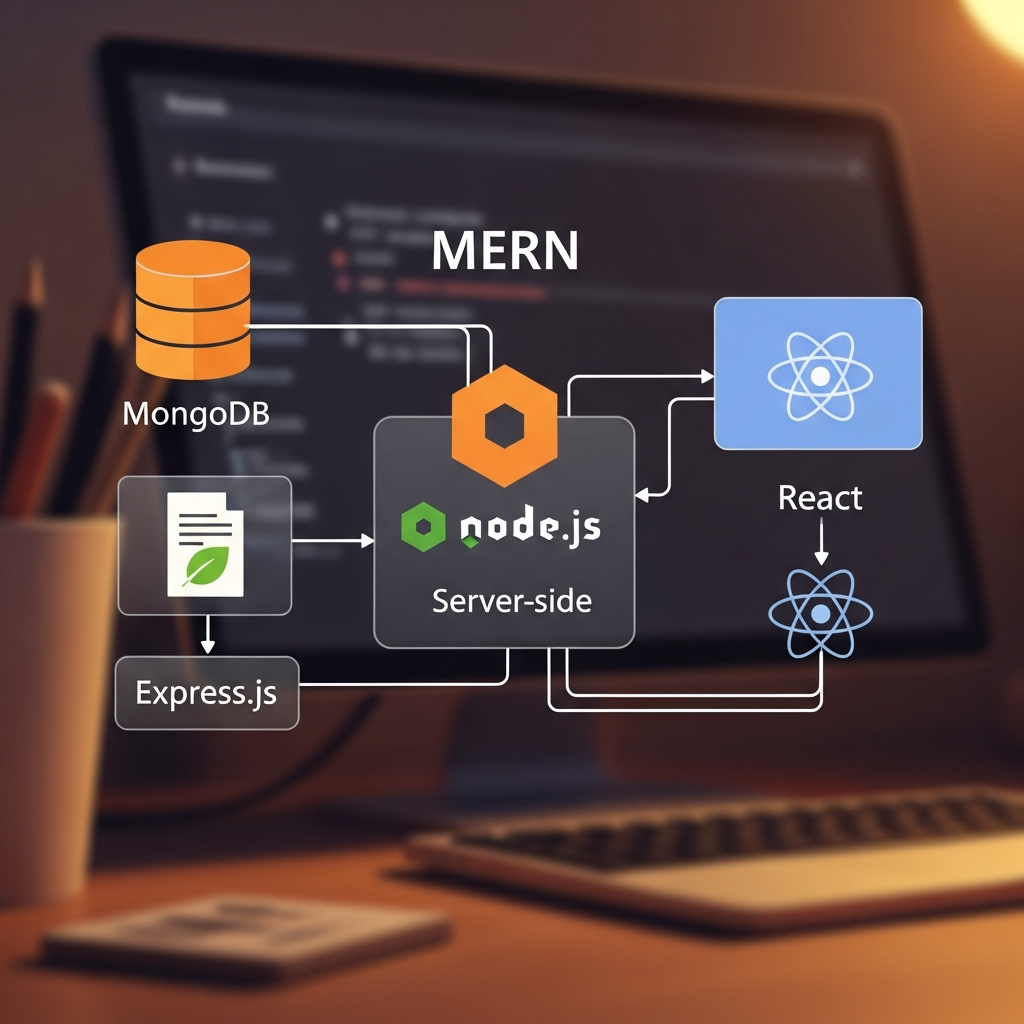 The MERN stack is a well-known mix of tools used to make web applications that change and respond to what you do. It is a full-stack setup, so it works for both the front-end user interface and the back-end server with the database. If you want to be a full stack developer, knowing the MERN stack is a key skill.
A good web development course on the MERN stack will show how the main components work together to build a web application that runs well. The course will help you learn about these tools, how they fit with each other, and what skills you will get in web development.
Key Components: MongoDB, Express.js, React, Node.js
The MERN stack gets its name from four main parts. All are built with JavaScript. This makes it a smooth and fast choice for people who make web applications. A course syllabus on MERN will have one module for each of these big web technologies.
Here are the main components found in the MERN stack:
MongoDB: This is a NoSQL database. It stores application data in a way like JSON. The setup is flexible and works well for web applications.
Express.js: This runs on Node.js. It helps make APIs and server logic easy by working as a back-end web application framework.
React: This is a front-end library for JavaScript. It builds the UI for responsive websites. It is known for using different parts called components to make the user interface easy and fast.
Node.js: This is the server part for JavaScript. It lets you run JavaScript on the server and handles requests and the logic for your application.
Put together, these web technologies make a good way to work on, build, and place modern web applications online. The main components help you move from start to finish when making a new site or tool for users.
How MERN Stack Works Together in Web Development
In a MERN stack web application, the four main technologies work together to help information flow from the user, to the database, and back again. It starts when you interact with the front-end built using React. React makes the user interfaces. It shows you what you see on the screen.
When you take an action, like filling out a form, React sends a request to an API. The API is made with Express.js. It runs on a Node.js server. Express.js gets the request and then talks to the server and database to get or save your user data. Tools like React Router help manage which part of the app you see. With React Router, you can move around the app easily and the page does not reload.
MongoDB stores the user data for the app in a way that is clear but also flexible. Node.js pulls this user data out and then sends it through the Express.js API back to the React front-end. The app's interface then shows you the new information.
Typical Project Structure and Use Cases for MERN Stack
The MERN stack gives you many options in web development. It is good for both small and big projects. You can use it to make a simple web page or a system that is much larger. Because it is flexible, people in practical training often pick the MERN stack. It is a main part of today’s web development roadmap. The types of work you can do with it cover a lot.
Some common ways to use MERN include:
Single-Page Applications (SPAs): Because React handles ui updates without reloading the full web page, the MERN stack helps make fast SPAs.
Content Management Systems (CMS): You can put together custom blogs or content management systems. It is easy for someone to change and update content in MongoDB.
Personal Portfolios and Interactive Websites: Many developers use MERN to build personal portfolios and exciting web pages that show their skills and projects. These are dynamic and keep people engaged.
This setup usually keeps React code in a folder on the client side. The server-side folder has Node, Express, and the database models in it.
Skills Taught in a MERN Stack Course
A good MERN Stack Course aims to help you build your skills. The web development course gives you practical experience with all four main tools. The web development course syllabus is made to give you the essential skills for building full-stack apps. Along with learning the basics, you will also learn other tools that people use in the field.
There are many developer courses that focus on the MERN stack. A top generative AI course in Hyderabad or an AI training institute in Hyderabad may have a MERN track. In these courses, you will learn:
How to build responsive UI components with React. How to create RESTful APIs using Node.js and Express.js. How to manage data with MongoDB and Mongoose. State management with things like Context API or Redux. Version control using Git and GitHub. How to use responsive design principles for different screen sizes.
These courses make sure you get hands-on knowledge. That way, you can enter the job market with confidence.
What Is the MEAN Stack?
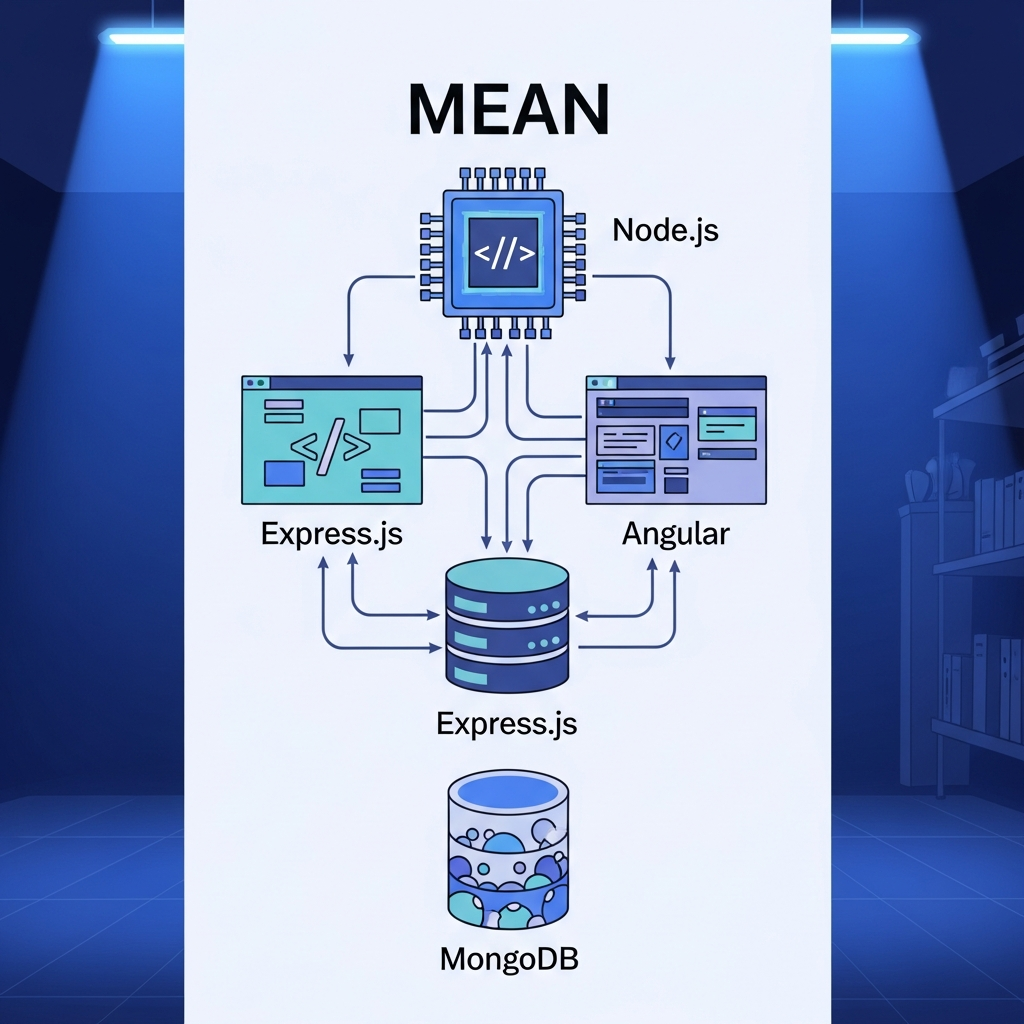 The MEAN stack is one more strong option if you want to build web apps. It uses all-JavaScript tools. It is a lot like the MERN stack. There is just one main difference, and that is the front-end framework. If you are a web developer who likes to work with something organized, you may go with the MEAN stack. Many people say it is a good pick because it gives you some structure in the way you use web technologies.
It is important to know the main components in the MEAN stack. This helps you see if it matches your way of learning and your goal for your job. The course syllabus for the MEAN stack is made to give you the best user experience. It uses its own set of web technologies, so you get to use JavaScript and tools that work well together.
Core Technologies: MongoDB, Express.js, Angular, Node.js
The MEAN stack is much like MERN. It gets its name from its main components. Three of the four main parts are the same in both, which are MongoDB, Express.js, and Node.js. The big change between them is the front-end framework used. When you look at a web development syllabus for MEAN, you see that you will work on making these technologies fit well together.
The main components of the MEAN stack be:
MongoDB: This is the NoSQL database that stores your app data as documents.
Express.js: It is the back-end framework that runs on Node.js and helps make APIs.
Angular: Google made this front-end JavaScript framework. It helps you make single-page applications that are both dynamic and organized.
Node.js: This is the runtime where you run JavaScript code on the server.
Angular has a structured design. This sets it apart from React. It often uses TypeScript. It also has features like two-way data binding. These things help large companies stay consistent in web development. You will also learn to use style sheets to give your application a clean look.
Unique Architecture of the MEAN Stack
The MEAN stack uses a clear and set way to build apps because of Angular. Angular is a full framework. It is not just a library. It gives rules for making an app. It uses the Model-View-Controller (MVC) pattern. This helps people make code that is neat and easy to keep up.
Angular works with the Document Object Model (DOM) in a direct way. It uses two-way data binding. With this, when the user interface, or UI, changes, the user data also changes right away. If user data changes, the UI updates as well. This lets people use less code to keep the UI and user data working together.
The way Angular is set up helps big groups work on an app. The framework gives a clear plan for how to build each part. The interfaces and the whole app structure are more standard and alike for teams. This is more so than with MERN.
Where MEAN Stack Excels in Application Development
The MEAN stack works best for big web development projects, especially in large companies. It is great for teams who need strong foundation, clear structure, and easy long-term care for their apps. This is good if you want your web development roadmap to include jobs at big corporations. MEAN gives you a reliable setup so all team members work in the same way.
MEAN stack is good for:
Enterprise Web Applications: It helps build strong apps where you might need user authentication and room for different users to have different access.
Large-Scale Single-Page Applications (SPAs): Angular makes routing, handling forms, and dealing with state simple, so you get responsive design for big SPAs.
Dynamic and Real-Time Platforms: Apps that need things to update fast like dashboards or streaming benefit from Angular’s good data handling.
So, if you want your project to stay organized and work well over time, the MEAN stack is what you should use for responsive design.
Topics Covered in a MEAN Stack Course
A MEAN Stack course gives you a course syllabus that helps you build the technical skills needed for work at the enterprise level. The lessons are broken down into clear modules. You start with basic ideas and learn more advanced topics so you can make complex apps.
Key topics you'll see in a MEAN Stack course include:
TypeScript Fundamentals: You study the syntax and features of TypeScript. This is important because Angular uses TypeScript.
Angular Core Concepts: You get to know components, services, routing, and dependency injection.
Building RESTful APIs: You use Express.js and Node.js to connect the Angular front-end to the MongoDB backend.
Database Management: You learn how to do CRUD operations and how to design schemas with MongoDB and Mongoose.
A lot of courses go over advanced topics, too. You use RxJS for state management, build content management systems, and make sure your apps look good on various screen sizes.
Comparing MERN Stack vs MEAN Stack – Core Differences
 When you think about MERN Stack vs MEAN Stack, the main difference comes from the front-end part. MERN uses React and MEAN uses Angular. Both stacks have MongoDB, Express.js, and Node.js. But React and Angular are not the same. This one change affects how you build things, how easy it is to learn, and what projects are good for each stack.
If you want to be a full stack developer, you need to know how the two stacks are not the same. It matters before you sign up for any web development course. The course syllabus will shape what you know and the way your career path will go in web development. Let’s in to the core differences.
MERN vs MEAN: Frontend Frameworks (React vs Angular)
The most significant difference in the MERN vs. MEAN comparison is the choice between React and Angular for front-end web development. React is a JavaScript library for building user interfaces, while Angular is a full-fledged framework. This distinction affects everything from flexibility to project structure.
React offers more flexibility, allowing a developer to choose other libraries for state management and routing. In contrast, Angular comes with a built-in, opinionated structure for building applications, which can lead to more consistency in large teams. React uses a virtual Document Object Model (DOM) for faster UI updates, which can enhance the user experience.
Here’s a quick comparison:
Feature | React (MERN) | Angular (MEAN) |
|---|---|---|
Type | Library | Framework |
Data Binding | One-way | Two-way |
Language | JavaScript (JSX) | TypeScript |
Structure | Flexible, component-based | Structured, MVC architecture |
Learning Curve | Easier for beginners | Steeper, due to TypeScript and concepts |
DOM | Virtual DOM | Real DOM |
Learning Curve and Flexibility for New Developers
For beginners starting their web development roadmap, the learning curve is important. In most cases, the MERN stack is easier to learn. React uses syntax that is close to plain JavaScript, and its component-based model is simple to get. This makes the learning experience go better for those who are new to front-end web development. The flexibility of MERN lets you pick up skills step by step, so you do not get overwhelmed.
On the flip side, the MEAN stack is harder to learn at first. Angular uses TypeScript, which is a form of JavaScript, but has extra things you need to learn. It has a structured way of doing things, and you must learn about modules, dependency injection, and services right away.
This can help you build a strong foundation for bigger projects, but it can be tough for beginners. Your choice will depend on if you want the freedom and quick start that MERN gives, or the clear skill development path that comes with MEAN.
Performance, Community, and Industry Adoption in India
When it comes to how well they work, both stacks are good at what they do. MERN's React uses something called a virtual DOM. This helps the app update faster, which is great for a ui that has a lot going on. This makes optimization easy. MEAN uses Angular. In its newer versions, it works better too. But when you have a lot of data changing back and forth, all the updates can slow things down.
In India, both stacks are popular for web development.
MERN Stack: Startups and companies that want things built fast mostly pick this stack. React has a big group of people who use it, so you can get help and find resources.
MEAN Stack: Larger companies and businesses that like clean structure and easy upkeep often use this way. Angular is backed by Google, so it feels stable and reliable.
If you are a full stack developer and you know how to work with either stack, you will find many jobs. Signing up for a web development program, like an AI engineering course in Hyderabad, can help you follow what’s new and get ready for these trends.
Project Complexity and Suitability for Different Webdeveloper Courses
The choice between MERN and MEAN depends on how complex the project is and what your long-term goals are. Each stack does a good job with certain kinds of real-world projects. That is why a web development course often focuses more on one stack than the other.
MERN Stack is ideal for:
Projects that need flexibility and quick changes, like startups and MVPs.
Single-page apps and interactive UIs where speed matters most.
Developers who want to pick their own tools for each part of the project.
MEAN Stack is better for:
Big, business-level projects that work best with a set plan and can last a long time.
Projects where having the same code style across a big team helps.
A web development course that gives practical training will let you work on projects built just like these. You can earn a certificate that fits with your job goals.
Choosing Between React and Angular: The Deciding Factor
In the end, choosing between MERN and MEAN is about picking React or Angular. This choice will shape how you do web development. It affects your web design and how the user experience feels. If you are a web developer, you need to know what each front-end technology is about. This helps you make the best choice for your career.
React gives you flexibility and speed. Angular gives you structure and many tools you can use. Let's take a closer look at what these things mean for you, and which framework may be the best place to start your work in web development.
Flexibility of React vs Structure of Angular
The main debate between React and Angular comes down to if you want more freedom or a clear setup. React is a library made for UI. You can choose your own tools for routing, state, and more. This makes it good for custom ideas and quick tests.
Angular is a full framework. It gives you everything you need, including answers for routing and state. The setup tells you the way to do things. This helps big groups work together. It keeps your project easy to fix and use later.
React (Flexibility):
Lets you pick your own tools.
Good for smaller web development jobs and to start fast.
Easy syntax (JSX) helps if you know html and javascript.
Angular (Structure):
Brings a set pattern for building.
Best for big web development plans in a company.
Uses TypeScript, so you get strong checks and less mistakes in big codes.
A web development course syllabus shows this difference. React lessons focus on building your own tools. Angular lessons focus on learning the whole framework.
Ecosystem Maturity and Developer Support
React and Angular both have long-standing support from people who code and big groups that help keep them strong. But, they are not the same in how their work groups run. The React community is large and runs with input from many people. On GitHub and other places, you can find lots of third-party tools and things made by others. That means you get a lot of ways to change React for what you like. People in the group help a lot when you want to solve issues or learn advanced topics.
Angular’s group is more close-knit and set up by Google. This gives it a safe feel and makes you know it is steady. There may not be as many extra packages as React has, but the ones you get from the main site are linked up and ready for most jobs. This makes finding trusted steps and easy-to-read work guides less hard.
React: Large, vibrant community; lots of third-party libraries.
Angular: Made strong by Google; stable, comes with official packages.
Those who want to grow their technical skills can look for classes online or at places that teach advanced topics. You may find AI developer courses in Hyderabad or in other cities, and have what you need to learn more.
Which Framework Is Best for Your Webdeveloper Course Path?
Picking the best framework for your web development course depends on how you like to learn and what you want in your job. Your web development roadmap should fit with the type of work you plan to do.
Pick React (and MERN) if:
You are among the beginners and want an easier start.
You need freedom and want to build projects fast.
You wish to work at startups or on apps that focus a lot on UI.
Pick Angular (and MEAN) if:
You want a system that covers everything in one place.
You plan to work for big companies or on large projects.
You like using strongly-typed languages like TypeScript.
A good web development course syllabus will match these different paths. For example, a data science course in Hyderabad may use python stacks, but a top-level machine learning course in Hyderabad or an AI engineering institute in Hyderabad will have special web courses that help you build your skill development the right way.
Conclusion
In the end, you can choose the MERN Stack or the MEAN Stack. Both have things that help with different needs in web development. MERN Stack lets you be more flexible. It is good if you want to build UI fast. MEAN Stack gives you a set way to work, which is good for big projects.
Think about your career goals and the kind of job you want to do. Each choice can help you find a good place in web development. The need for web developers is going up. If you want to learn more about ui or mern, you can get a free consultation to see which course is right for you.
Frequently Asked Questions
Are there prerequisites for enrolling in a MERN Stack Course or MEAN Stack Course?
Many web development courses are made for beginners. But, you need to know the basics of HTML, CSS, and JavaScript first. This strong foundation is key. The web development program will teach you all other things in the course syllabus. Still, having these fundamentals, and good soft skills for problem-solving, will help you do well.
What are the career opportunities after completing a full stack Developer Course in India?
After you finish a course, your career path opens up. You can work as a full stack developer. You can also choose to be a front-end developer or back-end developer. There are a lot of jobs in tech startups, e-commerce, and big companies. You will help build web applications for people to use. Many jobs also let you work from home or take freelance projects.
How long does it typically take to finish an online web development Developer Course?
The time you need to finish a web development course can be different for each person. If you join a course that gives both lessons and hands-on practice, it might take you three to six months of steady work. How you learn depends on the course syllabus and your own pace. Still, to get good at the technical skills you need for the job, you should stick with it and keep learning every day.