






.png%3Falt%3Dmedia%26token%3Db983b019-437f-4d12-95a2-9edab6a50c45&w=3840&q=75)
Quick Tips on How to Explain Projects in Interview
Key Highlights
Here are the main things you need to know for your next project explanation:
A good project explanation shows off your skills better than any certificate can.
If you are new, telling your story with clarity is very important in the interview room.
The STAR method will help you set up your ideas and give a strong project explanation.
Talk more about your role, what problems you had to solve, and what happened in the end.
Being honest about your problems and showing good communication skills will often make recruiters happy. You do not need to use lots of technical talk.
You will feel more sure of yourself if you practice. Practice helps you get better and do well.
Introduction
Going into the interview room can make anyone feel nervous, especially if you are new to this. When the interviewer asks, "Tell me about a project" you have worked on, it might feel hard to know what to say. But this is your time to stand out and show what you can do. A good project explanation lets you tell about your skills and how you fix real problems. This simple guide gives clear steps, so you can talk about your project with confidence and clarity. It will help you make a good impression and help you get noticed by others.
Why Interviewers Ask You to Explain Projects
 Have you ever thought about why the interviewer asks you about your projects? It's not just a formality. The interviewer wants to see your technical expertise. They want to learn how you solve problems. They also want to find out how well you talk about tough ideas in a simple way. Good communication skills are important for the job.
When you answer this question, you let the interviewer see how you may work in the job. The way you talk about your work shows your attitude and how you work with other people. It also shows if you want to grow in your professional life. A good story about your own project may help you pick the right career path. Now, let's look at what recruiters really need from your answer.
What Recruiters Evaluate During Project Presentation in Interview
When you talk about your project, recruiters want to know more than just the end result. They want to find out your specific contributions to the project. Did you lead the team, fix a big bug, or design the user interface? It's better to use "I" instead of "we" when you share what you did. This helps recruiters see your role and shows that you can take responsibility for your work. Talking this way lets them see how you can fit in and work with a team.
Your technical knowledge matters a lot. The choices you make about what tools to use are just as important. Recruiters want to see which tools you picked and your reasons for choosing them. When you explain why you used these tools, it shows that you know what you are doing. Recruiters also want to see your project management skills. They look at how you stay on track with you work, and how you solve problems when they come up.
Your emotional intelligence is important for recruiters. The way you talk about your work lets them see this side of you. When you take a hard topic and make it simple for someone who is not technical, it shows good emotional intelligence and strong communication skills. If you show that you love what you do, that helps a lot too. A mix of emotional intelligence, clear communication, and technical skill can help you stand out to recruiters.
Why Projects Matter More Than Certificates for Job Selection
Certificates look good on your resume to show your skills. But the real proof is when you do a project. As a fresher, the best way to impress people in an interview is to talk about a project you worked on. This makes your technical expertise clear for them. It shows you do not just know the theory. You know how to use that in a real way. Anyone can say they know a programming language. But when you talk about your projects, you show them you use what you know to build things.
Your projects show recruiters if you are ready for work in the real world. They check how you handle challenges, use your time, and finish tasks. This is different from just completing a course and getting a certificate. Doing projects is like already doing the job. The way you talk about your project explanation tells them how you solve problems and how much you want to learn.
Having your own projects can help you stand out when many people are going for the same job. It lets you show your story about your professional growth and career path.
People want team members who know what to do and will get it done. When you talk about what you built, what you learned, and the problems you fixed, others see that you can make things happen. You become someone who stands out, not just another name in the pile.
Common Mistakes Beginners Make While Explaining Projects
Your project may be really good, but if you do not give a clear project explanation, it might not get the right attention. A lot of beginners, or even people who know a lot, make easy mistakes. A common problem is using too many technical details or words. If the interviewer is not from a technical background, it can be hard for them to understand what you say.
Another mistake is being too general. If you just say, "I helped with the development," it can look like you did not do much. You need to talk about your part in the work and what you brought to the project for more clarity. Also, honesty is very important. Do not say you did something if you did not. Recruiters value honesty and like when people know their own skills.
Here are a few mistakes to avoid:
You should not talk only about the technical details and forget to say what the project is for.
If you do not share the problems you faced or how you got past them, people will not see your journey.
You must plan your project explanation before you start. If not, it can be hard for people to follow what you say.
Do not forget to connect what you learned in your project to the job you want.
When you give honest answers and clear project explanation, you help recruiters and interviewers see your skills. This is true even if you are new to the job. Showing honesty and clarity will help you stand out.
Beginner’s Guide: What You Need to Get Started with Project Presentation
 To give a good project explanation, you need to be ready. The key to doing well is to be organized. Before you go for your interview, sit down and think about what you want to say. Make sure you have all your things ready. You should not only remember the technical details. You also have to give a clear and strong story.
This is a lot like case interview preparation. You need to know the problem. You should also know what you did to solve it. Make sure you understand what happened after you took action. Try to look at the whole thing from every side. When you get ready this way, you show your work with clarity and feel confident. The next parts will help you see what you should prepare.
Resources and Project Documentation to Prepare Before Interviews
Before you go in for an interview, take a little time to read over your whole project. Go through the code, your notes, and any reports you have. This will help you remember everything about it. It makes it easier to talk with people about each part of the project. Try to think about not just what you did, but also why you did it for every step.
When you know the whole story of the project, you can talk about it in a good way. This helps show your communication skills. You should tell about the problem you wanted to fix, what you did step by step, and how you finished the project. For good project management, it is key to keep these points in your mind.
Be ready with this information:
The Project's Objective: What problem did you try to fix?
The Scope of the Project: What was the timeline, and who was on the team?
Technical Details: Which tools, languages, and frameworks did you use?
Your Specific Role: What was your part in the project?
The Final Outcome: What was the impact you made with your work?
How SocialPrachar Helps Build Interview-Ready Projects and Storytelling Skills
Building the project is just one part, but being able to share about it well is just as important. A focused learning place like SocialPrachar can help with your professional growth. At SocialPrachar, you get the chance to make projects that match what companies want out in the real world. The projects you do here are made to help get you ready for interviews. If you want to join a data science course in hyderabad or get more skills in the ai developer course in hyderabad, you will get the hands-on practice that recruiters ask for.
The programs at SocialPrachar help you learn about technical details. They also teach you how to share your project story in a way that people get it. A good project explanation means that you need to show how you fixed a problem. At SocialPrachar, you get practice interviews. You use these mock interviews to show what you did and to get clear advice. This helps you get better at your project explanation. It also helps you feel more sure about yourself.
Their skilled teachers show you how your work connects to real-life jobs and the needs of the business. This helps you see that learning has a use. If you are looking for the best data science ai training institute in hyderabad, it is smart to choose the one that lets you make projects and teaches you to talk about them. Both are needed if you want to get your dream job.
Step-by-Step Framework: How to Explain Projects in Interview
Let’s look at how you can talk about your project in a clear way. A simple structure will help you stay on topic. It also helps you cover all the main points that the interviewer will want to know.
This will help you show your communication skills. It will also make it easier to answer any behavioral questions the interviewer asks.
This simple step-by-step guide shows you how to talk about your project. It helps you show your technical expertise in a way that the interviewer can follow. You will have an easy and repeatable way for your project explanation. Just use these steps to make your project story clear and get their attention.
Step 1: Introduce Your Project with a Clear Problem Statement
The best way to give your project explanation is to start with a clear and short overview. First, talk about the background. What was the problem or what situation were you trying to fix with your project? Do not go into the technical details right away. Your main goal is to get the interviewer's attention. Let them see what your project explanation will be about before you share more.
For example, do not just say, "I built an app with React." You can say, "I worked on an online shop for a retail company. They had a hard time keeping their products updated right away. Our goal was to make a site that is easy to use. This was to help them sell more online." This lets the interviewer see why you did this work.
This way, things will be more clear for everyone. It shows the interviewer that you know how the business works and you also understand the technical details. When you give your project explanation and you state the problem in a good way, the interviewer sees that your project is made to meet a real need. The interviewer will look for a project that fills a gap. This also helps set the right tone for your talk and it keeps things clear for both you and the interviewer.
Step 2: Discuss Why You Chose the Project and Its Relevance
After you talk about the problem, say why this project mattered for you. Was it done for your college, did you feel strong about it, or did it fit into your career path? When you share why you cared, people can see you care about your work. This helps you get the attention of the interviewer and puts a personal feel into your story.
You might say, "I picked this project because I like machine learning. I wanted to use my technical expertise on a real problem. It gave me a good chance for professional growth. I also got better at Python and data analysis." This shows you want to learn and keep getting better.
When you are in the interview room, you should talk about why you did the project. This lets them see you do not choose random work. You have thought about your career path, and you want to learn and get better. It also shows them you plan for your future. Saying this shows the project is important to you, not just a job to do, but a way for you to grow.
Step 3: Explain Tools, Technologies, and Your Specific Role
This is the part where you talk about the technical details. Share the names of the tools, technologies, and setups you used. But do more than just name them. Tell why you picked each one for the job. This will show your way of thinking when making choices about the work and explains that you do not just write code. You also think and act like an engineer.
It is important to let the interviewer know about your specific contributions in project management. If you worked with a team, be clear about what you did. Talk about your tasks, not just what the team did. This will show that you take ownership. The interviewer will then know your part in the project. This helps them see your real impact on the work. Working this way is important in project management and teamwork.
Here is an easy way to lay out your role and what you do:
Your Role | Key Responsibilities | Tools & Technologies Used |
|---|---|---|
Lead Front-End Developer | Designed the user interface and developed reusable components. Ensured the site was responsive. | React.js, CSS, JavaScript |
Data Analyst | Cleaned and processed data, built a recommendation model. | Python, Pandas, Tableau |
Backend Developer | Built RESTful APIs and managed the database. | Node.js, Express, MongoDB |
Step 4: Highlight Challenges Faced, Solutions, and Final Outcomes
Every project will have some problems. Do not feel scared to talk about these challenges. You can talk about what did not go well and also talk about how you fixed it. This is a good way to show your technical expertise and how you solve problems. If you talk about these things, people might ask you behavioral questions. So, it helps if you get ready before. This shows you are strong, you can handle change, and you think fast.
Talk about the problem you had. Share what steps you took to solve it and what you learned from it. For example, you could say, "One big problem was to get the site to work in all browsers. I fixed this by using CSS resets and doing tests. I learned that good testing is very important." This lets you turn a hard time into a good lesson.
Finish by sharing what happened. Try to include numbers to show the results.
Did you help boost performance by 30%?
Did you help cut operation costs by 20%?
Did users say your work made things better?
Did you make report time twice as fast? Numbers like these show what you really did in your project and point out your technical expertise.
Using the STAR Method for Projects in Interviews
If you want a good way to do a project explanation, the STAR method can help you. STAR stands for Situation, Task, Action, and Result. It is a simple tool that helps you tell your story. The STAR method lets you tell what happened, what you had to do, what steps you took, and what happened after.
The STAR method is a good way to answer questions from an interviewer. It is helpful when you speak about your work or how you think. With the STAR method, you talk about the setting, your job in that situation, what steps you took, and how things ended. This method gives more clarity to what you say. The interviewer can understand your story better and can see what role you played, which is important.
How to Structure Your Answer with the STAR Method for Projects
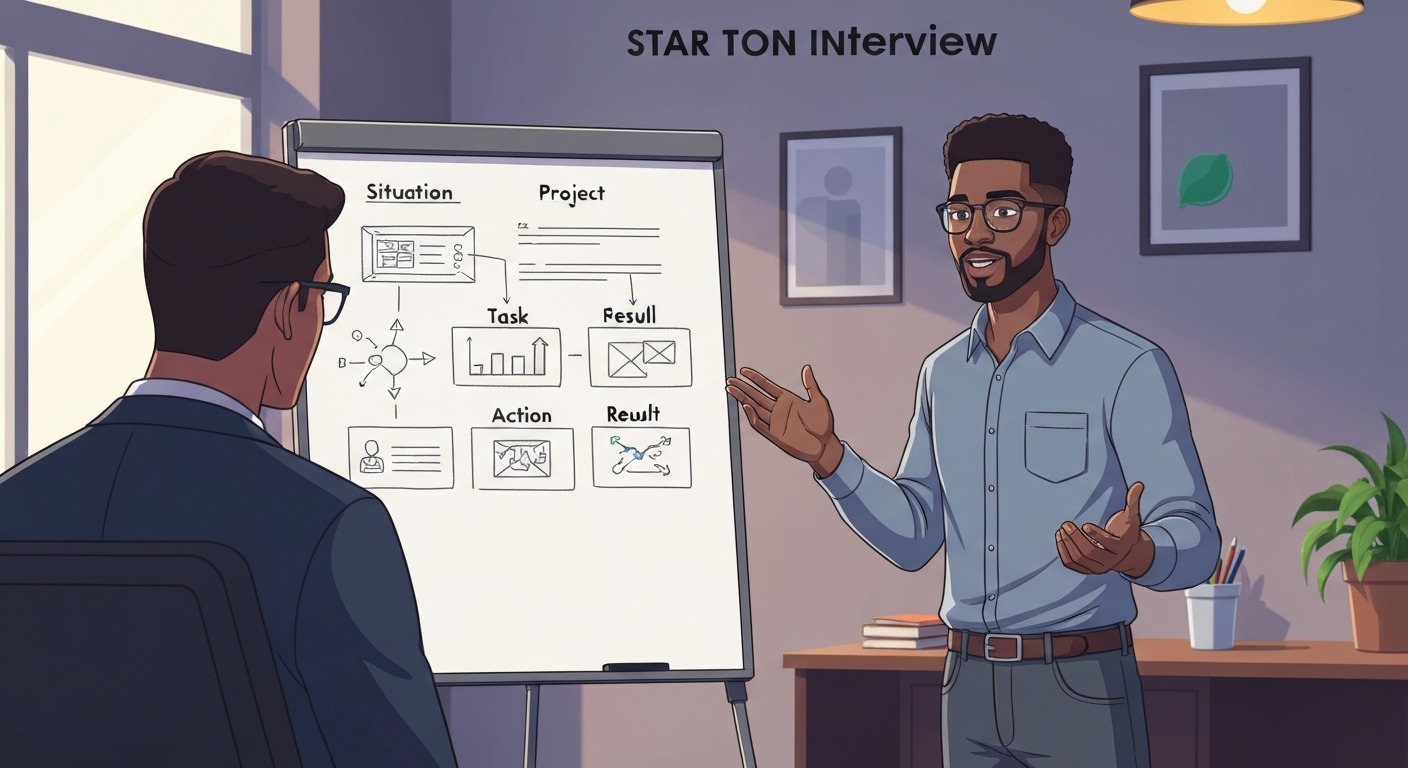 The STAR method is a good way to talk about your project. It helps you turn a simple story into one that people want to listen to. When you follow these four steps, you make your answer clear and cover everything you need to. This way works well, especially when you want to get better at telling stories for behavioral questions.
First, you start by telling the interviewer where you began. Next, you explain what was expected of you in that project. Then, you share what steps you took to do the work. Last, you talk about the good outcome you helped make happen. This shows your part in the project in a clear way, so people remember it.
Here’s how you use the STAR method:
Situation: Tell them what the project was. Tell what problem you had to deal with.
Task: Say what you needed to do. Tell what your job or your goal was in this.
Action: Tell what you did to get it done. Tell how you handled it.
Result: Tell what happened after you finished. You can talk about numbers to show the effect if possible.
This helps you feel more clear when you talk about your project explanation. You can also do well in behavioral questions with any interviewer.
Sample STAR Method Answer for Project Presentation in Interview
Let’s see how you can use the STAR method in the interview room with this example answer. If the interviewer wants you to talk about a project, you can use this way to make your answer easy to understand. This helps you get noticed.
In my last project, the sales team had a hard time. Their revenue numbers were not right. The data was kept in many different spreadsheets. This meant people had to do slow work by hand. That work led to mistakes.
I had to build a system that brings all the data together at one place. It gives real-time numbers. This helps the team get better at making good forecasts.
I used Python to make a data pipeline. It took data from many places. I showed these numbers in dashboards that are easy to use by using Power BI. I also made the SQL queries work faster. Because of this, the dashboards open more quickly now.
Result: Because of this, we made about 30% less mistakes in our forecasts. We also saved 15 hours each week on the reports we used to do by hand. The sales team could work faster and made their choices with up-to-date data.
Project Storytelling Techniques That Impress Recruiters
The way you talk about your project is important. It is not just about facts. The way you speak can help you stand out from others. Recruiters want to see good communication skills, emotional intelligence, and passion. They want to know about people, not just read a list of things you can do. A good story makes it easy for recruiters to remember you.
Make your project feel like a story. First, talk about the problem. Then, share how you solved it. Tell what happened at the end. A story like this helps you connect with people. It shows you have good communication skills. It also helps recruiters know more about you. Now, let's see some simple ways to make your story smoother.
Using Clear Storytelling Instead of Technical Jargon
One key storytelling skill is to share tough ideas in a simple way. This is very important when you are in the interview room, especially if the manager or HR person does not have a tech background. Try not to use a lot of hard words or jargon. It can make things confusing for them. It can also make it look like you do not have good communication skills.
To make your answer work better for the person you are speaking with, talk more about what you did and why you did it. Do not only say how you did it. Use simple words when you talk about the problem. Tell how your answer helped solve it. Say what good things came out from that. For example, you do not have to talk about the parts of an algorithm. You can say, "I built a system that improved recommendation accuracy. It helped people find products they love more easily."
This shows that you respect the interviewer's time. It also shows you have good communication skills. A good story can reach everyone, no matter who they are or where they come from. If you use clarity when you answer questions, you show that you can work well with all kinds of people in the group. This trait is needed and valued in every place.
Linking Your Decisions and Impact to the Job Role
The best way to show how your project helped is to connect it to the job you want. Before you meet the interviewer, read the job description. Find what skills they want and what you will need to do. Then, in your project explanation, talk about how your work fits what they are looking for. Share your specific contributions and show how they match the needs of the job.
For example, if the job is about data analysis, talk about how you used data in your project to help make choices. You can say, "I have experience making SQL queries faster and building dashboards in this project. This matches the data analysis needed for your job."
This helps the interviewer see that you know what they want. It also shows that you care a lot about the role. When you talk about your career path and give a project explanation, you help them feel clear about why you are a good fit. If you draw a clear link between your project, the project explanation, and your career path, you give them a strong reason to pick you for the team.
Portfolio Presentation Tips That Boost Confidence
Your portfolio shows what you can do and how good you are at your work. If you set it up the right way, it can make you feel ready and help the interviewer see your skills. Think of the way you show off your portfolio as your second elevator pitch. You get to use this moment to walk the interviewer through your best work. You can show what you have done and what you give.
Good project management in a portfolio means you choose your work with care. You do not have to put in all the work you have done. Pick a few projects that fit the job you want. Show your top skills in those projects. If you follow some easy tips, you can show your portfolio like a pro.
How Many Projects to Present and Selecting the Right Ones
When you make your portfolio, keep in mind that the quality of your work matters more than having a lot to show. You do not need to bring everything you have to impress the interviewer. It is better to pick your two or three best and most important projects. This way, you can talk more about each project. You also do not have to hurry when you explain them. Choosing the right projects is a big part of good project management.
Try to choose the projects that match with the work the company does. Think about the job you want for your career path. If you want to be a front-end developer, pick projects that show your UI and UX skills. This will help the interviewer see that you know what they are looking for. It also shows you have planned your own career path.
Here’s how to pick your projects:
Relevance: Does the project use the same tools or tech that you saw in the job post?
Impact: Can you share real results that came from this project?
Complexity: Does this project show you are able to take on hard jobs?
Passion: Is this a project you feel happy and excited to talk about?
When you choose your projects like this, you add more clarity to what you say. This can help you make a better mark when you are in the interview room with the interviewer.
Data science project storytelling
Showcasing GitHub, Dashboards, and Handling Cross-Questions
If you can, use some visual tools when you talk about your project explanation with the interviewer. These can help keep things more interesting. You can show your GitHub, a live demo, or a dashboard. This lets the interviewer watch your work happen in real time. Make sure your GitHub is clean and simple to read. Every project should have a clear README file with helpful details in it.
When you present, be ready to answer questions about the technical details. Interviewers often want to know why you picked some things. This helps them see how much you know. Try to stay calm when you speak. Answer with honesty and do not guess if you do not know. Instead, say how you would find the answer. This shows honesty and lets the interviewer see you want to keep learning.
Here’s how you can feel good when you get cross-questions:
Anticipate Questions: Think about what the interviewer might ask you. Try to have your answers ready for them.
Practice Your Demo: Check that the live demo you plan to use works well and does not have any problems.
Stay Composed: When the interviewer asks you tough behavioral questions, stay calm and keep your focus.
Be Honest: If you do not know the answer to something, it is better to say you do not know.
Show Enthusiasm: Let them see that you are excited about your work. This can get other people interested in you.
Conclusion
To sum up, it is important to show your projects well in interviews. This can help you show your skills and how you solve problems. Using a plan like the STAR method can help you share your story in a way that connects with the people in the room. Use clear words and do not use too much technical language. This will help people see how you fit the job.
When you practice more, you feel more sure of yourself. This can also help you get the job that you want. For better practice with interviews, you can look at what SocialPrachar offers. You can get a free chat to help make your project talk better and help you stand out when it is time for the interview.
Frequently Asked Questions
How do I explain my project in an interview confidently?
If you want to feel good when you talk about your project, practice what you will say. You should know the project from start to finish. The STAR method will help you speak in a clear way. Talk about your specific contributions in the project. If you use good communication skills and prepare well, you will feel more sure of yourself in the interview room.
What is the best structure to explain projects in interviews?
The STAR method is a good tool to help you have clarity in your project explanation. It helps you tell the story in a simple and strong way. Start with the situation. After that, talk about the task you had to do. Next, share the actions you and your team took, and add the technical details. At the end, show the results and try to make them something you can measure. This way, your project explanation will be clear and easy for people to understand.
How long should project explanation be in an interview?
You should start your project explanation with a short and clear overview. Spend about two to three minutes on this. It helps the interviewer in the interview room get the main idea of your project. This gives them a chance to ask more questions. If they want to know more, be ready to share your technical knowledge. But always begin with clarity, so everyone can follow and stay interested.
How does SocialPrachar prepare students for project-based interviews?
SocialPrachar helps students get ready for real jobs. It does this by letting them work on projects that use tools and skills seen in the field now. The program also helps students get better at sharing their stories about the work they do. With practice interviews and advice from experts, students learn how to talk about their technical expertise with clarity. Each project explanation turns into a way for them to show their skills. This helps them grow as a professional and do well when they have interviews.
How do I explain a mini-project to an interviewer?
To talk about a mini-project in an interview, start by saying what the project was about. Tell them your own role and how you did the work. Share the main problems you found and what you did to solve them. In the end, talk about what you finished and what skills you learned. Show how your way to handle problems and your new skills matter for the job.
How can I highlight my specific role in a team project during an interview?
When you talk about what you did in a team project in an interview, talk about both your own work and how you helped the team. Start by saying what the project was about and what the team wanted to achieve. Then, tell what you did for the project and what tasks you were in charge of. For example, you could say, "In our web development project, I made the user interface, talked with users to find out their needs, made wireframes, and worked with the developers to make sure people had a good time using the site."
Use real examples and give numbers when you can. For example, you can say, “My new design made page load time 30% faster.” Talk about what you did as a leader, like how you helped set up meetings or how you solved problems between people.
End by thinking about what you got from working together with others. You may have learned how to talk better with your team or solve problems in a new way. Talk about how feedback from others made the project better and helped you grow. Be sure to say how you helped, but also show you respect teamwork. This will let others see both what you achieved and that you work well with other people.