







.png%3Falt%3Dmedia%26token%3D2b7d9bf4-0f5b-4545-bbe4-d519e22fddbb&w=3840&q=75)
Data Engineering vs Data Science: Key Differences Explained
Key Highlights
A data engineer builds the systems that move, clean, and store data for the business.
A data scientist uses that prepared data to find patterns, build models, and support decisions.
This Data Engineering vs Data Science career comparison shows how the two roles differ in focus and daily work.
Both paths are in high demand and offer strong long-term career path options.
Your choice depends on whether you enjoy infrastructure, coding for scale, analysis, or machine learning.
Introduction
If you want to look at data engineering and data science, you are thinking about a good job path. The two are both about data, but they are not the same. One is about building strong systems for moving and keeping data safe. The other is about looking at data to find answers, make guesses, and get good machine learning results. In this guide, you will see a simple and easy way to look at what the jobs are, the skills you need, how much you can make, and how you can grow. This will help you pick the path that is good for you and matches what you like to do. When considering salaries, data engineers typically earn between $90,000 to $130,000 per year, depending on experience and location. Data scientists often earn similar or slightly higher salaries, ranging from $95,000 to $140,000 annually, with top positions going even higher, especially in large tech companies.
Data Engineering vs Data Science – Quick Career Comparison
 A data engineer builds and takes care of the systems that help collect, move, and keep data. A data scientist uses this data after it is ready to work on data analysis, make predictions, and answer business questions. The main difference between data engineering and data science is what they each do with data.
So, which role is the right one for you? If you are into computer science, work on backend systems, and care about things running well all the time, you may want to be a data engineer. If you enjoy data analytics, finding patterns, and making models, then the data scientist path could be a better fit for you.
What Is Data Engineering? – Fast Overview for Beginners
Data engineering is the work that builds the base for company data to be useful. A data engineer takes raw data from apps, websites, devices, and business tools. The goal is to move that data into systems we can trust. These systems help with reports, analytics, and AI.
Data engineering is really about data infrastructure. It includes things like data pipelines, places to store data, and the flow of how data moves. These setups make sure that data gets to the right spot, in the right way. They have to work well every day, sometimes all day and all night.
To become a data engineer, you need to know how to use programming, SQL, and think about how systems work. You should also be comfortable with cloud platforms, database management, and making steady ways for data to move. Other teams need to count on these processes for their own work.
What Is Data Science? – Key Concepts Explained
Data science is all about using data to answer questions and find patterns. It is used to see what might happen in the future. A data scientist works with data sets that are already cleaned and easy to get. The goal is to turn all of this information into useful ideas for the business.
Most of the time, data science focuses on data analytics, thinking with numbers, and building simple models. A data scientist might look at things like customer churn, changes in demand, fraud, or ways to make things more personal. After that, they make predictive models. These models help teams act faster and smarter.
To do this job, you need to have Python, statistics, and strong analytical skills. You also need to understand machine learning, data visualization, and know how to share your results in a clear way. The technical side matters a lot. Still, being able to talk well with the business team is just as important.
Main Differences at a Glance
The daily work in data engineering and data science is not the same, but both deal with a lot of data. Data engineering is about making sure data can flow, be stored, and be easy to get when needed. Data science is more about looking at the data, trying out new ideas, and helping people make good choices. Both jobs are needed, but they happen at different stages when people use data.
Here is a simple comparison to help you think about your career in data engineering or data science:
Data engineering is when you build systems, while data science is when you look at results.
Data engineers use programming languages to make pipelines and things that help data move.
Data scientists use data analytics and different models to find answers to business questions.
Data engineering helps business intelligence by making sure you get trusted data.
Data science helps people make choices by finding patterns, making forecasts, and understanding the numbers.
If you enjoy working with systems that are steady and well-planned steps, you may like data engineering. If you like to solve all kinds of problems and figure out what the data means, data science might be the better choice for you.
Who Should Choose Each Path? Guidance for Career Starters
Your choice should be about the kind of work that holds your interest. Both data engineering and data science have high demand. But they fit different people and strengths. A professional data engineer likes structure, fixing problems, and software thinking. Data science professionals like working with numbers, dealing with what is not known, and telling stories with data.
Here is a simple guide:
Pick data engineering if you like computer science, building systems, and working on backend logic.
Pick data science if you like finding patterns, running tests, and solving business problems.
Go with engineering if the idea of making strong and steady systems sounds good to you.
Go with science if making models and predicting things is what matters most to you.
If you are not sure yet, try a bit of both. Build a small pipeline project, and make a simple prediction with data. You will know more about what feels right. Finding what you like might show your best career path quicker than any guesswork.
Understanding Data Engineering – Scope and Role
 Data engineering is important for many of the reports, analytics, and AI tools we use today. The team uses it to gather raw data, clean it, and put it into good storage. If you don't have this step, business teams end up with wrong, late, or missing details.
In real life, the work is broad. It touches on things like data infrastructure, storage design, making workflow steps automatic, and big data tools for big jobs. The next parts show how this job is done inside groups or companies.
Core Definition and Purpose in Organizations
At its heart, data engineering is when you build and take care of data systems. These systems keep the information ready, safe, and easy to reach. You use these systems to feed dashboards, reports, ML workflows, and your daily business tools. They are the base layer for all business intelligence and advanced analytics work.
Inside many groups, you will see that data pipelines are a big part of what data engineers do. Data pipelines move data from a source into storage and then on to people who need it. If these pipelines break, it can hurt reports and analysis right away. That is why you need to make them strong and dependable.
Many times, this work is close to what a data architect does, especially when your job is to help with schema design and big-picture planning. Teams in data engineering partner with analysts and data scientists. They set up structured data so everyone can use it with no need to make constant manual fixes.
Building Data Infrastructure and Pipelines
A big part of the job is building systems that can keep up with the growing need for data. Data engineers create data infrastructure so information moves smoothly from apps, devices, and services into central storage. This work has to support scale, speed, and reliability.
Data pipelines are what make all that movement happen. They take data from many places, change it into useful formats, and put it into a data warehouse or lake. Good data pipelines cut down on manual work and help with consistent reporting.
The challenge is that systems up the chain change a lot. Schemas change, source quality drops, and workloads grow. That means engineers have to keep an eye on how things are running, fix what breaks, and update pipeline logic. At the same time, they should not break things for teams that use fresh and easy-to-use data.
Data Storage, Processing, and Workflow Tasks
Besides taking in the data, data engineers take care of how the data is kept and used. They deal with relational databases, warehouses, and lakes so that teams can find information fast. They also pay attention to how the data is split up, data formats, and how well things run as the data gets bigger.
Another job they do every day is planning how data moves through different steps. Engineers set up when each step should run, watch to see how they go, and make sure the data is handled in the right order. If one part does not work, other things like reports or models can stop too.
Some usual workflow jobs are:
Taking care of where the data is kept, including both structured and unstructured data
Running data processing jobs so the output is clean
Helping with the setup and updates for data workflow schedules
Making sure data quality is good through different checks
This part of the job is less about trying to figure out what the data means and more about making sure the data gets where it needs to be. This is one of the easiest ways to understand the difference between data engineering and data science.
The Role of Data Scientists – Purpose and Impact
 Data science starts when you have trusted data to work with. A data scientist looks at this information to explain what happened before, guess what might happen next, and help everyone make better decisions. The main goal is not to make sure the data pipeline works well, but to focus on data analysis and finding value in the data.
This is why many companies pay a lot of attention to the data science role. Data science helps with business intelligence, testing new ideas, and making plans. In the next parts, you will see how a data scientist can turn information into real action.
Data Science Explained: From Analysis to Prediction
Data science is an area that uses statistics, coding, and business knowledge together. It begins with data analysis and often goes into prediction. A data scientist looks at data sets, asks questions, checks ideas, and looks for useful patterns.
For many jobs, data analytics is the first step. You check the data, see how it is spread out, find odd points, and pick the variables that matter most. When you know what the problem is, you can build predictive models. You can use these models for things like churn, fraud, or demand prediction.
This job needs people to work together. Data science gets better results when engineers share clear and organized data. In return, scientists share what they find about missing values, missing features, or any data quality issues that need fixing before you can trust a report or model.
Generating Business Insights with AI and Predictive Models
Data scientists help companies find answers to business problems by using data and evidence. They use data analysis to see what is really going on, then use predictive models to guess what may happen in the future. This work can change things like marketing, the way a team works, how to keep customers, or making plans for the future.
Artificial intelligence and ML models are big parts of data science. People on a team use data from the past to train tools that spot things like customer loss, demand for products, or fraud. But their work only helps if the information becomes something a business can use and act on.
Actionable insights are a key goal in data science. People do not just make models. They explain what is found, show where things are not sure, and talk with other teams. The data helps people make real changes in how the company works.
How Data Scientists Add Value to Organizations
Organizations get real value from data science when the analysis leads to new choices. A data scientist might help find out which customers may leave soon, which products could sell well next month, or where there is a bigger risk of fraud. These insights can help a business change direction fast.
The job of a data scientist and a data analyst sometimes have the same kind of work, such as making reports and exploring data. However, data science usually goes further. It uses modeling, data mining, and feature engineering to spot patterns that simple reports might miss.
Clear talk is very important. Data visualization helps people, even those who do not know much about tech, see trends and changes. When data scientists show the findings in a simple way, business intelligence gets better. This is because leaders can lean on facts, not just gut feeling.
Data Engineer Responsibilities – Daily Tasks and Challenges
A data engineer spends much of the day making sure data flows safely and without problems. The job includes building data pipelines, taking care of storage, watching for any breakdowns, and making things work better. This is hands-on work with a big focus on data management.
Just as important, engineers make sure that the path of the data and data quality are safe for all teams. What they do affects dashboards, analytics, and ML systems. The next parts below talk about the main jobs and everyday problems you see in real work.
Constructing Data Pipelines and Managing Databases
The main job for a data engineer is to build and look after data pipelines. This means setting up the flows that pull data from APIs, apps, logs, or devices and move it into safe storage. These flows can run at set times or almost right away.
Another big job is database management. Data engineers set up tables, manage schemas, make queries faster, and make sure the right people can use the data. With big data, even small choices in design can change the cost, speed, and how easy it is for people across the company to use the data.
Each day, data engineers work on data integration too. Data from many places needs to be pulled together so it has the same structure. Then others, like analysts or a data scientist, can work with it. Compared to a data scientist, the engineer spends more time making sure everything works right, stays reliable, and gets help in production.
ETL/ELT Workflows and Cloud Data Infrastructure
ETL and ELT are at the core of what a data engineer does. Engineers take raw data from main sources, change it, and load it into a data warehouse or data lake. In newer setups, it is common to load raw data first. The data is then changed later within the platform.
Cloud computing has grown in importance for this work. Many teams now use AWS, Azure, or Google Cloud for their data infrastructure. They pick these options to get more scale and be more flexible. But this also means a data engineer must have new skills, such as working with orchestration, keeping things secure, and handling cost.
A data engineer's typical tasks are:
Designing ETL jobs that repeat and help move data
Running cloud computing services used for storing and working with data
Loading picked data into a data warehouse
Checking if the data infrastructure runs well and looking for problems
These jobs show that a data engineer’s work is very technical. In most places, this role is close to software engineering.
Ensuring Data Quality and Real-World Applications
You cannot have good results if your data is wrong. This is why the data quality needs to be a key part of the work. The data engineer adds checks to look for missing data, broken setups, records that show up more than once, or data that is not up to date.
Good data management also helps to guard privacy, set who can use the data, and keep up with strong data governance. When the results are clean, analysts can trust their reports more, and scientists can use the data to make better models. This is where working together is important, since teams who use the data often find problems that the data engineer then fixes in the main data pipeline.
In most jobs, you see data governance and data management used in ways like these:
Sending trusted daily updates to BI dashboards
Feeding better data into ML training through even data processing
Keeping up with data rules through controls
Making day-to-day reports better because of good data quality
To sum up, the data engineer works to make sure all data is strong and ready for other teams to use with trust.
Data Scientist Responsibilities – Core Duties in Practice
A data scientist helps turn prepared information into ideas people can use. On most days, this means they start their work with data analysis and statistical analysis. They also do modeling, run tests, and share their results. This job brings together a strong knowledge of tech and clear business thinking.
For this reason, these scientists do a lot more than just build machine learning models. They look at a problem, figure out what it means, and pull out business ideas that leaders can use. Now let’s see what their main tasks look like.
Data Exploration and Statistical Analysis
A big part of what a data scientist does starts with looking at the data. They explore data sets to see how the data is set up, if there are any missing values, strange points, or hidden links. This first step helps the data scientist decide what the main question should be before any model is built.
Next, the data scientist moves to statistical analysis. Here, they check ideas, look at groups, see how things are linked, and find out if there are real patterns or just noise. Having good analytical skills is very important now, because getting it wrong can lead the business the wrong way.
This day-to-day work is not the same as what an engineer does. Engineers pay attention to getting data delivered and keeping systems working well. Data scientists focus on exploratory data analysis, making sense of what they see, and saying what the data sets tell us to do next. One job builds trust in how data is handled. The other builds trust in the final answer found from the data analysis.
Building Machine Learning Models and Visualizations
Once the question is set, the scientist starts making a model. Machine learning helps to guess, sort, or give suggestions. The way they do it can change. It depends on the problem, the amount of data sets, and what people want from the final output.
Not every job needs deep learning. There are many business needs that can be handled with simple ml models. These are not only easier to share with others, but also simple to look after. What matters is how the model does its job, how easy it is to understand, and how well it fits with the business.
People often use these results:
Churn prediction with machine learning models
Forecasting with ml models created from past data
Dashboards and charts for data visualization
For some big needs, deep learning for complex patterns
This is the reason scientists should be able to build models and explain the results in a clear and simple way.
Delivering Actionable Business Recommendations
The last step is often the most important for data science. This is because real value comes when the data analysis helps a team or person make a choice. A scientist takes the numbers and shows what action to take, like where to try to keep more customers or how to plan for demand in a better way.
Doing this well takes good business intelligence. You have to know what the people, or stakeholders, care about. You should also know what real options are open to them. Data visualization helps here. It makes results clear, so people in all teams can get what the numbers show, even if they are not technical.
It also takes teamwork. Engineers give strong and stable data. Data scientists go deep with their data analysis. The business teams use these ideas to act. If all sides work together, things can move faster. The group can see which data to trust and which advice is best for them. This is how data science and business intelligence help the business do well.
Data Engineering vs Data Science – In-Depth Career Comparison
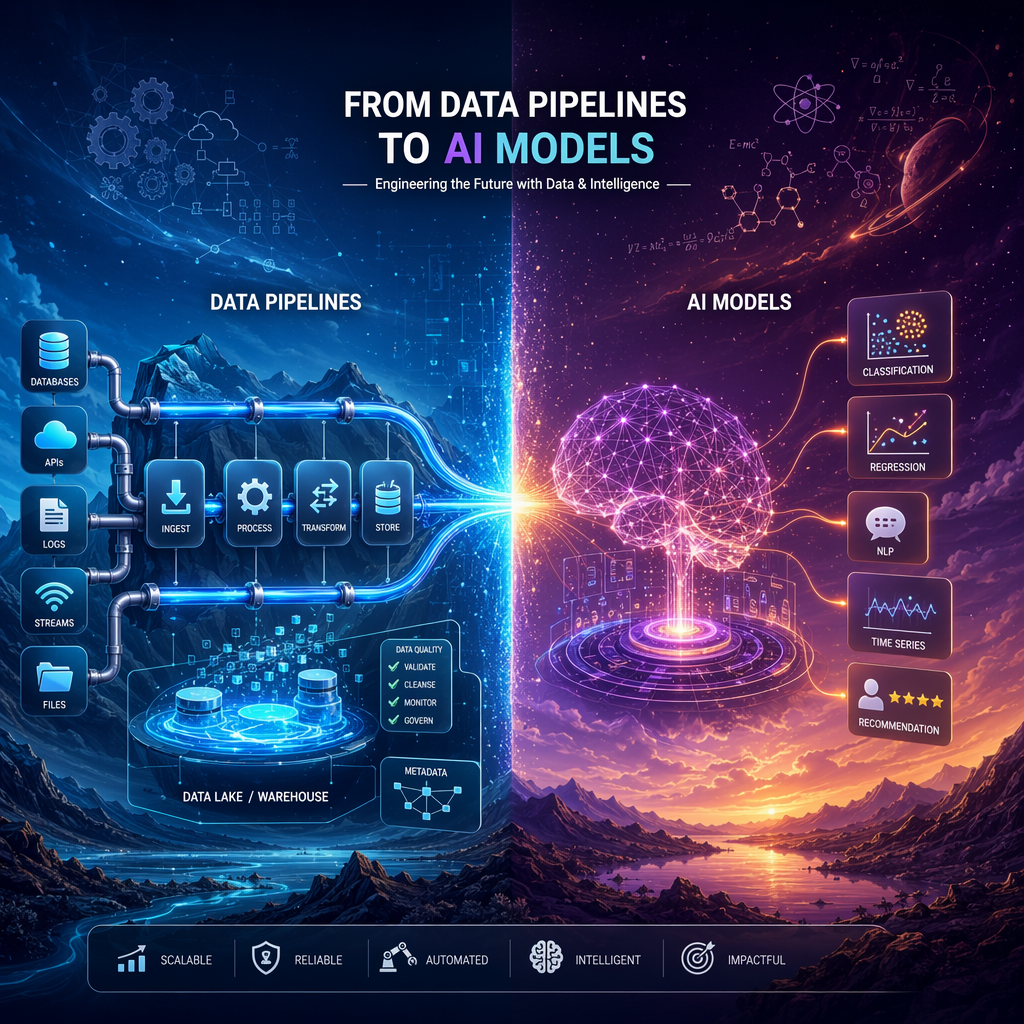 Both data engineering and data science are good careers. But, they take very different paths as you move ahead. People in data engineering focus on building and looking after platforms. They work on design and how things fit together. People in data science work more on building models, testing ideas, and helping with planning. The kind of work you want to do to solve a problem will shape your long-term career path.
Right now, industry trends show that more companies want people for both data engineering and data science. That is because AI, analytics, and cloud systems all need to work together. Let’s look closer at each career path.
Comparing Focus Areas, Tools, and Programming Skills
The clearest difference is focus. Engineering is closer to software engineering and data architecture. Science is closer to data analysis, experimentation, and prediction. Both use code, but the purpose of that code changes a lot from one role to the other.
Programming languages overlap too. Both roles often use Python and SQL. Still, engineers are more likely to use big data tools, orchestration platforms, and storage systems. Scientists are more likely to use notebooks, ML libraries, and visualization tools.
Category | Data Engineering | Data Science |
|---|---|---|
Primary focus | Data flow and reliability | Insight and prediction |
Common tools | Spark, Kafka, Airflow, Snowflake | Pandas, scikit-learn, TensorFlow, Jupyter |
Code style | Production systems | Analytical workflows |
Education emphasis | Computer science, software engineering | Statistics, mathematics, computer science |
Business Involvement, Technical Complexity, and Growth Potential
These jobs work with the business in their own ways. Data scientists talk more to the people who make choices. What they do helps shape the decisions. Data engineers often stay in the background, but what they make is used in every report, dashboard, or model.
Both data engineering and data science need strong technical skills, but not in the same way. Engineers work with big systems and care about making things run well and keep working. For data scientists, the hard part is not always knowing everything at first and picking the right model or using good judgment in stats. That is why both data science and data engineering jobs are in high demand in many areas.
Key takeaways for your career:
Data science gives you more business intelligence visibility
Data engineering can move you into bigger roles like platform leadership and working with system design
Both data engineering and data science have many job openings now and going forward
Pay is good in both jobs, but it can change depending on what you do and where you work
Conclusion
To sum up, knowing the differences between data engineering and data science is important if you want a good career in the field of data. Each job matters to groups but fits different people and skills. Data engineering is about building strong data systems and flows. Data science is about using data to find answers and plan for what may happen next. You should look at your own skills and what you like doing. Compare those to the tasks and skills we have listed here. This will help you pick what will work best for you. If you feel ready to start the next part of your job journey, you should book a free talk with the experts. They can help you find out what is out there for you.