








Data Science Roadmap in 2026: A Beginner's Learning Path
Key Highlights
This data science roadmap provides a beginner’s learning path to start a career in AI and analytics. Mastering programming languages like Python and SQL is the first crucial step for any aspiring data professional. When comparing the roles, a data scientist typically focuses on extracting insights from data, using statistical analysis and machine learning to inform business decisions, while an AI engineer primarily designs, develops, and deploys artificial intelligence models and systems in production environments. Both roles require strong foundations in data science and programming languages, but their day-to-day responsibilities and end goals differ.
Mastering programming languages like Python and SQL is the first crucial step for any aspiring data professional.
Key skills include machine learning, statistics, data analysis, and creating compelling data visualization.
Roles like data analyst and data scientist are in high demand across various industries.
Building real-world projects is essential to showcase your practical skills and create a strong portfolio.
A structured learning plan helps you become job-ready in this exciting field.
Introduction
Are you thinking about a job in data science? This is a fast-growing field. It brings together computer science and statistics. Data science is at the center of the artificial intelligence wave right now. The main idea is to use data and find answers that help people make good choices. If you are a student, want a career change, or are just interested in artificial intelligence, this guide will give you a simple plan to learn more. Let's see how you can begin and build a strong career in the world of data science.
Why Data Science Is a Top Career Choice in India for 2026
 Picking a data science career is a good idea right now. Technology is growing fast and the need for people who work with data is bigger than before. The Bureau of Labor Statistics says data science will grow a lot in the years to come. This means there will be many jobs for job seekers.
In this field, you can have good career progression. You will get to work on projects that matter. Future trends show that businesses will use data even more. These data science skills make you important in almost any line of work. This is why the field is growing so much today.
Growth of AI and Analytics in the Indian Job Market
The job market in India is changing fast with the rise of artificial intelligence and big data. Every day, companies collect a lot of data. They need people who can work with this information and find answers. Because of this, there are a lot more jobs now in AI and data. This is now one of the fastest-growing fields to work in.
Looking at future trends, this growth is set to keep going. More and more companies are using artificial intelligence to help their work and give customers better service. This means the need for people with these skills will keep going up. From new tech companies to big, old firms, many places want people who are good with data and can come up with new ideas.
If you are about to enter the job market, now is a good time. A job in artificial intelligence or big data is more than just work. It puts you at the front line of fast-changing tech. What you learn on this path will be wanted by many companies. It can give you good chances to grow in your career and keep your job for a long time.
Increasing Demand for Data-Driven Decision Making
People do not make business decisions based just on how they feel anymore. Now, they use facts and numbers for most choices. Companies use data analytics to learn about what customers like, to make work smoother, and to find new chances in the market. Because of this change, there is now a big need for the people who know how to go from numbers to good ideas.
You can see the effect in the job market. The types of jobs that need data analysis and looking at results are growing in every part of work. Companies want to hire people who can help them make good and smart business decisions. No matter if you are in marketing, money, or how things run, data plays a big part.
That is why data literacy is so important. If you can look at data and explain what it means, you can be helpful at any place you work. Being able to share good information and action steps from what you find can help your company do well. This skill can make you an important part in any team.
Diverse Career Opportunities Across Industries
One of the best things about a data science career is how flexible it can be. The skills you pick up are useful in many industries. Healthcare, finance, retail, and technology all need data professionals for different problems they have. This gives you many career paths you can try.
Your data science role can change with who you work for and what they want. You might help predict market trends, help patients get better care, or make shopping more personalized. This means you can choose a job in the data science field that matches what you like and what matters to you.
Some of the most common career paths are:
Data Analyst
Data Scientist
Machine Learning Engineer
Business Intelligence (BI) Analyst
Data Architect
Future-Proof Your Skills with Data Science
Learning data science is one of the best ways to make sure your career stays strong as the world keeps changing fast. The technical skills you get, like machine learning and coding, are important in today's jobs. Technology will keep getting better, so knowing how to work with data will be a good skill to have. This skill is useful and many people and companies want it.
Looking at future trends, things like automation and AI will change a lot of jobs. But jobs that need critical thinking, problem-solving, and working with data will still grow. A data science job helps you build these important skills. This makes you ready for changes in technology, so your career stays strong.
When you put your time and effort into learning these essential skills now, you are planning for success. You will be ready for future jobs. You will also be able to bend and keep up with new things that show up in the field of data science.
What Does a Data Scientist Do?
 A data scientist is someone who uses their technical skills for data analysis. They help turn numbers and facts into business value. You can think of them like detectives. They look at lots of information to find hidden patterns and insights.
They use data analysis, programming, and machine learning in their work. This helps them solve real problems in the world. For example, they might predict what customers will do next. They also find ways to help the business run better.
The job of a data scientist is changing all the time. It is both different and important. They help connect data and smart choices, which helps the company do well because of data. Now, we will check out what they do day to day.
Core Roles: Data Collection, Cleaning, and Analysis
The path for a data scientist often starts with gathering raw data from many places. This data can be messy and not easy to use. So, the next big thing to do is called data wrangling. You may also hear this step called data cleaning. In this part, the data scientist fixes problems, fills in missing bits, and changes the data into a format you can use.
After getting clean data, the next phase is data processing. At this point, the data scientist sorts the data and gets it ready for data analysis. This step matters because it helps make sure any answers you get later will be true and can be trusted. If you do not clean and process the data well, the answers can be off and not show what is really going on.
In the end, the data scientist carries out exploratory data analysis. Here, a person uses math tools and graphs to take a good look at the data. This helps them find patterns in the data and come up with ideas. Exploratory data analysis lets you understand how the data is set up, find new insights, and learn which way to go next for more work.
Building Machine Learning Models and Generating Insights
After looking at the data, a data scientist begins building machine learning models. These are tools that can learn from data and make guesses about the future. For example, predictive models can help guess future sales, spot which customers may leave, or find out about fake transactions. This is the place where the real strength of data science comes out.
The data scientist must pick the best model, use old data to train it, and then check to see how well it works. This takes a strong understanding of statistical analysis and machine learning techniques. The data scientist tries out different models and settings to get the most accurate answers.
In the end, the goal is to get insights that can help with business decisions. The guesses from the machine learning models are shared as ideas that people can use. For example, if a model finds a customer who may leave, the company can offer them a special deal to keep them.
How Data Scientists Add Business Value
Data scientists help solve hard business problems. They do more than handle data. They also match it with the company's needs and the problems it faces. By knowing the business well, they find chances where data can give real help. The goal is to turn information into meaningful insights.
What makes them special is how they give clear, actionable insights. They do not just share numbers or charts. They use the data to tell a story and explain what it means. They let you know what steps to take next. This makes it much easier for leaders to make good business decisions. The result can be more money, lower costs, or better customer happiness.
Here are ways data scientists add value to the business:
Identifying trends to get more from marketing campaigns.
Building models to guess when customers might leave and finding ways to keep them.
Analyzing how things are done to get rid of work that does not help.
Finding fresh ideas for new products and services by using their data skills.
Beginner’s Guide: How to Start Your Data Science Journey
 Starting your data science journey might seem like a lot at first. It does not have to be. The first step is to follow a plan that helps you learn each thing as you go. This guide gives you a clear roadmap. It is a good starting point for people who are new to data science.
The best way to grow is to mix what you learn in theory with hands-on practice. As you get new ideas, try them out in real projects. This will help you understand more and learn faster. It will also let you build a group of projects you can show to future employers. Let's look at what you need for your first step on this path and how to get started with your practical experience.
What You Need to Get Started (Equipment, Resources, Mindset)
To start with data science, you do not need a lot. The most important things to have are a computer that works well and a stable internet connection. Most of the software and tools that you use are free and open-source. You can learn with little money.
You will find many places on the web to help you get the necessary skills. Online course platforms have programs made for people who are new to this field. There are many blogs, guides, and groups that talk about data science. If you are in Hyderabad, an ai training institute in hyderabad can give you in-person classes.
More than anything, you need to have the right attitude. Be curious, patient, and keep going even when things are hard. Learning data science takes time. It is not quick or easy.
Equipment: A laptop or desktop that is up-to-date.
Resources: Online courses, books, and community forums.
Mindset: Curiosity, patience, and a drive to solve problems.
Step-by-Step Data Science Roadmap for Beginners
A structured data science roadmap is the best way to approach your learning. This step-by-step learning plan is designed to build your skills logically, from the fundamentals to more advanced topics. By following this path, you can ensure you have a solid foundation before moving on to more complex concepts.
This roadmap will guide your career progression, helping you acquire the skills needed for entry-level roles and beyond. Each step focuses on a critical area of data science, ensuring you develop a well-rounded skill set.
Here is a simplified roadmap to guide your journey:
Step | Focus Area | Key Topics |
|---|---|---|
1 | Programming Fundamentals | Python, Data Structures, Functions |
2 | Mathematics & Statistics | Probability, Descriptive Statistics, Algebra |
3 | Data Analysis & Visualization | EDA, SQL, Tableau, Power BI |
4 | Machine Learning & AI | Supervised/Unsupervised Learning, Neural Networks |
5 | Projects & Portfolio | Real-world case studies, GitHub portfolio |
Step 1: Master Python Programming Fundamentals
When you want to work in data science, Python is the top language to use. The way it is written is simple. There are many libraries to help you, so it is great for new learners. If you want to get started, learning Python is the first step in your data science path. It is also a key part of a good ai developer course in hyderabad. You will use this language for everything from cleaning your data to building machine learning models.
At first, you should learn the basics of computer science and programming. This means you need to know how to write code. You also have to know how to store data and how to build parts of code that you can use again. If you get these basics down, it will be easier to pick up harder skills later.
Some key Python ideas and tools you should know are:
Variables and data structures like lists and dictionaries.
The idea of functions and basic object-oriented programming.
NumPy, which is used for numeric work.
Pandas, which helps with handling and looking at your data.
Step 2: Build a Foundation in Mathematics & Statistics
You don't have to be a math genius for data science. But you do need a good base in math and statistics. These topics are key in machine learning and in statistical models. If you learn them well, you will pick the right ways to study your data. You will also understand what the results mean.
Go back and review the main ideas in math. You can find many online courses made to help with the math you need for data science. The lessons are easy to follow and show you how to use math for real problems. Try to know why you use each formula, not just memorize it.
Key areas to focus on include:
Probability: This helps you understand things that are not certain and models that deal with random events.
Descriptive Statistics: These tools let you sum up and talk about your data, such as mean, median, and mode.
Hypothesis Testing: With this, you can make guesses about a group, using part of the data as your sample.
Linear Algebra: You use this when working with data as matrices. It's important for deep learning.
Step 3: Develop Data Analysis and Visualization Skills
After you build your programming and math skills, you can start with data analysis. In this step, you check, clean, and shape data so you can find useful things in it. You will learn to work with different types of data. This includes unstructured data, like pictures and text. You will also do exploratory data analysis to see what patterns you can find at first.
Data visualization is a key part of data analysis. Making charts, graphs, or dashboards helps you share what you find with others. A good data visualization can tell a story and help people who do not know much about data to understand what is going on. For hands-on experience, an ai engineering course in hyderabad will give you lots of practice with these data visualization tools.
You will get to know how to use SQL to look up data in databases. You will also use Python libraries like Matplotlib and Seaborn to make easy-to-read charts. BI tools like Tableau or Power BI will help you build dashboards you can use and change. These skills in data analysis and data visualization are what many employers are searching for now.
Step 4: Learn Machine Learning and Deep Learning Basics
Machine learning is where data science really gets fun. In this area, you learn how to build models that can make predictions or sort data into groups. Start by looking at two main ways: supervised learning, where you use labeled data, and unsupervised learning, where you find patterns in data without labels. This is an important part of any machine learning course in hyderabad.
Once you feel good with the basics of machine learning, you can look into deep learning. This topic is about using neural networks, which work a bit like the human brain. Deep learning is behind many AI tools today, like using a computer to pick out faces in photos or help computers understand text, also called natural language processing.
Try to start with libraries like Scikit-learn when working with machine learning. Later, you can work with TensorFlow or PyTorch when you get into deep learning. There is no need to hurry or try to learn everything right away. Focus on understanding the main ideas and try to build a simple model first.
Step 5: Build Real-World Projects and Your Portfolio
It’s good to have book knowledge, but practical experience is what helps you get a job. The best way to get this kind of experience is to work on real projects. When you solve real problems, you get to use what you know and show what you can do to future employers. Your portfolio can take the place of work experience when you are just starting out in data science.
Pick projects that interest you and are a good fit for the kind of data science role you want. It’s smart to begin with easy projects, then move up to harder ones as you gain more skills. Write down each step you take, from finding and using data to building models. Share your code and results on a site like GitHub.
Here are some project ideas to help you get started:
Sales Prediction: Guess future sales for a store or company.
Customer Churn Analysis: Find out which customers may leave a business or service.
Sentiment Analysis: Look at how customers feel by studying their reviews.
Recommendation System: Create a system that tells people what movies or products they might like.
This approach helps you gain real practical experience with data science and builds a strong portfolio when you don't have past work experience. You get to face new problems, learn a lot from them, and get ready for the kind of job you want.
Conclusion
As we finish this guide on the Data Science Roadmap for 2026, you can see that starting a career in data science gives you lots of chances to grow. With the right skills and tools, and a bit of hard work, anyone can move into this field and find success. Start by learning the basics, like Python and statistics. Practice by working on real-world projects. Build your portfolio and stay open to new trends in AI and analytics as they come up. If you want to begin your data science journey now, book a free consultation with our experts to help figure out your first steps!
Frequently Asked Questions
How long does it take to become job-ready in data science in India?
It can take you about 6 to 12 months to get ready for a job if you put in steady effort and study. The time you need can change based on your past experience and how much you do each week. If you work hard to pick up the necessary skills and put together a project portfolio, you will have a better chance in the job market in India.
Which programming languages and tools should I learn first?
Start with Python. It is the most used language for data science, machine learning, and data analysis. You should also learn SQL for database management. SQL is needed for getting and changing data. When you know these two, you will have a strong set of skills for anyone who wants to work with data.
What are the best certifications for data science beginners in India?
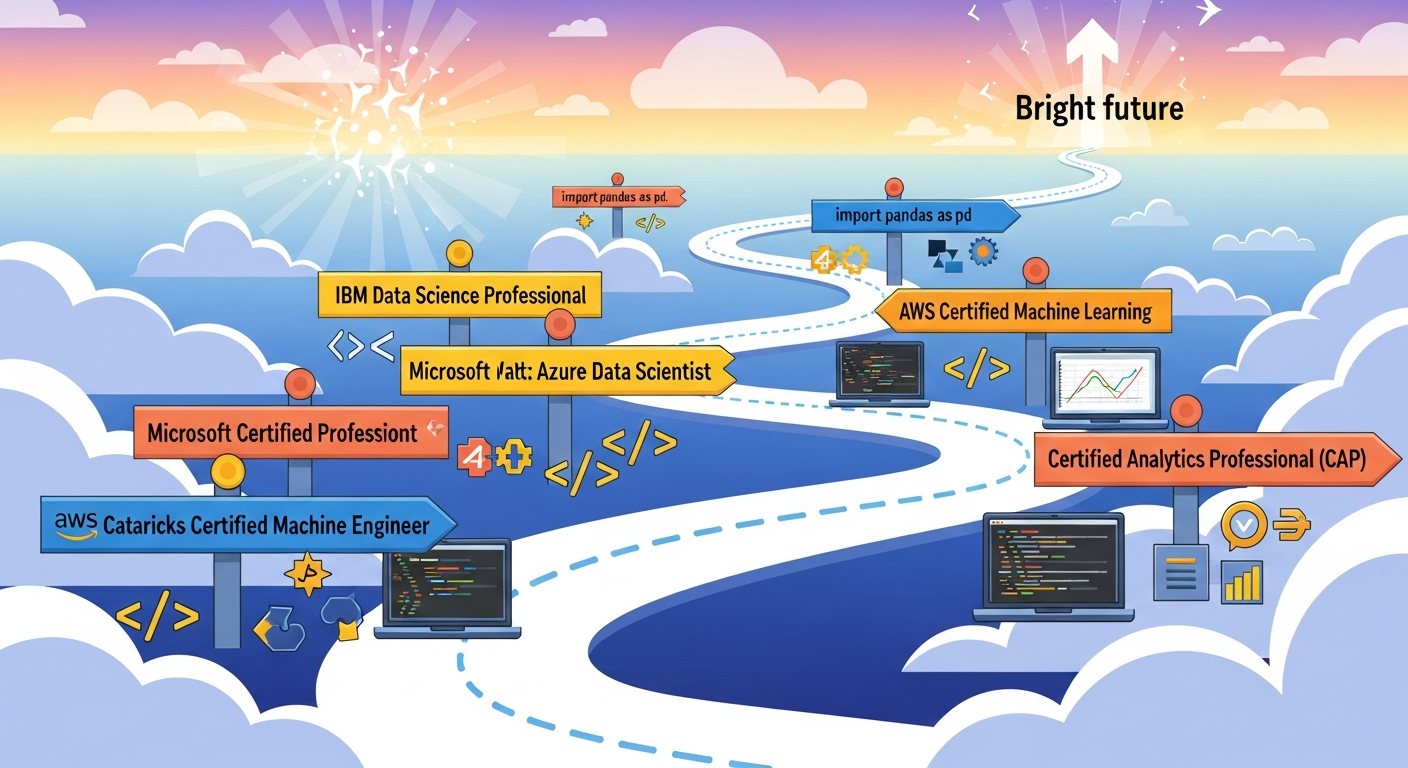
Certifications such as the IBM Data Science Professional Certificate or the Google Data Analytics Professional Certificate are good choices for people who are new to this field. You can also join a full data science course in hyderabad from a known institute like SocialPrachar. This will help you get the essential skills and hands-on practice you need to make your resume stronger.
What projects strengthen a beginner’s data science portfolio?
Beginner portfolios feel stronger when they show real-world projects. These projects highlight your skills in problem-solving and data analytics. You can pick projects like customer sentiment analysis, sales forecasting, or making a simple recommendation engine. They show that you use what you know from learning to get practical experience and real results.